
🔍 Read the full analysis: Pasta Alla Gricia: The Ancestor Of Carbonara Deserves Its Own Night on Mad Tasting

Get kitchen staples and gadgets delivered free with Prime
- Fast, free delivery on millions of items
- Prime Video, Amazon Music and more included
- Member-only deals all year
TL;DR
Pasta alla gricia is a Lazio dish made with pasta, guanciale, Pecorino Romano, black pepper and starchy cooking water. It is often called carbonara’s ancestor, but the source describes that as a popular culinary story, not a settled historical fact. The dish contains no egg or tomato and is distinct from carbonara, amatriciana and cacio e pepe.
Pasta alla gricia, a Lazio pasta dish made with guanciale, Pecorino Romano and black pepper, is often described as carbonara’s ancestor—but the historical connection is not settled. A Mad Tasting article argues that the egg-free, tomato-free dish merits attention on its own, while explaining its ingredients, its relationship to other Roman-area pastas and the uncertainty around its origins.
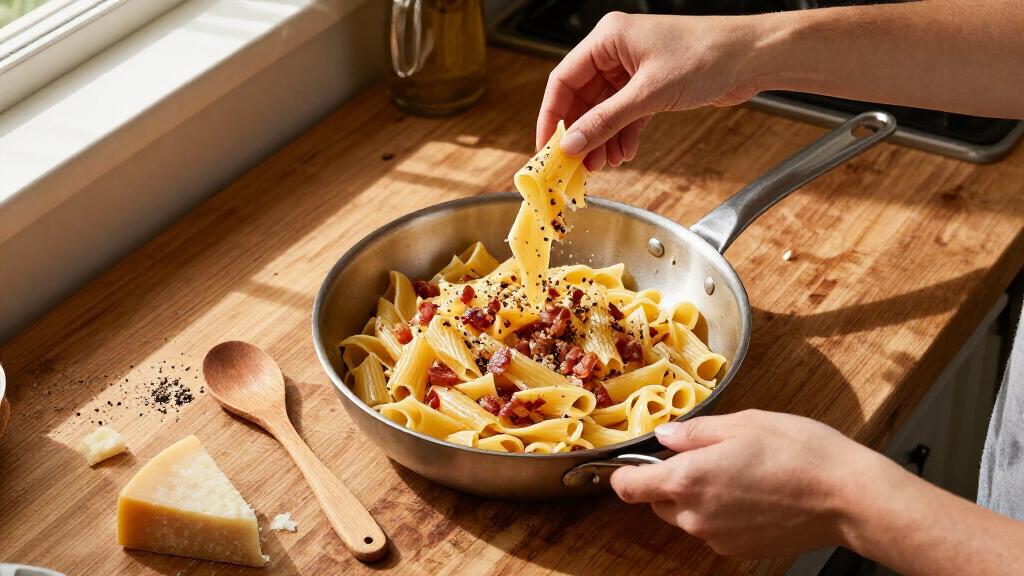
Gricia combines cured pork jowl, or guanciale, with grated Pecorino Romano and black pepper. Pasta cooking water, which carries starch from the noodles, helps bring the pork fat and cheese together into a sauce that coats the pasta. The dish does not use egg or tomato, and the source says traditional versions do not need cream.
The cooking technique matters because the ingredients can separate if handled poorly. The article recommends slowly rendering the guanciale, then using starchy pasta water to help bind the fat and cheese. It warns that rushing the process can leave a greasy pan or clumped cheese. The source does not provide tested quantities or a full recipe, so cooks would need those details from a separate recipe.
The dish is associated particularly with the area around Amatrice in Lazio. The article also calls it *amatriciana bianca*, or “white amatriciana,” because it shares ingredients with amatriciana but leaves out tomato. It stresses that this nickname is a comparison, not a complete account of gricia’s identity.
A Lazio classic in its own right
Pasta alla gricia brings guanciale, Pecorino Romano and black pepper together with starchy pasta water. Its link to carbonara is a popular story, not settled history.
What goes into gricia
A short ingredient list gives each element a clear role.
Guanciale
Slow rendering releases the fat that helps form the sauce.
Pecorino Romano
Grated cheese brings a salty, savory edge.
Black pepper
Pepper completes the dish’s simple flavor profile.
Starchy pasta water
It helps bind the pork fat and cheese so the sauce coats the pasta.
How it differs
These central Italian pasta dishes share some ingredients, but each has a distinct combination.
| Dish | What sets it apart |
|---|---|
| Gricia | Guanciale, Pecorino Romano and black pepper; no egg or tomato |
| Carbonara | Typically includes egg |
| Amatriciana | Includes tomato |
| Cacio e pepe | Cheese and pepper without guanciale |
Cook it patiently
Technique matters: rushing can leave a greasy pan or clumped cheese.
Let the pork fat release slowly.
Use its starch to help bring the fat and cheese together.
Bring the ingredients together into a sauce that clings to the noodles.
Place and history
Gricia is associated with Lazio, particularly the area around Amatrice.
- It is sometimes called “white amatriciana” because it shares ingredients with amatriciana but leaves out tomato.
- The nickname is a comparison, not a complete account of gricia’s identity.
- Its exact beginnings and the origin of its name remain uncertain.
- The carbonara ancestry claim is a popular culinary story, not a confirmed historical fact.
Gricia Beyond the Carbonara Story
The article’s central point is culinary rather than a newly documented historical discovery: gricia can stand as a dish in its own right, rather than being treated only as a precursor to carbonara. Its short ingredient list gives each element a clear role, and the absence of egg and tomato produces a different sauce from those in carbonara and amatriciana.
That distinction can help readers choose what to cook and describe the dish accurately. Carbonara typically includes egg; amatriciana includes tomato; cacio e pepe leaves out the pork. Gricia occupies a separate place in that group, with guanciale, cheese and pepper brought together by pasta water.
Its history also shows why food traditions need careful wording. Calling gricia carbonara’s ancestor is common, but resemblance between recipes does not by itself establish which came first or prove a direct line of development. The source presents that ancestry as a popular story, not a confirmed fact.
Products Worth Considering

Instant Pot Pro Plus 6-Quart 10-in-1 Electric Pressure Cooker

Le Creuset Enameled Cast Iron Round Bread Oven, 9.5-Inch, Cerise

Cuisinart 10-Cup Thermal Classic Programmable Coffeemaker, Black (DCC-1170BKNAS)
As an affiliate, we earn on qualifying purchases.
How Gricia Differs From Its Neighbors
Gricia shares ingredients with several well-known pasta dishes from central Italy, but the additions and omissions change the result. In the source’s comparison, carbonara adds egg to a combination that often includes guanciale, Pecorino Romano and black pepper. Amatriciana brings in tomato, while cacio e pepe relies on cheese and pepper without guanciale.
The article says versions and regional preferences can vary, so those descriptions are useful guideposts rather than fixed rules for every household. It links gricia especially with Lazio and the area around Amatrice, while noting that its exact beginnings and even the origin of its name remain disputed. One explanation connects the name to Grisciano near Amatrice; another links *gricio* to bread sellers in Rome. Neither account is presented as universally accepted.
“Pasta alla gricia is a Lazio pasta dish made with guanciale, Pecorino Romano, black pepper, and pasta, bound together with starchy cooking water.”
— Mad Tasting
The Origins Remain Disputed
The source does not establish when pasta alla gricia originated or prove that it directly preceded carbonara. Its status as carbonara’s ancestor is described as a popular culinary account, while the exact beginnings of gricia remain uncertain. Stories connecting the dish to shepherds and rural cooking are presented as tradition, not settled history.
The name’s origin is also unresolved in the source: it gives competing explanations involving Grisciano near Amatrice and Roman bread sellers, without endorsing either as definitive. The article supplies no new historical documents or expert interviews to resolve those questions, and it does not give a publication date or a complete recipe with measurements.
A Place at the Dinner Table
The source’s practical recommendation is to cook gricia as a distinct meal, not only as a point of comparison with carbonara. Its short list—pasta, guanciale, Pecorino Romano and black pepper—makes the cooking technique especially important: render the pork patiently and use pasta water to help the sauce come together.
No further announcement, research milestone or follow-up is identified in the source. For now, the clearest takeaway is to enjoy the dish while describing its ancestry with care: gricia is a Lazio classic, while its direct historical relationship to carbonara remains unproven in the material provided.
Key Questions
What is pasta alla gricia made from?
The core ingredients are pasta, guanciale, Pecorino Romano and black pepper. Starchy pasta water helps bind the pork fat and cheese into a sauce.
Is gricia the ancestor of carbonara?
It is often described that way because the dishes share cured pork, Pecorino Romano and black pepper. The source cautions that this is a popular story, not a settled historical fact.
Does pasta alla gricia contain egg or tomato?
No. The version described in the source contains neither egg nor tomato. Carbonara typically includes egg, while amatriciana includes tomato.
How is gricia different from cacio e pepe?
Both use Pecorino Romano and black pepper, but gricia also includes guanciale. Cacio e pepe leaves out the pork.
Where does pasta alla gricia come from?
It is a classic associated with Lazio, particularly the area around Amatrice. The source says its precise origins and the origin of its name remain uncertain.
Source: Mad Tasting