TL;DR

Get kitchen staples and gadgets delivered free with Prime
- Fast, free delivery on millions of items
- Prime Video, Amazon Music and more included
- Member-only deals all year
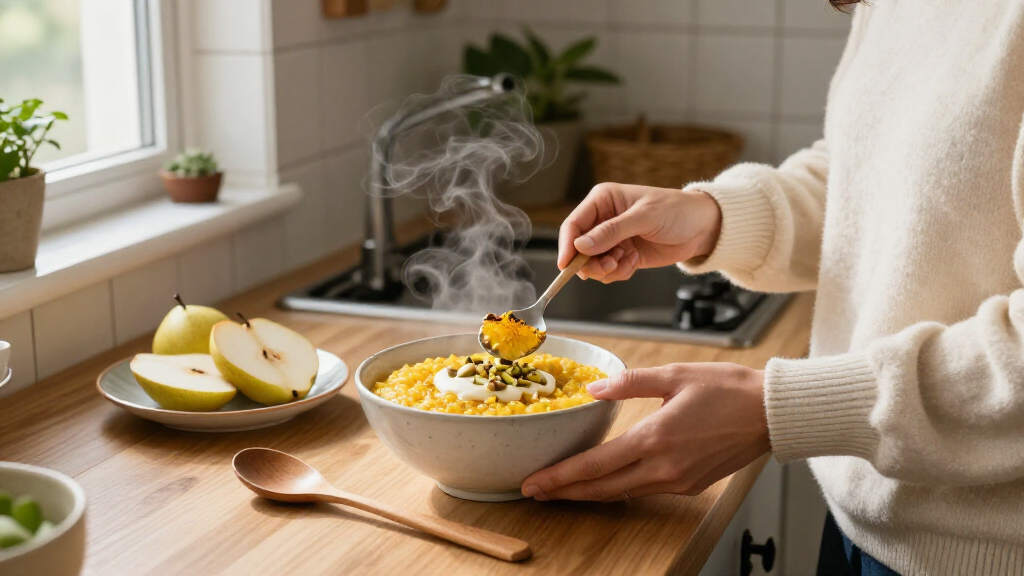
The Florentine published a recipe for golden saffron porridge topped with baked pear, pistachios, pomegranate seeds and tahini cream. The one-serving dish takes about 10 minutes to prepare and 15 minutes to cook, according to the report; its background also notes saffron’s long history of cultivation in Tuscany.
The Florentine published a golden saffron porridge recipe on November 4, pairing oats cooked with saffron and turmeric with cardamom-baked pear, pistachios, pomegranate seeds and tahini cream. The recipe serves one, takes about 10 minutes to prepare and about 15 minutes to cook, and offers a seasonal breakfast idea while drawing on the history of saffron cultivation in Tuscany.
The recipe calls for 60 grams of rolled oats and 250 millilitres of unsweetened almond or oat milk, with half milk and half water suggested as another option. Five or six saffron threads and a quarter teaspoon of ground turmeric infuse the liquid before the oats are added. Honey or agave syrup sweetens the porridge, while a pinch of flaky salt balances it.
For the topping, half a ripe but firm pear is cored, sliced lengthways and tossed with extra-virgin olive oil and ground cardamom. It bakes at 180°C for 10 to 15 minutes, until tender. Meanwhile, the milk is gently warmed with saffron and turmeric for two minutes; the oats then simmer in the mixture for seven to 10 minutes, with regular stirring, until creamy.
The finished bowl is topped with the pear, one tablespoon of pistachios and two tablespoons of fresh pomegranate seeds. The tahini cream combines a tablespoon of tahini with a teaspoon of honey or agave; one or two teaspoons of water can be added gradually to loosen it. The report says unsweetened pistachio paste can replace tahini. Almond, sesame and pistachio are relevant allergens for people who need to avoid those ingredients; the recipe also allows oat milk as a dairy-free liquid option.
A Seasonal Breakfast With Tuscan Saffron
The recipe gives readers a practical way to use saffron outside savoury dishes, pairing its aroma and colour with familiar oatmeal ingredients. Its roughly 25-minute total preparation and cooking time makes it a relatively quick breakfast, although the oven-baked pear requires a separate tray and the porridge needs attention as it simmers.
The dish also connects a contemporary home recipe to a regional food history. The Florentine says saffron has been grown in Tuscany since the 13th century, particularly near San Gimignano. That history adds local context to an ingredient now used here in a single serving, rather than making the recipe a claim about saffron’s health effects. The article describes saffron as traditionally associated with mood improvement, but provides no evidence or medical guidance to establish a mood benefit.
Products Worth Considering

Instant Pot InstantChill Ice Cream Maker with Rolled Ice Cream, No Pre-Freezing, 2-Pint

Philips Café Aromis Automatic Espresso Machine with LatteGo Pro Milk System

Philips 2200 Series Fully Automatic Espresso Machine with Classic Milk Frother, 2 Coffee Varieties, Intuitive Touch Display, Ceramic Grinder
As an affiliate, we earn on qualifying purchases.
Saffron’s Tuscan Roots
The Florentine’s report describes saffron as an autumn-harvested crop: flowers are picked by hand, and their red threads are separated and dried. It says about 150,000 flowers are needed for one kilogram of saffron, underscoring the labour involved in producing the spice. The account also says Tuscan saffron was once exported as far as the Middle East and North Africa, and that trade helped bring wealth to local families and finance some of San Gimignano’s medieval towers.
The recipe’s author says they source saffron and spices from Duccio Fontani, based in Castellina in Chianti, and identifies La Fierucola market in Florence and Il Paliaio in Greve in Chianti as places to find him. These are details supplied in the original report; it does not provide a separate market schedule or information about current stock.
“Saffron is the star of this porridge, bringing a delicate flavour and golden colour to the oats.”
— The Florentine recipe report
Health Claims and Ingredient Choices
The report does not cite research supporting its statement about saffron and mood, so readers should treat that as a traditional association rather than a demonstrated health benefit. It also gives no nutritional analysis, cost estimate or advice about therapeutic use. The recipe is a food preparation, not medical guidance.
Some details are flexible by design: readers can choose almond or oat milk, honey or agave, and tahini or pistachio paste. The report does not give substitutions for people with sesame or nut allergies, nor does it specify a particular oat brand or a precise amount of extra liquid if the porridge thickens. It describes the pear as tender after baking but does not set a more exact doneness test.
Preparing and Serving the Porridge
The next step for readers is to follow the recipe’s cooking sequence: bake the sliced pear at 180°C for 10 to 15 minutes, warm the milk with saffron and turmeric, then simmer the oats for seven to 10 minutes. Stir regularly and add liquid if needed. Finish with the sweetener, toppings and tahini cream, adjusting the latter with water for a thinner drizzle.
The recipe is written for one serving and says it can be multiplied easily, but it does not provide altered cooking times for larger batches. The report lists no follow-up announcement or scheduled event. Anyone seeking the named saffron seller should check directly with the markets mentioned, as the article does not confirm dates or availability.
Key Questions
How long does the saffron porridge take?
The Florentine lists 10 minutes of preparation and about 15 minutes of cooking. The pear bakes for 10 to 15 minutes while the porridge is prepared on the stovetop.
Can I make the recipe without tahini?
Yes. The report suggests using unsweetened pistachio paste instead of tahini. It does not list other alternatives for people avoiding sesame and nuts.
Is the porridge suitable for people avoiding dairy?
The recipe offers unsweetened almond or oat milk, or a mixture of milk and water. Check product labels and choose a suitable option for any allergies or dietary needs; tahini and pistachio paste are not dairy substitutes for people with sesame or nut allergies.
Does saffron in the recipe improve mood?
The report says saffron is traditionally associated with improving mood but does not cite supporting research. The recipe should not be treated as a proven mood treatment.
Source: theflorentine.net