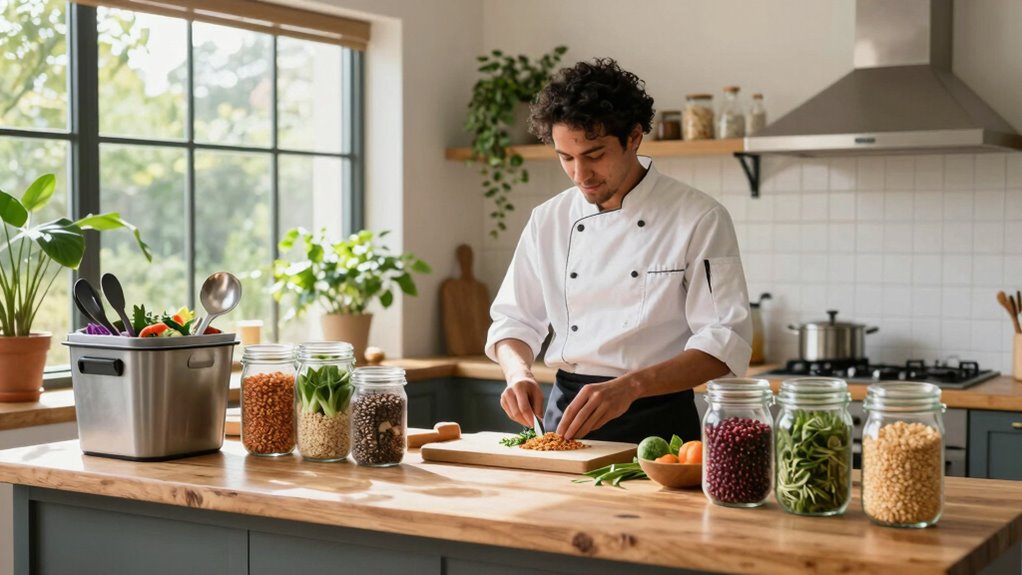

Zero-waste cooking is no longer just a trend; it’s a crucial step toward sustainable living. By maximizing ingredient use, choosing eco-friendly utensils, and composting food scraps, you reduce waste and help the environment. Small adjustments in your daily routine can make a significant difference. Embracing zero-waste practices is increasingly necessary as we face global waste and pollution issues. If you’re interested, you’ll discover effective strategies to make your kitchen more eco-conscious and resourceful.
Key Takeaways
- Zero-waste cooking addresses environmental issues by reducing food and plastic waste, making it a necessary sustainable practice.
- It promotes resource efficiency and circular food management, essential for combating climate change.
- Growing awareness and climate concerns are driving zero-waste cooking from trend to vital lifestyle change.
- Implementing zero-waste methods can lower household costs and reliance on disposable products, highlighting its practical necessity.
- As global waste challenges intensify, zero-waste cooking is increasingly seen as a crucial step toward sustainable living.
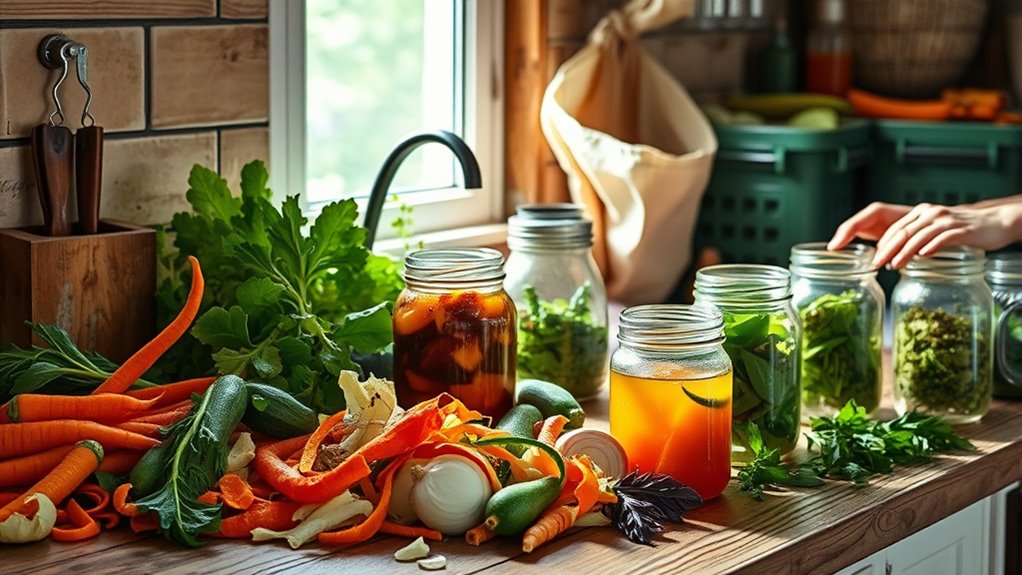
Zero-waste cooking is all about making the most of every ingredient and minimizing food waste in your kitchen. It’s a practice that encourages you to rethink how you handle food, utensils, and leftovers, transforming waste into valuable resources. One of the simplest ways to support this movement is by investing in sustainable utensils. These eco-friendly tools, made from bamboo, stainless steel, or silicone, help you reduce single-use plastics and unnecessary disposables. Using durable, reusable utensils during meal prep and cooking means fewer plastic forks, spatulas, and spoons end up in landfills. Not only do sustainable utensils last longer, but they also contribute to a more environmentally conscious kitchen.
Sustainable utensils reduce waste and promote eco-friendly, durable tools for a greener kitchen.
In addition to choosing eco-friendly tools, mastering composting techniques becomes essential for zero-waste cooking. Composting allows you to recycle organic waste like vegetable peelings, coffee grounds, eggshells, and food scraps that can’t be eaten. By setting up a simple compost bin in your backyard or utilizing community composting programs, you prevent this waste from rotting in trash bins and releasing harmful methane gases. Composting transforms food scraps into nutrient-rich soil, which you can use for your garden or houseplants. It closes the loop on food waste, turning what would be trash into a valuable resource for future growth. modern kitchen technology, such as smart compost bins, can further simplify this process by helping you monitor and optimize compost conditions.
Getting started with composting is straightforward. First, identify a suitable container—either a bin with a lid or a compost tumbler—that’s easy to access and maintain. Next, learn what you can compost; most fruit and vegetable scraps, coffee grounds, and paper products are fair game, while fats, oils, and meat should generally be avoided unless you have a specialized compost system. Remember to balance greens (wet, nutrient-rich waste) with browns (dry, carbon-rich materials like leaves or shredded paper) to keep the compost healthy and odor-free. Turning or aerating the compost regularly speeds up decomposition and ensures that it remains active and effective. Additionally, understanding filtration and airflow can help streamline the composting process through smart compost bins that monitor moisture and temperature levels. Incorporating composting tips and tricks can further enhance your composting success, making it quicker and more efficient. Using sustainable utensils during your cooking process supports the overall reduction of waste and promotes responsible resource use. Furthermore, choosing appropriate composting containers ensures your composting setup is efficient and suitable for your space.
Incorporating sustainable utensils and composting techniques into your cooking routine doesn’t require a massive overhaul. Small changes, like swapping disposable cutlery for durable, sustainable options, and composting your food scraps, have a significant impact on reducing waste. These practices support a more circular approach to food and resource management, making zero-waste cooking not just a trend but a crucial part of sustainable living. By making these adjustments, you’re actively reducing your environmental footprint and fostering a healthier planet, one meal at a time.
Frequently Asked Questions
How Can Beginners Start Practicing Zero-Waste Cooking Effectively?
You can start practicing zero-waste cooking by focusing on meal planning to reduce unnecessary leftovers and waste. Use composting techniques for vegetable scraps and coffee grounds to minimize trash. Buy in bulk to cut packaging waste, and choose reusable containers. Incorporate leftovers into new meals, and stay organized in your kitchen. Small, consistent steps make zero-waste cooking manageable and eco-friendly, helping you build sustainable habits over time.
What Are the Most Common Kitchen Items to Repurpose?
You can repurpose common kitchen items like food scraps and kitchen containers. Use food scraps to make broths, compost, or snack on edible parts. Reuse kitchen containers for storage, meal prepping, or as planters. Keep jars and plastic containers to store leftovers instead of buying new ones. These simple steps help reduce waste, save money, and make your kitchen more sustainable. Start small and watch your waste decrease.
How Does Zero-Waste Cooking Impact Food Safety?
Zero-waste cooking can improve food safety if you focus on proper storage and handling. By repurposing leftovers and scraps, you reduce waste and lower the risk of food contamination. However, you must be careful to store ingredients correctly and clean all surfaces thoroughly to prevent bacteria growth. Proper storage ensures leftovers stay fresh longer, while careful handling minimizes health risks, making zero-waste cooking both eco-friendly and safe.
Are Zero-Waste Practices Cost-Effective Long-Term?
Is saving money worth the effort? Zero-waste practices can be cost-effective long-term because they reduce food waste, leading to significant cost savings on groceries. Plus, you’ll enjoy environmental benefits by minimizing landfill waste and conserving resources. Although initial investments in tools or storage might be needed, the ongoing savings and positive ecological impact make zero-waste cooking a smart, sustainable choice for your budget and the planet.
What Are Innovative Tools to Reduce Kitchen Waste?
You can reduce kitchen waste with innovative tools like composting bins designed for easy food scrap disposal, which accelerates composting methods. Invest in vacuum sealers and airtight containers for food preservation, extending freshness and minimizing spoilage. Additionally, smart kitchen gadgets like food waste digesters turn scraps into useful compost or biogas, making waste management more efficient. These tools help cut waste, save money, and contribute to sustainability efforts.
Conclusion
Embracing zero-waste cooking isn’t just a trend; it’s a smart choice for your future. You might think it’s too time-consuming or restrictive, but once you get started, you’ll see how easily leftovers and scraps become valuable ingredients. Every small effort adds up, reducing waste and saving money. By making simple changes, you can enjoy delicious meals while helping the planet—proving that zero-waste isn’t just necessary, it’s also rewarding and doable.