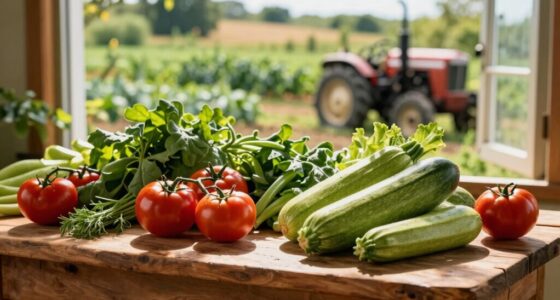
Ugly produce is gaining popularity as a way to cut food waste and support sustainable farming. By choosing misshapen or bruised fruits and vegetables, you challenge outdated beauty standards and help reduce unnecessary waste. Farmers markets often offer these imperfect items at lower prices, making it easier to buy fresh and nutritious food while supporting local growers. If you want to discover more about how this movement can benefit the environment and your health, keep exploring.
Key Takeaways
- The ugly produce movement encourages buying misshapen fruits and vegetables to reduce food waste and promote sustainability.
- Farmers markets are key venues where imperfect produce is sold directly to consumers at lower prices.
- Choosing ugly produce challenges beauty standards, supports local farmers, and helps normalize less-than-perfect food items.
- Buying imperfect produce reduces environmental impact by decreasing waste and transportation emissions.
- The movement emphasizes health benefits and eco-friendly practices, fostering community awareness and societal change.

Have you ever overlooked imperfect fruits and vegetables at the grocery store? You’re not alone. Many shoppers tend to pass by produce that doesn’t look “perfect,” even though it’s just as nutritious and delicious as the flawlessly shaped ones. This tendency is partly driven by consumer perceptions—people often associate perfect appearance with quality and freshness. However, this mindset is changing, especially with the rise of farmers markets and the ugly produce movement. Farmers markets are becoming popular spots where you can find produce that might be misshapen, bruised, or unevenly colored, but is fresh and flavorful. These markets challenge the notion that beauty equals quality, encouraging consumers to rethink their standards and reduce food waste.
Choosing imperfect produce supports sustainability and reduces food waste.
The ugly produce movement advocates for embracing these imperfect fruits and vegetables, emphasizing that appearance doesn’t determine worth. Shopping at farmers markets makes it easier to access such produce because vendors are often more willing to sell “imperfect” items directly to consumers. When you visit these markets, you’ll notice that the produce is often less expensive and just as nutritious. Vendors are passionate about reducing waste and supporting sustainable practices, so they’re enthusiastic to sell produce that might otherwise be discarded due to cosmetic imperfections. This shift in consumer perception is vital because it helps to normalize the idea that beauty is not a prerequisite for quality. Additionally, promoting natural and sustainable farming practices can further support the reduction of waste and encourage more eco-friendly food choices.
By choosing to buy ugly produce, you’re actively participating in a movement that fights food waste and promotes sustainability. It’s a small change, but it can have a significant impact. When you buy imperfect produce, you’re sending a message to farmers and grocery stores that you value waste reduction and are willing to look beyond appearance. This can influence how the supply chain operates, encouraging farmers and stores to stock and sell a broader range of produce. As awareness grows, more people will understand that the focus on appearance is superficial and that the real value lies in nutrient density and flavor. Furthermore, supporting local food systems by purchasing from farmers markets can strengthen community ties and promote environmentally friendly practices. Recognizing that visual appeal is not the sole indicator of quality can help shift consumer habits toward more sustainable choices.
Additionally, purchasing ugly produce can inspire others to do the same. Sharing your experience at farmers markets or with friends can help shift consumer perceptions on a larger scale. Over time, this can lead to more widespread acceptance and normalization of imperfect produce, making it easier for farmers and stores to sell it without stigma. Ultimately, embracing these imperfect fruits and vegetables isn’t just about reducing waste; it’s about challenging outdated ideas about beauty, supporting local farmers, and making sustainable choices that benefit both the environment and your health. Supporting eco-friendly food choices can also contribute to reducing the carbon footprint associated with food production and transportation.
Frequently Asked Questions
How Does Ugly Produce Impact Overall Food Prices?
Ugly produce can lower overall food prices by increasing supply and reducing waste, which influences market pricing. When retailers accept imperfect fruits and vegetables, they buy more, helping to stabilize prices and prevent shortages. This also eases pressure on the supply chain, making it more efficient. As a result, consumers like you may see more affordable options, and food waste decreases, benefiting both your wallet and the environment.
What Are Common Misconceptions About Ugly Produce?
You might think ugly produce isn’t safe or nutritious, but that’s a common misconception. People often judge based on visual appeal, not quality, leading to unfair consumer perceptions. Ugly produce is just as healthy and tasty as its perfect-looking counterparts. Its appearance doesn’t affect its flavor or nutritional value, so don’t let superficial standards influence your choices. Embracing imperfect produce helps reduce food waste and supports sustainable eating habits.
How Can Consumers Identify and Select Ugly Produce?
Don’t overlook imperfect fruits; they’re just as good as perfect ones. To spot and select ugly produce, look beyond visual standards—check for firmness, weight, and smell. Avoid fruits with mold or deep bruises, but remember, slight blemishes are normal. Trust your senses and choose produce that feels fresh and smells appealing. Your mindful selection helps reduce waste and supports a more sustainable food system.
Are There Specific Types of Produce More Commonly Rejected?
You’ll notice that produce like apples, carrots, and potatoes are more commonly rejected due to cosmetic standards and retail rejection. These items often have blemishes, irregular shapes, or minor imperfections that don’t meet the aesthetic criteria set by stores. Despite their appearance, they taste just as good. By choosing ugly produce, you help reduce food waste and support more sustainable shopping habits.
What Policies Support the Ugly Produce Movement?
You’ll find that government incentives and retail regulations support the ugly produce movement. Policies like subsidies encourage farmers to sell imperfect fruits and vegetables, reducing waste. Retailers often face regulations that promote sourcing and selling cosmetically imperfect produce at discounted prices. These policies help change perceptions, making ugly produce more acceptable and accessible, ultimately reducing food waste and promoting sustainability in the food industry.
Conclusion
By choosing ugly produce, you’re not just saving food—you’re helping the planet breathe a little easier. Think of it as giving imperfect fruits and vegetables a second chance at life, turning the tide against waste. Every time you pick up that oddly shaped apple or crooked carrot, you’re planting a seed of change. Together, we can make the ugly beautiful and show that even the most imperfect food has a purpose worth fighting for.