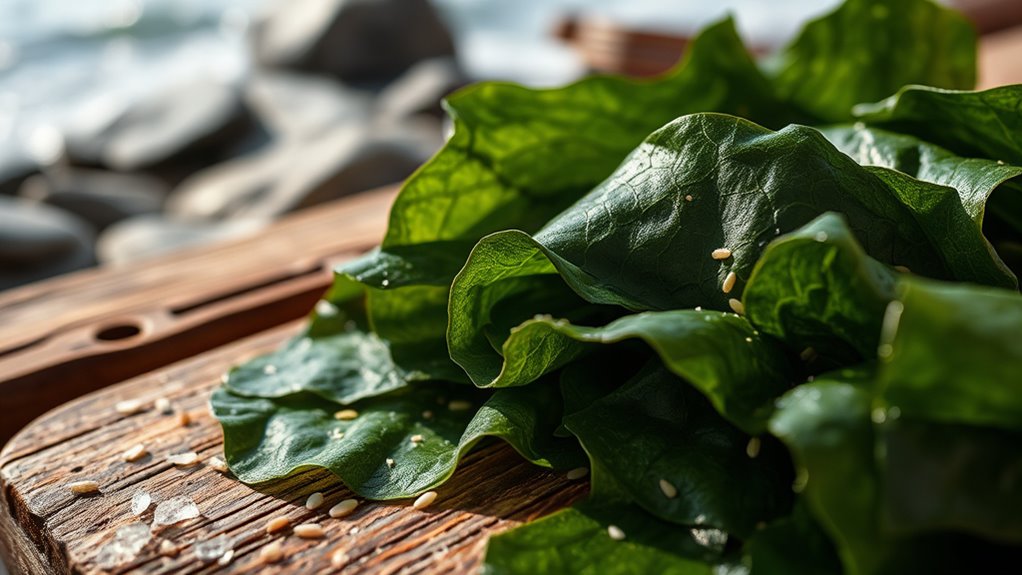

Seaweed snacks have evolved from traditional coastal harvests into a popular, healthy, and sustainable choice worldwide. They’re packed with nutrients like iodine, calcium, and magnesium, making them a great alternative to chips. Sustainable harvesting guarantees the environment stays healthy while providing a steady supply. Modern processing adds exciting flavors like sesame or chili, blending tradition with innovation. Keep exploring to discover how these snacks became a global pantry staple and their positive environmental impact.
Key Takeaways
- Seaweed snacks are a healthy, nutrient-rich alternative to traditional chips, offering minerals like iodine and calcium.
- Sustainable harvesting practices ensure environmental protection and promote regrowth, supporting a steady supply for global markets.
- They are processed into flavored sheets or strips, with options like sesame, chili, or soy, reflecting cultural influences.
- Traditional coastal harvesting methods have evolved with modern techniques, making seaweed a versatile, global pantry staple.
- Their portability, sustainability, and health benefits align with contemporary lifestyles and eco-conscious consumption habits.
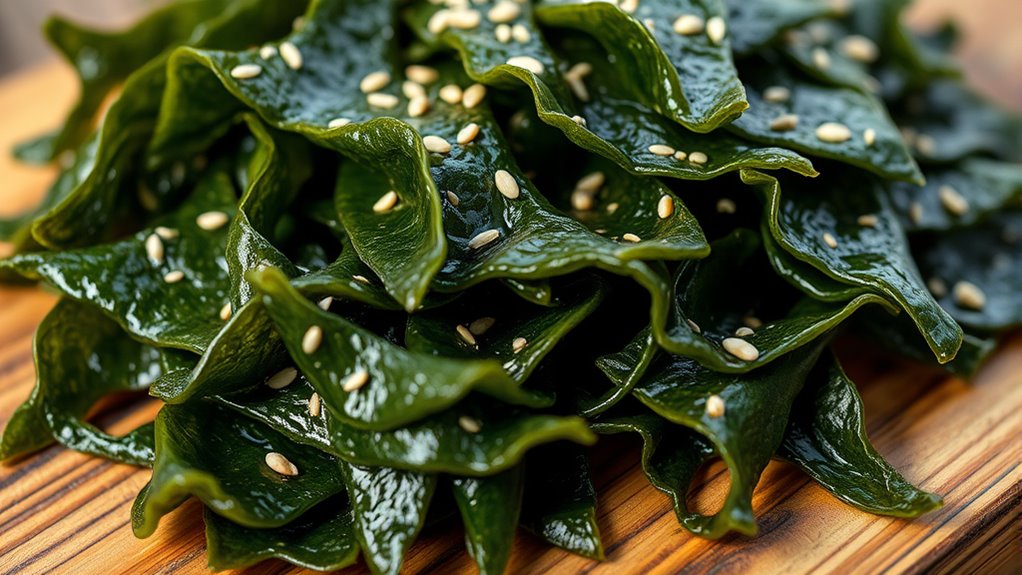
Seaweed snacks have become a popular, healthy alternative to traditional chips, offering a savory crunch packed with nutrients. As you reach for a bag, you’re probably aware of their reputation as a superfood loaded with minerals like iodine, calcium, and magnesium. But you might not realize how much effort goes into harvesting the seaweed sustainably, ensuring that these snacks remain eco-friendly and replenishable. Sustainable harvesting involves carefully collecting seaweed without damaging the surrounding marine environment or depleting the resource. Harvesters often use selective cutting methods, taking only mature seaweed and leaving enough behind to promote regrowth. This approach helps maintain healthy ocean ecosystems while providing a steady supply of raw material for snack producers. It’s this balance between environmental responsibility and product quality that helps seaweed snacks stay popular among eco-conscious consumers.
Once harvested, seaweed is processed and dried into sheets or strips, ready for flavoring. One of the most appealing aspects of seaweed snacks is their variety of flavor variations. You can find options seasoned with sesame, soy sauce, or chili, offering different taste experiences to suit every palate. Some brands even experiment with more adventurous flavors like wasabi, garlic, or lemon, giving you an array of choices that keep snack time exciting. These flavor variations are usually achieved through natural seasonings and oils, keeping the snacks healthy and free from artificial additives. The diversity in flavors also reflects the cultural influences behind seaweed snacks, which originated in East Asia but have now gained global popularity. Whether you prefer a mild, salty taste or something with a spicy kick, there’s a seaweed snack out there for you.
As you explore the world of seaweed snacks, you’ll notice how they seamlessly blend tradition with innovation. The practice of harvesting seaweed has been part of coastal cultures for centuries, but modern production techniques and flavoring options have transformed them into a global pantry staple. You can enjoy these snacks on the go, toss them into salads, or incorporate them into recipes for added umami flavor. Their portability and versatility make them a convenient, nutritious choice for busy lifestyles. Plus, knowing that they’re produced through sustainable harvesting practices gives you peace of mind that you’re supporting environmentally responsible choices. With so many flavor variations available, you’re free to experiment and find your favorite way to enjoy this delicious, healthful snack that’s rooted in coastal tradition but thriving worldwide. Additionally, understanding vertical storage solutions can help keep your pantry organized and make space for these snacks along with other healthy foods.
Frequently Asked Questions
Are Seaweed Snacks Suitable for Vegans and Vegetarians?
You’re wondering if seaweed snacks are suitable for vegans and vegetarians. The good news is, they’re generally plant-based options that fit well into vegan and vegetarian diets. Seaweed is naturally vegan, containing no animal products. However, you should always check the ingredients for added flavors or preservatives that might not align with your dietary considerations. Overall, seaweed snacks make a tasty, healthy, and inclusive addition to your plant-based choices.
How Long Do Seaweed Snacks Stay Fresh?
They say “a stitch in time saves nine,” so knowing how long seaweed snacks stay fresh helps you enjoy them longer. Typically, their shelf life is about six to twelve months if stored properly. Store them in an airtight container in a cool, dry place away from sunlight. Proper storage tips, like sealing the bag tightly and keeping them away from moisture, guarantee your snacks stay crisp and delicious longer.
Do Seaweed Snacks Contain Added Preservatives or Artificial Ingredients?
You might wonder if seaweed snacks have added preservatives or artificial ingredients. Many brands now offer preservative-free formulations, so you can enjoy them without artificial flavor concerns. Always check the label, as some products still contain preservatives or artificial flavors, but increasingly, companies focus on natural ingredients. This way, you get a healthy snack that aligns with your desire for clean, minimally processed foods.
Can Seaweed Snacks Be Included in a Low-Sodium Diet?
Did you know that seaweed naturally contains about 10 times less sodium than traditional snack options? This makes seaweed snacks a smart choice if you’re on a low-sodium diet. Their sodium content varies, so check labels for health considerations. You can include them in your diet, but moderation is key. Always consider your overall sodium intake to maintain balanced health, especially if you’re monitoring your salt consumption.
What Are the Environmental Impacts of Harvesting Seaweed?
You might wonder about the environmental impacts of harvesting seaweed. When done through sustainable harvesting practices, it helps protect marine biodiversity by avoiding overharvesting and habitat destruction. Responsible harvesting encourages regrowth and maintains ecosystem balance. However, if not managed carefully, it can lead to declines in seaweed populations and harm marine life. Supporting sustainable sources guarantees you enjoy seaweed’s benefits while preserving ocean health and biodiversity.
Conclusion
Just like a humble seed that blooms into a vibrant tree, seaweed snacks bridge ancient coastal traditions with your modern world. They’re more than a treat; they’re a reminder of nature’s resilience and the wisdom of generations past. As you reach for that crunchy snack, envision yourself connected to the ocean’s vast, nurturing heart. Embrace this gift from the sea, and let it inspire you to nourish your body and soul with every bite.