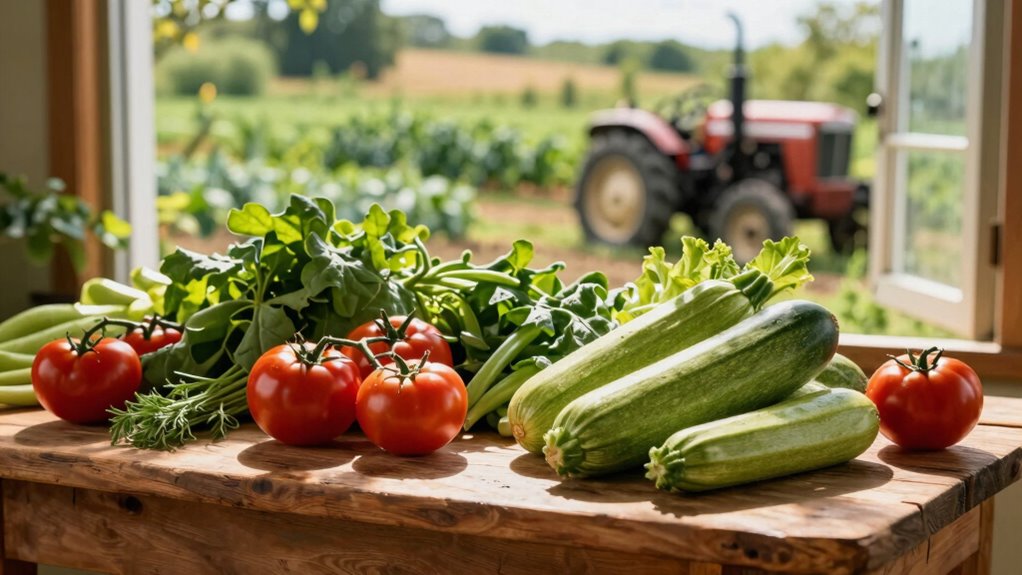
Farm-to-table isn’t just a passing trend; it’s a growing movement shaping how you choose your food. It emphasizes sourcing from local farms that use sustainable methods, which benefits your health, local economies, and the environment. As more restaurants and markets adopt these practices, it’s clear this approach is here to stay. If you want to understand how it’s transforming food culture and what it means for your plate, there’s more to discover below.
Key Takeaways
- Growing consumer awareness and demand for transparency support the long-term adoption of farm-to-table practices.
- Increasing adoption by restaurants and retailers indicates a sustained shift toward local and sustainable sourcing.
- Emphasis on environmental benefits and regenerative agriculture suggest farm-to-table aligns with future sustainability goals.
- The movement fosters community connections and supports local economies, reinforcing its cultural and economic viability.
- Despite challenges, ongoing innovations and consumer education point to farm-to-table becoming an enduring element of food culture.

Have you ever wondered where your food really comes from? In today’s world, many people are starting to question the origins of their meals, and the farm-to-table movement has become a popular response. This approach emphasizes sourcing food directly from local farms, often prioritizing sustainable farming practices that protect the environment and support regional economies. When you choose farm-to-table options, you’re not just eating; you’re making a conscious decision to support local sourcing and promote a more transparent, responsible food system.
Sustainable farming is at the core of farm-to-table efforts. Farmers who adopt sustainable practices focus on maintaining soil health, reducing chemical inputs, and conserving water. These methods produce healthier food and help preserve ecosystems for future generations. By sourcing ingredients locally, restaurants and consumers can reduce the carbon footprint associated with long-distance transportation. Fresh, seasonal produce travels shorter distances, meaning less fuel consumption and fewer emissions. When you buy locally sourced food, you’re directly contributing to a system that values environmental health and community well-being. Additionally, many farms incorporate regenerative agriculture techniques that restore soil vitality and biodiversity, further enhancing sustainability. Incorporating renewable energy sources on farms can further reduce environmental impacts and promote energy independence in food production.
Many people are drawn to the farm-to-table movement because it fosters a genuine connection between consumers and producers. You get to know where your food comes from, meet the farmers, and learn about their methods. This transparency helps you make more informed choices and encourages better eating habits. Plus, supporting local sourcing keeps money within the community, strengthening local economies and creating jobs. It’s a cycle that benefits everyone involved—farmers, consumers, and the environment. Additionally, the movement promotes seasonal eating, which aligns with natural growth cycles and reduces food waste.
The movement also champions seasonal eating. When you prioritize foods that are in season locally, you enjoy fresher, tastier produce while reducing reliance on imports and artificial growth methods. This seasonal cycle encourages diversity in your diet and reduces waste, since food is harvested at its peak rather than being stored or transported long distances. As a result, farm-to-table isn’t just a passing trend; it’s a sustainable approach rooted in respecting nature’s rhythms. Moreover, embracing seasonal eating can inspire innovative culinary creations that showcase the best flavors of each season.
Although some critics argue that farm-to-table might be a passing fad, its principles are becoming embedded in the broader food culture. More restaurants, grocery stores, and consumers are recognizing the benefits of local sourcing and sustainable farming. This shift signifies a move toward a more resilient, transparent food system. If you’re interested in making a positive impact, embracing farm-to-table practices allows you to enjoy delicious, ethically sourced food while supporting a healthier planet. It’s clear that farm-to-table is here to stay, driven by a desire for authenticity, sustainability, and community connection.
Frequently Asked Questions
How Does Farm-To-Table Impact Local Economies?
You can see that farm-to-table boosts local economies by strengthening local market dynamics and supporting small farmers. When you buy directly from local producers, you help reduce supply chain resilience issues and keep money circulating within your community. This direct connection encourages sustainable practices, creates jobs, and fosters community growth. Overall, farm-to-table has a positive impact, making local economies more robust and resilient over time.
What Are the Main Challenges for Farmers Adopting This Model?
You face challenges like managing transport logistics, which can be costly and complex, affecting freshness and delivery times. Additionally, increasing consumer awareness is vital; you need to educate customers about the benefits of farm-to-table to boost demand. These hurdles require careful planning and marketing efforts, but overcoming them can help you build stronger local connections and grow your farm’s reputation within the community.
How Does Farm-To-Table Influence Food Safety Standards?
You see that farm-to-table practices improve food safety by reducing the supply chain’s complexity, which minimizes contamination risks. When you buy locally, you get fresher food with fewer handling steps, lowering the chance of foodborne illnesses. This direct connection between farmer and consumer helps guarantee better quality control and transparency, making it easier for you to trust the safety standards of your food and enjoy healthier, safer meals.
Are There Environmental Benefits Associated With Farm-To-Table Practices?
Farm-to-table practices sprout like fresh leaves, offering real environmental benefits. You can reduce urban expansion’s impact by supporting local farms that minimize pesticide use and transportation emissions. This approach helps preserve land and water resources, keeping ecosystems healthier. By choosing local, you cut down on fossil fuels and waste, making your food choices a powerful tool to nurture the planet. It’s a sustainable cycle that benefits everyone.
Can Farm-To-Table Be Sustainable for Large-Scale Restaurants?
Yes, farm-to-table can be sustainable for large-scale restaurants if you focus on supply chain efficiency and menu flexibility. By establishing strong local partnerships, you reduce transportation emissions and guarantee fresh ingredients. Flexibility in your menu allows you to adapt to seasonal availability, minimizing waste and supporting local farmers. This approach promotes sustainability without sacrificing scalability, making farm-to-table practices practical even for larger establishments.
Conclusion
As you consider the farm-to-table movement, remember it’s more than just a trend—it’s a call to reconnect with what sustains us. Will it fade away like passing clouds, or grow roots deep into our communities? The choice is yours. By supporting local farms and embracing fresh, sustainable food, you plant seeds of change today that can bloom into a healthier, more mindful tomorrow. After all, aren’t we all stewards of the land we share?