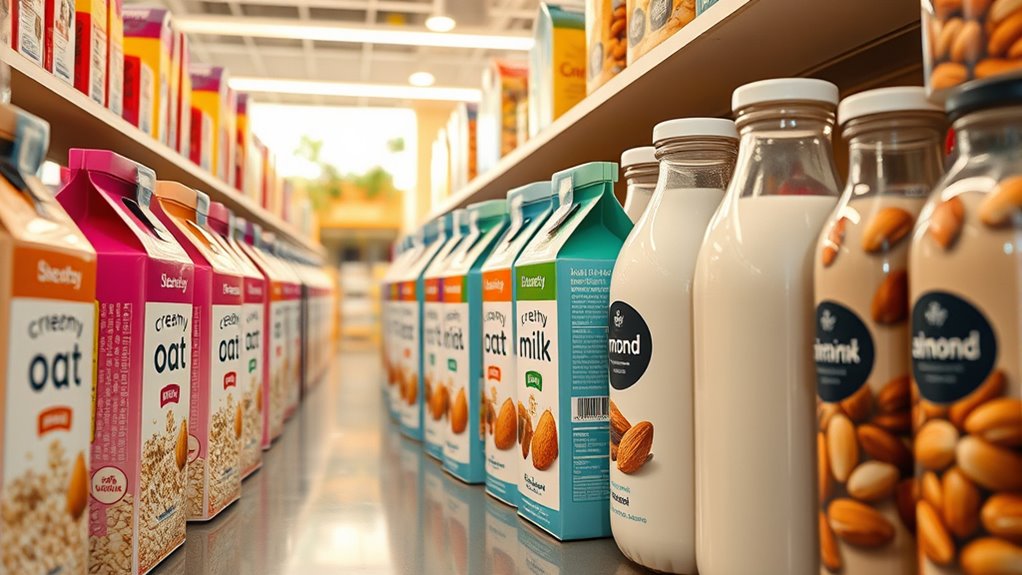

The alt-milk explosion is transforming your grocery store aisle with popular options like oat and almond milk, offering sustainable and healthful choices. You can enjoy creamy textures, diverse flavors, and added nutrients while supporting eco-friendly farming practices that reduce water use and greenhouse gases. As more consumers shift toward plant-based options, the industry keeps innovating and expanding. If you’re curious about how these plant milks are changing the food landscape, there’s more to explore.

Get kitchen staples and gadgets delivered free — and shop member deals
- Fast, free delivery on millions of items
- Access to Prime Big Deal Days deals on October 6–7
- Prime Video, Amazon Music and more included
Key Takeaways
- The alt-milk industry is rapidly expanding, offering diverse options like oat and almond milk to meet consumer demand.
- Growing awareness of environmental benefits drives consumers toward sustainable, plant-based milk choices.
- Alt-milks are fortified with nutrients, catering to health-conscious and dietary-restricted consumers.
- Oat and almond milks are favored for their unique flavors, textures, and eco-friendly production methods.
- The increasing popularity of alt-milks is transforming grocery shelves and encouraging sustainable farming practices.
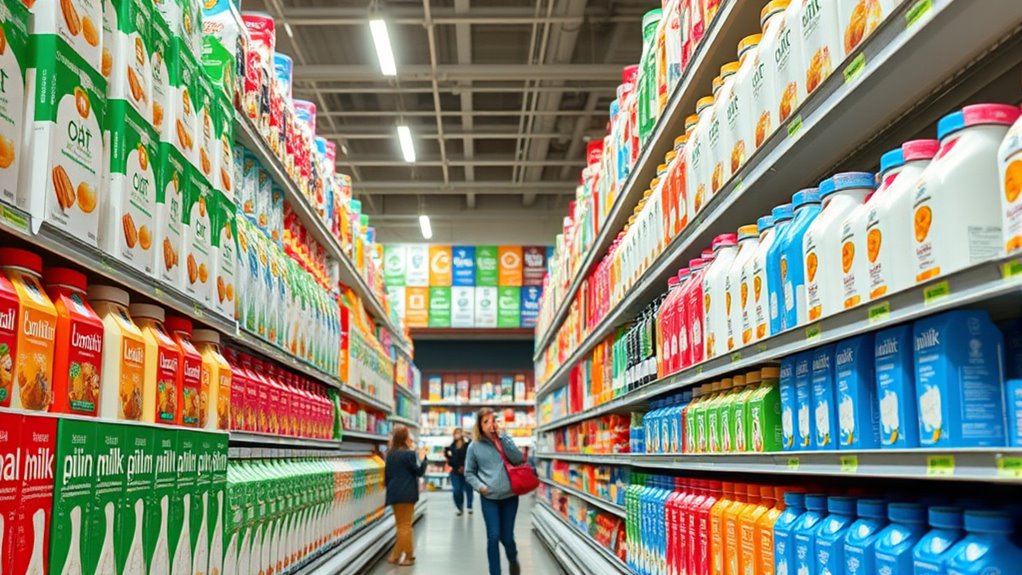
The alt-milk industry is experiencing a rapid boom, transforming the way people think about traditional dairy. More shoppers are now choosing plant-based options like oat and almond milk, drawn by their environmental benefits and potential health advantages. This shift isn’t just a trend; it reflects a broader movement toward sustainable farming practices that aim to reduce the ecological footprint of food production. When you opt for alt-milks, you’re supporting farms that often prioritize water conservation, minimize greenhouse gas emissions, and promote biodiversity. Unlike conventional dairy farming, which can be resource-intensive and environmentally taxing, many plant-based milk producers focus on sustainable methods that protect the planet for future generations.
Choosing alt-milks supports sustainable farming and reduces environmental impact for future generations.
You might also find that choosing alt-milk impacts your dietary health in positive ways. Many plant-based options are fortified with vitamins and minerals like calcium, vitamin D, and B12, making them comparable or even superior to cow’s milk. They typically contain less saturated fat and cholesterol, which can benefit your heart health and help you manage weight more effectively. If you’re lactose intolerant or have a dairy allergy, these options give you a way to enjoy a nutritious beverage without discomfort. Furthermore, plant-based milks often have fewer additives and hormones than traditional dairy, aligning with a clean-eating approach that emphasizes whole, minimally processed foods. Incorporating sustainable farming practices into your choices can also encourage more environmentally responsible production in the industry.
As you explore the new milk aisle, you’ll notice that oat and almond milks come in a variety of flavors and formulations, catering to different tastes and dietary needs. Oat milk, for example, has gained popularity not just because of its creamy texture but also because it’s made from oats that are often sustainably farmed. Its production generally uses less water than almond milk, which is an important factor if you’re mindful of resource conservation. Almond milk, on the other hand, offers a nutty flavor and is often enriched with nutrients, making it a versatile choice for coffee, cereal, or baking. Both options appeal to health-conscious consumers looking for dairy alternatives that align with their values.
In the end, your decision to switch to alt-milks reflects a conscious effort to support sustainable farming practices and enhance your dietary health. The explosion of oat, almond, and other plant-based milks is transforming grocery shelves, giving you more options to make eco-friendly and health-conscious choices. As awareness of environmental issues and personal wellness grows, so does the availability of these innovative beverages. This shift not only benefits your health but also encourages the industry to adopt more sustainable, ethical farming methods—making the alt-milk revolution a win for everyone.
As an affiliate, we earn on qualifying purchases.
Frequently Asked Questions
How Do Alt-Milks Compare Nutritionally to Cow’s Milk?
You’ll find that alt-milks vary in nutritional comparison to cow’s milk; many are lower in protein and calories but often fortified with vitamins and minerals. Processing differences mean some may contain added sugars or thickeners, impacting health benefits. For example, almond milk is typically lower in calories but also in protein, while oat milk provides more fiber. Always check labels to understand the nutritional profile and processing details of your chosen plant-based milk.
What Environmental Impacts Do Oat and Almond Milks Have?
You might think oat and almond milks are eco-friendly, but their environmental impacts are astonishing. Almond milk demands an enormous water footprint, often requiring more water than some crops. Oat milk, while generally more sustainable, still produces greenhouse gases during processing. If you care about the planet, choose oat milk over almond, but remember, both have significant environmental costs compared to traditional dairy, so consumption choices truly matter.
Are There Any Health Risks Associated With Consuming Alt-Milks?
You might face health risks with alt-milks, especially if you’re allergic to nuts or oats, raising allergen concerns. Some brands add sugars, which can contribute to weight gain or blood sugar spikes. Always check labels for added sugars and allergens. If you have sensitivities or health concerns, choosing unsweetened options and reading ingredient lists helps you avoid potential risks. Moderation and informed choices keep you safer while enjoying plant-based milks.
How Do I Choose the Best Alt-Milk for My Diet?
To choose the best alt-milk for your diet, start by reading nutritional labels to compare calorie, sugar, and protein content. Consider flavor profiles; if you prefer a creamier taste, oat milk might suit you, while almond milk offers a nutty flavor. Think about any dietary restrictions or allergies, and try different options to see which aligns with your health goals and taste preferences.
What Is the Future Trend for Plant-Based Milk Varieties?
The future of plant-based milk is a vibrant garden of flavor innovations and market diversification. You’ll see new varieties that cater to specific diets and preferences, like fortified options or unique blends. As consumer tastes evolve, companies will experiment with richer textures and inventive flavors, making plant-based milks more exciting and accessible. Expect a broader range of choices that fit seamlessly into your lifestyle, pushing the boundaries of what milk can be.
almond milk fortified with calcium
As an affiliate, we earn on qualifying purchases.
As an affiliate, we earn on qualifying purchases.
Conclusion
As you explore the vibrant world of alt-milks, you’ll find a gentle shift happening in your routine—an invitation to embrace new flavors softly woven into your day. With each sip, you’re subtly supporting a more mindful choice, a quiet nod to sustainability and variety. The alt-milk aisle isn’t just expanding; it’s inviting you to savor the subtle beauty of change, one gentle pour at a time, making your mornings a little brighter and your choices a little kinder.
As an affiliate, we earn on qualifying purchases.
As an affiliate, we earn on qualifying purchases.
NFL season / tailgating Picks
team gear
As an affiliate, we earn on qualifying purchases.