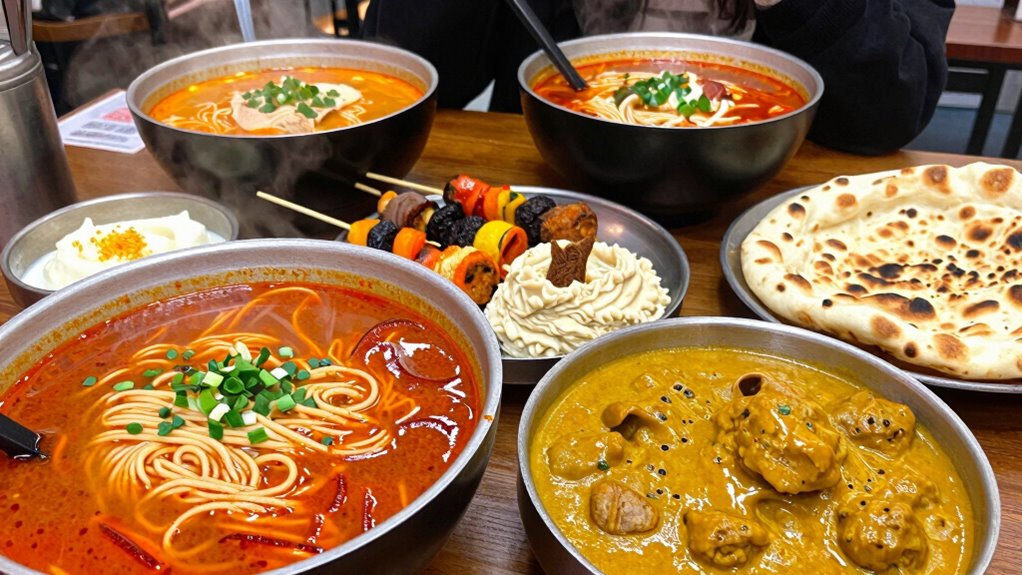

Immigrant cuisines are transforming food trends by blending flavors, techniques, and influences from different cultures. You’ll find menus that fuse ingredients like kimchi and tacos or sushi burritos, creating new culinary identities. This trend encourages experimentation and makes dining more inclusive and exciting. Global ingredients are more accessible, inspiring home cooks to try new recipes. As you explore these multicultural options, you’ll discover how food unites people—keep exploring wider culinary influences to see how this movement evolves.
Key Takeaways
- Immigrant cuisines introduce new flavors and techniques that inspire innovative fusion dishes, shaping evolving food trends.
- Fusion menus reflect cultural exchange, blending ingredients and presentation styles from diverse culinary traditions.
- International ingredients become mainstream, encouraging home experimentation and expanding global palates.
- Food festivals and media promote immigrant cuisines, elevating their influence on popular food trends.
- Melting pot menus foster inclusivity and cultural appreciation, driving the dynamic evolution of contemporary food culture.
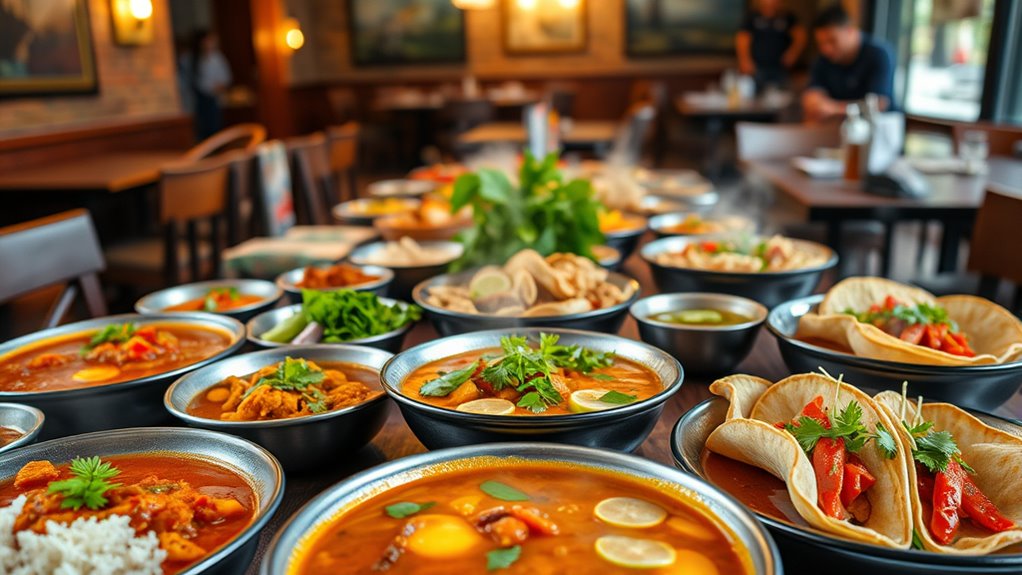
Immigrant cuisines have become a vibrant and influential part of modern food trends, shaping what we see on menus and grocery shelves today. They bring diverse flavors, techniques, and ingredients that constantly push the boundaries of traditional cooking. One of the most noticeable impacts is the rise of fusion dishes, which blend elements from different culinary traditions to create innovative, exciting flavors. These dishes often combine spices, cooking methods, or presentation styles from multiple cultures, appealing to adventurous eaters and reflecting the interconnectedness of today’s world. Fusion dishes exemplify culinary globalization, where borders blur in the kitchen, and ingredients travel across continents with ease. This phenomenon isn’t just about mixing flavors; it’s about creating new culinary identities that resonate with a multicultural audience. As immigrant communities settle into new countries, they introduce their culinary heritage, which then evolves through interaction with local ingredients and tastes. The result is a dynamic food scene that continually adapts and expands, giving rise to dishes you might not have encountered a decade ago. For example, Korean tacos or sushi burritos fuse traditional Asian and Latin flavors, making them accessible and trendy. These creations are more than just novelties—they reflect a broader cultural exchange driven by globalization, where culinary innovation becomes a way to celebrate diverse backgrounds. You’ll notice that many restaurants now emphasize their multicultural roots, offering menus that showcase this melting pot of influences. Grocery shelves similarly reflect this trend, with international ingredients becoming staples in mainstream stores. You might find kimchi next to salsa or turmeric alongside cumin, highlighting how immigrant cuisines influence everyday cooking. This culinary globalization encourages you to experiment and incorporate flavors from around the world into your own meals. It’s about breaking down barriers and discovering new tastes that expand your palate. The popularity of globally inspired dishes also fuels the rise of food festivals, pop-up restaurants, and cooking shows dedicated to exploring immigrant cuisines. These platforms celebrate culinary diversity, inspiring you to try new recipes or visit neighborhoods known for authentic immigrant food spots. Furthermore, cultural exchange through food helps foster mutual understanding and respect among diverse communities, enriching the social fabric. Additionally, the integration of immigrant ingredients into mainstream markets further amplifies their influence, making diverse flavors more accessible than ever before. This process is facilitated by culinary globalization, which accelerates the spread of diverse ingredients and techniques across borders. Moreover, the increasing presence of authentic culinary techniques from different cultures enriches the variety and depth of dishes available today. Ultimately, immigrant cuisines and their fusion dishes serve as a bridge that connects cultures, fostering understanding and appreciation through shared culinary experiences. They remind you that food is a universal language—one that evolves with each new influence, creating a vibrant, ever-changing landscape of flavors. As you explore these trends, you’ll find that your own cooking can become more adventurous, blending traditions and ingredients to craft unique meals that tell a story of cultural exchange and culinary globalization.
Frequently Asked Questions
How Do Immigrant Cuisines Influence Local Ingredient Availability?
Immigrant cuisines influence local ingredient availability by introducing ingredient diversity, prompting markets to stock new spices, vegetables, and grains. Your local sourcing options expand as suppliers meet the demand for these authentic ingredients, encouraging farmers and vendors to grow and provide more diverse products. This dynamic not only enriches your culinary choices but also supports local economies, making your food scene more vibrant and globally inspired.
What Role Do Food Festivals Play in Promoting Immigrant Dishes?
Food festivals play a essential role in promoting immigrant dishes by showcasing Cultural Celebrations that highlight diverse culinary traditions. You actively engage with these events, discovering authentic flavors and learning about different cultures. They foster Community Engagement, allowing you to connect with immigrant communities, support their businesses, and broaden your palate. These festivals help elevate immigrant cuisines, making them more mainstream and appreciated, ultimately enriching local food scenes.
How Do Immigrant Chefs Adapt Traditional Recipes for Mainstream Audiences?
You adapt traditional recipes for mainstream audiences by using fusion techniques to blend flavors and presentation styles, making dishes more appealing. You often employ ingredient substitution to suit local tastes or available ingredients, ensuring authenticity while enhancing familiarity. This approach helps you introduce diverse cuisines without overwhelming diners, creating a bridge between authentic flavors and popular preferences, ultimately broadening appreciation for immigrant dishes in the mainstream culinary scene.
What Challenges Do Immigrant Restaurateurs Face in New Markets?
You face the delicate dance of cultural integration and maneuvering regulatory hurdles when entering new markets. These challenges can feel like a tightrope walk, requiring you to balance authentic traditions with local tastes. Regulations might seem like a maze, but persistence and understanding help you adapt. Embracing community ties and sharing your story can turn obstacles into opportunities, allowing your cuisine to flourish while respecting both your heritage and new surroundings.
How Do Immigrant Cuisines Impact Food Sustainability and Sourcing?
Immigrant cuisines positively impact food sustainability and sourcing by promoting cultural preservation and culinary innovation. You can embrace local ingredients while respecting traditional recipes, reducing reliance on imported products. This approach encourages sustainable practices, minimizes environmental impact, and supports local farmers. By blending authentic flavors with innovative techniques, you help preserve cultural heritage and create diverse, eco-friendly menus that appeal to a broad customer base, fostering a more sustainable food industry.
Conclusion
You can’t ignore how immigrant cuisines revolutionize food trends—they’re the heartbeat of innovation in our kitchens. Every dish you try is a vibrant thread in a tapestry of global flavor, turning ordinary meals into extraordinary experiences. Without these culinary pioneers, our plates would be duller than a beige wall. So, next time you savor a fusion dish, remember, you’re tasting a piece of history in the making—truly the most exciting culinary revolution of our time.