Edible insects are gaining recognition as a sustainable, nutritious protein source that could shape the future of food. They require less land, water, and feed compared to traditional livestock, making them eco-friendly. Advances in insect farming, such as automation and innovative feed options, improve efficiency and scalability. As they become more integrated into our diets, they support eco-conscious choices and local economies. If you want to explore how bugs could revolutionize your food system, there’s more to discover ahead.
Open a free Amazon Business account
Business pricing, bulk buying and tax-exempt orders.
As an affiliate, we earn on qualifying purchases.
Key Takeaways
- Edible insects are a nutritious, eco-friendly protein source addressing global food security.
- Controlled farming techniques enable scalable, sustainable insect production year-round.
- Innovations like automation and sustainable feeds improve efficiency and reduce costs.
- Insect farming supports local economies and reduces environmental impact through regional production.
- Growing acceptance and technological advancements position bugs as a viable future protein option.
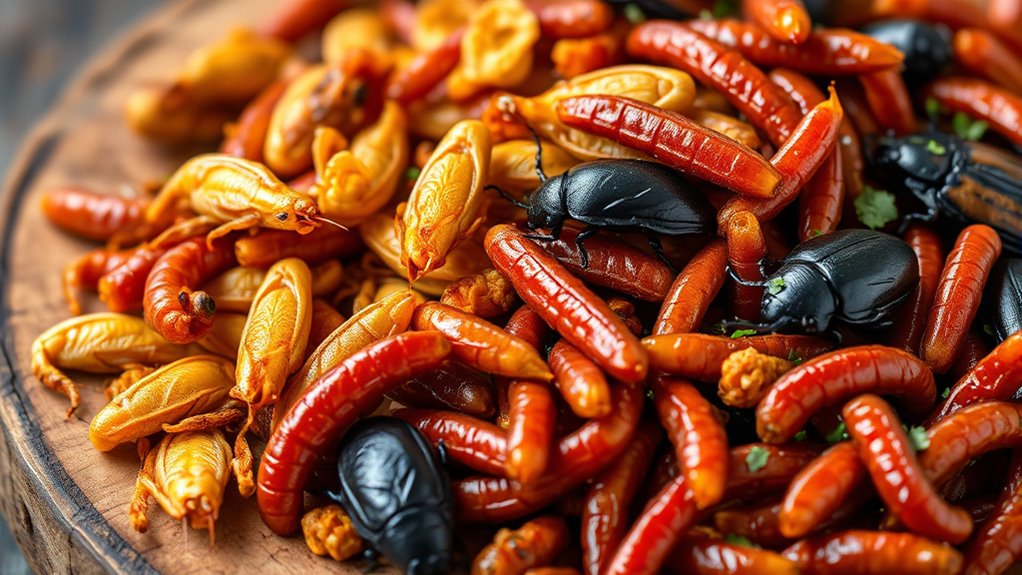
As the world seeks sustainable food sources, edible insects are gaining recognition as a nutritious and eco-friendly option. They offer a promising solution to meet the increasing global demand for protein without overburdening our environment. Unlike traditional livestock, insects require considerably less land, water, and feed, making them an efficient choice for sustainable farming. This shift toward insect consumption hinges on how we develop and implement insect farming techniques that are both effective and ethical.
You might wonder how insect farming fits into sustainable farming practices. Well, insect farming involves raising insects in controlled environments, often in vertical farms or specialized facilities that maximize space and minimize resource use. These techniques allow for year-round production, reducing the dependence on seasonal cycles and ensuring a reliable protein source. By adopting insect farming techniques that emphasize clean, contained, and scalable environments, farmers can produce large quantities of insects with minimal environmental impact. This method also reduces waste, as insects can efficiently convert organic waste into high-protein biomass, further supporting sustainability.
Insect farming techniques are evolving quickly, focusing on optimizing growth rates, feed efficiency, and health management of the insects. Innovations include automated systems for temperature control, humidity regulation, and feeding schedules, which improve productivity and reduce labor costs. Many farms are now exploring sustainable feed options, like agricultural byproducts, which lowers costs and decreases reliance on conventional feed ingredients like soy and grains. These advancements not only make insect farming more profitable but also more environmentally friendly.
You’ll find that insect farming is scalable, adaptable, and increasingly integrated into the broader food system. Small-scale entrepreneurs are using innovative methods to raise insects at home or in community settings, while large commercial operations are investing in automated, high-density farming setups. This versatility allows for localized production, reducing transportation emissions and supporting local economies. Additionally, electric vehicles are being considered for the distribution of insect-based products, further lowering carbon footprints. As you consider the future of food, insect farming techniques stand out as a practical way to produce high-quality protein sustainably.

Don Bugito Planet-Friendly Edible Insect Protein Snacks (Chili-Lime Crickets)
- Brand Name: Don Bugito
- Location: San Francisco
- Product Focus: Planet-friendly protein snacks
As an affiliate, we earn on qualifying purchases.
As an affiliate, we earn on qualifying purchases.
Frequently Asked Questions
Are Edible Insects Safe for People With Shellfish Allergies?
If you have shellfish allergies, eating edible insects may pose a risk due to allergen cross reactivity, since insects and shellfish share similar proteins. You should consult food safety regulations and speak with an allergist before trying insects. While some insects are safe for most, individual reactions vary, so it’s vital to approach insect-based foods cautiously and stay informed about allergen labeling and potential risks.
How Are Edible Insects Farmed Sustainably at Large Scales?
You can farm edible insects sustainably at large scales by implementing eco-friendly practices like recycling waste as feed and optimizing temperature and humidity controls. Using automated systems for large-scale insect cultivation reduces resource consumption and labor costs. This approach minimizes environmental impact, conserves water, and decreases greenhouse gas emissions. Sustainable farming practices guarantee a steady supply of protein while protecting ecosystems, making large-scale insect cultivation a viable and responsible solution for future food needs.
What Are the Cultural Barriers to Adopting Insect-Based Diets?
Cultural acceptance faces hurdles because traditional taboos often view insects as unappealing or unclean. You might feel uneasy about trying insect-based foods due to ingrained perceptions or societal norms. Overcoming these barriers requires education and exposure, showing that edible insects are nutritious and sustainable. Once you see their benefits and become more familiar with them, your willingness to embrace insect-based diets could increase markedly.
Can Edible Insects Effectively Replace Traditional Livestock Protein?
Think of it this way: edible insects can indeed replace traditional livestock protein, and they do so effectively. You’ll benefit from their nutritional benefits, like high-quality protein, vitamins, and minerals. Plus, they have a lighter environmental impact, requiring less land, water, and feed. Incorporating insects into your diet can help meet global protein demands sustainably, making them a practical alternative to conventional meat sources.
How Do Edible Insects Impact Local Ecosystems and Biodiversity?
You might worry that harvesting edible insects could cause insect habitat disruption, but responsible practices minimize this risk. By focusing on sustainable insect farming and wild collection methods, you help preserve biodiversity conservation efforts and protect local ecosystems. When done carefully, insect harvesting can reduce pressure on traditional livestock and support ecological balance, ensuring that biodiversity remains intact while you benefit from a nutritious, eco-friendly protein source.
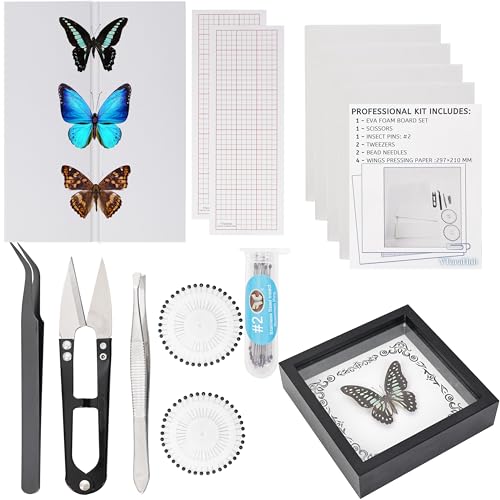
Insect Specimen Tools Kit – EVA Foam Pinning Board, Coordinate Paper, Wings Pressing Paper, Insect Pins & Butterfly Pins, Complete Entomology Kit for Beginners (Black Display Case Box Kit)
- Display Case Material: Wooden frame with acrylic cover
- Protection Features: Dust, moisture, UV resistant
- Pinning Support: High-density EVA foam board
As an affiliate, we earn on qualifying purchases.
As an affiliate, we earn on qualifying purchases.
Conclusion
Imagine a future where bugs are your everyday meal, transforming the way we see food and sustainability. Edible insects could be the key to feeding a growing world without draining our planet’s resources. As you consider this possibility, remember that change often starts with a single bite. Embrace the idea of edible insects not just as a novelty, but as a delicious, eco-friendly solution that could shape tomorrow’s plates. The question is: are you ready to take a bite?
As an affiliate, we earn on qualifying purchases.

Reptilian Arts Dubia Roaches Live Feeder Insects Medium (1/2"), 50, Count
- Nutrient-Rich Feeders: Packed with essential nutrients for reptiles
- Easy to Handle: Cannot fly, jump, or climb smooth surfaces
- Minimal Odor: Raised on fruit and grain diet for less smell
As an affiliate, we earn on qualifying purchases.
As an affiliate, we earn on qualifying purchases.
Baby shower & registry season Picks
baby registry must-haves
As an affiliate, we earn on qualifying purchases.