
Ancient grains like quinoa, amaranth, millet, and farro are making a strong comeback thanks to their impressive health benefits and versatility. You’ll find they’re packed with nutrients, including fiber, protein, and essential minerals, helping you eat healthier. They’re easy to prepare with simple techniques like rinsing, toasting, and simmering, making them perfect for salads, soups, and bowls. Keep exploring to discover how easily these wholesome grains can transform your meals and boost your health.
Key Takeaways
- Ancient grains like quinoa, amaranth, millet, and farro are experiencing a resurgence among health-conscious consumers.
- They offer nutrient-dense benefits, including high levels of fiber, protein, vitamins, and minerals.
- Proper preparation, such as rinsing and toastings, enhances flavor and maximizes nutritional value.
- These grains are versatile, ideal for salads, soups, bowls, and various healthy dishes.
- Their revival supports the trend toward healthier, more nourishing eating habits.

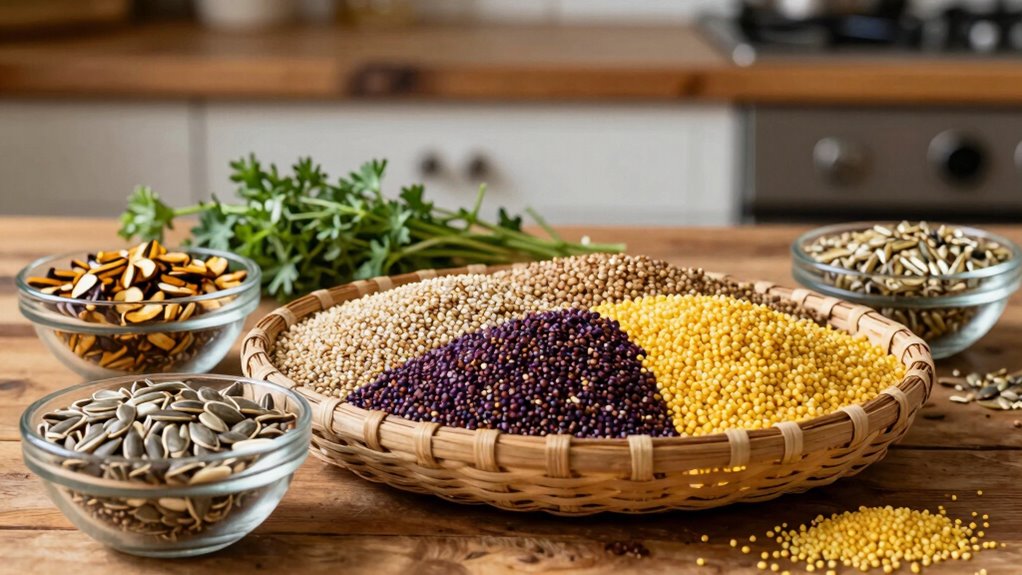
In recent years, ancient grains have experienced a remarkable resurgence as health-conscious consumers seek nutrient-dense alternatives to modern staples. These grains, like quinoa, amaranth, millet, and farro, are packed with vital nutrients, making them popular choices for those aiming to boost their diet’s quality. You might be surprised how these grains can elevate your meals, providing both flavor and health benefits. To get the most out of them, understanding grain nutrition and proper cooking techniques is essential.
Ancient grains are rich in fiber, protein, vitamins, and minerals, often surpassing their modern counterparts. For example, quinoa is a complete protein, containing all nine essential amino acids, while amaranth offers high levels of magnesium and iron. When you incorporate these grains into your diet, you’re not just adding variety—you’re considerably improving your nutritional intake. However, unlocking their full potential requires knowing the right cooking techniques. Many of these grains, unlike rice or wheat, have unique preparation methods that guarantee they retain their texture, flavor, and nutritional value.
Ancient grains are nutrient-rich superfoods that boost your diet’s health benefits.
For most ancient grains, thorough rinsing before cooking is necessary to remove any residual saponins or dirt. Quinoa, for instance, benefits from rinsing to eliminate its natural bitter coating. Cooking techniques vary depending on the grain. Quinoa and millet require a 2:1 water-to-grain ratio and typically take about 15 minutes to cook, while farro and barley might need more water and longer simmering times. Using a saucepan with a tight-fitting lid helps trap steam, making sure they cook evenly. For a fluffier texture, you can let the grains sit covered for a few minutes after cooking. You might also consider toasting grains like amaranth or millet briefly before boiling—they develop richer flavor and enhance grain nutrition by releasing more aroma and nutrients.
Mastering these cooking techniques allows you to maximize the nutritional benefits of ancient grains while achieving appealing textures and flavors. Incorporate them into salads, soups, or as a base for bowls; their versatility makes them easy to include in your everyday meals. With proper preparation, you’ll find that ancient grains are not only wholesome but also delicious, adding depth and variety to your diet. Embracing these grains is more than a trend—it’s a smart move toward healthier eating, guaranteeing you get the most nutrients from every bite.
Top picks for "ancient grain back"
Open Amazon search results for this keyword.
As an affiliate, we earn on qualifying purchases.
Frequently Asked Questions
How Do Ancient Grains Compare Nutritionally to Modern Grains?
You’ll find that ancient grains generally offer more nutritional benefits compared to modern grains. They’re rich in fiber, protein, vitamins, and minerals, making them a healthier choice for your diet. In a grain comparison, ancient grains like quinoa and amaranth often have higher antioxidant levels and better nutrient profiles. Incorporating these grains can boost your overall health, providing a more balanced and nutrient-dense option than many modern grains.
Are Ancient Grains Suitable for People With Gluten Sensitivities?
Yes, ancient grains like quinoa and amaranth are suitable for people with gluten sensitivities because they are naturally gluten-free. If you have dietary restrictions, these grains offer excellent gluten-free options that can be incorporated into your meals. Just make sure to check labels and buy from reputable sources to avoid cross-contamination. They provide nutritious, tasty alternatives to wheat and barley, supporting your gluten-free lifestyle effortlessly.
What Are the Best Ways to Incorporate Ancient Grains Into Daily Meals?
Think of ancient grains as hidden gems waiting to elevate your meals. To incorporate them, try grain substitution in salads, soups, or stir-fries for added texture and nutrition. Meal prep tips include cooking large batches of quinoa or amaranth, then storing them for quick use during the week. Mix these grains into breakfast bowls or use them as a base for veggie bowls, making healthy eating both simple and delicious.
How Sustainable Is the Cultivation of Ancient Grains Globally?
You’ll find that the cultivation of ancient grains is generally sustainable because it has a lower environmental impact compared to some modern crops. These grains often promote crop diversity, reducing the risk of pests and soil degradation. By choosing ancient grains, you support farming practices that are eco-friendly and help preserve biodiversity, making their global cultivation a positive step toward sustainable agriculture and healthier ecosystems.
Can Ancient Grains Help With Specific Health Conditions or Dietary Goals?
You can use ancient grains like quinoa to support digestive health and blood sugar regulation. For example, a person incorporating quinoa into their diet may notice improved digestion and more stable blood sugar levels. These grains are high in fiber and protein, which help slow digestion and prevent spikes in blood sugar. By adding them to your meals, you can effectively meet specific health goals and enhance overall well-being.
Conclusion
As you embrace ancient grains like quinoa and amaranth, you’re not just nourishing your body but reconnecting with centuries of tradition. Some believe these grains hold the secret to better health and sustainability, a theory backed by their nutrient density and eco-friendly farming. By choosing them, you’re part of a movement that honors the past while shaping a healthier future. So, trust in this timeless revival—your body and the planet will thank you.