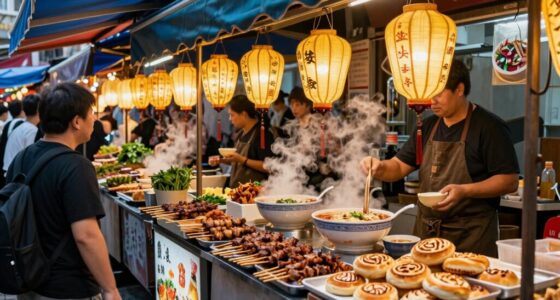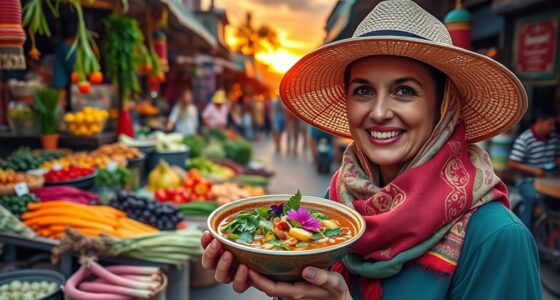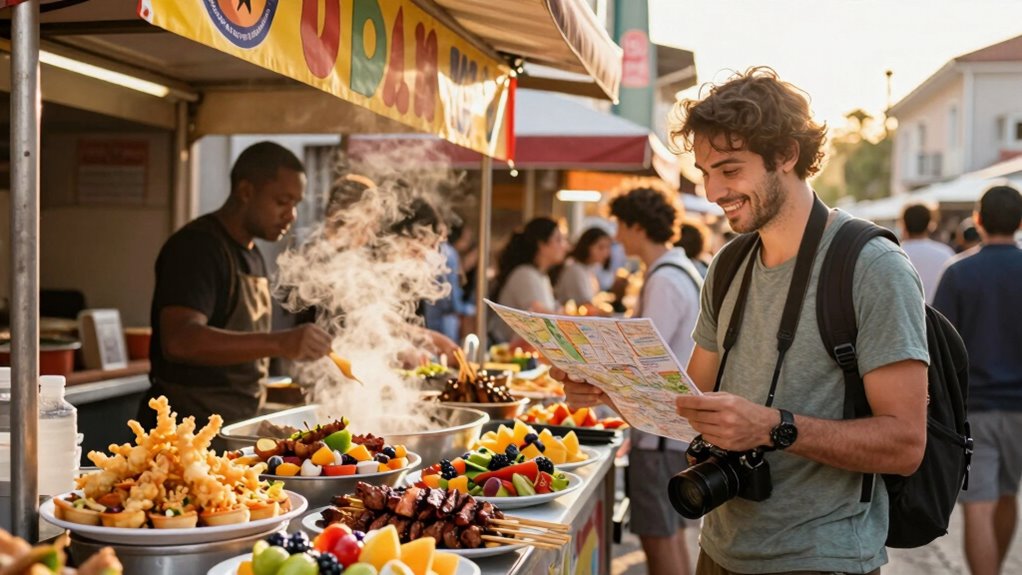

To build a food-focused itinerary without burning out, prioritize must-try regional dishes and authentic experiences while leaving room for spontaneous discoveries. Plan key activities like market visits and cooking classes, but avoid cramming your schedule. Pay attention to your body—hydrate, rest, and savor each bite—so you stay energized and engaged. Balancing activity and downtime helps you enjoy every moment fully. If you keep these tips in mind, you’ll create a memorable culinary journey.

Get kitchen staples and gadgets delivered free with Prime
- Fast, free delivery on millions of items
- Prime Video, Amazon Music and more included
- Member-only deals all year
Key Takeaways
- Prioritize must-try regional dishes and authentic experiences over quantity to prevent overwhelm.
- Schedule food activities with ample downtime and spontaneous exploration to maintain a relaxed pace.
- Balance structured experiences, like cooking classes, with free time for local discovery and rest.
- Listen to your body, stay hydrated, and skip meals if feeling overwhelmed or exhausted.
- Incorporate regional context and environment to deepen understanding without overextending.
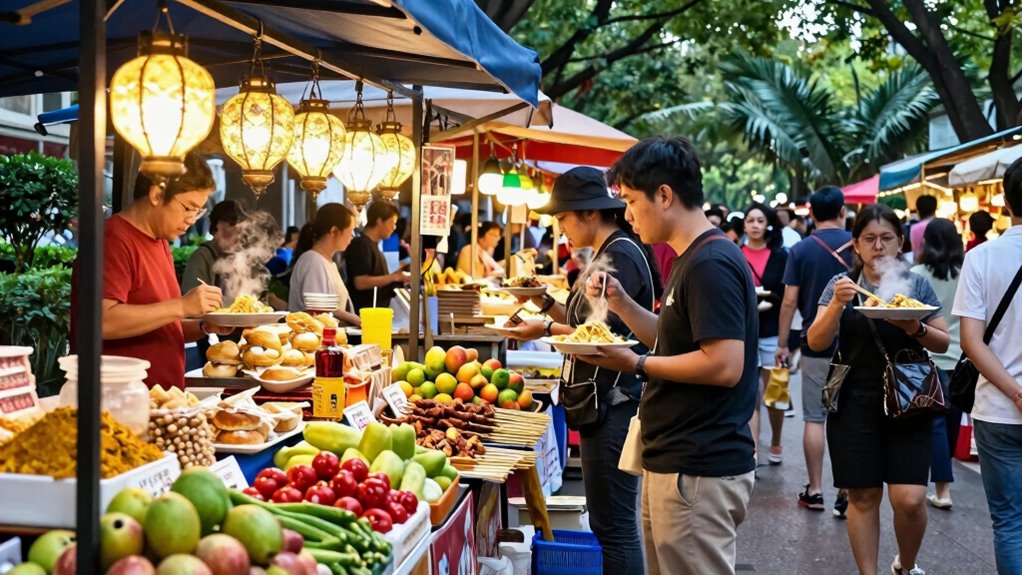
Planning a food-focused itinerary can transform your trip into a culinary adventure you’ll never forget. When you immerse yourself in exploring a new destination through its cuisine, you get a genuine taste of its culture, history, and people. To do this effectively, start by researching the culinary traditions that define the region. Every place has its unique flavors, cooking techniques, and signature dishes that tell a story about its heritage. Understanding these traditions helps you prioritize what to try and guarantees you’re not just sampling random foods but engaging with the authentic culinary identity of the area.
Start your culinary journey by researching regional flavors, techniques, and signature dishes to truly connect with local food culture.
Next, make a list of the local markets you want to visit. Local markets are treasure troves of culinary tradition—they’re where fresh ingredients, local spices, and regional specialties come together. Visiting these markets gives you an immersive experience, allowing you to see, smell, and taste the ingredients that form the backbone of local dishes. Don’t just stick to the main markets; seek out smaller, neighborhood stalls or night markets that might offer lesser-known but equally delicious bites. Interacting with vendors can provide insider tips on must-try foods and hidden gems, enriching your culinary journey.
As you plan your days, balance your food adventures with some downtime to prevent burnout. It’s tempting to cram in as many tastings as possible, but overloading can turn your trip into a stressful race rather than an enjoyable experience. Instead, schedule a few key experiences each day, like a cooking class, a guided food tour, or a meal at a highly recommended restaurant. Leave room for spontaneous discoveries and local favorites that you stumble upon. Remember, sometimes the best bites are the ones you encounter unexpectedly. Incorporating knowledge about regional cuisine can help you better understand the context and significance of the dishes you try, making each tasting more meaningful.
Keep your pace steady and listen to your body. If you’re feeling overwhelmed or full, it’s okay to pause or skip a meal. Hydrate regularly, especially if you’re tasting spicy or rich foods, and don’t forget to savor each bite. Building a food-focused itinerary isn’t about ticking off as many dishes as possible; it’s about savoring quality, engaging with local traditions, and creating lasting memories. To deepen your understanding of the culinary scene, consider exploring the region’s biodiversity, which influences the availability and flavor of local ingredients. Being mindful of the local environment can help you better appreciate the seasonal and regional variability in ingredients, enriching your culinary experience. By thoughtfully selecting your culinary experiences and respecting your limits, you’ll enjoy a rich, flavorful journey without the exhaustion. Ultimately, the goal is to have fun, learn, and leave with a deeper appreciation for the region’s food culture—without burning out along the way.
As an affiliate, we earn on qualifying purchases.
Frequently Asked Questions
How Can I Balance Food Experiences With Sightseeing?
To balance food experiences with sightseeing, plan your culinary adventures around key attractions, allowing time to enjoy local culinary traditions without rushing. Prioritize restaurants known for authentic food presentation, and schedule meals at different times to avoid fatigue. Mix shorter tasting sessions with longer sightseeing, so neither feels overwhelming. This way, you savor the flavors and sights, creating a well-rounded experience that’s both delicious and memorable.
What if I Have Dietary Restrictions?
Dealing with dietary restrictions demands diligent detail and careful planning. You can comfortably cater to allergies and dietary accommodations by researching reputable restaurants ahead, communicating your needs clearly, and seeking allergy-friendly options. By balancing bold, beneficial choices with mindful meal management, you guarantee your food adventures remain flavorful and safe. Prepare proactively, prioritize your health, and pursue pleasurable eats without the pressure—making every meal memorable and manageable.
How Do I Avoid Overeating During Food Tours?
To avoid overeating during food tours, practice mindful eating by paying attention to your hunger cues and savoring each bite. Use portion control by sharing dishes or ordering smaller portions, which helps you enjoy more variety without overstuffing. Stay hydrated and eat slowly, giving your body time to signal when you’re full. This approach keeps you satisfied without feeling overwhelmed, allowing you to enjoy the experience fully.
Should I Schedule Rest Days Between Food Activities?
Yes, you should schedule rest days between food activities to keep your energy high. Rest day planning helps prevent exhaustion and guarantees you can fully enjoy each tasting experience. Pacing your food activities with breaks allows your body to recover and keeps your enthusiasm alive. Don’t underestimate the power of a well-placed rest; it’s the secret to making your culinary adventure memorable and sustainable.
How Can I Discover Hidden Local Food Spots?
You can uncover hidden local food spots by exploring local food markets and joining street food tours. Start your day at bustling markets where vendors sell authentic dishes, and ask locals for their favorites. Street food tours are great for discovering off-the-beaten-path eateries, offering insider tips and tastings. These experiences help you connect with the culture and find unique bites that aren’t listed in guidebooks, making your culinary adventure memorable.
As an affiliate, we earn on qualifying purchases.
Conclusion
Crafting a food-focused itinerary is like weaving a flavorful tapestry, where each stop adds a new vibrant thread. Keep your pace steady, savor every bite, and listen to your body’s rhythm. Remember, this journey is about delight, not exhaustion. When you balance exploration with rest, your culinary adventure becomes a delicious melody, not a chaotic noise. So, savor each moment, and let your love for food be the compass guiding you to a truly memorable experience.
As an affiliate, we earn on qualifying purchases.
As an affiliate, we earn on qualifying purchases.
NFL season / tailgating Picks
team gear
As an affiliate, we earn on qualifying purchases.