Parchment paper is a versatile tool to simplify cooking and cleanup. To prevent sticking, cut it precisely to fit your sheet and smooth out wrinkles for even baking. Use it to easily transfer decorated cookies or handle sticky doughs. Create templates by cutting shapes or lines for uniform results. Folding or lining surfaces with parchment reduces mess and saves time. Discover more clever tricks to make your baking easier and more professional as you uncover all its uses.
Key Takeaways
- Cut parchment precisely to fit baking sheets, preventing curling and ensuring even baking and browning.
- Fold or shape parchment to create easy-to-handle packets for steaming or roasting foods.
- Use parchment as a decorating surface for icing, then fold to contain mess and crumbs for quick cleanup.
- Cut shapes or templates from parchment to aid in decorating, shaping dough, or transferring delicate baked goods.
- Reuse parchment for multiple tasks like lining sheets, shaping dough, and decorating to streamline your baking process.
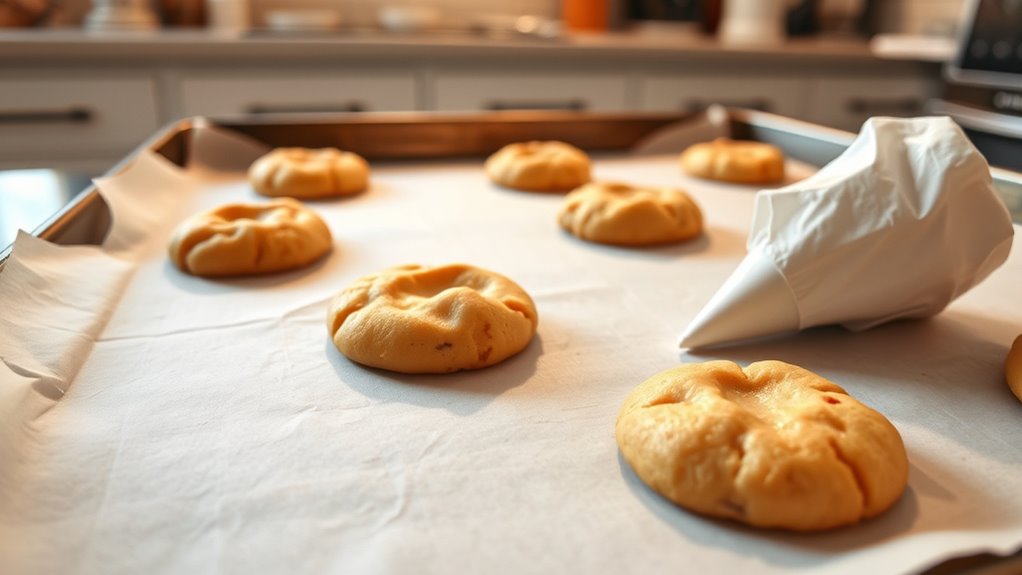
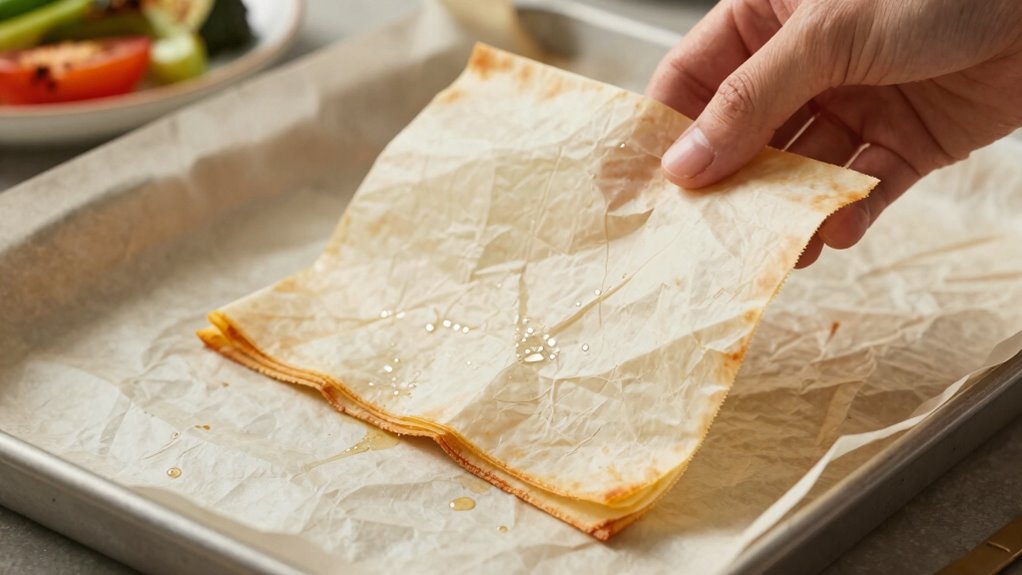
Parchment paper is a versatile tool that can make your cooking and baking much easier, but many people don’t realize there are several simple tricks to get the most out of it. One of the most common uses is for baking sheet prep. Before you start baking cookies or roasting vegetables, lining your sheet with parchment helps prevent sticking and makes cleanup a breeze. To guarantee your baked goods come off easily, cut the parchment to fit your sheet precisely, avoiding excess that can curl or burn. When placing the parchment, smooth it out so there are no wrinkles, which can cause uneven baking. For cookies, this not only helps with easy removal but also promotes even browning. When you’re preparing to decorate cookies, parchment plays an essential role. Once baked and cooled, you can use it as a surface for cookie decorating, especially if you’re working with royal icing or melted chocolate. The smooth surface helps you pipe clean lines and intricate designs without the cookies sticking or smudging. If you want to get perfect, professional-looking decorations, place your cookies on a sheet of parchment laid over a flat surface—this keeps everything steady and provides a clean workspace.
Another trick for cookie decorating involves using parchment as a piping surface or template. After piping your designs, you can slide the parchment onto a baking sheet and refrigerate the cookies for the icing to set without disturbing the design. This technique helps maintain detail and reduces smudges. Plus, parchment makes it easy to transfer decorated cookies onto plates or trays without damaging the icing. When you’re done, simply fold up the parchment to contain any stray icing or crumbs, making cleanup quick and tidy.
For more advanced baking, you can even use parchment to create templates for decorating or shaping dough. Cut out shapes or patterns from parchment, then trace or cut into your dough for consistent results. This trick works well for cookies, tarts, or other pastries where uniformity matters. Additionally, parchment is a perfect surface for rolling out dough, preventing sticking and allowing you to lift and transfer shapes easily. It’s especially helpful when working with sticky doughs or delicate pastries.
Frequently Asked Questions
Is Parchment Paper Safe for Microwave Use?
Yes, parchment paper is microwave safe because it has good heat resistance and can handle microwave temperatures without catching fire or releasing harmful chemicals. When using it in the microwave, make sure it doesn’t touch the microwave walls or heating elements, and avoid using it with high-fat foods that might cause smoke. Always check the packaging for microwave safety instructions to guarantee safe and effective use.
Can Parchment Paper Be Reused Multiple Times?
You can reuse parchment paper a few times if you clean it properly and it remains in good condition. To do this, carefully remove food residue and wipe it down after each use. Keep an eye out for tears or excessive wear, as damaged parchment shouldn’t be reused. Reusing parchment saves money and reduces waste, but always prioritize safety and make sure it’s clean and intact before reusing.
How Do I Prevent Sticking When Using Parchment Paper?
Imagine your baking surface as a smooth, gliding dance floor—if you want your cookies to twirl freely, apply a light touch of non-stick coating or use high-quality parchment paper. To prevent sticking, guarantee the paper is fresh and not overly greasy, and avoid overcrowding your baking sheet. Properly prepared parchment creates a reliable barrier, allowing your baked goods to release effortlessly and keep your baking surface pristine.
What Are Alternatives to Parchment Paper for Baking?
If you’re looking for alternatives to parchment paper, try silicone baking mats—they’re reusable and prevent sticking effectively. Aluminum foil is another option; just lightly oil it to avoid sticking and make certain easy removal. Both options work well for baking, roasting, and lining pans. Silicone mats are especially eco-friendly and cost-effective over time, while foil is convenient for quick, simple tasks. Pick the one that suits your needs best.
How Do I Dispose of Used Parchment Paper Safely?
You might wonder about safely disposing of used parchment paper. First, check if it’s biodegradable—if it’s free from food residue, you can compost it or dispose of it in your green waste. However, if it’s heavily soiled, it’s best to follow your local recycling guidelines or toss it in the trash. Be cautious, as not all parchment paper is recyclable, so reading labels is vital before discarding.
Conclusion
Now that you know these parchment paper tricks, cooking becomes a breeze—less mess, less stress. Think of parchment as your secret weapon, turning chaos into calm with just a simple sheet. Imagine every dish gliding off effortlessly, leaving cleanup behind like a distant memory. With these tips, you’ll wonder how you ever cooked without it. So go ahead, embrace the magic of parchment paper—your kitchen’s new best friend waiting to transform your cooking adventures.