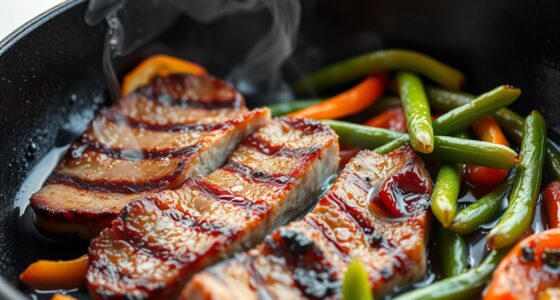
To get that perfect finish, use your oven’s high heat or broil function at just the right moment. Typically, you’ll apply these finishing touches near the end of baking to develop a golden crust or crisp surface. Keep an eye on your food to prevent burning, and remove it when it reaches your desired color and texture. If you want to master timing tips and safety tricks, there’s more to discover on this process.
Key Takeaways
- Use oven finishing techniques like broiling or high heat near the end of baking for crisp, golden-brown crusts.
- Preheat the oven properly to ensure even heat distribution before applying finishing steps.
- Monitor baked goods visually and remove when desired color and texture are achieved, avoiding burning.
- Reserve broiling for quick, intense heat bursts to caramelize surfaces and enhance appearance.
- Adjust timing based on oven performance and specific recipes to achieve consistent, perfect results.
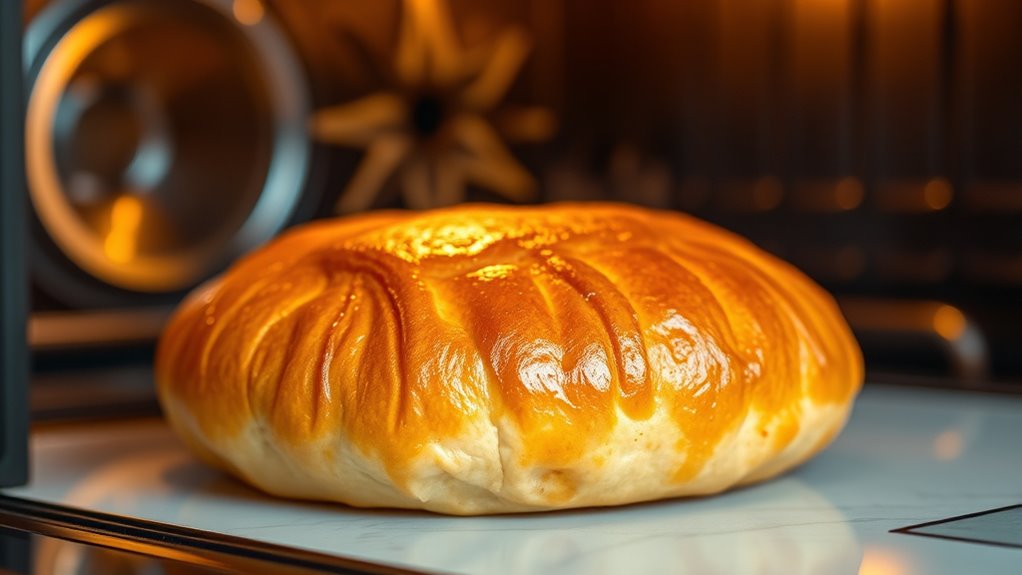
Have you ever wondered how to achieve that perfect, crispy finish on your baked goods? The secret often lies in the right oven finishing technique. Knowing when and how to use your oven for that final touch can elevate your baking from good to exceptional. To do this effectively, you need to master specific baking techniques and prioritize oven safety, making certain your creations come out perfectly without accidents or mishaps.
First, understanding the role of oven finishing involves recognizing the importance of proper baking techniques. For instance, many baked goods benefit from a high-temperature blast at the end of the baking process. This quick burst of heat helps develop a golden-brown crust and adds that satisfying crunch you crave. Before cranking up your oven, make sure your oven is preheated to the right temperature, as this ensures even cooking and prevents underbaking or burning. Pay attention to your recipe’s instructions—some may recommend finishing with a broil, which introduces direct heat from above to create a caramelized, crispy surface. When using the broiler, keep a close eye to avoid burning your food, and always use oven mitts to protect your hands.
Proper oven finishing involves preheating, high heat, and careful broiling for that perfect crispy, golden crust.
Oven safety is essential during these finishing steps. Never leave the oven unattended when broiling or using high heat; a moment of distraction can lead to burnt food or even a fire. Use oven-safe tools and racks, and ensure your oven is free of any flammable materials. Ventilate the kitchen well, especially if you’re broiling, as this process can produce smoke or strong odors. Also, check that your oven’s temperature controls are functioning correctly to prevent overheating, which could cause uneven finishes or damage your baked goods. Regular maintenance, like cleaning the oven and inspecting door seals, helps avoid safety hazards and guarantees consistent heat distribution.
Timing is everything. Many bakers make the mistake of leaving their baked goods in the oven too long or not long enough. To get that perfect crispy finish, remove items once they reach the desired color and texture. For bread, a 5-10 minute finishing at high heat or broil can give you that crusty exterior, but watch closely to prevent charring. For pastries and pies, a quick broil at the end can add a glossy, crispy top. Remember to adapt your techniques based on the type of baked good and your oven’s quirks. Every oven behaves differently, so getting familiar with its hot spots and temperature accuracy will help you perfect your oven finishing process.
Frequently Asked Questions
Can Oven Finishing Be Used for All Types of Baked Goods?
Oven finishing isn’t suitable for all baked goods. You should use it mainly for items that benefit from a crispy or browned exterior, like bread or pastries. For delicate baked goods such as cakes or cookies, gentle oven techniques or finishing stages may be better. Always consider the specific recipe and texture you want to achieve, adjusting oven time and temperature accordingly for the perfect finish.
How Does Oven Finishing Affect the Nutritional Content of Food?
A gentle touch during oven finishing helps maintain the food’s natural goodness. You’ll find that using the oven wisely can boost nutritional retention by avoiding overcooking. Cooking methods like baking and roasting gently lock in vitamins and minerals, so you enjoy the full flavor and health benefits. Just keep an eye on timing to ensure your food stays nutritious, flavorful, and perfectly finished every time.
What Are Common Mistakes to Avoid During Oven Finishing?
You should avoid overcooking your dish and uneven browning by closely monitoring the oven during finishing. Don’t rely solely on time; check frequently to prevent overcooking tips from ruining texture and flavor. Use a thermometer if needed, and rotate your dish for even heat distribution. Stay attentive and avoid rushing, so your food gets a perfect finish without burning or uneven browning.
How Can I Tell if My Dish Is Over-Finished in the Oven?
Imagine pulling your lasagna out, only to find it dried out and burnt edges. You know it’s over-finished if the color change turns too dark or charred, or if the surface becomes overly crispy. Use a food thermometer to check temperature indicators—most dishes should reach specific internal temperatures without overdoing it. When you notice these signs, it’s time to remove the dish to prevent further over-frying.
Are There Alternative Methods to Achieve a Similar Finish Without an Oven?
Yes, you can achieve a similar finish with alternative methods like broiling, pan-searing, or using a torch for browning. These finishing techniques help develop a crispy or caramelized exterior without oven use. For example, broiling can quickly brown the top of dishes, while pan-searing creates a flavorful crust. Using a culinary torch allows precise finishing, giving you control over texture and color without relying solely on the oven.
Conclusion
So, next time you’re aiming for that flawless finish, consider giving your dish a gentle, well-timed oven touch. It’s like adding just the right finishing brushstroke—subtle yet impactful. Trust your instincts, and don’t rush the process. With a little patience and the right moment, you’ll achieve a beautifully polished result that’s sure to impress. Remember, sometimes a gentle oven nudge is all you need to bring your creation to perfection.