To keep your knives sharp and safe, store them properly in a knife block, magnetic strip, or with blade guards, and always dry and clean them before storing. Regularly sharpen using a whetstone or electric sharpener, holding the blade at a 15-20° angle, and maintain edges with honing steels between sharpenings. Consistent care extends your knives’ lifespan and boosts performance—learn more tips to keep your knives in top shape.
Key Takeaways
- Store knives properly using knife blocks, magnetic strips, or blade guards to protect blades and prevent accidents.
- Regularly hone knives with a honing steel to realign edges and maintain sharpness between sharpenings.
- Use a quality sharpening stone with appropriate grit; sharpen at a 15-20° angle for a clean, sharp edge.
- Clean and dry knives thoroughly before storage to prevent rust and damage.
- Sharpen knives when cutting performance declines or edges feel dull, using proper techniques and tools.
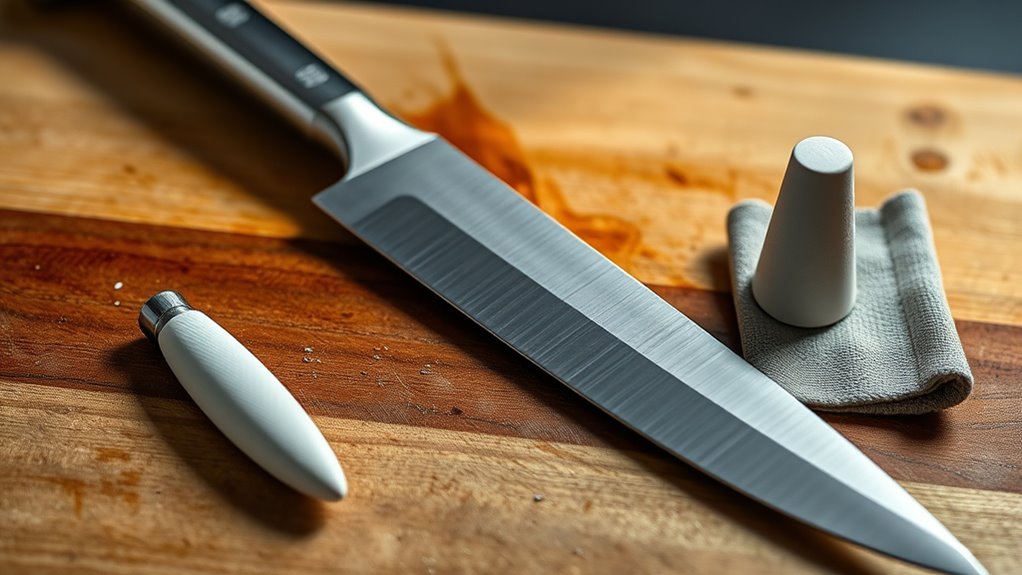
A sharp, well-maintained knife is vital for safe and efficient cooking, but many people overlook proper care. Proper knife storage plays a key role in maintaining your blades’ sharpness and overall condition. Storing knives loosely in a drawer can cause blades to bump and dull quickly, so consider using a knife block, magnetic strip, or blade guard. These options keep your knives protected, prevent accidental injuries, and preserve their edge longer. When storing your knives, make sure they’re dry and clean to prevent rust and corrosion. Proper storage isn’t just about safety; it’s about extending the life of your knives and ensuring they perform at their best every time.
Another key aspect of maintaining sharp knives involves regular sharpening. Investing in good sharpening stones is one of the best ways to keep your blades in top shape. These stones come in different grits, allowing you to sharpen and polish your knives effectively. For daily maintenance, a finer grit stone can restore a smooth edge, while coarser stones are ideal for more significant dullness or nicked blades. When using sharpening stones, wet them with water or honing oil, depending on the type, to reduce friction and debris buildup. Hold the knife at a consistent angle—usually around 15 to 20 degrees—and draw the blade across the stone with steady, even pressure. Repeat this process on both sides until you achieve a sharp, clean edge.
Additionally, understanding the role of proper technology such as honing steels and electric sharpeners can further enhance your knife maintenance routine. It’s important to remember that sharpening isn’t a one-time task; it’s a regular part of knife care. How often you sharpen depends on how frequently you cook and use your knives. A good rule of thumb is to inspect your blades regularly, and if you notice a decrease in cutting performance or roughness when slicing, it’s time to sharpen. Besides sharpening, honing your knives with a honing steel can realign the edge between sharpenings, keeping them razor-sharp longer. Use the steel at a consistent angle, and draw the blade along it with light, controlled strokes. This simple step can make a significant difference in maintaining your knife’s cutting performance and prolonging the intervals between sharpenings.
Frequently Asked Questions
How Often Should I Sharpen My Kitchen Knives?
You should sharpen your kitchen knives every 1-3 months, depending on how often you use them. Regular blade maintenance, like honing, helps keep the edge sharp, but periodic sharpening restores it fully. Pay attention to how your knives perform—if they start slipping or require more pressure, it’s time for a sharpening session. Consistent maintenance guarantees your knives stay safe and effective, making food prep easier and more enjoyable.
What Is the Best Storage Method for Maintaining Knife Sharpness?
Think of your knives as delicate artists; their blades need protection to stay sharp. The best storage method is a knife block, magnetic strip, or blade guards, which keep blades protected from damage and prevent dulling. Proper knife storage guarantees blade protection, reduces friction, and maintains sharpness longer. Always store knives separately or in designated slots to avoid unnecessary wear, helping you keep your knives performing their best.
Can I Sharpen Ceramic Knives at Home?
Yes, you can sharpen ceramic knives at home, but it requires special tools and techniques. Use a ceramic sharpening stone or a diamond-embedded rod designed for ceramic blades for effective ceramic sharpening. Be gentle and consistent to avoid damaging the blade. While home maintenance is possible, consider professional sharpening if you’re unsure, as ceramic knives are more brittle and prone to chipping if not handled properly.
How Do I Prevent My Knives From Rusting?
To prevent your knives from rusting, keep them dry and store them properly. Regularly wipe your stainless steel knives after use, especially if they come into contact with moisture. Apply a light coating of mineral oil or rust-preventive oil on the blades to create a barrier against moisture. Avoid leaving your knives in damp environments, and always dry them thoroughly before storing in a knife block or drawer.
What Are Signs My Knife Needs Professional Sharpening?
If your knife shows signs of blade damage or you notice dullness indicators like difficulty cutting or increased effort, it’s time for professional sharpening. You might also see nicks, chips, or a rough edge that can’t be remedied with honing alone. When these issues persist despite regular maintenance, seeking expert help ensures your knife regains its sharpness and safety, preventing further damage and extending its lifespan.
Conclusion
Taking good care of your knives keeps them sharp and safe to use. Regular sharpening, proper storage, and careful cleaning extend their lifespan and improve your cooking experience. Did you know that a dull knife can slip and cause injuries? Keeping your knives sharp reduces this risk and makes prep work easier. So, follow these simple tips, and you’ll enjoy perfectly sliced meals and safer cooking every time. Happy knife caring!