A double boiler helps you cook delicate ingredients gently and evenly. It uses two stacked pots: the bottom one holds simmering water, and the top holds your ingredients, heating them with steam to prevent scorching or seizing. This setup is perfect for melting chocolate, making custards, or warming sauces. By maintaining consistent, indirect heat, you get smooth, professional results every time. Keep going, and you’ll uncover all the secrets to mastering this versatile technique.
Key Takeaways
- Double boilers provide gentle, indirect heat ideal for delicate ingredients like chocolate and custards.
- Proper setup ensures water in the bottom pot simmers without touching the top bowl, preventing overheating.
- Consistent stirring and temperature control are essential for smooth, evenly melted, or heated results.
- They enhance cooking precision, reducing the risk of scorching or seizing sensitive ingredients.
- Suitable for various tasks, double boilers are vital tools for mastering gentle heat cooking in both professional and home kitchens.
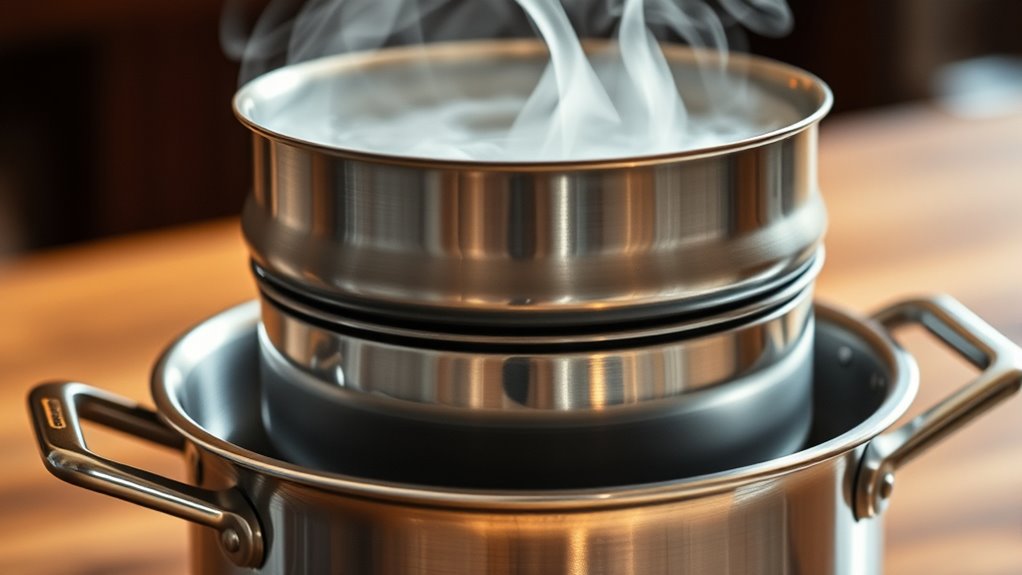
Have you ever wondered how to melt chocolate smoothly or prepare delicate sauces without burning them? That’s where a double boiler becomes your best friend. Using a double boiler allows you to gently heat ingredients by creating a controlled, indirect heat source, which is essential for tasks like chocolate melting and delicate sauces. When you don’t want your chocolate to seize or your sauces to scorch, this method ensures you maintain the right temperature without risking overexposure to direct heat. It’s especially useful when working with substances that require careful handling, helping you achieve silky textures and smooth finishes every time.
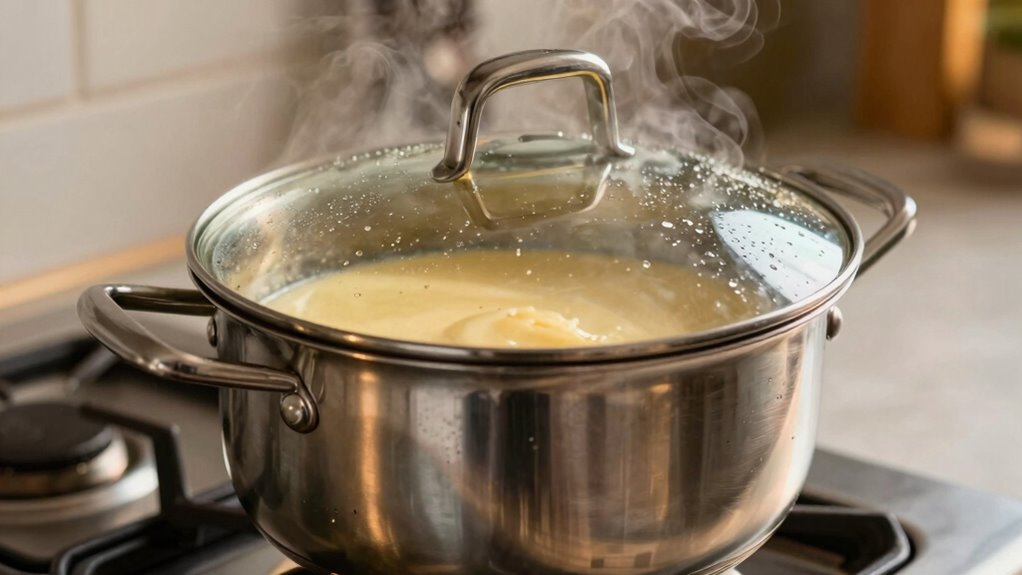
A double boiler consists of two pots: an outer pot filled with water and an inner pot or bowl that sits on top. The water in the bottom pot is heated to a gentle simmer rather than a rolling boil, and the steam heats the upper container evenly. This indirect heat prevents hot spots that can cause burning or curdling, giving you precise control over your cooking process. When melting chocolate, for example, a double boiler ensures the chocolate melts evenly without seizing or developing a grainy texture. Similarly, for delicate sauces like hollandaise or custards, it prevents overheating that could break or scorch the mixture.
Using a double boiler is straightforward. Fill the bottom pot with a few inches of water, making sure the water doesn’t touch the bottom of the top bowl. Bring the water to a simmer over medium heat, then place your ingredients in the top bowl. Stir constantly to promote even melting or blending. The gentle, consistent heat helps maintain the integrity of sensitive ingredients, avoiding the rapid temperature changes that can ruin your recipe. This method also allows you to melt ingredients gradually, giving you better control over the timing and consistency of your finished product.
In addition to melting chocolate and preparing delicate sauces, a double boiler is versatile for other culinary tasks, like tempering chocolate, melting butter, or warming baby food. Its ability to deliver consistent, gentle heat makes it a valuable tool in your kitchen arsenal. Plus, it’s easy to set up with common kitchen items: a heatproof bowl or a smaller saucepan that fits snugly inside a larger one with water. Whether you’re a seasoned chef or a home cook, mastering the use of a double boiler will elevate your cooking, ensuring your creations turn out smooth, creamy, and perfectly textured every time.
Frequently Asked Questions
Can I Use a Double Boiler on Induction Cooktops?
Yes, you can use a double boiler on induction cooktops if both the inner pot and outer container are induction-compatible. Look for cookware with a magnetic base to verify proper heating. If your double boiler isn’t induction-friendly, consider alternative heating methods like a heat diffuser or using a stovetop-safe, induction-compatible pot. This way, you’ll achieve gentle, even heat without damaging your cookware or cooktop.
How Do I Clean a Double Boiler Effectively?
Think of your double boiler as a delicate dance partner—you need gentle steps to keep it shining. To clean it effectively, use warm, soapy water and a soft sponge to remove residue without scratches. For stubborn spots, try baking soda paste and let it sit before scrubbing. Regular maintenance techniques like drying thoroughly prevent rust. With these cleaning tips, your double boiler stays gleaming and ready for its next gentle heat performance.
What Materials Are Best for a Double Boiler?
You should choose stainless steel for your double boiler because it offers excellent material compatibility and durability. Its superior heat conduction guarantees even heating, preventing hot spots that could scorch your ingredients. Aluminum is also a good option, providing quick heat transfer, but it’s less durable and can react with certain foods. Avoid non-metallic materials like plastic or glass, as they don’t conduct heat well and aren’t suitable for double boilers.
How Do I Prevent Water From Splashing Into the Top Bowl?
To prevent water from splashing into the top bowl, guarantee your double boiler fits snugly and the water level stays below the bottom of the upper bowl. Keep the lid slightly ajar to allow steam safety while reducing splashes. Stir gently and avoid rapid boiling, which can cause splashing. These steps help prevent splashing and maintain safe, gentle heat, ensuring your ingredients cook evenly without water contamination.
Can a Double Boiler Be Used for Canning?
Can you use a double boiler for canning? Yes, but proceed with caution. Canning safety demands precise heat distribution, which a double boiler offers gently, reducing the risk of overheating delicate jars. However, double boilers aren’t designed for the high, consistent heat needed for safe canning. Use them only for reheating or melting, and always follow proper canning guidelines to guarantee safety and success.
Conclusion
Now that you’ve mastered the art of double boilers, you can confidently create delicate sauces and melt chocolates without fear of burning. Remember, “a gentle hand makes the best dish,” so always use low heat and patience. With this knowledge, you’re equipped to elevate your cooking, ensuring each recipe turns out smooth and perfect. Keep experimenting and enjoy the process—cooking is an art, and double boilers are your new best tool!