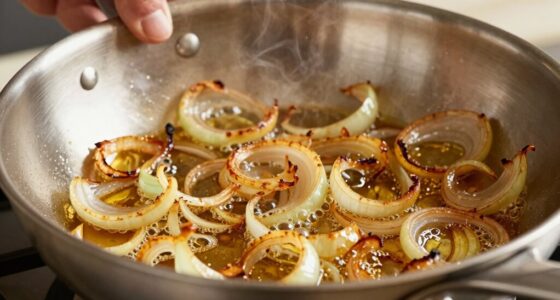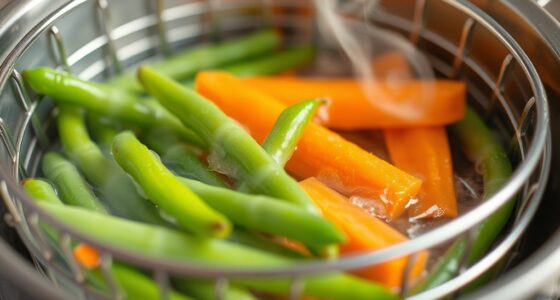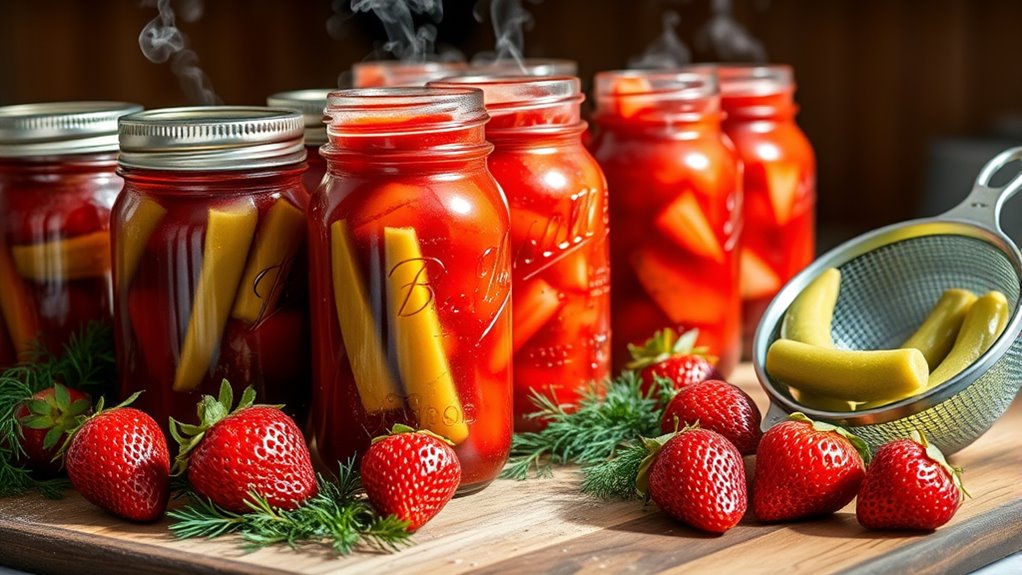

To safely can jam and pickles, start by choosing ripe, high-quality produce and sterilizing your jars and lids thoroughly. Use tested recipes to guarantee safety and proper setting. Pack your jars carefully, leaving the appropriate headspace, and pour hot brine or syrup to remove air bubbles. Process the jars in boiling water for the recommended time to establish a secure vacuum seal. Continuing with these steps helps keep your preserves safe and delicious for months ahead.
Key Takeaways
- Use tested recipes and follow precise cooking and processing times for safety and proper preservation.
- Sterilize jars and lids thoroughly before filling to prevent contamination.
- Ensure high-quality, fresh produce and appropriate acidity levels, especially for pickles.
- Remove air bubbles, leave proper headspace, and process jars in boiling water bath for recommended time.
- Label jars with date and contents, store in a cool, dark place, and check seals regularly for safety.
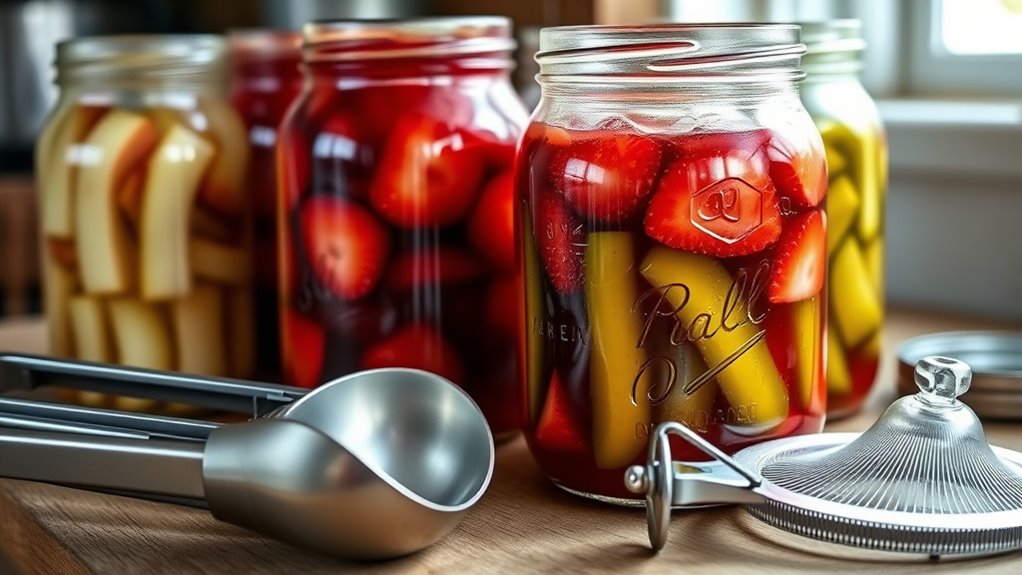
Have you ever wondered how to enjoy the flavors of your garden or seasonal harvest year-round? Canning and preserving are the perfect ways to do just that, especially when it comes to making jam and pickles. Mastering jam making techniques is essential for capturing the fresh taste of your fruits and berries, while also guaranteeing your jars stay safe and delicious over time. When you get started, focus on selecting ripe, high-quality produce and sterilizing your jars and lids thoroughly. Use proper techniques like crushing the fruit evenly and cooking it to the right consistency, all while keeping a close eye on the temperature. Boiling the jars for the correct amount of time creates a vacuum seal that keeps the jam fresh and prevents spoilage. Following tested recipes and precise timing guarantees your jam will set properly and last for months.
When it comes to pickling, safety tips are crucial to avoid foodborne illnesses. Always use fresh vegetables and high-quality vinegar with at least 5% acidity to inhibit bacterial growth. Clean your produce thoroughly and use sterilized jars and lids to prevent contamination. Pack your vegetables tightly in jars, leaving appropriate headspace, and pour hot brine over them, making sure all air bubbles are eliminated. Processing the jars in a boiling water bath for the recommended time ensures a proper seal, which is vital for safety. Remember, not all pickling recipes are safe for water bath processing—always rely on tested recipes from reputable sources.
Throughout the process, pay close attention to cleanliness and proper handling. Wash your hands, utensils, and work surfaces before starting, and avoid touching the inside of jars or lids once sterilized. If any jars don’t seal properly, refrigerate and consume the contents promptly. When storing your preserved goods, keep them in a cool, dark place to extend shelf life and maintain quality. Label each jar with the date and contents so you can enjoy your homemade treats at their peak flavor.
Frequently Asked Questions
How Long Can Canned Jams and Pickles Be Stored Safely?
You can typically store canned jams and pickles safely for up to one year if you follow proper storage guidelines. Keep them in a cool, dark place, away from direct sunlight, to maximize shelf life. Always check for signs of spoilage before consuming, like mold or off smells. Proper sealing and handling are key to ensuring your preserves stay safe and delicious for as long as possible.
Can I Reuse Canning Jars and Lids Multiple Times?
You can reuse canning jars for jar reuse, but always inspect them thoroughly for cracks or chips before reuse. For lid safety, it’s best to use new lids each time, as they create a proper seal and prevent contamination. Reusing lids isn’t recommended because their sealing ability diminishes. If you want to guarantee safe preservation, invest in new lids and carefully inspect jars to keep your jams and pickles safe to enjoy.
What Are Common Signs of Spoilage in Canned Goods?
Think of your canned goods as silent storytellers — if you notice visual spoilage like mold, discoloration, or bubbles, it’s a red flag. Odor indicators are like warning bells; foul or sour smells mean spoilage has taken root. Trust your senses—if anything looks or smells off, it’s best to discard the jar. These signs help protect you from consuming unsafe food, so stay vigilant every time you open a jar.
Is It Safe to Can Low-Acid Foods Without a Pressure Canner?
No, it’s not safe to can low-acid foods without a pressure canner. Low acid foods, like vegetables and meats, require the high temperatures a pressure canner provides to kill bacteria and spores. Using acidification methods, like adding vinegar or lemon juice, won’t reliably make them safe without proper pressure canning. Always follow recommended guidelines to prevent botulism and ensure your canned goods are safe for long-term storage.
How Do I Prevent Mold Growth on Canned Preserves?
Mold can be the uninvited guest that sabotages your canned preserves. To prevent it, always clean your canning jars thoroughly, removing any residue that might encourage mold growth. Use mold prevention techniques like adding appropriate headspace and ensuring a proper seal. Store jars in a cool, dark place, and regularly check for any signs of mold or spoilage. A clean canning process keeps your preserves safe and delicious longer.
Conclusion
Now that you’ve learned the gentle art of canning and preserving, you’re ready to open a world of flavors. With a little patience and care, you can turn simple ingredients into lasting treasures. Remember, every jar holds a story and a taste of tradition, waiting to be shared. Embrace the process, and soon, your pantry will be a cozy haven of homemade goodness—just waiting for you to savor each delightful bite.