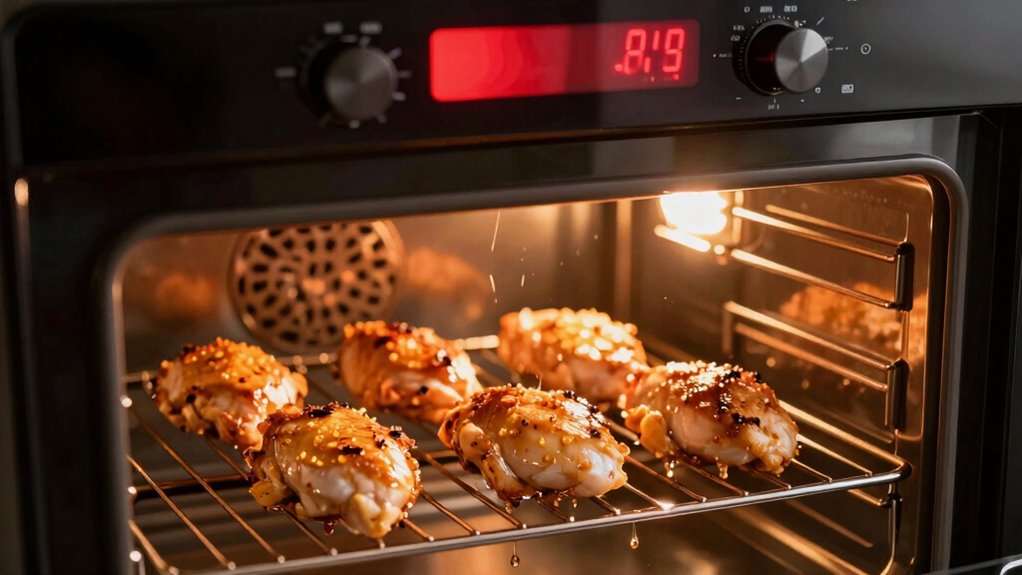
Broiling is a fast, high-heat cooking method that uses direct radiant heat from your oven’s upper element to quickly sear and cook foods. To get the best results, preheat your broiler, position the rack about 4-6 inches from the heat, and keep a close eye on your food to prevent burning. Proper equipment, timing, and safety measures are essential. If you keep exploring, you’ll discover how to master this fiery technique with ease.
Key Takeaways
- Broiling uses high heat from above to quickly cook and brown foods, typically at 500°F–550°F.
- Preheat the broiler for 5 minutes and position the oven rack 4–6 inches from the heat source.
- Use a broiler pan or a baking sheet with a wire rack to allow fats to drain and prevent flare-ups.
- Monitor food constantly with the oven light or window to prevent burning and ensure even cooking.
- Handle hot foods safely with oven-safe tools and maintain proper ventilation to manage smoke and odors.
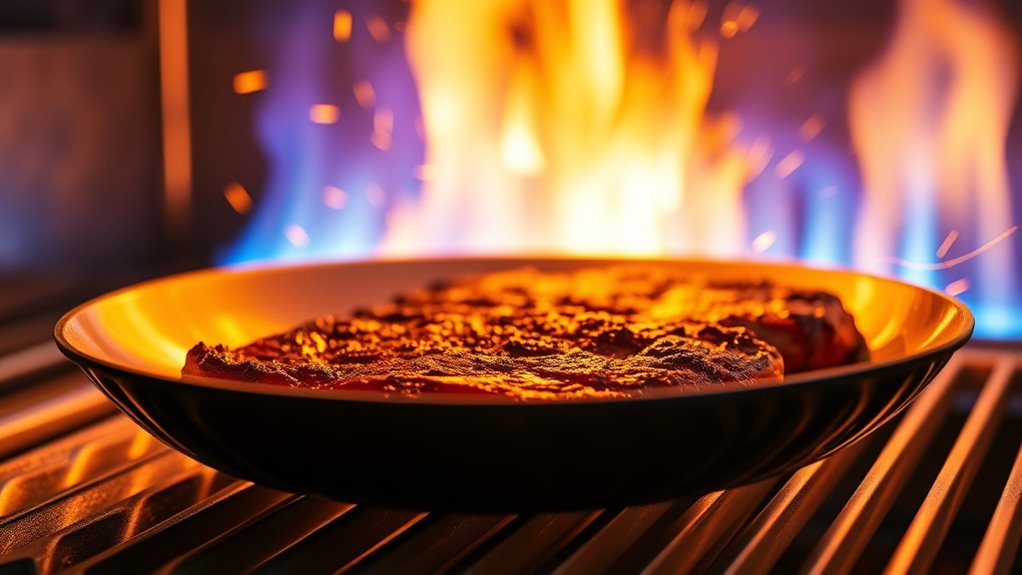
Have you ever wondered how to perfectly cook a meal quickly using your oven’s broiler? Broiling is a high-heat cooking technique that uses direct radiant heat from above to sear, brown, and cook food rapidly. Mastering this method allows you to create restaurant-quality dishes right in your kitchen without needing special equipment or lengthy cooking times. To get started, you’ll need to familiarize yourself with some equipment essentials. Your oven’s broiler is usually located in the top compartment or as part of the oven itself. Make sure you know whether your oven has a dedicated broiler pan or if you’ll need to use a baking sheet with a wire rack. A broiler pan is ideal because it allows excess fat and juices to drain away, preventing smoke and flare-ups. Additionally, investing in a good oven-safe spatula or tongs will help you handle hot foods safely.
Understanding the right cooking techniques is key to successful broiling. First, always preheat your broiler, usually for about 5 minutes, to guarantee it’s at the perfect temperature. Most broilers operate at high temperatures, often between 500°F and 550°F, so your food will cook quickly. Position your oven rack about 4 to 6 inches from the heat source—closer for faster searing, but be cautious not to burn delicate items. When preparing food, pat dry surfaces to promote even browning and avoid excess moisture that can hinder the searing process. Season your ingredients appropriately, as the high heat intensifies flavors and can evaporate moisture rapidly. Being aware of contrast ratio helps you understand how the visual quality of your broiled dishes can be maximized, especially in darker or more complex recipes. Knowing about Free Floating concepts can also help you optimize your workspace and prevent accidents while handling hot equipment. Also, understanding heat transfer principles enables you to better control cooking times and achieve consistent results. Additionally, paying attention to air circulation can improve heat distribution and prevent uneven cooking. Incorporating proper ventilation can help minimize smoke and odors during high-heat cooking. Timing and attention are vital when broiling. Unlike roasting or baking, you need to watch your food constantly to prevent burning. For instance, thin cuts of meat or fish can cook in just a few minutes, so stay nearby. Use your oven’s light and window to monitor progress, and flip or rotate items as necessary to ensure even cooking. If you’re broiling vegetables or cheese-topped dishes, keep a close eye on them, as they can go from perfect to burnt quickly. Keep a spray bottle of water handy to extinguish small flare-ups caused by drips or fat splatters.
Top picks for "broil quick high"
Open Amazon search results for this keyword.
As an affiliate, we earn on qualifying purchases.
Frequently Asked Questions
Can I Broil With a Convection Oven?
Yes, you can broil with a convection oven. Convection benefits include even heat distribution and faster cooking, making it ideal for broiling. To do so, set your oven to the broil setting, often with a convection option available. Keep a close eye on your food, as convection speeds up browning. Adjust your oven settings as needed, and you’ll enjoy delicious, evenly broiled dishes with your convection oven.
How Do I Prevent Food From Burning Under the Broiler?
Prevent burning by paying close attention to your plate, pan, and position. Place your food on a sturdy broiler pan or directly on the oven rack, keeping it a safe distance from the heat source. Keep a keen eye on the food, and don’t wander away. Rotate or flip as needed, and set a timer for timed temptations. This way, you’ll avoid overcooking and achieve perfect, flavorful results.
What’s the Best Way to Broil Vegetables?
To broil vegetables effectively, start with vegetable preparation by cutting them evenly for uniform cooking. Use broiling techniques such as placing them on a preheated, oiled rack or baking sheet close to the heat source. Turn the vegetables halfway through to ensure even browning. Keep a close eye to prevent burning, and season them beforehand for added flavor. This way, you’ll achieve perfectly roasted, flavorful vegetables every time.
How Do I Know When My Broiled Food Is Done?
Think of your food as a story reaching its climax. You’ll know it’s done when it achieves the perfect meat doneness—juicy, tender, and browned. Use a meat thermometer to check the internal temperature, matching it with recommended cooking times for each type. For vegetables, look for a charred, caramelized exterior. Trust your senses—smell, sight, and touch—these clues guide you to the finish line of perfectly broiled food.
Can I Broil Frozen Foods Directly?
You can broil frozen foods directly, but it’s not ideal for frozen meats due to safety concerns. Broiling frozen meats can lead to uneven cooking, increasing the risk of bacteria. For frozen foods, it’s safer to thaw them first to guarantee even heat distribution and proper internal temperatures. Always prioritize frozen food safety by following proper thawing methods before broiling to avoid undercooked or unsafe results.
Conclusion
So, next time you’re craving that perfectly crisp, high-heat finish, remember—broiling is your quick fix. It’s ironic how something so simple can turn a raw piece of food into a gourmet-looking dish in minutes. Just don’t forget: with great power (and heat) comes great responsibility. Keep an eye on your food, or you might end up with a charred masterpiece instead of a delicious one. Happy broiling!