To master a bain-marie, choose a heatproof bowl that fits snugly over a saucepan filled with a few inches of simmering water—avoid direct contact. Keep the water at a gentle simmer, not a boil, and stir your ingredients regularly for even heating. Use sturdy, heavy-bottomed cookware for steady temperature control. Once you get the hang of maintaining gentle, consistent heat, you’ll produce smooth custards, chocolates, and sauces every time. Keep exploring to learn all the tips for perfect results.
Key Takeaways
- Use a heatproof, snug-fitting bowl over a saucepan filled with gently simmering water to ensure even, indirect heat.
- Maintain water temperature at a gentle simmer, avoiding boiling to prevent scorching or curdling.
- Choose heavy-bottomed, heat-resistant cookware like glass, stainless steel, or ceramic for consistent results.
- Regularly stir ingredients and monitor water level and temperature for uniform heating and safe operation.
- Master gentle simmering and proper setup to achieve smooth, professional-quality custards and delicate sauces.
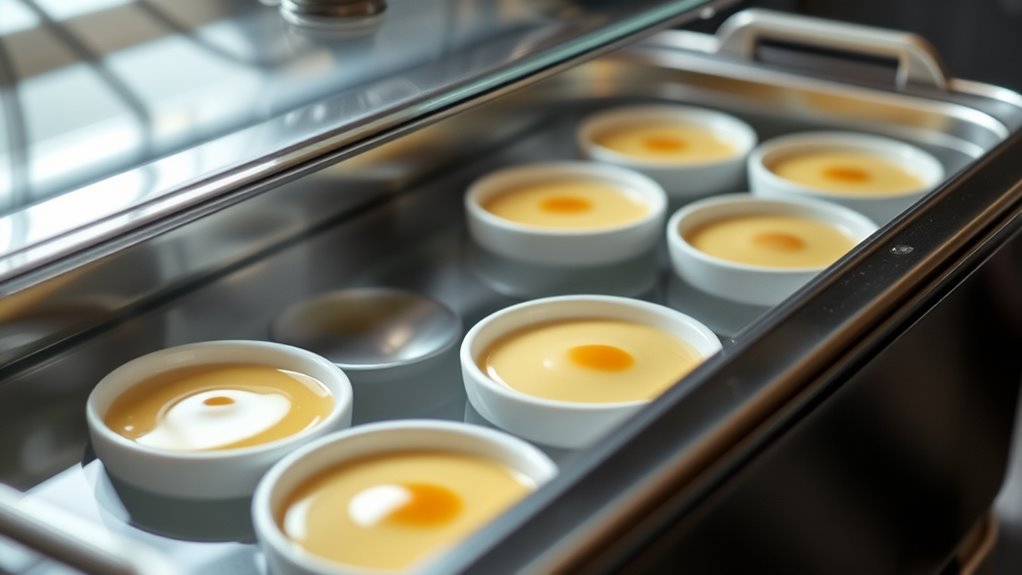
Have you ever wondered how chefs melt chocolate smoothly or keep delicate sauces warm without burning them? The secret often lies in mastering the bain-marie technique—a gentle water bath that guarantees precise temperature control. To do this effectively, you need to pay close attention to your cookware selection. Not all pots and pans are suitable for a bain-marie, so choosing the right ones is vital for consistent results.
When it comes to temperature control, your goal is to create a gentle, even heat that prevents scorching or curdling. The key is using a heatproof bowl that fits snugly over a saucepan filled with simmering water. The bowl shouldn’t touch the water directly; instead, it should sit comfortably above it, allowing steam to transfer heat evenly. This setup gives you the ability to control the temperature precisely, which is essential when working with fragile ingredients like custards, chocolate, or delicate sauces. If the water gets too hot or boils vigorously, it can cause uneven heating or even water to splash into your mixture. To avoid this, keep the water at a gentle simmer—not a rolling boil—and monitor both the water level and temperature throughout.
Choosing the right cookware is equally important. You want a sturdy, heat-resistant bowl made from glass, stainless steel, or ceramic—materials that conduct heat evenly and are safe for indirect heat. The saucepan should be a good fit for your bowl, with enough depth to hold enough water without risking overflow. It’s best to select a saucepan with a heavy bottom, as this helps distribute heat more evenly and prevents hot spots that could cause your ingredients to overheat. Some cooks prefer using specialized double boilers, which are designed specifically for this purpose, but a well-chosen saucepan and heatproof bowl work just as well.
Once you’ve selected the appropriate cookware, you can focus on maintaining consistent temperature control. Keep the water at a gentle simmer, and adjust the heat as needed to avoid boiling. Stir your ingredients gently and regularly for even heat distribution. This combination of thoughtful cookware selection and vigilant temperature control is what makes the bain-marie technique so reliable. Whether you’re melting chocolate, preparing custards, or warming delicate sauces, mastering these fundamentals will help you achieve smooth, professional results every time.
Frequently Asked Questions
Can I Use a Microwave Instead of a Traditional Bain-Marie?
You can’t effectively use a microwave as a substitute for a traditional bain-marie because it’s not designed for gentle, even heating needed for custards. Microwave safety concerns include uneven heat distribution, which can cause curdling or overheating. For alternative heating methods, stick with the water bath to ensure precise temperature control and gentle heat. This way, you avoid risks and get the best results for delicate recipes.
What Are the Best Materials for a DIY Bain-Marie?
A DIY bain-marie is like crafting a cozy nest for delicate dishes. For materials, you want options that are heat-resistant, non-reactive, and durable. Stainless steel and glass are the best choices, as they conduct heat evenly and won’t react with your food. You can also use an oven-safe ceramic or a sturdy metal pan. These materials help you create a reliable, safe, and effective setup for your water bath.
How Do I Prevent My Custard From Curdling in the Water Bath?
To prevent your custard from curdling, monitor its temperature carefully, keeping it around 170°F (77°C). Use water level control by ensuring the water in the bath is hot but not boiling, ideally covering half of the custard container. Stir gently if needed, and avoid sudden temperature shifts, which can cause curdling. Consistent heat and proper water level control are key to smooth, perfect custards.
Is a Bain-Marie Suitable for Melting Chocolate?
Yes, a bain-marie is suitable for melting chocolate because it provides gentle heat and excellent heat control. By placing your chocolate in a heatproof bowl over simmering water, you prevent direct heat that could burn or seize the chocolate. Keep the water at a gentle simmer and stir frequently to guarantee smooth, even melting. This method helps maintain the chocolate’s quality and prevents overheating.
How Do I Clean and Maintain My Bain-Marie Equipment?
Ever wondered how to keep your bain-marie in top shape? To clean it, use warm soapy water and gently scrub the removable parts, avoiding abrasive cleaners. For maintenance tips, regularly check for mineral buildup and drain it thoroughly after each use. Rinse and dry completely to prevent rust. Isn’t it worth taking a few minutes to guarantee your equipment stays efficient and clean? Proper cleaning techniques and ongoing maintenance keep your bain-marie performing like new.
Conclusion
Now that you’ve learned the secrets of the bain-marie, you’re ready to tame even the silkiest custards and delicate sauces. Think of it as your culinary safety net, catching any potential burns or curdles before they happen. With this gentle water bath guiding your creations, you’ll turn simple ingredients into masterpieces that melt in your mouth. Embrace the method, and let your kitchen adventures simmer into something truly extraordinary.