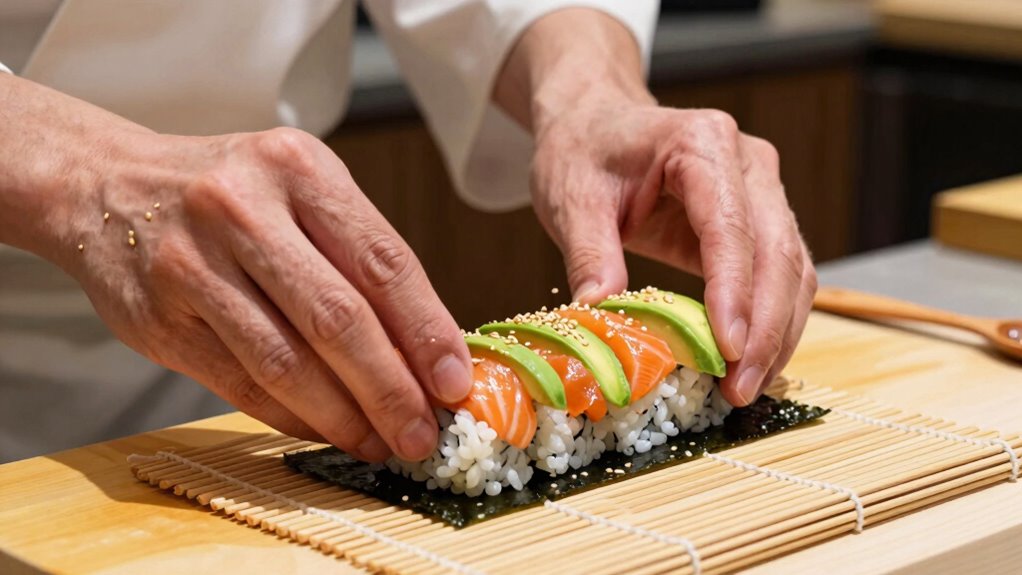

To roll sushi like a pro, start by mastering proper techniques, such as spreading rice evenly, adding the right amount of filling, and rolling tightly with respect for craftsmanship. Pay attention to regional styles and ingredients, and handle everything with cleanliness and care. Incorporate cultural etiquette like gentle handling and organized workspace. Honing these skills reflects authentic practice and personal style, ensuring your sushi looks and tastes amazing. Keep exploring, and you’ll discover even more tips to elevate your sushi game.
Open a free Amazon Business account
Business pricing, bulk buying and tax-exempt orders.
As an affiliate, we earn on qualifying purchases.
Key Takeaways
- Master proper chopstick handling and gentle ingredient handling to show respect for sushi craftsmanship.
- Practice consistent rolling techniques, ensuring tight, well-shaped sushi for professional presentation.
- Incorporate regional ingredients and styles to enhance authenticity and personal flair.
- Maintain cleanliness and organization in your workspace, reflecting proper sushi etiquette and professionalism.
- Balance tradition with creativity by adjusting flavors and presentation while respecting cultural roots.
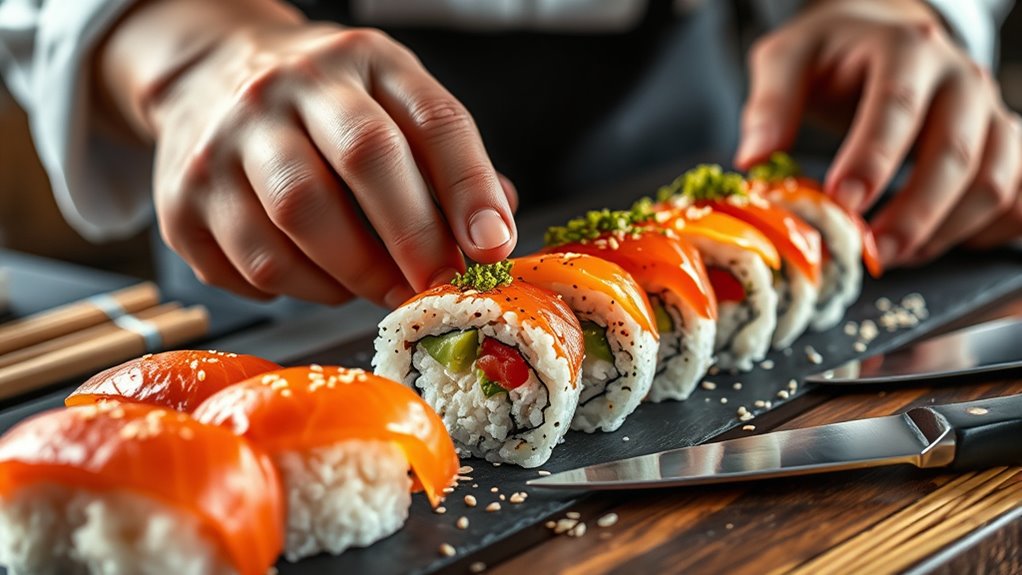
Sushi making is a rewarding culinary skill that combines precision, creativity, and tradition. When you start learning how to roll sushi, it’s essential to understand the importance of sushi etiquette. Respect for the cultural roots of sushi helps you appreciate the discipline behind each piece you create. For example, using your chopsticks properly, refraining from sticking them upright in a bowl of rice, and handling the sushi gently all reflect good manners. These small gestures show your respect for the craftsmanship involved and the traditions that have been passed down through generations. As you explore regional sushi styles, you’ll notice how different areas of Japan—like Tokyo’s Edomae sushi or Osaka’s more casual styles—bring their unique flavors and presentation techniques. Recognizing these regional differences can deepen your understanding of sushi and influence your own creations, whether you prefer the delicate balance of nigiri or the inventive rolls of modern fusion.
Getting comfortable with regional sushi styles helps you develop a more nuanced approach to rolling and serving. For instance, if you’re making sushi inspired by the Kansai region, you might emphasize a slightly sweeter or more vinegary rice, reflecting local tastes. Meanwhile, in Tokyo, the focus tends to be on pristine, fresh fish paired with perfectly seasoned rice. Learning these distinctions allows you to adapt your techniques and ingredients accordingly. As you practice, pay attention to how chefs in different regions handle their ingredients and arrange their rolls—this can inspire your own personal touch. Knowing when to use certain types of fish or how to present sushi properly can elevate your skills from amateur to proficient. Additionally, maintaining a clean and organized workspace is crucial, as it aligns with the sushi etiquette of professionalism and respect for ingredients. Practicing consistent techniques and paying attention to detail can improve your skills significantly over time. Incorporating regional styles into your practice can also help you understand how different ingredients and presentation methods reflect local tastes and traditions. Understanding cultural significance of various sushi types can deepen your appreciation and help you craft more authentic dishes.
When it comes to rolling sushi, precision is key, but don’t forget to let your creativity shine. Start by mastering the fundamentals—how to spread the rice evenly on the nori, how much filling to add, and how tightly to roll to avoid collapsing. Once you’re comfortable, you can experiment with regional influences, adjusting flavors or adding local ingredients. Remember to keep your workspace clean and organized; cleanliness is an essential part of sushi etiquette, especially in professional settings. As you gain confidence, you’ll find that your rolls become not just a delicious dish but a reflection of your respect for the tradition and your personal style. Whether you’re aiming for authenticity or a creative twist, understanding regional styles and etiquette will help you craft sushi with skill, flair, and a deep appreciation for this art form.
As an affiliate, we earn on qualifying purchases.
Frequently Asked Questions
What Are the Best Types of Rice for Sushi?
You should choose short-grain or medium-grain Sushi rice varieties, like Japonica or Calrose, for authentic sushi. These varieties have a higher starch content, helping them stick together perfectly. Store your rice in an airtight container in a cool, dry place to keep it fresh. Proper rice storage tips guarantee your sushi rice remains sticky and flavorful, making your sushi rolls taste just like they do at a professional sushi bar.
How Do I Store Sushi Ingredients Properly?
You should store sushi ingredients in proper storage containers to maintain their freshness. Keep fish and seafood in the coldest part of your fridge, ideally on a bed of ice, to safeguard sushi ingredient freshness. Use airtight containers for vegetables and cooked items to prevent spoilage. Always refrigerate promptly after purchasing or preparing, and consume ingredients within recommended timeframes to ensure safety and the best flavor.
Can I Make Sushi Without a Bamboo Mat?
Yes, you can make sushi without a bamboo mat. Try alternative rolling techniques like using plastic wrap, a clean kitchen towel, or even a silicone baking mat. You can also create DIY sushi mats from household items like strips of cardboard or sturdy paper towels. These options help shape your sushi rolls effectively, making it easy to achieve tight, professional-looking results without a traditional bamboo mat.
What Are Common Mistakes Beginners Make?
Think of sushi making as painting a canvas—you might rush or skip details. Beginners often overstuff rolls, neglecting rice seasoning, or forget the importance of neat sushi presentation. They might also press too hard, causing rice to spill out. Focus on even rice distribution, balance flavors, and handle ingredients gently. These small missteps can turn your sushi from artistic to amateurish, so practice patience and precision to elevate your craft.
How Do I Prevent Rice From Sticking to the Knife?
To prevent rice from sticking to your sushi knife, focus on proper sushi knife techniques and rice preparation tips. Wet your knife with water before slicing to reduce sticking, and keep it clean and dry in between cuts. Use a gentle sawing motion rather than pressing down, and make sure your rice is slightly sticky but not overly wet. These steps help achieve clean, precise slices without rice clinging to the blade.
As an affiliate, we earn on qualifying purchases.
Conclusion
Now that you’ve learned the art of sushi making, you’re ready to impress with each roll. Remember, practice turns skill into mastery, and patience is your best ingredient. As you master the delicate balance of rice, seafood, and seaweed, you’ll find that sushi isn’t just food—it’s an experience, a dance of flavors. So, embrace the journey, enjoy every step, and let your passion roll through every delicious creation. Your sushi adventure has only just begun.
As an affiliate, we earn on qualifying purchases.
As an affiliate, we earn on qualifying purchases.
NFL season / tailgating Picks
team gear
As an affiliate, we earn on qualifying purchases.