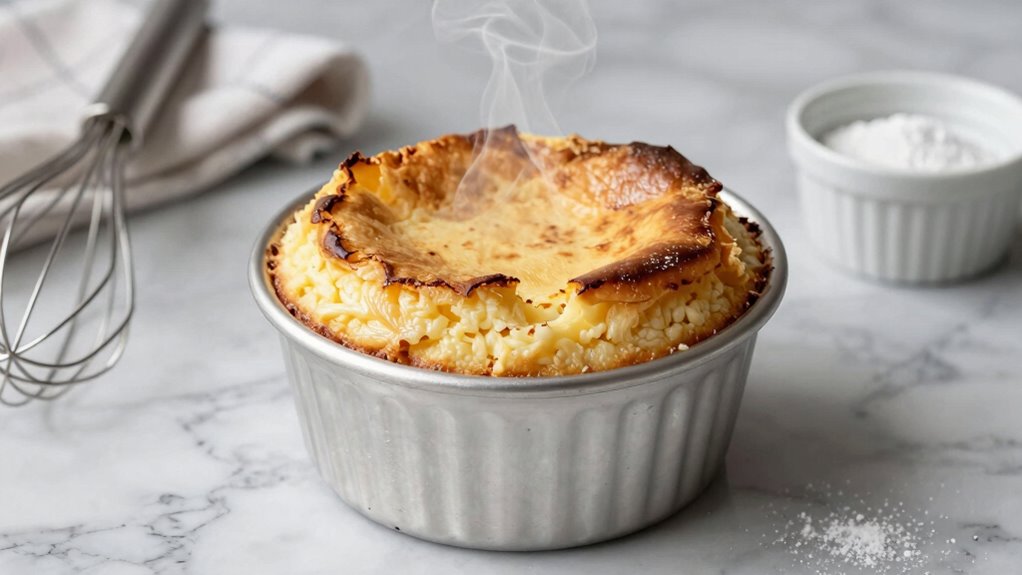

To conquer the soufflé, master your technique by whipping egg whites to the right stiffness, folding gently to keep the air trapped, and ensuring your oven is perfectly preheated with an accurate thermometer. Experiment with flavor variations and ingredient substitutions to create signature dishes. Precise temperature control and baking time are key to achieving that perfect rise and delicate structure. Keep practicing, learn from each attempt, and discover how refining these skills elevates your baking prowess—there’s much more to uncover ahead.
Key Takeaways
- Master proper egg white whipping and gentle folding techniques to ensure a light, airy soufflé structure.
- Maintain precise oven temperature and baking time, using tools like an oven thermometer for consistency.
- Experiment with ingredient substitutions and flavor variations to personalize and elevate your soufflé recipes.
- Serve immediately after baking to preserve its delicate rise and texture, understanding it will deflate quickly.
- Practice consistently, refining your technique and troubleshooting to build confidence and achieve perfect results.
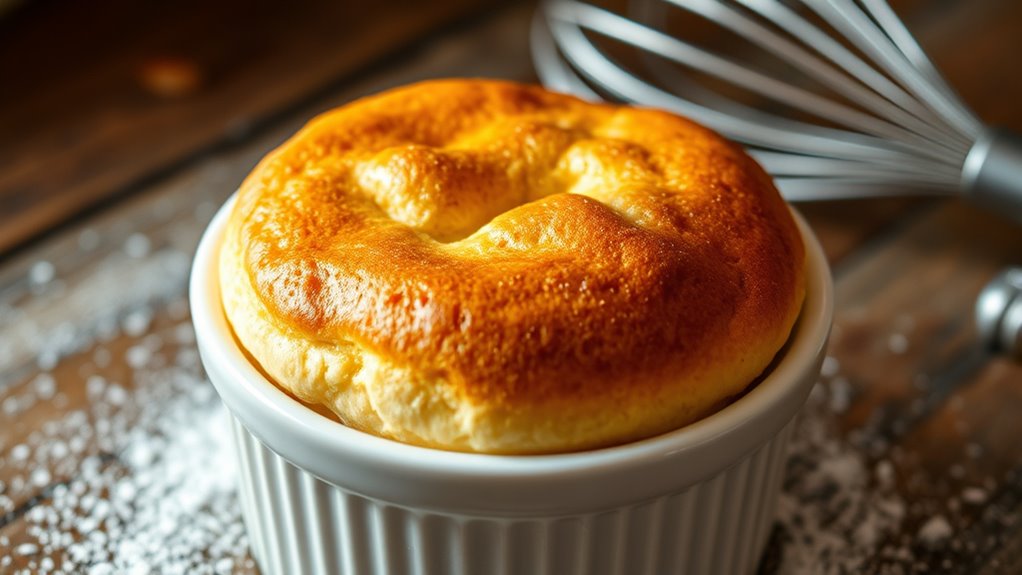
If you’ve mastered basic baking skills and want to elevate your creations, advanced techniques can open up a new world of flavor and texture. Conquering a soufflé is a perfect example of this next-level baking, demanding precision, finesse, and a deep understanding of technique mastery. To succeed, you need to pay close attention to your egg whites, ensuring they’re whipped to the right stiffness without overbeating. Incorporate gentle folding techniques to combine your delicate meringue with the base mixture, preserving the air that gives the soufflé its rise. These steps require patience and a steady hand, but once mastered, they become second nature, allowing you to produce consistently impressive results. Temperature control is also critical, as precise oven monitoring can significantly impact the soufflé’s final rise and texture. Ingredient substitutions can also play an essential role in perfecting your soufflé. For instance, swapping traditional cheeses like Gruyère for sharper or milder varieties can dramatically alter the flavor profile. You might experiment with different herbs or spices to add a personal touch. When it comes to sweet soufflés, consider using fruit purees or flavored extracts to create unique variations. Substituting cornstarch with arrowroot or tapioca flour can improve texture and stability, especially if you’re aiming for a dairy-free or gluten-free version. Being creative with ingredient substitutions not only broadens your culinary repertoire but also helps you adapt recipes to dietary preferences or what you have on hand. As you work through the process, keep in mind that Temperature control is essential. Your oven needs to be preheated thoroughly, and the baking time must be precise to avoid a collapsing soufflé. Using an oven thermometer can help you monitor consistency, ensuring your soufflé bakes evenly. Precision in baking can make the difference between a perfect rise and disappointment. Once out of the oven, serve it promptly; soufflés are at their best when fresh, and their delicate structure begins to deflate shortly after baking. Practice makes perfect, and don’t be discouraged by initial failures. Every attempt is a learning experience that sharpens your techniques mastery and enhances your understanding of ingredient substitutions. In essence, conquering the soufflé is about combining technique mastery with a willingness to experiment. With patience, attention to detail, and a creative approach to ingredients, you’ll develop the confidence to craft light, airy, and flavorful soufflés that wow family and friends alike. Each successful attempt will boost your skills and inspire you to try new flavor combinations and variations, turning a challenging recipe into one of your signature desserts. Additionally, understanding technique mastery can help improve your overall baking confidence and result in more consistent, professional-quality dishes. Developing a deep knowledge of ingredient interactions can also help you troubleshoot common issues and refine your results further.
Frequently Asked Questions
What Are Common Mistakes That Cause a Soufflé to Collapse?
You often cause a soufflé to collapse by overbeating egg whites, which damages their structure, or using incorrect folding techniques, which deflates the mixture. Be gentle when folding to preserve air bubbles, and stop beating the egg whites once they reach stiff peaks. These mistakes weaken the soufflé’s stability, making it fall easily after baking. Paying attention to your technique guarantees a light, airy, and perfectly risen soufflé.
How Can I Adjust Recipes for High-Altitude Baking?
Think of high altitude like a roller coaster racing uphill—you need to slow it down. For altitude adjustments, increase the flour slightly and reduce liquids to prevent collapse. Use ingredient substitutions like extra egg whites for stability. You might also need to lower oven temperature and extend baking time. These tweaks help your soufflé stay aloft, transforming your baking adventures into a smooth ride instead of a free fall.
What Are Alternative Ingredients for Allergies or Dietary Restrictions?
If you have allergies or dietary restrictions, you can swap ingredients easily. For gluten-free options, try almond or rice flour instead of wheat. For vegan substitutions, use flaxseed or chia seed gel in place of eggs, and plant-based milks like almond or coconut milk instead of dairy. These adjustments let you enjoy delicious soufflés while respecting your dietary needs and still achieving great results.
How Do I Store Soufflés for Optimal Freshness?
To store your soufflé for ideal freshness, use aging techniques by letting it cool completely before refrigerating. Cover it loosely with plastic wrap to prevent drying out, and consume within 24 hours. For longer storage, freezing tips suggest wrapping it tightly in plastic and foil, then thawing gently in the fridge. Keep in mind, soufflés are best enjoyed fresh, but proper storage helps preserve their delicate texture.
Can I Prepare Soufflés Ahead of Time Without Compromising Texture?
You can prepare soufflés ahead of time using pre prep techniques and make ahead tips. To do so, prepare the soufflé base and fold in the egg whites, then refrigerate it covered for up to 2 hours. Just before baking, re-whisk gently if needed and bake promptly. This way, you maintain the delicate texture and guarantee your soufflé rises beautifully, making your prep smoother and stress-free.
Conclusion
Now that you’ve mastered the art of the soufflé, remember that only about 20% of home bakers attempt these advanced recipes. That means you’re in the minority, pushing your skills and impressing others with your dedication. Keep experimenting, and don’t be afraid to embrace the challenge. Every successful soufflé boosts your confidence and deepens your baking expertise. So, keep conquering those delicate creations—you’re well on your way to becoming a true baking pro!