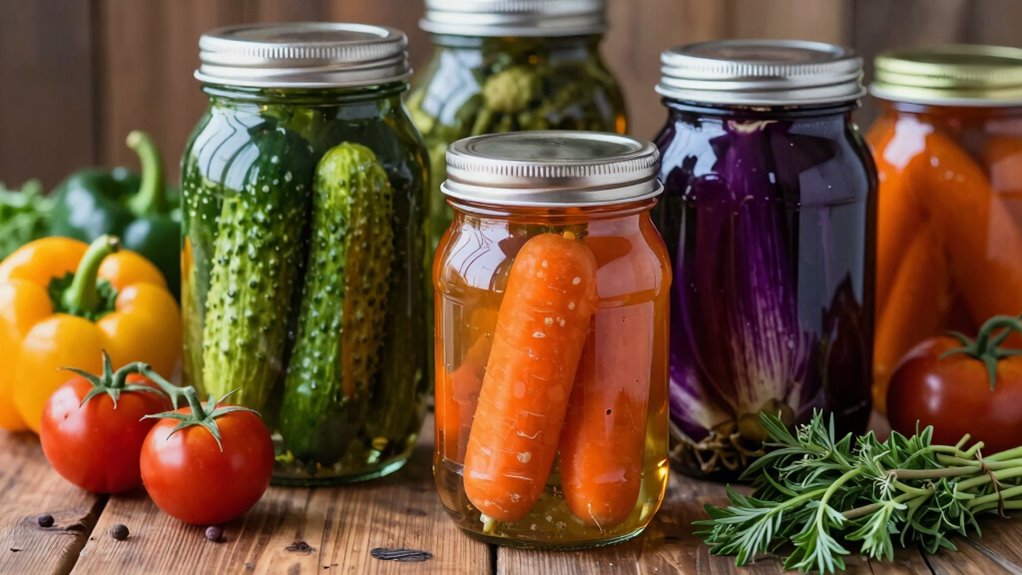
To preserve seasonal produce like a pro, master proper pickling and canning techniques. Start by sterilizing your jars thoroughly to prevent contamination, then fill them with hot, seasoned ingredients and seal tightly to create an airtight environment. Use natural fermentation for probiotics-rich foods or water bath canning for shorter shelf life items, always maintaining consistent temperatures. Proper storage, labeling, and monitoring guarantee safety and flavor. Keep going to discover how mastering these steps guarantees delicious, long-lasting preserved foods.
Key Takeaways
- Master proper sterilization, sealing, and filling techniques to ensure safe, airtight preservation of seasonal produce.
- Learn fermentation methods to enhance flavor and nutritional value with probiotic-rich pickles.
- Follow tested processing times and temperatures for water bath and pressure canning to prevent spoilage.
- Store jars correctly, checking for vacuum seals and labeling for optimal shelf life and inventory management.
- Maintain consistent, cool storage conditions to prolong freshness and prevent mold or microbial growth.
Ever wondered how to transform fresh vegetables into delicious, shelf-stable jars? The secret lies in mastering pickling and canning techniques that preserve flavors while guaranteeing safety. To start, you’ll need to understand fermentation techniques—an ancient method that uses natural microbes to convert sugars into acids, creating tangy, probiotic-rich foods. This process not only enhances flavor but also boosts the nutritional profile of your preserved produce. When fermenting, it’s essential to maintain proper conditions: keep your vegetables submerged in brine, use a fermentation vessel that allows gases to escape, and store everything at consistent, cool temperatures. These steps help prevent mold and spoilage, resulting in vibrant, flavorful jars that can last months.
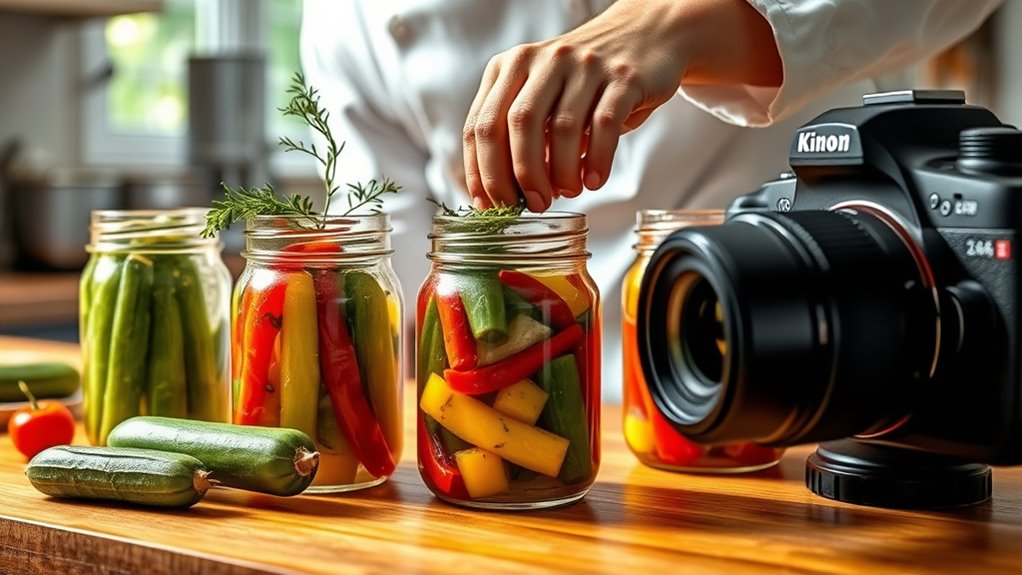
Equally necessary is jar sterilization, which is the foundation of safe canning. Before adding any produce or brine, you must thoroughly sterilize your jars and lids to eliminate bacteria, yeasts, or molds that could cause spoilage or foodborne illness. You can do this by boiling the jars in water for 10 minutes or running them through a hot cycle in your dishwasher. Guaranteeing your jars are sterile creates a clean environment where your preserved foods can develop their flavors without contamination. Once sterilized, handle the jars carefully, avoiding contact with unclean surfaces, and fill them while the contents are still hot. Proper sealing is crucial—make sure the lids are securely fastened to create an airtight environment. This prevents oxygen from entering, which could lead to mold growth or spoilage over time.
Once your jars are filled and sealed, it’s necessary to process them correctly through water bath canning or pressure canning, depending on the type of produce. This step creates a vacuum seal that locks in freshness and prevents bacteria from re-entering. During processing, monitor the temperature and processing time carefully, following tested recipes to guarantee safety and quality. After processing, let the jars cool undisturbed, and check that the lids have sealed properly with a slight inward indentation. Any jars that haven’t sealed should be refrigerated and consumed sooner. Label your jars with the date and contents, so you keep track of what’s ready to enjoy and what’s best to use first.
Frequently Asked Questions
Can I Use Tap Water for Pickling Solutions?
You can use tap water for pickling solutions, but you should consider water quality and mineral content first. If your tap water is high in minerals or contains chlorine, it might affect the flavor or safety of your preserved produce. To avoid issues, use filtered or boiled water to guarantee a consistent, safe pickling process. This helps prevent spoilage and maintains the quality of your preserved goods.
How Long Do Homemade Pickles Last Without Refrigeration?
Homemade pickles can last about 1 to 2 months without refrigeration if stored properly in a cool, dark place. To prevent spoilage, make certain your jars are sealed tightly and the brine covers the produce completely. Regularly check for signs of spoilage like mold or bad odors. Proper sealing and storage techniques are key to maximizing your pickles’ storage duration and preventing spoilage without refrigeration.
Are There Specific Jars Best for Long-Term Canning?
Think of your jars as the guardians of your harvest. You’ll want high-quality glass jars, like Mason or Ball jars, with thick walls for durability. Use proper sealing methods—vacuum seals or metal lids with rubber gaskets—to guarantee freshness and safety. These jar types and sealing techniques are essential for long-term canning, helping your preserved bounty stand the test of time, much like a well-kept secret waiting to be revealed.
What Are Common Mistakes to Avoid in Pickling?
You should avoid common pickling mistakes like neglecting proper sanitation, which can introduce bacteria and spoil your produce. Always use high-quality ingredients for the best flavor and safety. Don’t skip sterilizing jars and lids, as this prevents contamination. Also, verify you follow the correct recipe proportions and process times. These steps help guarantee your pickles stay fresh and safe for long-term storage, giving you delicious, preserved seasonal produce.
Can I Modify Recipes for Low-Sodium Pickles?
Sure, you can modify recipes for low-sodium pickles, but don’t expect them to taste exactly the same—because, surprise, sodium does wonders for flavor. For health considerations, reduce salt gradually and add herbs or spices for flavor adjustments. Keep in mind, too little salt might impact preservation, so experiment carefully. It’s all about balancing taste and health, even if it means a slightly different—and perhaps more interesting—pickle experience.
Conclusion
Now that you’ve mastered the art of pickling and canning, you’re ready to preserve produce with passion and precision. With patience and a bit of practice, your pantry will be packed with beautifully brined jars and canned creations. Keep experimenting, embracing the excitement of seasonal flavors and simple solutions. Remember, preserving is an art — so stay confident, creative, and committed to crafting delicious, delightful delights that last long after harvest!