Mastering gourmet sauces like demi-glace and hollandaise from scratch allows you to elevate your dishes with rich, complex flavors. You’ll learn essential techniques such as emulsification and reduction, balancing ingredients for perfect harmony. Customizing these sauces lets you tailor flavors to suit your taste and cuisine style. Developing your skills creates sophisticated meals that showcase craftsmanship and passion. Keep exploring, and you’ll discover even more tips to master these flavorful sauces.
Key Takeaways
- Mastering emulsification techniques like hollandaise and aioli creates rich, smooth sauces from scratch.
- Making demi-glace involves reducing veal or beef stock with aromatics for a deep, flavorful base.
- Proper timing and attention to detail ensure perfect texture and flavor balance in gourmet sauces.
- Customizing sauces with herbs, acids, and seasonings allows tailored pairings for various dishes.
- Developing these sauces enhances culinary skill and elevates home cooking with sophisticated flavors.
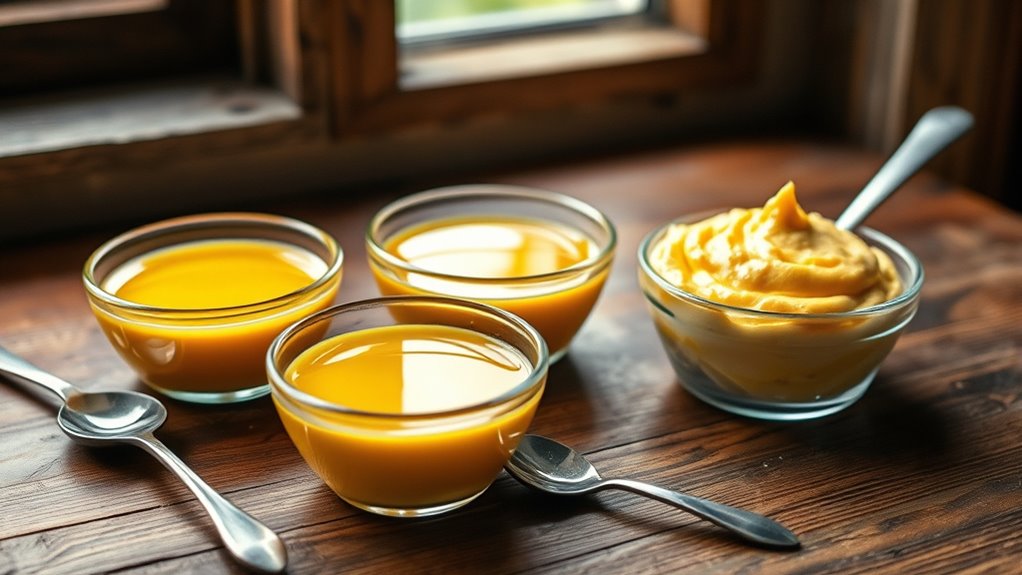
Creating gourmet sauces from scratch allows you to elevate any dish with rich, complex flavors that store-bought options often can’t match. When you master sauce techniques, you gain the ability to transform simple ingredients into culinary masterpieces. Whether you’re making a velvety hollandaise or a deeply reduced demi-glace, understanding the fundamentals helps you control texture, flavor, and consistency. The key is to focus on the process, paying attention to detail and timing, which will elevate your cooking from ordinary to exceptional.
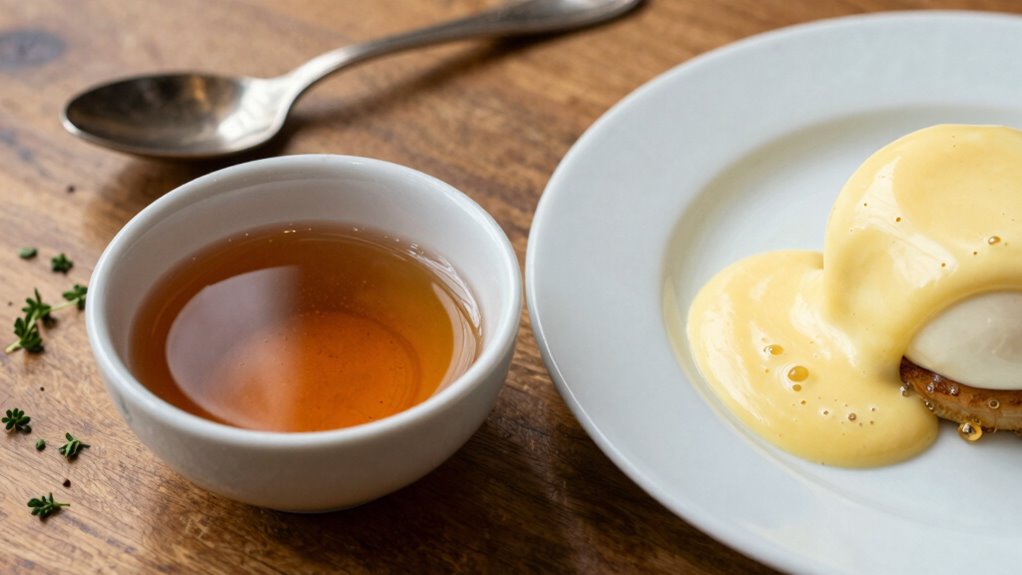
One of the most essential sauce techniques involves emulsification, especially for sauces like hollandaise or aioli. For hollandaise, you carefully whisk egg yolks and lemon juice over gentle heat, then slowly incorporate warm melted butter until the mixture thickens into a silky, cohesive sauce. This technique demands patience and precision but rewards you with a luxurious finish. Learning to balance acidity and richness through proper sauce techniques allows you to create harmonious flavor pairings that enhance your main ingredients without overpowering them. For instance, the tangy brightness of lemon in hollandaise pairs beautifully with asparagus or salmon, while the deep, umami notes of demi-glace complement roasted meats like beef or veal.
Master emulsification with hollandaise to create silky sauces that beautifully enhance main ingredients.
Flavor pairings are at the heart of gourmet sauces. When you understand which ingredients work well together, you can craft sauces that elevate your dishes. For example, a rich demi-glace made from veal bones provides a savory backbone that enhances the natural flavors of hearty meats. Incorporate aromatics like thyme, bay leaves, or garlic during the reduction process to add complexity. Similarly, when working with sauces like béarnaise or beurre blanc, you focus on balancing acidity and richness, creating a sauce that complements rather than overwhelms your protein.
As you experiment, you’ll discover that making sauces from scratch allows for customization. You can adjust seasoning levels, add herbs, or incorporate unique ingredients to suit your taste. This flexibility enables you to develop signature flavors and perfect pairings tailored to your cuisine style. Remember, the art of sauce-making is about patience, attention to detail, and understanding how different ingredients interact. Over time, you’ll refine your technique and develop an intuitive sense of when a sauce is just right.
Ultimately, mastering these sauce techniques and flavor pairings empowers you to bring professional flair to your home kitchen. From silky hollandaise to deeply flavorful demi-glace, each sauce becomes a testament to your skill and passion for cooking. Creating sauces from scratch isn’t just about adding flavor—it’s about crafting a complete culinary experience that delights the senses and elevates every bite.
Frequently Asked Questions
Can Gourmet Sauces Be Made Vegan or Vegetarian?
Yes, you can make gourmet sauces vegan or vegetarian by using plant-based alternatives. Swap dairy and meat-based ingredients with options like coconut milk, vegetable stock, or nut-based creams to achieve rich textures. These alternatives also enhance flavor, making your sauces just as indulgent. With a bit of creativity, you’ll enjoy flavorful, satisfying sauces that suit your dietary needs without sacrificing quality or taste.
How Long Do Homemade Sauces Typically Last in the Fridge?
You might wonder how long your homemade sauces last, and the answer varies—most keep fresh for about 3 to 4 days in the fridge. Keep an eye out for spoilage signs like sour smells, mold, or a change in texture. If you notice anything unusual, don’t risk it. Proper storage in airtight containers helps extend their shelf life, but always trust your senses before consuming.
What Are Common Mistakes to Avoid When Making Demi-Glace?
When making demi-glace, avoid common mistakes like over-reducing, which can make it too thick or bitter. Always choose quality ingredients, especially rich veal or beef bones, for deep flavor. Don’t rush the process; simmer slowly to develop complexity. Also, strain carefully to remove impurities. These steps guarantee a smooth, flavorful demi-glace, elevating your dish without risking a ruined sauce from haste or poor ingredients.
Are There Quick Alternatives to Traditional Hollandaise?
Like a modern-day chef with a magic wand, you can whip up quick hollandaise alternatives. Blender hollandaise blends eggs, butter, and lemon in seconds, offering a smooth, restaurant-quality sauce. Microwave hollandaise is another speedy option, where you gently heat the ingredients in short bursts. These methods save time without sacrificing flavor, making them perfect for busy kitchens or when you crave that classic, velvety hollandaise in a flash.
How Do I Thicken Sauces Without Using Flour or Butter?
You can thicken sauces without flour or butter by using natural thickeners like cornstarch, arrowroot, or potato starch. Mix a small amount of your chosen starch with cold water to create a slurry, then slowly add it to your simmering sauce, stirring constantly until it reaches your desired consistency. Starch substitutes work quickly and provide a smooth, glossy texture without relying on traditional thickeners.
Conclusion
Now that you’ve learned to craft these gourmet sauces from scratch, your kitchen transforms into a culinary artist’s studio. With each sauce you master—whether a rich demi-glace or silky hollandaise—you’re painting flavors that dance on your palate like a symphony. So don’t be afraid to experiment and make these recipes your own. Soon, your dishes will sing with the depth and elegance of a fine restaurant, turning everyday meals into extraordinary culinary masterpieces.