To break down meat like a pro, focus on using sharp knives and proper technique. Start by identifying natural seams, then plan your cuts with smooth, controlled motions, following muscle lines. Use a firm grip, keep your fingers curled away from the blade, and aim for consistent, precise slices. Practice balancing patience and consistency, and you’ll develop muscle memory for clean, professional results—more expert tips await to refine your skills further.
Key Takeaways
- Use a sharp, high-quality knife and maintain its edge regularly for clean, precise cuts.
- Plan your cuts by identifying natural seams and muscle groups to optimize efficiency.
- Employ smooth, continuous slicing motions, avoiding sawing or choppy back-and-forth movements.
- Hold the knife with proper grip and stance, using a claw grip to protect fingers and ensure control.
- Follow consistent angles (~45°) and develop muscle memory through deliberate practice for professional results.
Have you ever wondered how professional chefs achieve such precise and flawless cuts? It all comes down to their exceptional knife skills and the ability to maintain cutting accuracy. When you’re breaking down meat like a pro, mastering these fundamentals transforms a formidable task into a smooth, efficient process. The first step is understanding the importance of a sharp knife. A dull blade requires more force, which compromises control and increases the risk of slipping or uneven cuts. Regularly hone your knife to keep it sharp, and invest in a quality sharpening stone or system. When your knife is razor-sharp, your cuts become cleaner and more accurate, making the entire process safer and more enjoyable.
Mastering sharp knives transforms meat prep into precise, safe, and enjoyable culinary art.
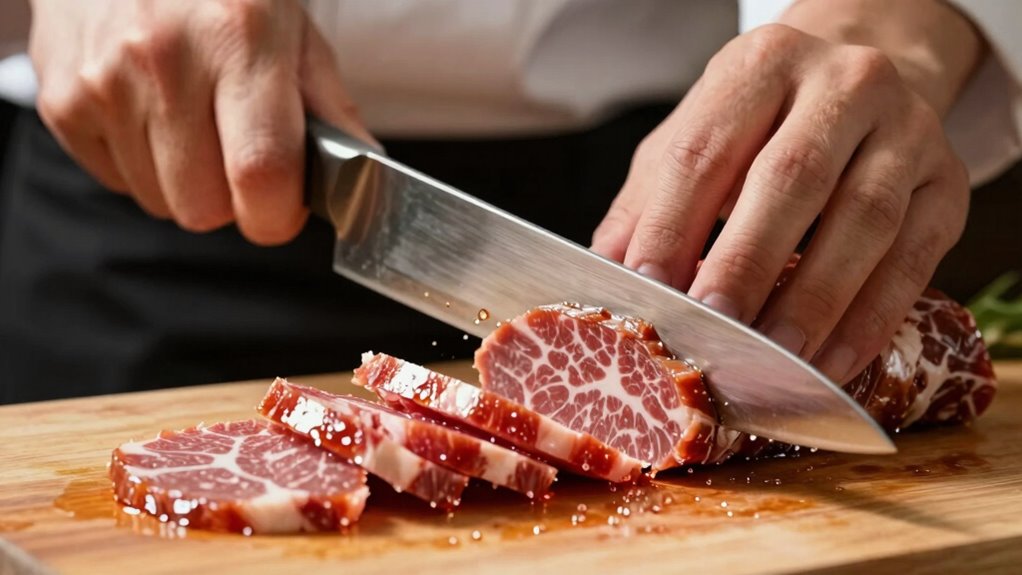
Next, focus on your grip and stance. Hold the knife firmly but comfortably, with your dominant hand gripping the handle securely. Your other hand should guide the meat, using a claw grip—curling your fingers inward to keep them safe from the blade. Position yourself so that your knife moves in smooth, controlled motions, aligning your forearm and wrist for maximum control. This stance provides stability, allowing you to apply consistent pressure and achieve cutting precision with every slice. Additionally, understanding the importance of contrast ratio can help you better visualize the details of your cuts and improve your technique.
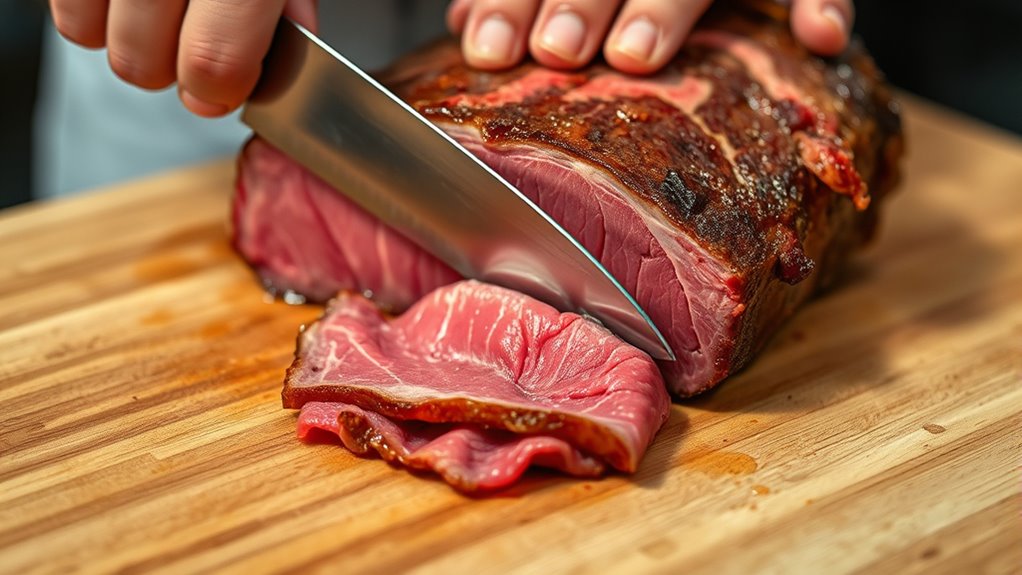
When breaking down meat, start with a well-defined plan. Identify the natural seams and muscle groups, and use your knife to follow these lines. Use long, steady strokes rather than choppy or hurried cuts. A controlled motion not only ensures precision but also minimizes waste. Pay attention to the thickness of your slices; maintaining uniformity is key to professional presentation and even cooking. To do this, set a consistent angle—usually around 45 degrees—and keep it steady throughout each cut. As you develop your knife skills, you’ll notice your ability to control the blade improves, leading to more precise and consistent results.
Another essential aspect is understanding the different cutting techniques. For example, the slicing motion should be smooth and continuous, avoiding saw-like back-and-forth movements that can tear the meat. For tougher cuts, use a gentle rocking motion, keeping the knife tip in contact with the board and pivoting it as needed. Practice makes perfect—regularly honing these techniques will refine your cutting accuracy and boost your confidence. Remember, patience and deliberate practice are vital. Over time, your muscle memory will develop, enabling you to break down meat quickly and expertly, just like a seasoned professional. By honing your knife skills and focusing on precise, controlled movements, you’ll elevate your culinary game and achieve impeccable results every time.
Frequently Asked Questions
What Type of Knives Are Best for Breaking Down Meat?
You should use a flexible boning knife or a carving knife for breaking down meat. Look for blades made from high-quality stainless steel or carbon steel, which offer durability and sharpness. Handle ergonomics are vital—choose a knife with a comfortable, non-slip grip to maintain control during precise cuts. These features guarantee you can work efficiently and safely, whether trimming fat or separating meat from bones.
How Often Should I Sharpen My Meat-Cutting Knives?
Think of your knives like a sports car; they need regular tuning to perform their best. You should sharpen your meat-cutting knives every 10-15 uses, or when they start to feel dull. Proper sharpness maintenance involves honing frequently and sharpening when necessary using effective sharpening techniques. This keeps your blades precise, safe, and efficient, ensuring you can break down meat with finesse and confidence every time.
What Safety Tips Are Essential When Handling Sharp Knives?
When handling sharp knives, always use a proper knife grip to maintain control and reduce slips. Keep your fingers tucked away from the blade, and hold the knife securely. Make sure your cutting surface is stable and clean to prevent accidents. Never rush or force cuts, and focus on your technique. These safety tips help prevent injuries and ensure safe, effective meat breakdown.
Can Different Meat Cuts Require Different Knife Techniques?
Different meat cuts do require different knife techniques because each has a unique meat texture and bone structure. For delicate cuts like tenderloin, use precise, gentle slicing to avoid shredding. For tougher, connective tissue-heavy cuts, employ more forceful, deliberate cuts and specific bone removal techniques. Adjust your approach based on the meat’s texture and bone placement to make sure of clean cuts and maximize safety and efficiency.
How Do I Maintain the Quality of My Knives During Butchering?
To maintain your knives’ quality during butchering, focus on good blade maintenance by regularly honing and sharpening them. Avoid cutting on hard surfaces like glass or stone, and clean your knives promptly after use. Store them properly in dedicated storage solutions such as knife blocks or magnetic strips to prevent damage. These practices keep the blades sharp, safe, and effective, ensuring your knives stay in top condition for precise meat breakdown.
Conclusion
Mastering advanced knife techniques isn’t just about skill—it’s about understanding the science behind each cut. Did you know that proper slicing can actually enhance the meat’s flavor and tenderness? When you break down meat like a pro, you’re not only improving your presentation but also revealing hidden layers of taste. So, next time you pick up your knife, remember: precision and knowledge turn simple cuts into culinary artistry.