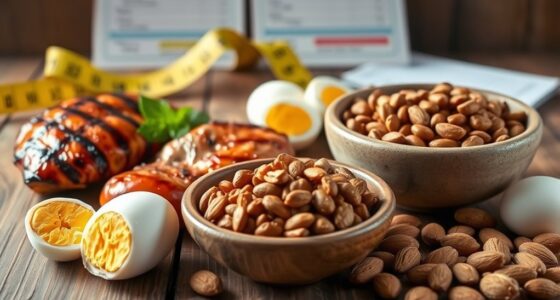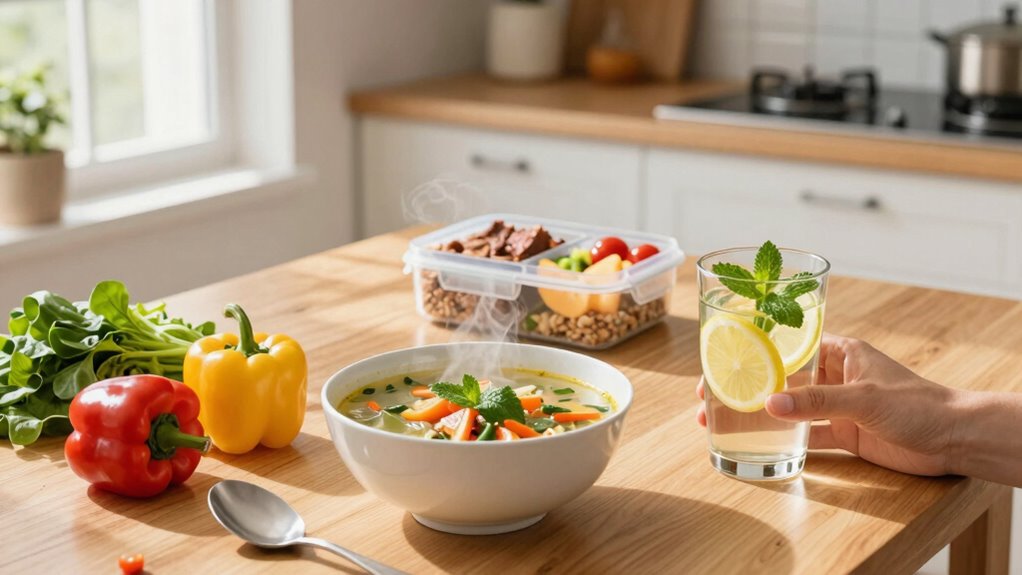

During stressful weeks, plan your meals ahead to avoid relying on unhealthy options and prepare ingredients in advance for quick, nutritious bites. Focus on mindful eating by savoring each bite and avoiding distractions to prevent overeating. Incorporate whole foods like fruits, vegetables, lean proteins, and whole grains to stabilize your mood and boost energy. Small, intentional steps combined with proper meal planning make it easier to stay on track—continue exploring ways to support your well-being during tough times.
Listen free for 30 days with Audible
Thousands of audiobooks and originals — cancel anytime.
As an affiliate, we earn on qualifying purchases.
Key Takeaways
- Plan and prep simple, nutritious meals ahead of time to avoid unhealthy last-minute choices.
- Focus on whole foods like fruits, vegetables, lean proteins, and whole grains for sustained energy.
- Practice mindful eating by savoring each bite and avoiding distractions during meals.
- Establish regular mealtimes to create consistent habits and prevent impulsive snacking.
- Incorporate quick, nourishing snacks to maintain energy and reduce stress-induced cravings.
When stress levels rise, it’s easy to reach for comfort foods or skip balanced meals, but maintaining good nutrition during these times is essential for your well-being. During stressful weeks, your body needs proper fuel to keep your energy steady and your mind clear. One of the most practical ways to do this is through effective meal planning. When you plan your meals ahead of time, you reduce the temptation to grab unhealthy options in a rush. Set aside a little time each week to prepare simple, nutritious meals or snacks. This not only saves you time during busy days but also ensures you’re making mindful choices rather than reacting impulsively to stress cravings. Incorporate a variety of whole foods—fruits, vegetables, lean proteins, and whole grains—to keep your body nourished and your mood stabilized. Keep ingredients handy so you can assemble quick meals without sacrificing quality.
Alongside meal planning, practicing mindful eating becomes a powerful tool during stressful periods. When you’re overwhelmed, it’s tempting to eat mindlessly while multitasking or scrolling through your phone. Instead, take a moment to focus on your food—notice the colors, textures, and flavors. Eating slowly allows you to enjoy your meal more and recognize when you’re full, preventing overeating. Mindful eating also encourages you to listen to your body’s hunger cues, helping you differentiate between genuine hunger and emotional cravings. This approach promotes better digestion and helps you feel more satisfied with smaller portions, reducing the likelihood of turning to unhealthy comfort foods. Additionally, understanding the importance of cooking science can help you make healthier choices by understanding how different foods affect your body and mood. Incorporating knowledge about nutritional impacts can further enhance your ability to select foods that support your mental and physical health during stressful weeks. Knowing how food processing influences nutrient retention can guide you in choosing more wholesome options. Furthermore, being aware of the effects of stress on digestion can empower you to make adjustments that support your gut health during challenging times.
You can integrate mindful eating into your daily routine by setting regular mealtimes, avoiding distractions, and savoring each bite. Pay attention to how certain foods make you feel—do they boost your energy or leave you sluggish? Use this awareness to guide your choices, opting for nutrient-dense options that support your mental and physical health during stressful weeks. Remember, small, intentional steps make a big difference. By planning your meals in advance and practicing mindful eating, you regain control over your nutrition, even when stress feels overwhelming. These habits help you stay grounded, improve your mood, and provide the stability your body needs to navigate challenging times with resilience.

KOMUEE 30 oz 5 Pack Glass Meal Prep Containers 2 Compartments, Glass Food Storage Containers with Lids, Airtight Lunch Box, Microwave, Oven and Freezer Safe
- High-Quality Borosilicate Glass: Safe for freezer, microwave, and oven
- Airtight Snap Locking Lids: Leak-proof, BPA-free with silicone ring
- Convenient 5-Pack Set: Includes five 30oz containers with lids
As an affiliate, we earn on qualifying purchases.
As an affiliate, we earn on qualifying purchases.
Frequently Asked Questions
How Can I Resist Comfort Foods When Stressed?
To resist comfort foods when stressed, practice mindful eating—pause and assess your hunger and emotions before grabbing a snack. Recognize emotional triggers that make you crave certain foods, and find healthier alternatives or distraction techniques like walking or deep breathing. By staying aware of your feelings and choosing intentional, nourishing options, you can reduce impulsive eating and manage stress without relying on comfort foods.
Are Supplements Effective for Stress-Related Eating?
Supplements like herbal remedies can support your stress management, but they aren’t a cure-all for stress-related eating. Combining these with mindfulness techniques helps you become more aware of your urges and cravings, making it easier to resist comfort foods. Remember, supplements work best when paired with healthy habits. So, focus on using herbal remedies alongside mindfulness to create a balanced approach that addresses both stress and emotional eating effectively.
How Do I Plan Meals During Busy, Stressful Days?
Did you know 80% of people find meal prep reduces stress during busy days? To plan meals during stressful weeks, focus on simple, nutritious options. Use time management techniques like batch cooking and prepping ingredients in advance. Dedicate a specific time each week for meal prep, so you’re ready to go when stress hits. This approach helps you stay on track, save time, and avoid last-minute unhealthy choices.
What Are Quick, Healthy Snacks for Stressful Times?
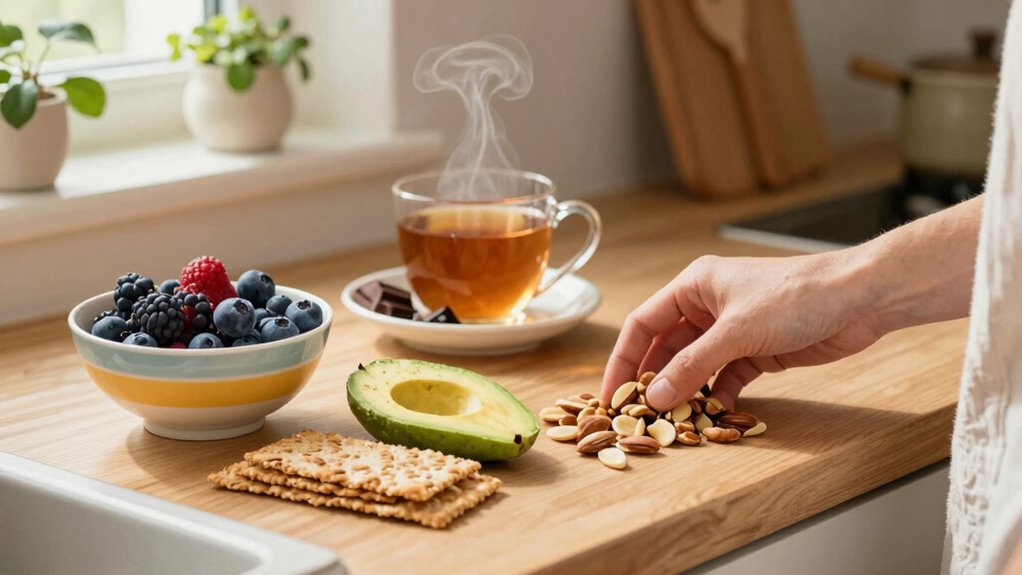
When stress hits, opt for healthy snack swaps like nuts, Greek yogurt, or fresh fruit to keep energy steady. Portable snack ideas such as trail mix, veggie sticks with hummus, or whole-grain crackers make it easy to nibble on the go. These quick, nutritious options help curb cravings and stabilize your mood, ensuring you stay fueled without sacrificing health, even during the busiest, most stressful days.
How Does Stress Affect My Digestion and Nutrient Absorption?
Stress disrupts your digestion by altering your gut microbiome, reducing beneficial bacteria, and impairing nutrient absorption. It also triggers the release of stress hormones, which lower digestive enzymes, making it harder to break down food. As a result, you may experience bloating, discomfort, and nutrient deficiencies. To counteract this, focus on managing stress through relaxation techniques, and support your digestion by nourishing your gut microbiome with probiotics and enzyme-rich foods.
As an affiliate, we earn on qualifying purchases.
Conclusion
Even during the busiest, most stressful weeks, choosing nourishing foods offers clarity amidst chaos. While deadlines and worries can push you toward quick fixes and junk food, opting for balanced meals grounds you like a steady anchor. In the midst of chaos, your commitment to eating well becomes a quiet act of self-care—an act that, paradoxically, restores calm and strengthens your resilience, proving that sometimes, the simplest choices hold the greatest power.
mindful eating plates and utensils
As an affiliate, we earn on qualifying purchases.
As an affiliate, we earn on qualifying purchases.
As an affiliate, we earn on qualifying purchases.
Flea & tick season Picks
flea and tick prevention
As an affiliate, we earn on qualifying purchases.