
To build better homemade dressings, focus on balancing acidity, sweetness, saltiness, and richness carefully. Use fresh, high-quality ingredients like citrus juice, herbs, and extra virgin olive oil for vibrant flavor. Taste and adjust seasonings gradually as you go, adding salt or sweetness to perfect the balance. Experiment with different flavor combos to create unique profiles. Keep refining your technique—if you keep exploring, you’ll discover even more ways to elevate your dressings.
Key Takeaways
- Balance acidity, sweetness, saltiness, and richness by tasting and adjusting gradually during preparation.
- Use fresh, high-quality ingredients like citrus, herbs, and premium oils for vibrant, natural flavors.
- Properly store ingredients to maintain freshness and maximize flavor depth.
- Start with a basic ratio (e.g., 1 part vinegar/citrus to 3 parts oil) and tweak for taste harmony.
- Experiment with diverse flavor combinations to create unique, well-rounded dressings.
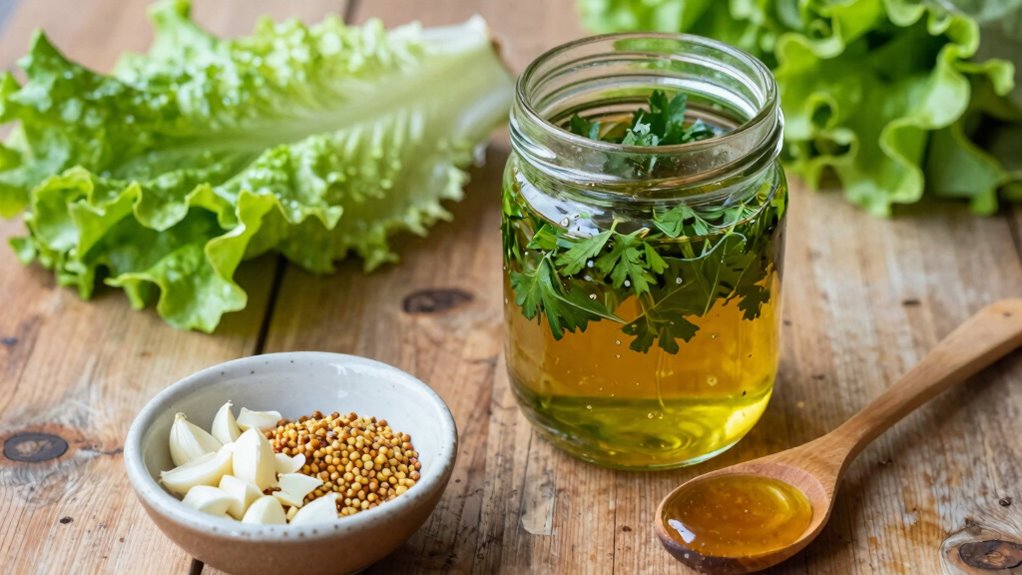
Ever wonder how to elevate your salads with simple, homemade dressings? The secret lies in mastering the art of flavor balance and prioritizing ingredient quality. When you focus on these aspects, your dressings won’t just taste better—they’ll transform your entire meal. Achieving a harmonious blend of acidity, sweetness, saltiness, and richness is essential. Too tart, and the dressing might overpower the greens; too sweet, and it could clash with the salad’s freshness. Striking the right balance means tasting as you go, adjusting the seasonings gradually until everything complements each other. Using fresh ingredients like lemon juice, high-quality vinegar, or real honey can make a noticeable difference in flavor depth. Avoid cheap, overly processed condiments that may contain artificial flavors or preservatives, which can dull the taste and disrupt the delicate balance you’re aiming for. Incorporating whole, unprocessed ingredients ensures your dressings maintain their natural flavors and nutritional integrity. When you understand how different ingredients interact at a molecular level, you can craft dressings that are more cohesive and satisfying. Additionally, understanding ingredient interactions can help you troubleshoot flavor imbalances more effectively. Recognizing how different flavors complement or clash is an important step in creating balanced dressings.
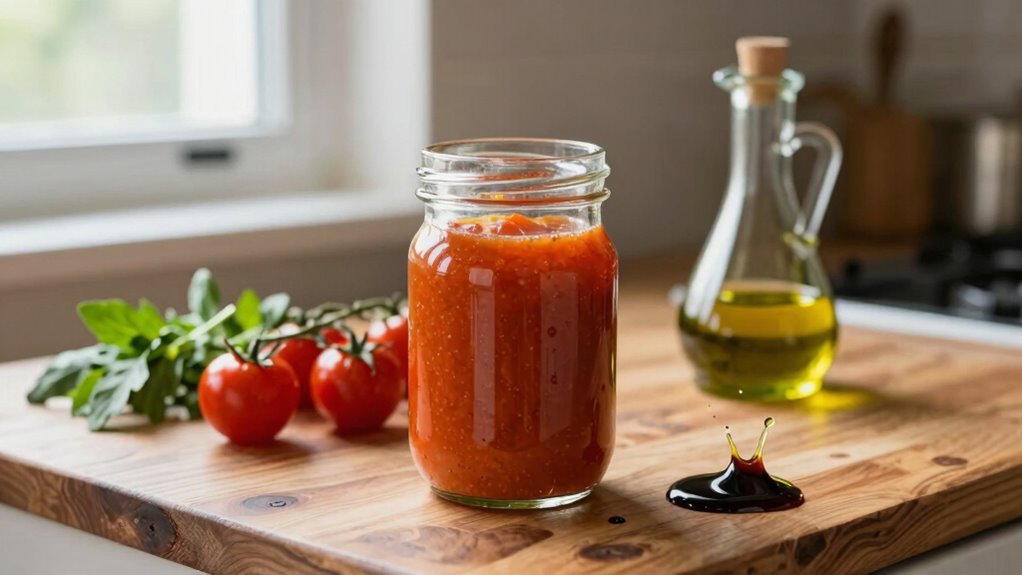
Ingredient quality is equally critical. When you start with fresh, premium ingredients, your dressing naturally elevates. Opt for extra virgin olive oil instead of cheaper vegetable oils, as it offers richer flavor and health benefits. Fresh herbs like basil, parsley, or dill bring vibrant notes that dry herbs can’t match, especially when freshly chopped. When selecting ingredients like garlic, choose firm, unblemished cloves rather than pre-minced versions that might have lost potency or contain additives. Similarly, if you’re using citrus, squeeze fresh juice rather than relying on bottled options; it adds brightness and a natural tang that can’t be replicated with concentrates or artificial flavorings. Remember, the correct storage of ingredients can also influence their freshness and flavor, so proper handling is important.
Another smart move is to taste and adjust throughout the process. Start with a basic ratio—say, one part vinegar or citrus to three parts oil—and then tweak based on your palate. Adding a pinch of salt enhances flavors and balances acidity, while a touch of sweetness can mellow out sharpness. For creamier dressings, incorporate ingredients like Greek yogurt or tahini, which add richness without overpowering the other flavors. Remember, quality ingredients don’t just taste better—they also help you achieve a more refined, balanced dressing with less effort. Experimenting with different flavor profiles can lead to unique and personalized dressings that elevate your meals even further.
extra virgin olive oil for dressings
As an affiliate, we earn on qualifying purchases.
As an affiliate, we earn on qualifying purchases.
Frequently Asked Questions
How Long Can Homemade Dressings Be Stored Safely?
You can usually store homemade dressings safely for up to a week in the fridge. Keep in mind that flavor variations may change over time, so taste test before using. Use airtight containers and follow proper storage tips to prevent spoilage. Make sure to shake or stir the dressing before each use, as ingredients can separate. When in doubt, discard if it develops an off smell or appearance.
What Are Common Mistakes to Avoid When Making Dressings?
When making dressings, you want to avoid common mistakes like neglecting flavor balance and ingredient freshness. Don’t overdo the salt or acidity, which can overpower other flavors, and always use fresh ingredients to guarantee vibrant taste. Avoid rushing the process; blending or whisking thoroughly helps ingredients meld. Also, skip using dull oils or expired items, as they can spoil the dressing quickly and compromise flavor and safety.
Can I Customize Dressings for Specific Dietary Needs?
You absolutely can customize dressings for specific dietary needs. Coincidentally, many common dietary restrictions—like gluten-free, vegan, or low-sodium—can be easily accommodated through ingredient swaps. By adjusting flavors with herbs, spices, or alternative oils, you tailor dressings to your taste and requirements. This way, you enjoy flavorful, personalized dressings that meet your dietary restrictions without sacrificing taste or variety.
Which Ingredients Can Be Substituted in Recipes?
You can substitute ingredients like olive oil with avocado oil for a milder flavor and added health benefits, or swap honey with maple syrup for a different sweetness. Using ingredients with high versatility allows you to customize flavors easily and enhance the overall taste. By experimenting with these substitutions, you gain flavor enhancement and ingredient versatility, making your homemade dressings more tailored to your preferences and dietary needs.
How Do I Achieve the Perfect Emulsion Every Time?
To achieve the perfect emulsion every time, focus on emulsification techniques like whisking vigorously or using a blender. Start with a flavor balance by adding mustard or egg yolk, which help stabilize the mixture. Slowly drizzle in oil while continuously whisking to create a smooth, cohesive dressing. Keep the ingredients at room temperature, and don’t rush—patience guarantees a stable, flavorful emulsion that stays together.
fresh lemon juice for salads
As an affiliate, we earn on qualifying purchases.
As an affiliate, we earn on qualifying purchases.
Conclusion
Once, I tried a homemade vinaigrette that transformed a simple salad into a gourmet experience. Just like a master painter mixes colors to create a masterpiece, blending the right ingredients results in dressings that elevate your meals. Remember, experimenting with flavors isn’t just fun—it’s the secret to crafting dressings that make every bite memorable. So go ahead, get creative in your kitchen and turn everyday salads into culinary masterpieces you’ll love to share.
herb chopping knife
As an affiliate, we earn on qualifying purchases.
As an affiliate, we earn on qualifying purchases.
homemade salad dressing shaker
As an affiliate, we earn on qualifying purchases.
As an affiliate, we earn on qualifying purchases.