
During Chinese New Year, you’ll find dishes packed with symbolism—dumplings shaped like ingots to attract wealth, rice cakes (nian gao) for growth, and whole fish signifying surplus and unity. Long noodles represent longevity, while citrus fruits like oranges bring good luck. Sweet treats symbolize family happiness and completeness. Each dish reflects hopes for a prosperous, healthy year, and exploring more reveals the rich stories behind these festive foods that celebrate tradition and good fortune.

Get kitchen staples and gadgets delivered free with Prime
- Fast, free delivery on millions of items
- Prime Video, Amazon Music and more included
- Member-only deals all year
Key Takeaways
- Traditional Chinese New Year foods symbolize luck, prosperity, health, and longevity, reflecting cultural beliefs and hopes for the coming year.
- Dumplings shaped like gold or silver ingots and rice cakes (nian gao) represent wealth and progress, respectively.
- Whole fish signifies abundance and completeness, with leaving some uneaten ensuring surplus for the year.
- Long noodles and citrus fruits like oranges symbolize longevity and good fortune.
- Sweet treats and spring rolls symbolize family unity, happiness, and wealth, adding festive cheer.
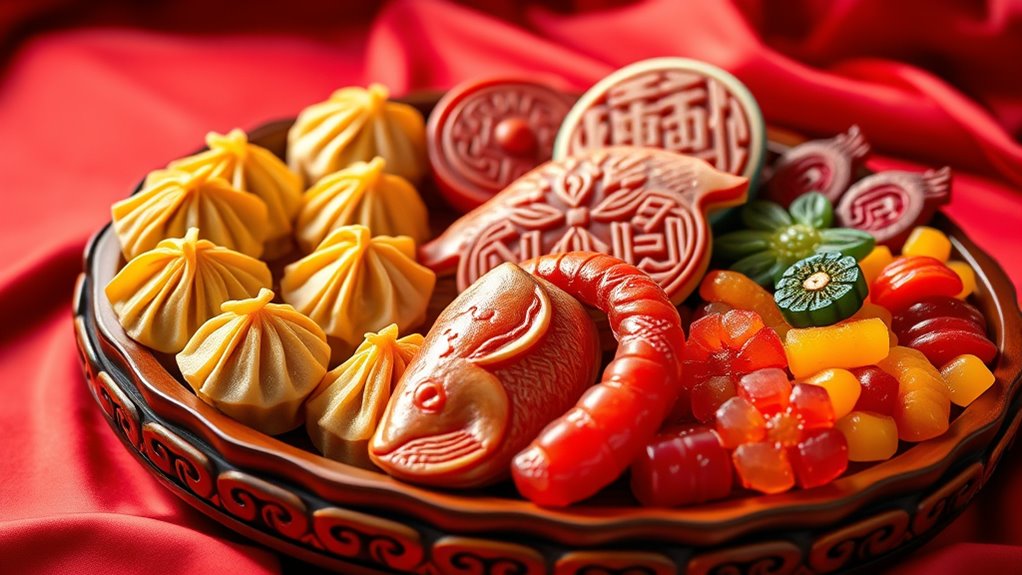
Chinese New Year is a time when families gather to enjoy a variety of traditional delicacies that symbolize luck, prosperity, and happiness. These special dishes, known as fortune foods, carry deep cultural significance and are carefully chosen to bring good fortune in the coming year. As you sit down to celebrate, you’ll notice that the table is decorated with an array of festive treats, each with its own meaning and story. These foods are more than just delicious; they serve as symbols of hopes for wealth, health, and longevity.
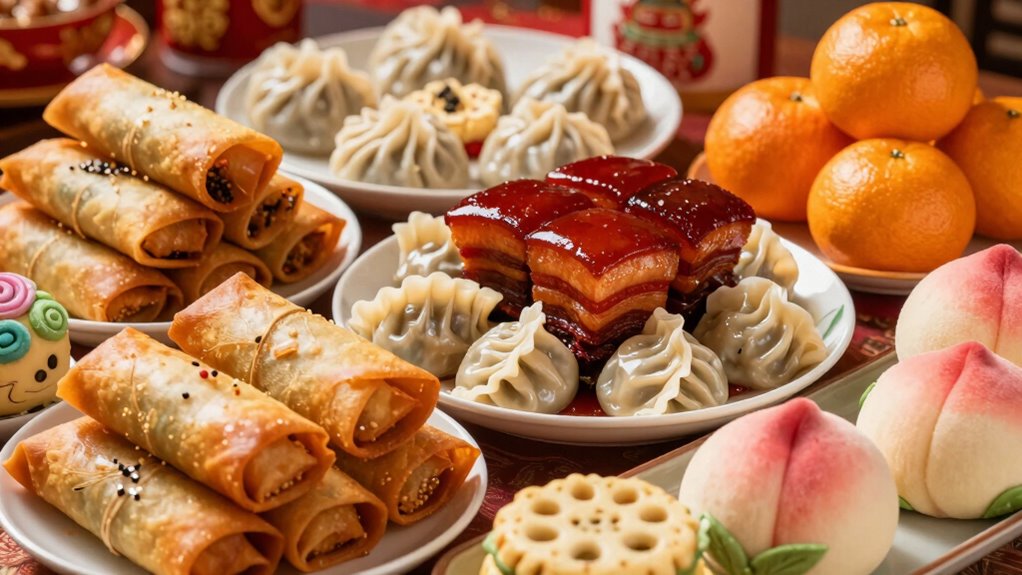
Families gather to enjoy lucky, prosperity-symbolizing dishes during Chinese New Year celebrations.
One of the most iconic fortune foods is dumplings. Shaped like ancient Chinese silver or gold ingots, they are believed to attract wealth. You’ll often find families making dumplings together, filling them with various ingredients to symbolize abundance. Eating dumplings on New Year’s Eve is a tradition that’s passed down through generations, and the act of wrapping them is considered a way to invite prosperity into your life. Another popular festive treat is rice cake, or nian gao, which sounds like “higher year” in Chinese. Consuming nian gao is thought to promote growth and progress, whether in your career, personal goals, or family life.
Fish also plays a vital role in Chinese New Year celebrations. Serving fish, especially whole fish, symbolizes surplus and completeness. The phrase “surplus year after year” is often associated with this dish, as it’s customary to leave some fish uneaten to ensure abundance for the coming year. Alongside these, you’ll find long noodles representing longevity, and vibrant citrus fruits like oranges and tangerines, which stand for wealth and good luck due to their bright color and auspicious sound.
Sweet treats are also an essential part of the celebration. Candied fruits and sweet rice balls symbolize family unity and happiness. Their round shape reminds you of completeness and harmony within your family circle. These festive treats are enjoyed throughout the holiday, adding a touch of sweetness to the joyous atmosphere. You might also indulge in spring rolls, which resemble gold bars and symbolize wealth and prosperity.
As you partake in these traditional foods, remember that each dish is carefully chosen to bring positive energy and good fortune. They connect you with centuries-old customs, reinforcing hopes for a prosperous, healthy, and joyful year ahead. The act of sharing these foods with loved ones strengthens bonds and celebrates the cultural heritage behind each symbolic dish. So, as you savor every bite of these festive treats, you’re not just enjoying delicious food—you’re also partaking in a meaningful tradition that hopes to usher in a year filled with luck, happiness, and abundance.
Frequently Asked Questions
How Do Regional Differences Influence Chinese New Year Dishes?
Regional differences shape Chinese New Year dishes by reflecting local culinary influences and ingredient availability. You’ll notice variations in flavors, cooking methods, and dishes across regions, from spicy Sichuan to sweet Cantonese cuisines. These regional variations celebrate local culture and history, influencing the symbolic meaning behind each dish. By exploring these differences, you gain a richer understanding of how cultural diversity influences traditional celebrations, making each region’s New Year feast unique and meaningful.
Are There Specific Etiquette Rules for Serving New Year Delicacies?
You absolutely must follow proper serving etiquette and dish presentation during Chinese New Year to show respect and bring good luck. Serve dishes in a thoughtful order, typically starting with lighter foods and ending with desserts. Use clean utensils, arrange dishes neatly, and avoid sticking chopsticks upright in bowls, as it resembles offerings to the dead. These small details make your celebration more auspicious and culturally respectful.
What Are the Most Modern Twists on Traditional Chinese New Year Foods?
You can enjoy modern twists on traditional Chinese New Year foods through fusion cuisine and gourmet reinterpretations. Chefs often blend classic ingredients with international flavors, like dumplings filled with spicy Thai herbs or mooncakes infused with gourmet chocolates. These innovative dishes preserve cultural symbolism while adding contemporary flair, making celebrations more exciting. Embrace these creative approaches to honor tradition while exploring new tastes and culinary artistry during the holiday.
How Do Dietary Restrictions Impact Traditional Dishes During the Celebration?
You might find that dietary restrictions influence your traditional dishes by encouraging vegetarian options and gluten-free adaptations. You can enjoy symbolic foods like vegetable dumplings or rice noodles that align with your needs, ensuring you partake in the celebration without compromising your diet. These modifications allow you to honor the cultural significance of the dishes while respecting your restrictions, making the festivities inclusive and enjoyable for everyone.
What Are Some Lesser-Known but Meaningful Chinese New Year Delicacies?
You should explore hidden delicacies like tangyuan, glutinous rice balls symbolizing reunion, or the chewy nian gao, representing progress. Regional variations add unique flavors, such as Hakka sweet rice cake or Sichuan spicy dumplings, enriching your celebration. These lesser-known dishes carry deep meanings, connecting you to local traditions and history. Trying these special foods offers a more meaningful and authentic Chinese New Year experience.
Conclusion
As you celebrate Chinese New Year, remember that each dish carries deep symbolism, bringing luck, prosperity, and happiness into your year ahead. Did you know that over 1.5 billion people worldwide participate in these traditions? Embracing these symbolic foods connects you to a rich cultural heritage, strengthening family bonds and inviting positive energy. So, enjoy every bite, knowing you’re part of a vibrant tradition that spans generations and continents.
Halloween Picks
halloween
As an affiliate, we earn on qualifying purchases.