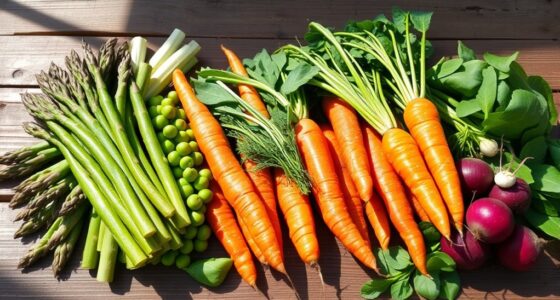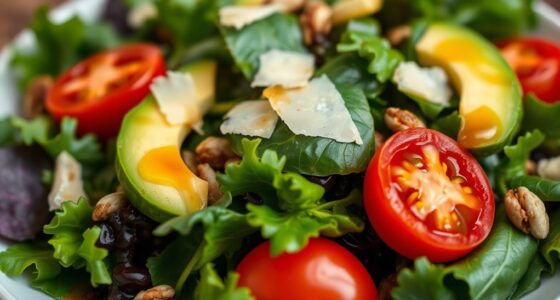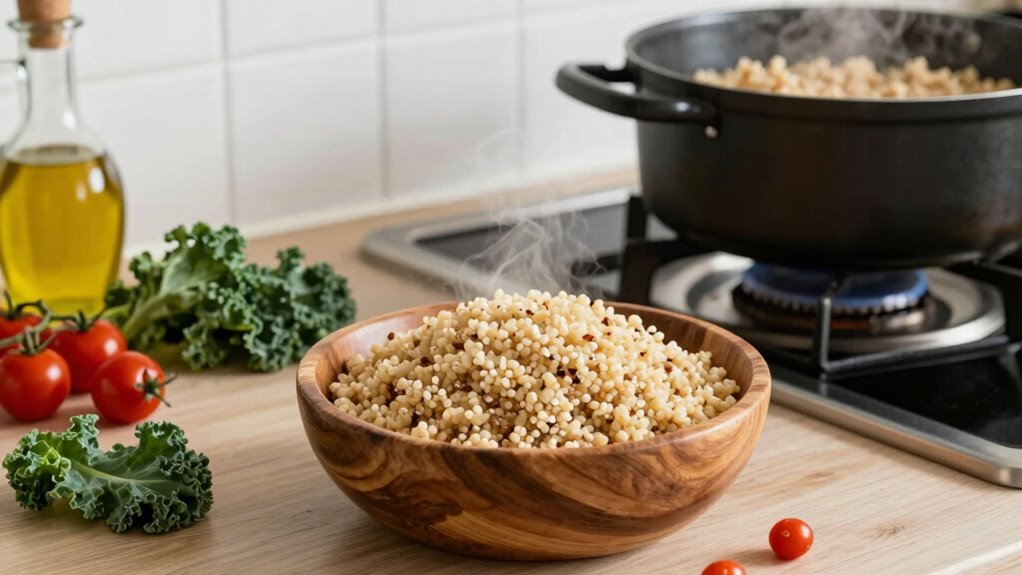

To cook whole grains like quinoa and brown rice, rinse them well to remove impurities, then use the right water ratio—about 1:2 for quinoa and 1:2.5 for brown rice—bringing water to a boil before simmering until tender. Let them rest off heat to improve texture, and store leftovers for quick, nutritious meals. Keep exploring for more tips on mastering these grains and boosting your meals.
Key Takeaways
- Rinse grains thoroughly to remove impurities and improve texture before cooking.
- Use the proper water-to-grain ratios: quinoa (1:2), brown rice (1:2.5), and others as specified.
- Bring liquids to a boil, then reduce heat, cover, and simmer without lifting the lid to retain steam.
- Cook until grains are tender, then let sit off heat to enhance texture and flavor.
- Store leftovers in the fridge for quick, nutritious meals and batch cooking convenience.
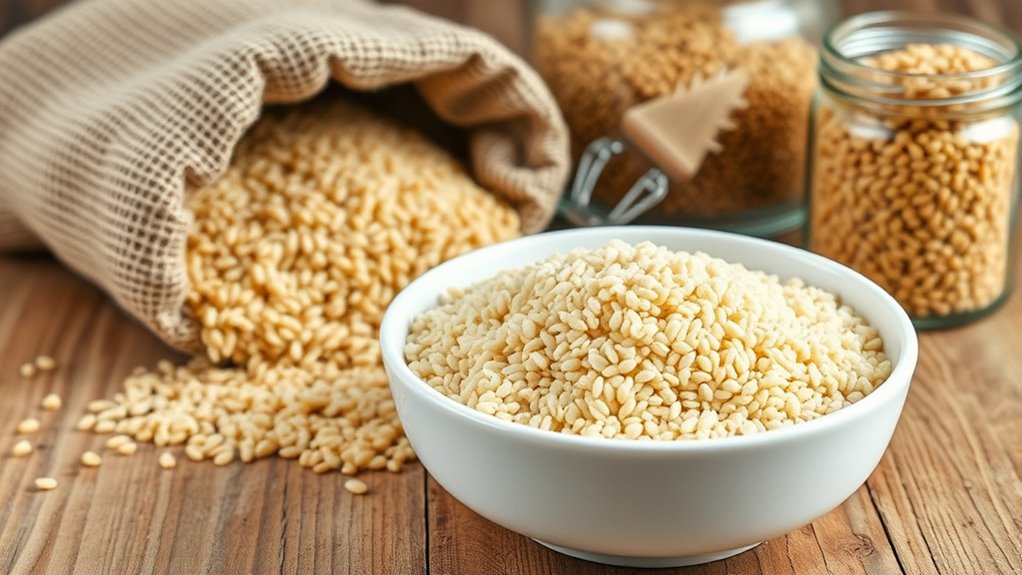
Whole grains are a vital part of a healthy diet, offering more nutrients and fiber than refined grains. They provide essential vitamins, minerals, and antioxidants that support overall well-being. When you include whole grains like quinoa, brown rice, or barley in your meals, you’re not only boosting your nutritional intake but also promoting better digestion and sustained energy levels. Knowing how to cook these grains properly can make a significant difference in your meals’ taste and texture.
Starting with quinoa, it’s quick to cook and versatile. Rinse it thoroughly under cold water to remove any saponins, which can give it a bitter flavor. Use a ratio of 1 part quinoa to 2 parts water or broth for ideal results. Bring the liquid to a boil, then reduce the heat to low and cover. Let it simmer for about 15 minutes until the grains are tender and the water is absorbed. Fluff it with a fork before serving. To maximize nutritional benefits, consider adding a pinch of salt or a splash of lemon juice after cooking, which enhances flavor without adding extra calories.
Brown rice takes a bit longer to cook but offers a chewy texture and rich flavor. Rinse it under cold water to remove excess starch, which helps prevent clumping. Use a ratio of 1 part brown rice to 2.5 parts water or broth. Bring the water to a boil, then reduce the heat to low, cover tightly, and simmer for about 45 minutes. Avoid lifting the lid during cooking, as this can release steam and extend the cooking time. Once done, let it sit off the heat for 10 minutes to allow the grains to firm up. Fluff with a fork and season as desired. For added nutritional benefits, cook brown rice in vegetable or chicken broth instead of plain water, which infuses flavor and nutrients.
Other whole grains like barley or farro follow similar principles. Rinse them well before cooking, use the appropriate water-to-grain ratio, and simmer until tender. Incorporating these grains into your diet is simple once you understand basic cooking tips. For added convenience, consider batch cooking and storing leftovers in the fridge for quick meals later. This approach not only saves time but also guarantees you always have a nutritious grain ready to complement your dishes.

KitchenAid KGM All Metal Grain Mill Attachment
Grinds Low-Moisture Grains (Wheat, Corn, Rice, Etc;) From Coarse to Fine
As an affiliate, we earn on qualifying purchases.
Frequently Asked Questions
How Long Do Whole Grains Like Quinoa and Brown Rice Stay Fresh?
You should store whole grains like quinoa and brown rice in an airtight container in a cool, dark place. Typically, they stay fresh for about 6 months on the grain shelf life. For longer freshness, consider refrigerating or freezing them, which can extend their shelf life to up to a year. Use these freshness tips to keep your grains flavorful and prevent spoilage. Always check for signs of spoilage before cooking.
Can I Cook Multiple Types of Whole Grains Together?
Yes, you can cook multiple types of whole grains together for grain blending and flavor mixing. Just keep in mind their cooking times and water ratios, as some grains like quinoa cook faster than brown rice. To guarantee even cooking, start with grains that take longer, then add quicker-cooking ones partway through. This way, you get a tasty, diverse dish without overcooking or undercooking any grain.
Are There Any Health Benefits Unique to Specific Whole Grains?
Think of each grain as a different hero in your diet. Some, like quinoa, pack more antioxidants, boosting your immune system, while others, such as gluten-containing grains, support digestive health or may challenge sensitive individuals. These unique benefits mean choosing specific whole grains can target your health needs—whether it’s reducing inflammation, improving digestion, or increasing nutrient intake. Embrace variety to reveal each grain’s secret power.
How Do I Store Cooked Whole Grains Properly?
To store cooked whole grains properly, transfer them to an airtight container and refrigerate within two hours of cooking. Use storage tips like labeling with the date to track freshness and consume within 3-4 days. For longer storage, freeze in portions. This helps preserve their freshness and flavor, preventing spoilage. Always reheat thoroughly before eating, and avoid leaving grains out at room temperature to ensure food safety.
Can I Freeze Cooked Whole Grains for Later Use?
Yes, you can freeze cooked whole grains for later use. Use airtight storage containers or freezer-safe bags to prevent freezer burn. Make sure to cool the grains completely before freezing, and label them with the date. For best results, freeze in individual portions, so you can easily reheat only what you need. Follow these freezing tips to keep your grains fresh and flavorful for future meals.
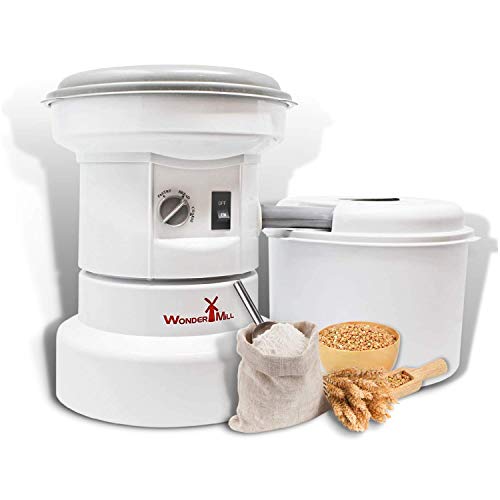
Powerful Electric Grain Mill Wheat Grinder for Home and Professional Use - High Speed Grain Grinder Flour Mill for Healthy Grains and Gluten-Free Flours - Electric Grain Mill by Wondermill,White
FASTER THAN THE COMPETITORS IN ITS PRICE RANGE - This electric grain mill grinder for flour is powered...
As an affiliate, we earn on qualifying purchases.
Conclusion
Now that you know how to cook quinoa, brown rice, and other whole grains, you’re ready to embrace healthier meals. Think of it as your personal quest for nourishment, much like a hero’s journey in a story. With each perfectly cooked grain, you’re mastering the art of wholesome eating. So go ahead—embark on this delicious adventure, and let these grains be your trusty allies in creating vibrant, nutritious dishes every day.

Electric Grain Mill Grinder, 2000W High-Speed 750g 304 Stainless Steel Professional grain mill for flour & Spice Grinder for Kitchen and Coffee Shop - Grinds Grains, Coffee, Dry Spices, Easy Operation
Unlock Professional-Grade Milling with the Yaofafa Grain Mill Grinder: Featuring a robust 2000W high-speed copper motor (28000 RPM)...
As an affiliate, we earn on qualifying purchases.

GVODE Grain Mill Attachment for Kitchenaid Stand Mixer, 9 Levels Flour Mill, Grain Mill for Flour, Fit for Non-Oily Dry Grain Corn, Coffee Bean Grinder, Oats, Millet, Wheat
This kitchenaid grain mill attachment fits all KitchenAid Stand Mixers—simply attach it to the power hub of any...
As an affiliate, we earn on qualifying purchases.