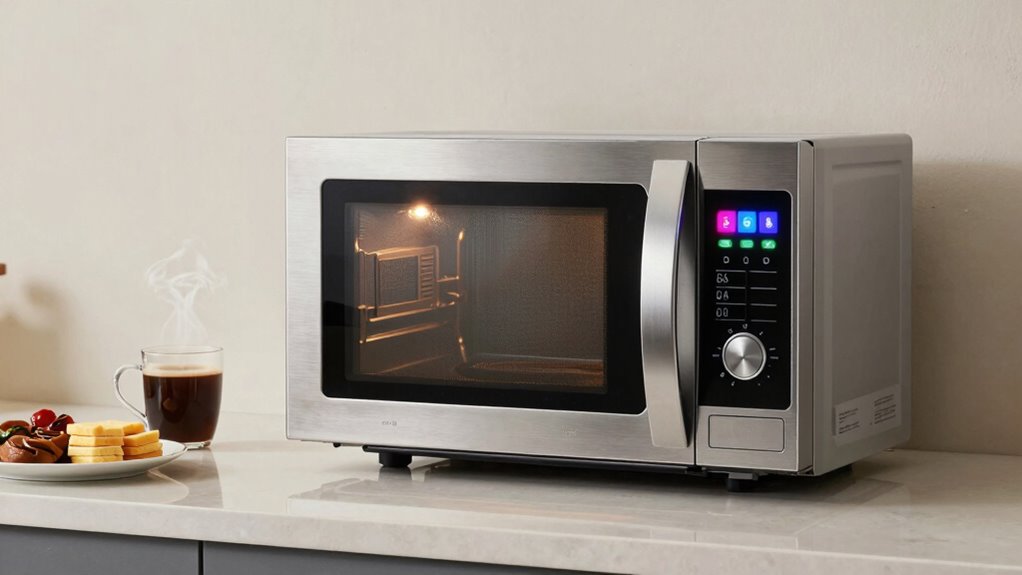
Discover five quick microwave hacks to boost safety, efficiency, and food quality. Use a mug of water to add moisture when reheating dry foods, cover dishes with damp paper towels for even heating, and pause to stir for consistent warmth. Clean regularly with vinegar steam cleans, and place a paper towel beneath messy foods. These simple tricks can transform your microwave experience—keep going to find even more ways to optimize and simplify your routine.
Key Takeaways
- Use a damp paper towel to cover food for even reheating and moisture retention.
- Microwave a cup of water before reheating to add extra moisture and prevent drying out.
- Place a paper towel underneath spills to catch drips and keep the interior clean.
- Steam vegetables in microwave-safe bags to preserve nutrients and simplify cleanup.
- Clean the interior regularly with vinegar and water to eliminate odors and grease buildup.

Microwaves are versatile appliances that can do much more than just reheat leftovers. In fact, mastering a few clever reheating techniques can make your life easier, ensuring your food stays flavorful and doesn’t turn into a soggy mess. One effective trick is to use a microwave-safe cup of water along with your food. This adds moisture to the environment, preventing dishes like rice or pasta from drying out. Covering your food with a microwave-safe lid or a damp paper towel also helps retain moisture and heat evenly. If you’re reheating items with different thicknesses or densities, pause halfway through and stir or rearrange to ensure uniform heating. For liquids, like soups or coffee, use short bursts to avoid boiling over or burning. Proper microwave use can also help prevent accidents and improve safety during operation. Additionally, being mindful of air purifier maintenance and avoiding excess water use can contribute to overall resource conservation in your home. Efficient appliance use not only saves energy but also extends the lifespan of your microwave. Incorporating energy-efficient habits like these can further reduce your household’s carbon footprint.
Aside from reheating, knowing how to clean your microwave properly is essential for hygiene and appliance longevity. Regular cleaning tips include wiping down the interior with a mixture of vinegar and water, which cuts through grease and eliminates odors without harsh chemicals. You can also steam clean your microwave by placing a bowl of water with lemon slices or vinegar inside and microwaving it for a few minutes. The steam loosens grime, making it easier to wipe away with a cloth. Be sure to clean the turntable and the door seals frequently, as these areas tend to accumulate food splatters and residue. Avoid abrasive scrubbers that can scratch surfaces; instead, use a soft cloth or sponge. For stubborn stains, a paste of baking soda and water applied gently with a sponge works wonders. Keeping your microwave clean not only improves its performance but also reduces lingering smells. Proper maintenance, including regular cleaning, ensures your appliance operates efficiently and extends its lifespan.
In addition to cleaning tips, there are a few other hacks to make your microwave experience smoother. For example, placing a paper towel under your food can catch drips and prevent messes. Using microwave steam bags for vegetables preserves nutrients while keeping cleanup minimal. When reheating baked goods or bread, wrapping them in a damp paper towel helps maintain moisture, preventing the crust from becoming hard. If you frequently use your microwave for cooking, consider investing in microwave-safe accessories like silicone steamers or crisper pans, which can expand its functionality. With a few simple reheating techniques and consistent cleaning tips, you’ll maximize your microwave’s potential and keep it running efficiently for years to come. These small adjustments make a significant difference, transforming your microwave from a basic appliance into a true kitchen helper. Practicing microwave energy efficiency can also help reduce electricity bills and support environmental conservation efforts.
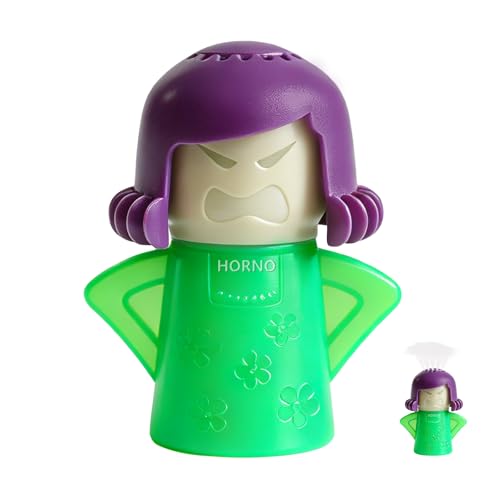
HORNO Angry Mama Microwave Oven Steam Cleaner and Disinfects With Vinegar and Water for Kitchens (Green)
【Food-Grade Safe Material】–Made from premium heat-resistant PP plastic, this cleaner is BPA-free and odorless. It withstands high temperatures…
As an affiliate, we earn on qualifying purchases.
As an affiliate, we earn on qualifying purchases.
Frequently Asked Questions
Can Microwaves Be Safely Used to Sterilize Kitchen Tools?
Yes, you can safely use a microwave to sterilize kitchen tools, but you should be cautious. Make certain the tools are microwave-safe to avoid damage or hazards. Microwave safety is essential, so avoid metal items and check if UV sterilization methods are suitable for your tools. Use a microwave-safe container with water to create steam, which helps sterilize effectively. Always follow manufacturer guidelines for safety and proper sterilization.
How Can I Prevent Food From Splattering in the Microwave?
To prevent food from splattering in the microwave, start by covering your dishes with microwave-safe lids or paper towels. Stir or rotate food halfway through heating to guarantee even cooking and reduce splatters. Use microwave-safe containers to promote safety. Always keep the microwave clean to avoid buildup, which can cause messes. These tips help you maintain microwave safety and prevent splatters, making cleanup easier and your appliance safer to use.
Is It Safe to Microwave Non-Microwave-Safe Containers?
You probably wonder if it’s safe to microwave non-microwave-safe containers. The answer is a cautious no—using the wrong container can lead to dangerous chemical leaching or melting. Always consider material safety: plastics not labeled microwave-safe might release toxins, while metals can spark fires. To keep yourself safe and your food uncontaminated, stick to containers specifically designed for microwave use. Don’t take chances—your safety depends on it.
Can I Use a Microwave to Dry Herbs or Produce?
You can use a microwave to dry herbs or produce, but it’s not the best method. For herb drying techniques and produce dehydration methods, air drying or using a dehydrator works better, preserving flavor and nutrients. If you choose the microwave, spread herbs or produce evenly on a microwave-safe plate, use short bursts, and check frequently to avoid over-drying or burning. This quick method is convenient but may impact quality.
What Is the Best Way to Revive Stale Bread in the Microwave?
Sure, microwave stale bread to revive it, but don’t expect fresh-baked perfection. Start by wrapping the bread in a damp paper towel, then microwave it on high for 10-15 seconds—think of it as a quick bread revival. The moisture helps restore some softness, making stale bread more palatable. Just remember, these stale bread tips work best for a quick fix, not a gourmet loaf.

Microwave Splatter Cover for Food, Upgraded Microwave Cover with Water Steamer, Integrated Handle, Plate Covers, Splatter Guard, Cookware Lid, House Essentials for Gift, 10 Inch
Microwave No More Mess: This microwave cookware is durable, BPA-free, and odorless. Gracenal microwave cover is made with…
As an affiliate, we earn on qualifying purchases.
As an affiliate, we earn on qualifying purchases.
Conclusion
With these clever microwave tricks, you’ll find yourself effortlessly enhancing your culinary routine. Embrace the subtle art of timing and technique, turning everyday tasks into seamless experiences. A little knowledge goes a long way in transforming mundane moments into more refined, enjoyable ones. So, next time you reach for your microwave, remember these small but impactful hacks—your kitchen confidence will thank you, and you’ll savor the simple elegance of well-executed convenience.
HORNO Angry Mama Microwave Oven Steam Cleaner and Disinfects With Vinegar and Water for Kitchens (Green)
【Food-Grade Safe Material】–Made from premium heat-resistant PP plastic, this cleaner is BPA-free and odorless. It withstands high temperatures…
As an affiliate, we earn on qualifying purchases.
As an affiliate, we earn on qualifying purchases.

Le'raze 10inch Glass Microwave Splatter Cover for Food – 100% Food Grade BPA & Lead Free – Dishwasher Safe – Cookware & Bakeware Serving Dish Plate Mess Guard Lid with Easy Grip Silicone Handle Knob
ENSURE A CLEAN MICROWAVE: Use this pure glass splatter guard lid to cover your food plate, bowl, or…
As an affiliate, we earn on qualifying purchases.
As an affiliate, we earn on qualifying purchases.