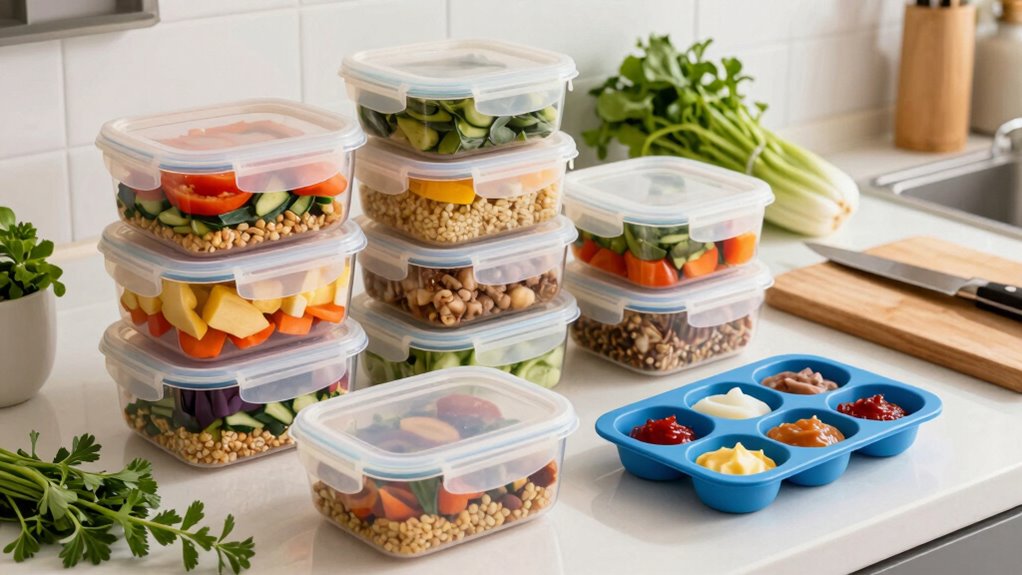
To freeze meals effectively, plan your batches by choosing recipes that freeze well, like stews and casseroles. Use quality, freezer-safe containers, leaving space for expansion, and label them with dates and contents. Allow dishes to cool before portioning into individual servings, then organize containers for easy access. Proper storage prevents freezer burn and keeps food fresh longer. Discover more tips to maximize your meal prep success and keep your freezer organized.
Key Takeaways
- Use quality, freezer-safe containers, leaving space for expansion, and label them with date and contents.
- Cool cooked meals slightly before portioning into containers to prevent sogginess and freezer burn.
- Divide meals into individual portions for easier reheating and waste reduction.
- Organize frozen meals by type and rotate older items to maintain freshness and prevent spoilage.
- Reheat meals evenly to ensure safety and optimal flavor retention.

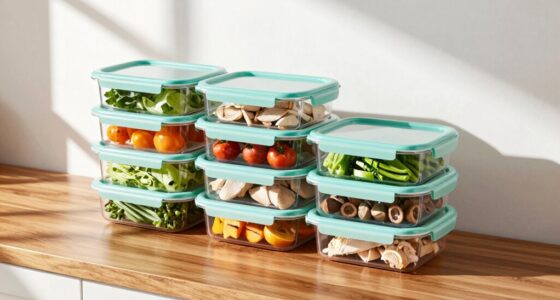
Have you ever felt overwhelmed trying to prepare meals every day? If so, batch cooking can be a game-changer, helping you save time and reduce daily stress. The key to successful meal prep is knowing how to prepare large quantities of food and store them properly for later. One of the most effective ways to do this is by using the right storage containers. Investing in quality, freezer-safe containers makes a huge difference, ensuring your meals stay fresh and free from freezer burn. When choosing containers, look for ones that are leak-proof, microwave-safe, and stackable, which makes organizing your freezer much easier.
Before you start cooking, plan your meals carefully. Think about recipes that freeze well—think hearty stews, casseroles, cooked grains, and roasted vegetables. Having a clear plan prevents you from overbuying ingredients or ending up with leftovers that won’t freeze well. Once you’ve cooked your dishes, allow them to cool slightly before portioning them into your storage containers. This helps prevent excess condensation, which can lead to soggy meals or freezer burn. Be sure to leave some space at the top of each container to accommodate expansion as the food freezes.
Label each container with the date and contents. This simple step guarantees you use your frozen meals in the right order and track their freshness. Using waterproof markers or pre-printed labels can make this process quick and consistent. When stacking containers in your freezer, organize them by type or meal category to streamline your reheating process. Keep frequently used meals in the front or at eye level for easy access, so you’re not digging through your freezer every time you want a quick meal.
Meal prep tips also include portioning your food wisely. Instead of large, single servings, consider dividing meals into smaller, individual portions. This way, you only thaw what you need, reducing waste and saving energy. When reheating, make sure to follow proper safety guidelines—heat your meals evenly, and ensure they reach the right internal temperature. This preserves both flavor and safety. Additionally, understanding freezer organization can help you maximize space and efficiency in your storage system.
Proper storage techniques are essential to maintaining the quality of your frozen dishes over time. To make the most of your freezer space, consider using airtight containers that prevent moisture loss and freezer burn. Finally, get into the habit of regularly reviewing your frozen meals. Rotate older items to the front and plan your weekly menu around what’s available. Batch cooking and proper storage can transform your approach to eating, making busy days manageable without sacrificing nutrition or flavor. With these meal prep tips and the right storage containers, you’ll find it easier than ever to enjoy homemade meals anytime you want, without the daily hassle.
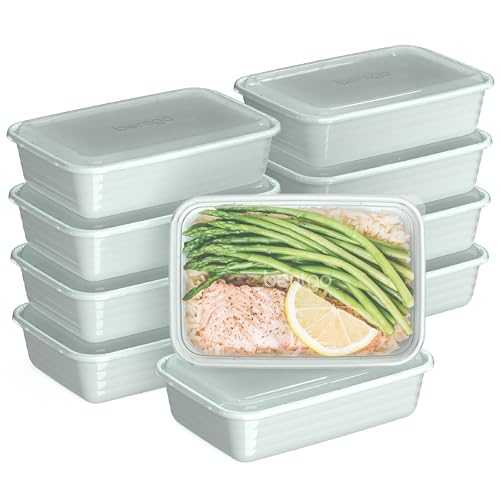
Bentgo Prep – 20-Piece 1-Compartment Reusable Meal Prep Containers with Lids, PFAS & BPA Free Materials, Durable, Microwave, Freezer, & Dishwasher Safe To Go Food Storage (Mint)
#1 Brand Pick for Meal Prep Containers: Bentgo is the top pick for meal prep containers!* This lightweight,…
As an affiliate, we earn on qualifying purchases.
As an affiliate, we earn on qualifying purchases.
Frequently Asked Questions
How Long Can Frozen Meals Be Stored Safely?
Frozen meals can be stored safely in your freezer for about 3 to 6 months, depending on the type of food. To guarantee freezer safety, always use airtight containers or heavy-duty freezer bags to prevent freezer burn. Label your meals with dates so you know the ideal storage duration. Proper storage duration helps maintain food quality and reduces the risk of spoilage, keeping your meals fresh and safe for later consumption.
What Are the Best Containers for Freezing Meals?
Perfectly paired containers prevent spoilage and spills. You should choose airtight containers to keep meals fresh and prevent freezer burn, while vented containers help release excess moisture. Glass containers are great because they’re durable, non-toxic, and won’t stain or retain odors, but plastic options are lightweight and convenient. Both types can be effective; just pick sturdy, microwave-safe options that suit your storage style and meal needs.
How Do I Reheat Frozen Meals Without Losing Quality?
To reheat frozen meals without losing quality, you should thaw them properly using gentle techniques like overnight refrigeration or cold water thawing. This preserves flavor and texture. Once thawed, reheat slowly on the stove or in the microwave, stirring occasionally to distribute heat evenly. Avoid high heat to prevent drying out or overcooking. These thawing techniques help maintain the meal’s flavor preservation and guarantee it tastes fresh.
Can All Recipes Be Frozen Successfully?
Not all recipes freeze equally well, but many can be successfully stored with proper ingredient substitutions and meal prep tips. Dishes like stews, casseroles, and soups tend to freeze better, while foods with high water content or fresh greens may not hold up. To improve results, opt for ingredient substitutions that enhance shelf life and avoid adding delicate ingredients before freezing. Proper packaging and cooling are essential for maintaining quality.
How Do I Prevent Freezer Burn on Stored Meals?
To prevent freezer burn on stored meals, use airtight containers to keep air out and maintain freshness. Don’t overfill containers—leave some space for expansion. Practice portion control by dividing meals into small, single-serving sizes, so you only defrost what you need. Wrap food tightly with plastic wrap or aluminum foil before sealing in containers. Regularly check your freezer for proper temperature, ideally at 0°F (-18°C).

54 Pcs Food Storage Containers with Lids Airtight, (27 Containers &27 Lids) Reusable BPA-Free Plastic Food Containers for Kitchen Organization, Leak Proof Freezer/Microwave Safe Meal Prep Lunch Boxes
Versatile Sizes for Every Storage Need: This 54-piece food storage set includes 27 containers and 27 matching lids…
As an affiliate, we earn on qualifying purchases.
As an affiliate, we earn on qualifying purchases.
Conclusion
Now that you know the essentials of batch cooking and freezing meals, imagine your freezer as a treasure chest, filled with ready-to-eat delights waiting to rescue you from last-minute hunger. With these simple tips, you’ll turn chaos into calm and mealtime stress into a thing of the past. Embrace the art of batch cooking, and watch your busy days become a little easier—because, after all, a well-stocked freezer is like having a secret weapon in your culinary arsenal.

LocknLock Freezer Fit Plastic Freezer Containers | Airtight Stackable Food Storage for Meal Prep | Microwave & Dishwasher Safe | BPA Free Freezer Container with Lid, 3.5L
TRUSTED FREEZER STORAGE PERFORMANCE: Built as durable freezer storage containers with lids, these airtight freezer containers lock in…
As an affiliate, we earn on qualifying purchases.
As an affiliate, we earn on qualifying purchases.

Ezalia 15 Pack- Meal Prep Containers 32oz, Plastic Food Prep Containers Reusable, Leakproof To Go Food Containers with Lids, BPA-Free, Microwave/Dishwasher/Freezer Safe
✸ WEEKLY MEAL PREP & PERFECT SIZE – Ezalia portion control containers set includes 15 pack meal prep…
As an affiliate, we earn on qualifying purchases.
As an affiliate, we earn on qualifying purchases.