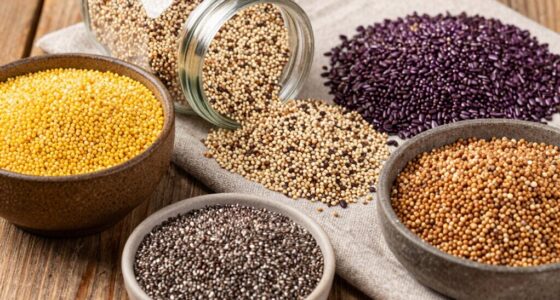

Understanding macros—carbohydrates, protein, and fats—is key to reaching your fitness goals. Carbs provide quick energy, protein helps build and repair muscles, and fats support overall health and satiety. Managing these macros by timing your meals around workouts and spreading intake evenly can boost your results. If you want to learn how to balance them effectively and make your diet easier, you’ll discover helpful tips for macro management right here.
Key Takeaways
- Macros include carbs, protein, and fats essential for energy, recovery, and overall health.
- Understanding macro functions simplifies meal planning and helps align diet with fitness goals.
- Timing carb intake around workouts boosts energy and recovery, while spreading protein supports muscle growth.
- Supplements can help meet macro needs but should complement whole foods for best results.
- Focus on balanced meals and strategic timing to make macro management straightforward and effective.

Have you ever felt overwhelmed trying to understand macros and how they fit into your diet? It’s common to get lost in all the numbers and conflicting advice. But once you grasp the basics, managing carbs, protein, and fat becomes much simpler. One key aspect to consider is meal timing—when you eat your macros can impact your energy levels, recovery, and overall progress. For example, consuming carbs around your workout helps fuel your session and aids recovery afterward. Protein intake spread evenly throughout the day ensures your muscles get the nutrients they need for repair and growth. Fat, on the other hand, is essential for hormone production and overall health, so including healthy fats in each meal can keep you feeling satisfied and energized.
Understanding how meal timing interacts with your macro intake makes it easier to plan your day. If you work out in the morning, having a balanced breakfast with carbs and protein can give you the energy boost you need. Post-workout, a meal rich in protein and some carbs helps replenish glycogen stores and promotes muscle repair. If you prefer evening workouts, adjusting your meal timing ensures you’re fueled and recovered when you need it most. This strategic approach helps optimize your macros without feeling overwhelmed.
When it comes to supplement options, they can be useful tools to fill in gaps in your diet or to support specific goals. Protein powders, for example, offer a quick and convenient way to boost your protein intake without having to cook extra meals. If you’re on the go or don’t get enough from whole foods, supplements can keep you on track. Carbohydrate drinks or gels are popular around workouts, providing fast energy when you need it most. Healthy fats like omega-3 capsules or oils can also supplement your diet if your intake from food is lacking. Just remember, supplements shouldn’t replace whole foods—they’re meant to complement your diet and make meeting your macros more manageable.

Optimum Nutrition Gold Standard 100% Whey Protein Powder, Double Rich Chocolate 1.98 Pound (Packaging May Vary)
24 g High-Quality Whey Protein per Scoop – 100% of the protein from whey for a fast-absorbing, complete…
As an affiliate, we earn on qualifying purchases.
As an affiliate, we earn on qualifying purchases.
Frequently Asked Questions
How Do I Track Macros Without a Scale?
You can track macros without a scale by using portion control and food journaling. Measure your servings with cups or hands to estimate portions, then record everything in a journal or app. Pay attention to food labels for macro info, and stay consistent with your measurements. Over time, you’ll develop a good sense of portions, making macro tracking easier even without a scale.
Can I Adjust My Macros for Weight Loss or Muscle Gain?
Think of your macros as a flexible recipe—you can tweak them to suit your goals. For weight loss, slightly reduce carbs and fats while maintaining protein to preserve muscle. For muscle gain, increase your protein and carbs to fuel growth. Adjust your macros based on meal timing and listen to your body’s signals. Remember, flexibility helps you stay consistent and progress without feeling restricted.
Are There Macro Recommendations for Different Age Groups?
Yes, there are age-specific guidelines for your macros because nutritional needs change as you grow older. For children and teenagers, you need more carbs and fats for growth, while adults should focus on balanced macros for maintenance and energy. Seniors might require fewer carbs and more protein to preserve muscle. To optimize your intake, follow age-specific recommendations, and adjust your macros based on your activity level and health goals.
How Do I Balance Macros on a Busy Schedule?
To balance macros on a busy schedule, prioritize meal prep by preparing nutritious meals and snacks ahead of time. Incorporate quick snack ideas like mixed nuts, Greek yogurt, or fruit to stay on track. Use a meal planner to allocate your macro targets for each meal, ensuring you get enough carbs, protein, and fats throughout the day. This way, you maintain balance without sacrificing time or convenience.
What Are Common Macro Mistakes Beginners Make?
One common macro mistake beginners make is neglecting portion control, which can lead to overeating or undereating certain nutrients. They also often overlook meal timing, missing opportunities to balance carbs, protein, and fats throughout the day. To avoid these pitfalls, focus on properly measuring your portions and spreading your macros evenly across meals. This helps maintain energy levels, supports recovery, and keeps your nutrition on track.
![NatureWise Extra-Strength Omega 3 Fish Oil Supplement - 1000mg per Serving - 600 EPA & 400 DHA and Vitamin E - Support for Heart & Brain Health - Lemon Flavor, GMO-Free - 60 Softgels[1-Month Supply]](https://m.media-amazon.com/images/I/41yo0jElBQL._SL500_.jpg)
NatureWise Extra-Strength Omega 3 Fish Oil Supplement – 1000mg per Serving – 600 EPA & 400 DHA and Vitamin E – Support for Heart & Brain Health – Lemon Flavor, GMO-Free – 60 Softgels[1-Month Supply]
EXTRA STRENGTH OMEGA-3 + VITAMIN E: Omega 3 is an essential fatty acid, while vitamin E is a…
As an affiliate, we earn on qualifying purchases.
As an affiliate, we earn on qualifying purchases.
Conclusion
Now that you understand the basics of carbs, protein, and fat, you’re ready to make smarter food choices. Remember, “you are what you eat,” so fueling your body with the right macros supports your health and goals. Keep experimenting, stay balanced, and don’t get overwhelmed. Small, consistent steps lead to big changes. With these simple tips, you’re well on your way to mastering your macros and feeling your best every day.
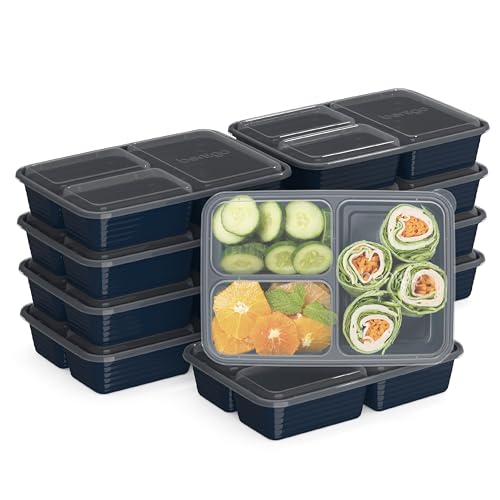
Bentgo Prep – 20-Piece 3-Compartment Reusable Meal Prep Containers with Lids, PFAS & BPA Free Materials, Durable, Microwave, Freezer, & Dishwasher Safe To Go Food Storage (Navy Blue)
#1 Brand Pick for Meal Prep Containers: Bentgo is the top pick for meal prep containers!* This lightweight,…
As an affiliate, we earn on qualifying purchases.
As an affiliate, we earn on qualifying purchases.

GU Energy Original Sports Nutrition Energy Gel, Vegan and Dairy-Free On-the-Go Energy for Any Workout, Strawberry Banana, 8-Count
The Original Sports Nutrition Energy Gel designed to help athletes perform their best; 100 calories and essential electrolytes…
As an affiliate, we earn on qualifying purchases.
As an affiliate, we earn on qualifying purchases.