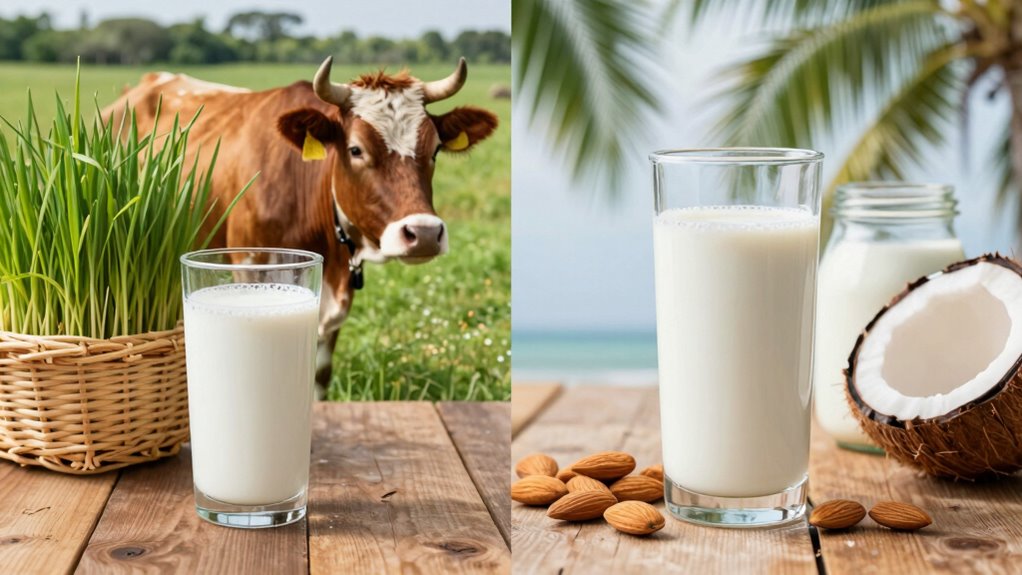

Choosing between dairy and non-dairy milk depends on your nutritional needs and values. Dairy milk provides a natural source of protein, calcium, and vitamin D, supporting strong bones. Non-dairy options like oat or soy milk often have a lower environmental impact and can be fortified with essential nutrients, making them a good choice for reducing your carbon footprint or if you’re lactose intolerant. Want to understand more about making the right choice for you?
Listen free for 30 days with Audible
Thousands of audiobooks and originals — cancel anytime.
As an affiliate, we earn on qualifying purchases.
Key Takeaways
- Dairy milk offers natural, complete nutrition with high-quality protein and essential nutrients, while non-dairy options are often fortified to match these benefits.
- Non-dairy milks generally have a lower environmental impact, especially oat and soy, but almond milk requires significant water resources.
- Dairy milk is minimally processed, maintaining natural nutrient balance, whereas plant-based milks may contain added sugars, thickeners, or fortifications.
- Choose dairy if you prioritize natural, nutrient-rich options; opt for non-dairy if reducing environmental footprint or avoiding lactose is important.
- Consider personal health needs, environmental impact, and label details to make an informed choice between dairy and plant-based milks.
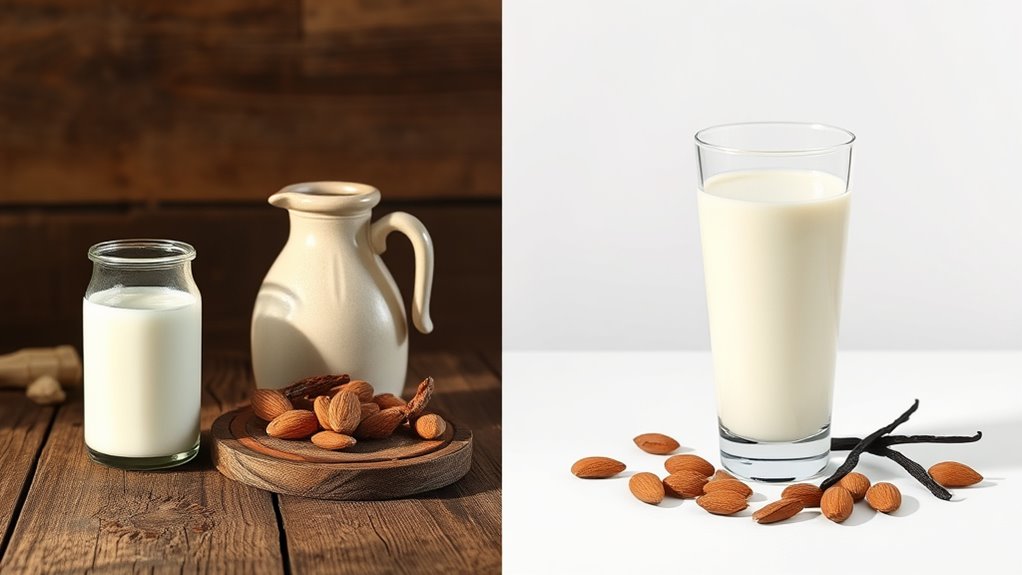
When choosing between dairy and non-dairy milk, understanding their differences can help you make an informed decision that fits your dietary needs and preferences. One key aspect to consider is their nutritional differences. Dairy milk naturally contains a balanced mix of protein, calcium, vitamin D, and other essential nutrients, making it a convenient choice for supporting bone health. It also provides high-quality protein, which is important if you want a complete amino acid profile. Non-dairy alternatives, on the other hand, vary widely in their nutrient content. Many are fortified with calcium and vitamins like B12 and D to match or exceed the levels found in dairy milk. However, they often contain less protein, especially options based on almonds or rice, which may not be sufficient if you’re relying on milk as a primary protein source. You’ll want to read labels carefully, as some non-dairy milks also contain added sugars or thickeners that can impact your health. Nutritional content can vary significantly among different brands and types, so comparing labels is essential. Additionally, be aware that the processing methods used in producing some plant-based milks can affect their nutrient retention and overall health benefits.
Environmental impact is another significant factor influencing your choice. Dairy farming has a notable environmental footprint, involving high water consumption, greenhouse gas emissions, and land use. Producing a gallon of cow’s milk requires about 1,000 gallons of water and releases substantial methane, a potent greenhouse gas. In contrast, most plant-based milks have a lower environmental impact. Almond milk, while popular, still requires significant water for almond cultivation, particularly in drought-prone regions. Oat and soy milks tend to be more eco-friendly, requiring less water and land to produce. If sustainability matters to you, non-dairy options generally offer a greener alternative.
Choosing between dairy and non-dairy milk ultimately depends on your individual priorities. If you value a straightforward, nutrient-rich option and aren’t concerned about environmental implications, dairy milk might suit you well. However, if you’re looking to reduce your carbon footprint or have dietary restrictions such as lactose intolerance or a vegan lifestyle, plant-based milks could be the better choice. Just remember to compare labels, especially for fortified nutrients and added ingredients, to ensure you’re getting the nutritional profile you need. As you weigh these factors, keep in mind that your choice impacts both your health and the planet. Making an informed decision means considering both the nutritional differences and environmental impact, allowing you to select the option that aligns with your values and lifestyle.

Cuisinart Mini Food Processor, Reversible Blade, 24-Ounce Capacity
- Powerful 250-Watt Motor: Efficient food processing capabilities
- Reversible Stainless Steel Blade: Quickly chops, dices, and grinds
- 24-Ounce Capacity: Suitable for small to medium tasks
As an affiliate, we earn on qualifying purchases.
Frequently Asked Questions
Are There Environmental Benefits to Choosing Non-Dairy Milk?
Yes, choosing non-dairy milk can have environmental benefits. You’ll notice a lower environmental impact, especially regarding water footprint, since many plant-based options like almond, soy, or oat milk require less water than dairy. By making this switch, you help reduce greenhouse gas emissions and conserve water resources, contributing to a more sustainable planet. It’s a simple way to lessen your environmental footprint while enjoying your favorite drinks.
How Do Dairy and Non-Dairy Milks Compare in Protein Content?
Dairy milk generally provides more dairy protein, offering about 8 grams per cup, while plant-based options vary—soy milk has comparable protein, around 7 grams, but almond or rice milk contain much less. If you’re focusing on plant-based protein, soy or pea milk are your best choices. Consider your dietary needs and preferences to choose the milk that best supports your protein intake and health goals.
Can Non-Dairy Milk Be Suitable for Infants and Young Children?
Non-dairy milk isn’t suitable for infants and young children as their primary source of nutrition. You should prioritize infant nutrition with breast milk or specially formulated baby formula, which provides essential nutrients. Non-dairy milks lack crucial proteins, fats, and vitamins needed for healthy growth. For toddlers, consult a pediatrician before introducing any non-dairy alternatives, ensuring they meet nutritional needs and support proper development.
What Are the Common Allergens Found in Dairy and Plant-Based Milks?
You should be aware that dairy milk often contains nut allergens like cashews or almonds, which can trigger nut allergies. Plant-based milks, such as soy milk, may cause issues if you have soy intolerance. Always check labels carefully to identify potential allergens, whether it’s nuts, soy, or other ingredients. Being cautious helps you avoid allergic reactions and choose the safest milk option for your needs.
How Do Shelf Lives of Dairy and Non-Dairy Milks Differ?
You’ll find that shelf life comparison shows dairy milk typically lasts about 1-2 weeks past the sell-by date when refrigerated properly, while non-dairy milks, especially unopened cartons, can last 1-3 months. Storage requirements differ; dairy needs consistent refrigeration, whereas plant-based varieties often have preservatives allowing for longer shelf life. Always check expiration dates and store your milk in a cool, dark place or fridge to maintain freshness.

TWOMEOW Food Processor 4 Cup, Electric Food Chopper, 【Small but Powerful】Meat Grinder with 2 Bowls, 2 Speed & 4 Blades for Vegetable, Meat, Nuts, Functions for Chopping, Dicing, Mixing and Puree
- Two Speed Settings: Adjust for soft or hard ingredients
- Four Double S-Shaped Blades: Efficient chopping and mincing
- Versatile Kitchen Tool: Purees, sauces, and baby food
As an affiliate, we earn on qualifying purchases.
Conclusion
Choosing between dairy and non-dairy milk is like picking a path through a forest—you’ll want to weigh your tastes, needs, and values. Both options are like different trees in the same forest, offering unique benefits and quirks. Ultimately, your choice shapes your health and your impact on the world around you. Trust yourself to find the right fit, and remember, every sip is a step along your own personal journey through this diverse landscape.

Hamilton Beach 3 Cup Electric Vegetable Chopper & Mini Food Processor
- Easy to Use: Stack and press design for simple operation
- Compact Size: Chops up to 3 cups for daily use
- Versatile Blades: Stainless steel blades for chopping and pureeing
As an affiliate, we earn on qualifying purchases.

KitchenAid 3.5 Cup Food Chopper, KFC3516ER, Empire Red
- Capacity: 3.5 cup work bowl
- Design Features: Locking blade, handle, pour spout
- Cleaning: Dishwasher-safe components
As an affiliate, we earn on qualifying purchases.
Baby shower & registry season Picks
baby registry must-haves
As an affiliate, we earn on qualifying purchases.