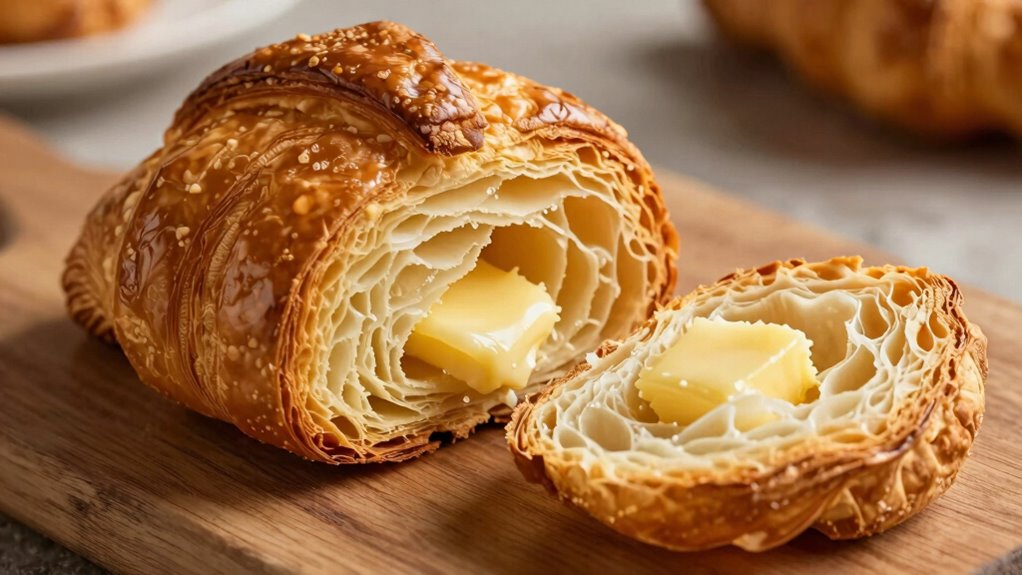

Laminated dough creates flaky, airy layers by folding butter into dough through a series of precise rollings and folds. You start by encasing cold butter in dough, then fold and roll it multiple times, resting in the fridge between steps to keep everything cold and firm. This process builds thin layers that bake into crispy, delicate pastries like croissants and puff pastry. Keep practicing these techniques, and you’ll discover the secrets to perfect laminated dough with each try.

Get kitchen staples and gadgets delivered free — and shop member deals
- Fast, free delivery on millions of items
- Access to Prime Big Deal Days deals on October 6–7
- Prime Video, Amazon Music and more included
Key Takeaways
- Laminated dough involves folding and rolling butter into dough to create multiple thin, flaky layers.
- Proper encasement of cold butter prevents leaks and ensures even layering during folding.
- Repeated folding and resting in the fridge build and maintain the dough’s layered structure.
- Keeping butter cold and working quickly are essential to achieve crisp, flaky results.
- Mastering lamination results in light, airy croissants and puff pastries with distinct layers.
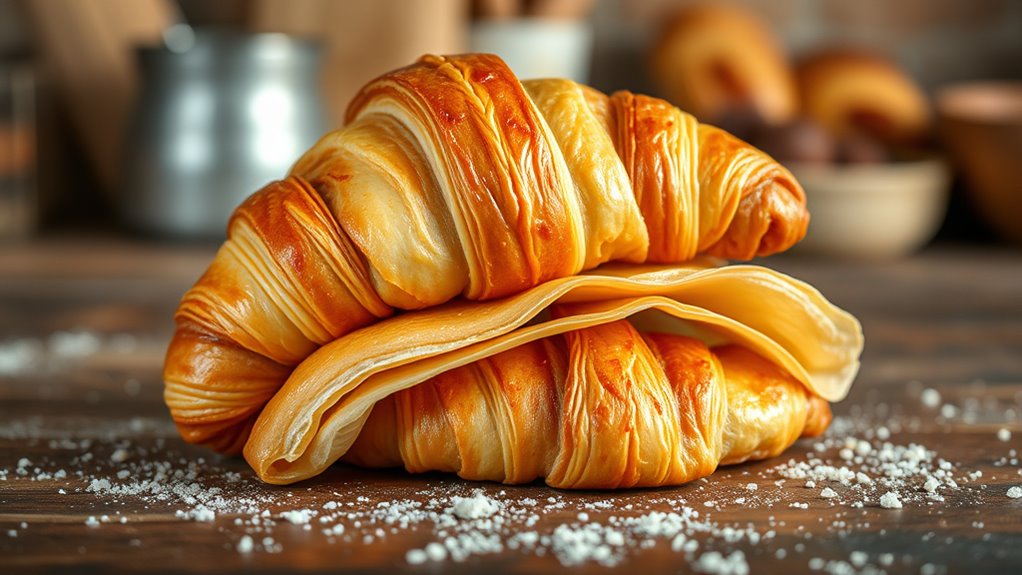
Laminated dough is a versatile baking technique that creates light, flaky layers through a process of folding and rolling butter into dough. This method relies on careful butter layering and dough folding to produce the signature airy texture found in pastries like croissants and puff pastry. When you start, you’ll want to guarantee your butter is cold and firm, making it easier to incorporate into the dough without melting. You’ll roll out your dough into a rectangle, then place a slab of butter on one side, folding the other over to encase the butter completely. This initial step sets the stage for creating multiple layers.
Once your butter is enclosed, you’ll perform a series of dough folding and rolling. Typically, you’ll roll the dough into a long rectangle, then fold it into thirds—similar to folding a letter—creating multiple layers of butter and dough. This process, known as lamination, is essential because each fold and roll builds up layers that, when baked, separate and puff up into flaky, tender layers. The key is to keep the butter cold and to work quickly to prevent it from melting into the dough, which would compromise the layering.
As you repeat the rolling and folding process—usually three to six times—you’ll notice the dough becoming more elastic and layered. Resting the dough in the fridge between folds helps maintain the butter’s firmness and relaxes the gluten, making subsequent folds easier. Be attentive to your technique: don’t press too hard or roll unevenly, as this can affect the final texture. Proper dough folding ensures even layers and prevents the butter from leaking out or creating uneven pockets.
During each fold, you’ll also want to pay attention to the dough’s shape and size, aiming for consistent thickness and dimensions. When done correctly, the layered dough will resemble a stack of thin sheets. When baked, these layers melt and separate, giving your pastry that characteristic flaky crunch. This process might seem intricate at first, but with practice, you’ll develop a feel for the right amount of pressure and folding technique needed to produce perfect layers.
In the end, mastering butter layering and dough folding transforms simple ingredients into extraordinary baked goods. Each step, from rolling to folding, contributes to the delicate structure that makes laminated dough so special. As you bake, you’ll see your efforts pay off in beautifully layered croissants and puff pastries that are light, crisp, and irresistibly flaky.
As an affiliate, we earn on qualifying purchases.
Frequently Asked Questions
Can Laminated Dough Be Made Gluten-Free?
Yes, you can make laminated dough gluten-free. You’ll need to replace regular flour with gluten-free flour, which varies in texture, so experiment to find the best one. Additionally, use alternative binders like xanthan gum or psyllium husk to mimic gluten’s elasticity and structure. Keep in mind, gluten-free laminated dough may require adjustments in handling and resting times, but with patience, you can achieve flaky, delicious results.
How Long Does Laminated Dough Last in the Fridge?
Laminated dough typically lasts in the fridge for up to 3 days if stored properly. For dough storage, wrap it tightly in plastic wrap or place it in an airtight container to prevent it from drying out or absorbing odors. Use refrigeration tips like keeping it on the coldest shelf and avoiding temperature fluctuations. Always check for any signs of spoilage before using, and re-roll or chill the dough if needed.
What Are Common Mistakes When Layering Dough?
You might think layering dough is simple, but overworking it or creating uneven layers is a common mistake that sabotages your pastry’s flakiness. Ironically, the more you handle the dough, the less flaky it becomes. Keep your layers even by chilling the dough often and handling it gently. Avoid rushing, and you’ll end up with beautifully layered, airy croissants or puff pastry—no wonder perfection feels so elusive!
Is Laminated Dough Suitable for Vegan Diets?
Laminated dough can be vegan-friendly if you use vegan butter alternatives or ingredient substitutions. You can replace traditional butter with plant-based spreads that melt and layer similarly. Just guarantee your vegan butter has the right consistency and fat content to achieve flaky, tender layers. Keep in mind, ingredient substitutions may require adjustments in technique, but with some experimentation, you can create delicious vegan laminated pastries.
Can Laminated Dough Be Frozen Before Baking?
Did you know that freezing dough can extend its shelf life by up to three months? Yes, you can freeze laminated dough before baking. Use proper freezing techniques like wrapping it tightly in plastic wrap and placing it in an airtight container to prevent freezer burn. This dough preservation method helps you plan ahead, and you can bake fresh croissants or puff pastry straight from the freezer when you’re ready.
As an affiliate, we earn on qualifying purchases.
Conclusion
Now that you’ve uncovered the secrets of laminated dough, you’re ready to create flaky masterpieces like a pro. Think of your dough as a blank canvas, ready to be transformed into golden croissants and airy puff pastries. With patience and practice, you’ll turn simple ingredients into a symphony of buttery layers that dance on your palate. So, roll up your sleeves and let your baking journey unfold—deliciousness is just a fold away!
As an affiliate, we earn on qualifying purchases.
dough scraper for laminated dough
As an affiliate, we earn on qualifying purchases.
As an affiliate, we earn on qualifying purchases.
NFL season / tailgating Picks
team gear
As an affiliate, we earn on qualifying purchases.