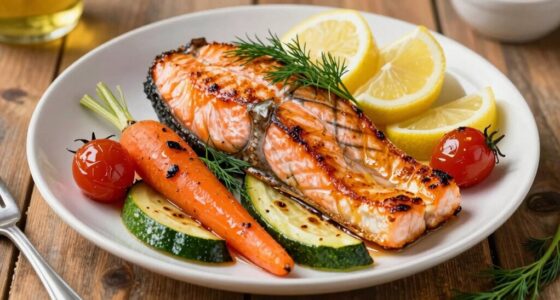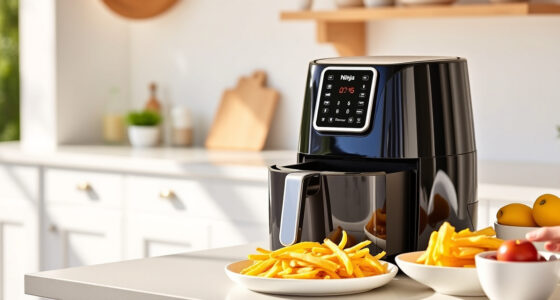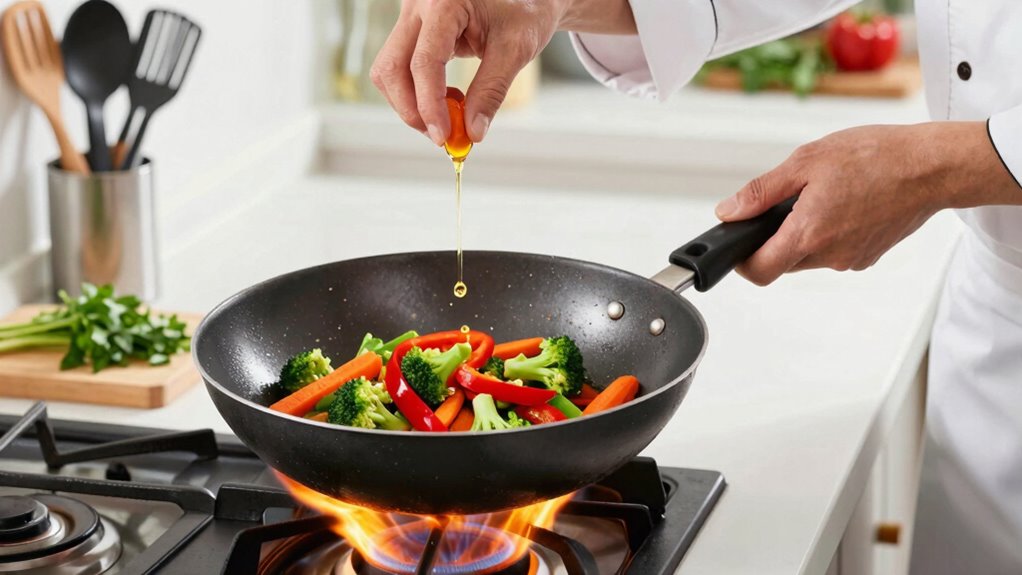

You can cut fat without losing flavor by using when you oven-bake or air fry foods with just a light spray of oil for crispiness. Opt for baking or steaming instead of frying, and substitute mashed avocado, yogurt, or broth for added moisture and richness. Enhance taste with herbs, spices, and acid to boost flavor without extra fat. Exploring these techniques helps you enjoy healthy, flavorful dishes—continue to uncover even more ways to cook smarter.

Get kitchen staples and gadgets delivered free — and shop member deals
- Fast, free delivery on millions of items
- Access to Prime Big Deal Days deals on October 6–7
- Prime Video, Amazon Music and more included
Key Takeaways
- Use oven-baking or air frying with minimal oil sprays to achieve crispness without excess fat.
- Substitute oil with broth, mashed avocado, or Greek yogurt to enhance moisture and flavor healthily.
- Incorporate herbs, spices, citrus, and acids to boost flavor without relying on added fats.
- Coat foods with panko breadcrumbs or crushed nuts for crunch without extra oil.
- Employ steaming, poaching, or non-stick pans to cook foods flavorful and tender with little to no oil.
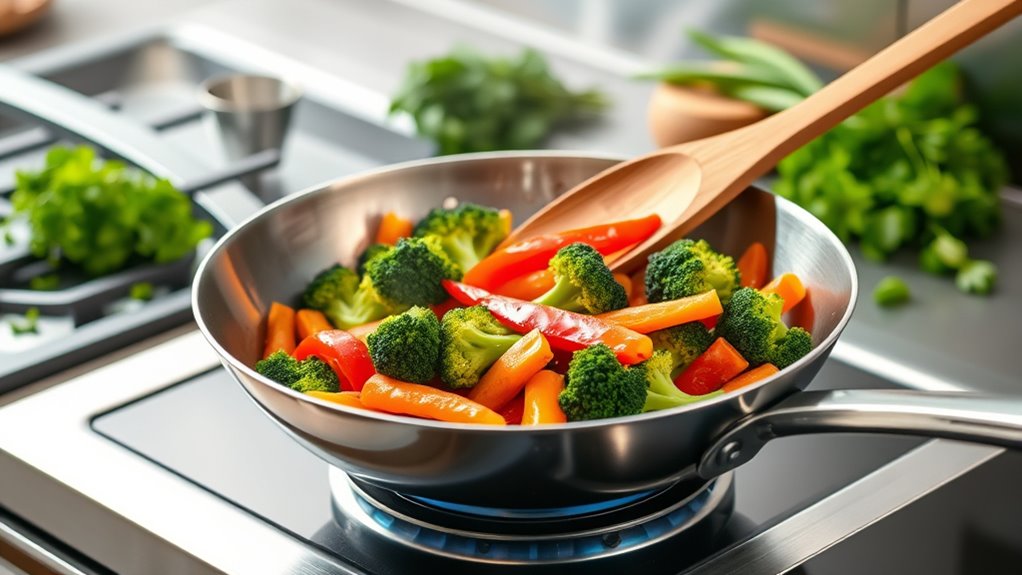
Have you ever wondered if you can enjoy flavorful, crispy dishes while using less oil? The good news is, you absolutely can. Achieving that satisfying crunch and rich taste doesn’t have to come from a heavy hand with oil. Instead, you can incorporate healthy substitutions and techniques that enhance flavor without sacrificing texture. By doing so, you not only cut down on unnecessary fat but also boost the nutritional profile of your meals.
Enjoy crispy, flavorful dishes with less oil using smart substitutions and cooking techniques.
One of the most effective ways to reduce oil is by swapping traditional frying with oven-baking or air frying. These methods use considerably less oil but still deliver crispy results. When you bake or air fry, consider using a light spray of oil or a brush of minimal oil to help with browning and flavor enhancement. This approach allows you to enjoy the same crunch without the excess fat. For even better flavor, marinate your ingredients beforehand. Herbs, spices, and citrus juices can impart bold tastes, making your dishes flavorful and satisfying without relying on oil as the primary flavor carrier.
Healthy substitutions can also involve using alternatives like mashed avocado, Greek yogurt, or even pureed vegetables to add moisture and richness. These ingredients not only contribute to flavor enhancement but also boost the nutritional value of your dishes. For instance, swapping out butter or oil in baking recipes with mashed bananas or applesauce can reduce fat content while maintaining moisture and taste. Similarly, using vegetable or chicken broth instead of oil for sautéing can keep vegetables flavorful and tender without adding fat. Incorporating healthy cooking techniques can further optimize your meals for health and flavor. Additionally, understanding cooking science can help you make smarter choices to achieve desired textures and flavors with less fat.
Using alternative cooking methods like steaming or poaching can also help you prepare tasty dishes without the need for excess oil. When aiming for crispy textures, consider coating foods with panko breadcrumbs or crushed nuts. These ingredients add crunch and flavor, allowing you to cut down on oil without losing that desirable texture. A light spritz of oil on the coating can enhance browning without excessive fat, making your dishes both tasty and healthier. Additionally, using a non-stick pan can reduce the need for oil altogether, allowing you to cook foods evenly with minimal fat. Connected home fitness technology can even assist you in tracking your nutritional intake, helping you stay mindful of healthier cooking habits.
Finally, pay attention to seasoning. Salt, garlic, pepper, and acid like vinegar or lemon juice can elevate flavors dramatically. This means you don’t need to rely on heavy oil or butter to make dishes flavorful. Instead, focus on building layers of taste with herbs, spices, and acidity. Experimenting with flavor enhancement techniques can make your dishes more enticing without added fat. With these techniques, you’ll find that enjoying crispy, flavorful meals with less oil isn’t just possible — it’s easy and delicious.
Frequently Asked Questions
How Can I Make Crispy Fried Foods With Less Oil?
You can make crispy fried foods with less oil by trying batter alternatives like cornstarch or chickpea flour, which create a crunchy coating with minimal fat. Additionally, use an air fryer to achieve that crispy texture without deep frying. Simply coat your food with the batter, then air fry at high heat until golden and crispy. This way, you enjoy delicious, less-oily fried dishes without sacrificing flavor or crunch.
Are There Alternative Oils That Are Healthier but Still Flavorful?
Think of choosing healthier oils like selecting vibrant, fresh paint for your masterpiece. You can opt for plant-based fats like avocado or olive oil, which are rich in healthy monounsaturated fats, or try infused oils for extra flavor without added calories. These alternatives, with their distinct tastes, help you enjoy flavorful dishes while reducing saturated fat intake, making your cooking both delicious and heart-healthy.
Can I Use Non-Stick Cookware to Reduce Oil Usage?
Yes, you can use non-stick cookware to reduce oil usage. Its non-stick benefits allow you to cook with less oil or even none at all, helping you cut fat without sacrificing flavor. Just remember proper cookware maintenance—avoid metal utensils and hot cleaning to prolong its life. This way, you enjoy healthier meals while keeping your cookware in good shape for future use.
What Are Quick Tips for Oil-Free Stir-Frying?
To make oil-free stir-frying, use a splash of healthy substitutes like broth or water to keep ingredients moving. Keep your pan hot for quick searing, which enhances flavor naturally. Add aromatics like garlic and ginger early to boost flavor without oil. Stir frequently to avoid sticking, and finish with a splash of soy sauce or vinegar for added flavor enhancement. This method keeps your dish tasty and healthy.
How Does Reducing Oil Affect the Nutritional Value of Dishes?
Reducing oil in your dishes mainly lowers calorie content, making your meals healthier and easier to manage weight-wise. It also helps retain more nutrients that might otherwise degrade or become less bioavailable when exposed to excess fat. By cutting back on oil, you preserve the dish’s natural flavors and nutrients, ensuring you get the maximum health benefits without sacrificing taste, so you can enjoy balanced, nourishing meals every time.
Conclusion
By mastering these techniques, you’re fundamentally turning your kitchen into a healthful oasis where flavor and wellness dance in harmony. Think of each drop of oil as a precious gem—using less makes each one sparkle brighter, without drowning your dishes in excess. With a little creativity, you’ll craft vibrant, tasty meals that nourish both your body and your soul. Embrace these methods, and watch your cooking transform into a colorful, flavorful garden—rich, balanced, and bursting with vitality.
NFL season / tailgating Picks
team gear
As an affiliate, we earn on qualifying purchases.