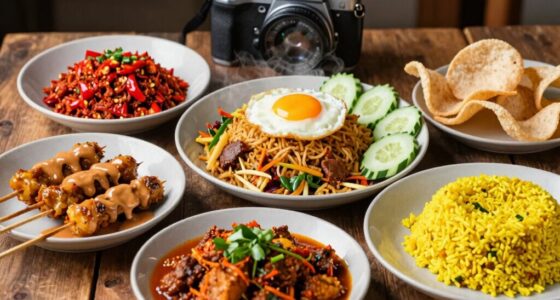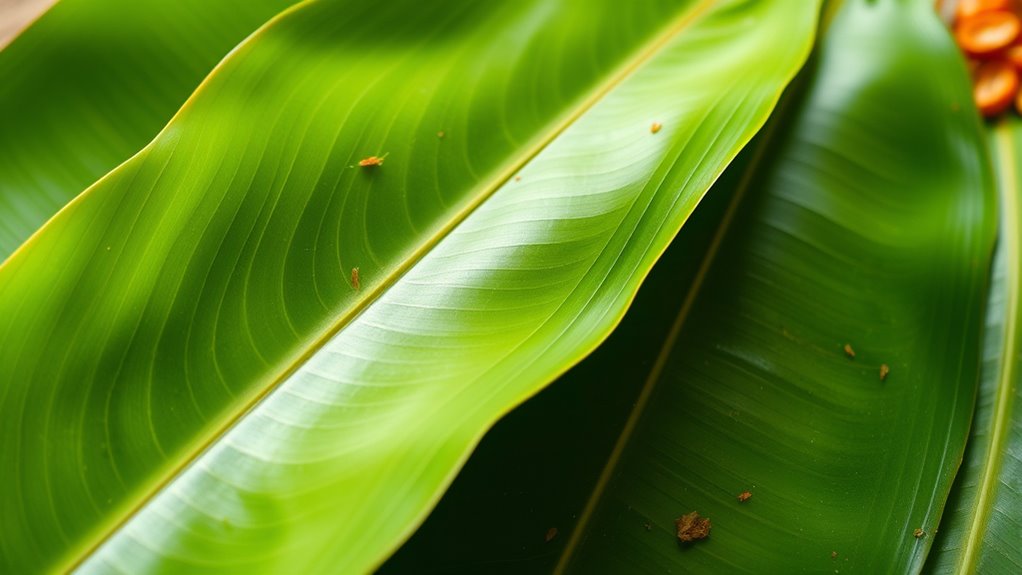

In Indonesian cooking, banana leaves bring a vibrant, natural touch to your dishes. They enhance aroma and flavor by infusing subtle earthy notes and locking in moisture, making your meals tender and aromatic. The leaves also add visual appeal, reflecting cultural heritage and tradition. Eco-friendly and versatile, they suit many dishes from grilled fish to rice. Exploring how these leaves connect food, aroma, and culture will reveal even richer culinary secrets.
Key Takeaways
- Banana leaves enhance Indonesian dishes’ visual appeal, signaling freshness and cultural authenticity.
- They infuse subtle earthy aromas, enriching flavors and creating aromatic, tender meals.
- The leaves act as natural barriers, locking in moisture and preserving traditional taste profiles.
- Using banana leaves reflects cultural heritage, emphasizing harmony with nature and communal sharing.
- They are versatile, eco-friendly, and easy to handle, supporting traditional cooking methods and sustainable practices.
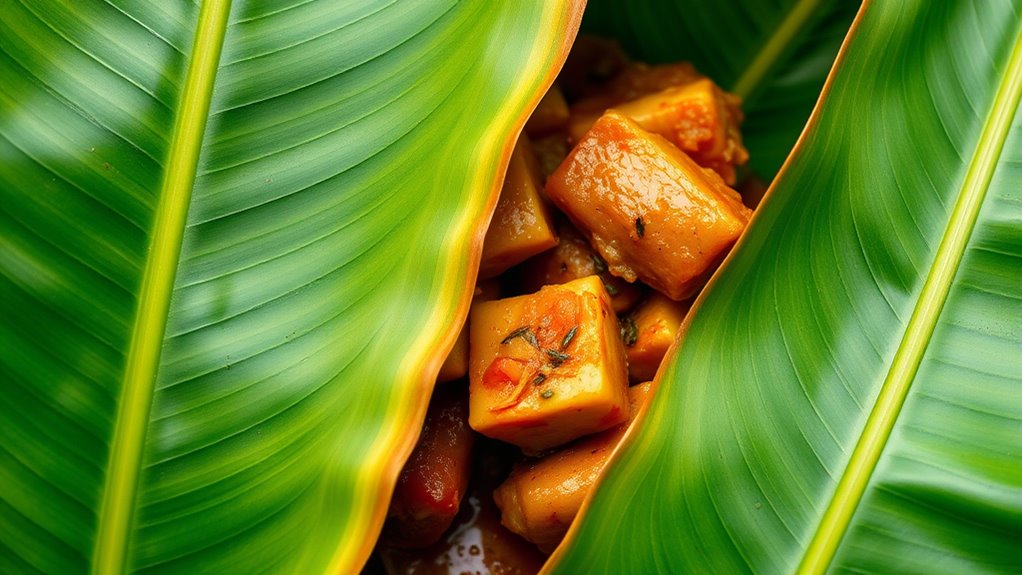
In Indonesian cooking, banana leaves are more than just a packaging material—they’re an essential element that imparts flavor, aroma, and a unique visual appeal to many traditional dishes. When you use banana leaves to wrap or serve food, you immediately elevate the presentation, making the dish more inviting and authentic. Their vibrant green color contrasts beautifully with the rich, colorful ingredients inside, enhancing the overall food presentation. This visual appeal isn’t just for aesthetics; it signals freshness and tradition, drawing people in and promising a flavorful experience.
Beyond appearance, banana leaves serve as eco-friendly packaging, aligning with sustainable practices. Unlike plastic or synthetic materials, they’re biodegradable and renewable, reducing waste and environmental impact. When you choose banana leaves, you’re making a conscious decision to support eco-friendly alternatives that respect nature. They can be reused if handled carefully, and after use, they decompose naturally without leaving harmful residues. This sustainable aspect makes banana leaves especially appealing in today’s eco-conscious world, where reducing plastic waste is more important than ever.
Banana leaves are eco-friendly, biodegradable, and reusable, supporting sustainable practices and reducing environmental impact.
Using banana leaves in cooking also enhances the flavor and aroma of dishes. As you wrap food in the leaves and cook it, the heat infuses the ingredients with a subtle, earthy aroma that’s hard to replicate with other packaging methods. The leaves act as a natural barrier, locking in moisture and flavors, making the food tender and aromatic. When served, the aroma wafts up, enticing your senses and creating a sensory experience that’s deeply rooted in tradition. The slight bitterness of the leaf itself balances the richness of the dish, adding depth to every bite. Additionally, the cultural significance of banana leaves in Indonesian cuisine reflects values of harmony with nature and communal sharing.
Handling banana leaves is straightforward, and their versatility allows you to prepare a variety of dishes—from grilled fish and rice to savory meats and vegetarian offerings. When you use them, you also embrace a cultural heritage that values harmony with nature and respect for local ingredients. The leaves are often used in communal meals, symbolizing unity and sharing, which adds a layer of cultural significance to your culinary presentation.
Frequently Asked Questions
How Do Banana Leaves Affect the Nutritional Value of Dishes?
You might wonder how banana leaves affect your dish’s nutritional value. By wrapping foods in banana leaves, you help with nutritional preservation, keeping vitamins and minerals intact during cooking. Plus, the leaves enhance flavor and aroma, adding a subtle sweetness. Their natural properties prevent direct contact with heat, reducing nutrient loss. So, using banana leaves not only boosts flavor but also helps retain the dish’s nutritional integrity, making your meal healthier and more aromatic.
Can Banana Leaves Be Reused or Recycled After Cooking?
You can reuse banana leaves, but it depends on their condition after cooking. About 60% of people practice recycling their banana leaves, making it eco-friendly and reducing waste. To reuse, clean them thoroughly and check for tears or stains. Reusing isn’t always ideal, so consider eco-friendly alternatives like parchment paper when reuse isn’t possible. This helps you minimize waste and supports sustainable recycling practices.
Are There Regional Variations in Banana Leaf Use Across Indonesia?
Yes, you’ll find regional variations in banana leaf use across Indonesia, influenced by local flavors and cultural practices. In Bali, they’re used for ceremonial dishes, while in Sumatra, they often wrap spicy grilled fish. Each region adapts banana leaves to suit its unique culinary traditions, blending flavors and techniques. Exploring these differences helps you appreciate Indonesia’s rich culinary diversity and the cultural significance behind each regional use.
How Do Banana Leaves Influence the Cooking Time of Traditional Dishes?
When you wrap dishes in banana leaves, you slow down cooking time because the leaves act as a natural barrier, regulating heat transfer. The fragrant aroma of the leaves traps moisture, creating a gentle, even heat that tenderizes ingredients without overcooking. As a result, your dish benefits from a more consistent cook, enhancing flavors while requiring slightly longer cooking times to fully develop the rich, aromatic qualities that banana leaves impart.
What Are the Environmental Impacts of Sourcing Banana Leaves?
Sourcing banana leaves sustainably helps protect ecosystems and reduces deforestation. You can support eco-friendly practices by choosing suppliers committed to sustainable sourcing, which minimizes environmental harm. This approach guarantees that banana leaves are harvested responsibly, preventing habitat loss and conserving resources. By prioritizing these practices, you contribute to environmental preservation and promote a more sustainable way to enjoy traditional cooking, making your culinary choices both flavorful and eco-conscious.
Conclusion
Just as the ancients wrapped their treasures in banana leaves, you too can embrace this tradition to infuse your dishes with rich aroma and vibrant flavor. By incorporating these leaves, you’re not only honoring Indonesian heritage but also adding a touch of nature’s own magic to your cooking. Let each leaf be a silent storyteller, carrying centuries of flavor and culture into your kitchen, making every meal a timeless journey through Indonesia’s rich culinary tapestry.