
Salad-in-a-jar offers a quick and convenient way to enjoy healthy, grab-and-go lunches in minutes. By preparing jars ahead of time, you can customize ingredients to your taste, layer them properly to keep everything fresh, and store them safely for busy days. This method saves you time, reduces food waste, and helps you stay committed to healthy eating. Keep exploring to discover tips on making the perfect, eco-friendly salad jars that suit your lifestyle.
Key Takeaways
- Prepare salads in advance by batching ingredients and layering them properly for quick assembly.
- Use glass or BPA-free jars with airtight lids to keep ingredients fresh and prevent leaks.
- Layer dressing at the bottom, heavier ingredients next, greens on top to maintain freshness.
- Choose durable, reusable jars to simplify storage, transport, and promote eco-friendly habits.
- Customize salads with preferred proteins, grains, and veggies to suit your taste and nutritional needs.
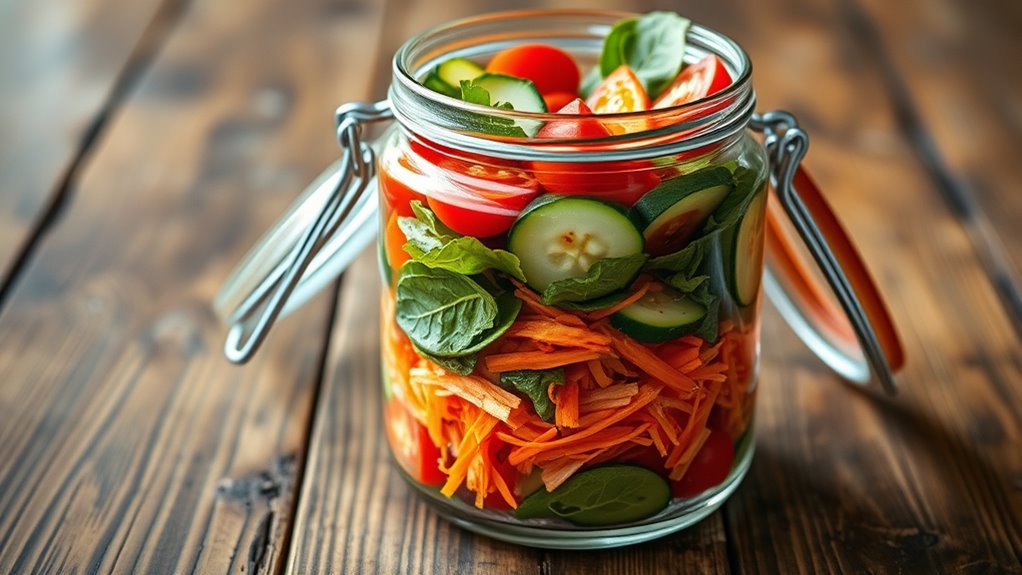
Have you ever wished for a quick, healthy meal you can grab on the go? Salad-in-a-jar offers the perfect solution. It’s convenient, nutritious, and easy to customize. To make this work for your busy schedule, you’ll want to develop effective meal prep strategies. The key is to prepare several jars at once, so you always have a fresh, ready-to-eat lunch. Spend some time on the weekend chopping vegetables, cooking grains, and portioning proteins. When it’s time to eat, just grab a jar, give it a shake, and enjoy. This approach reduces daily prep time and helps you stay committed to healthy eating. Planning ahead also minimizes the temptation to reach for fast food or vending machine snacks, saving you money and supporting your wellness goals.
Choosing the right jar material is vital for safety and freshness. Glass jars are the top choice because they’re non-toxic, durable, and environmentally friendly. They don’t stain or retain odors, making them ideal for storing a variety of ingredients. Plus, glass allows you to see the contents easily, so you can quickly identify what you want to eat. If you prefer something lighter or more resistant to breakage, BPA-free plastic jars are a decent alternative. Just confirm they’re labeled food-safe and dishwasher-safe for easy cleaning. Avoid jars made from materials that can leach chemicals or stain over time, as these could compromise your health or the quality of your salad. Also, consider jars with airtight lids to keep ingredients fresh and prevent leaks. Some jars come with silicone seals or locking mechanisms, which are especially useful if you’re carrying your salad in a bag or backpack.
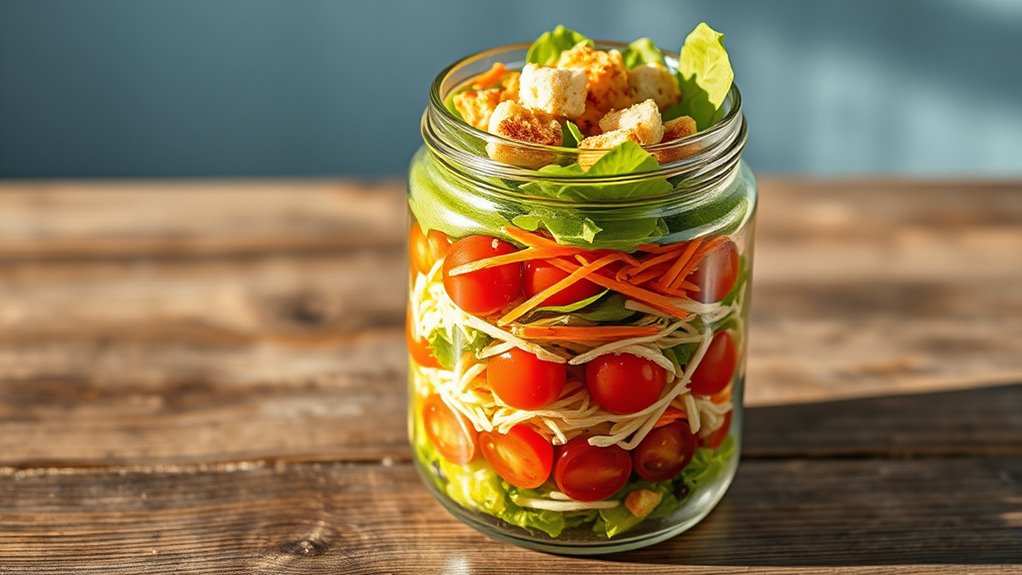
When assembling your salad-in-a-jar, be strategic about jar material choices and layering. Place the dressing at the bottom to prevent it from seeping into the greens, which keeps everything crisp. Heavier, sturdier ingredients like beans or nuts go next, followed by vegetables, grains, and finally leafy greens on top. This layering technique ensures that each bite is fresh and flavorful. As you plan your meal prep strategies, keep in mind that using durable, safe jars will make storage and transport easier. Plus, reusable jars are environmentally friendly and cost-effective in the long run. With a little planning and the right jar choices, you’ll be enjoying quick, healthy salads anytime—no fuss, no mess, just delicious nourishment on the go.

XLMYS 4 Pack Salad Jar, 32oz Salad Jars with Separate Wet/Dry Dressing Cup, Leakproof Salad Container for Lunch, Glass Food Storage for Home, Office and Outdoor
Fresh Meal Prep Salad Jars: Prep your salads ahead of time without worrying about sogginess! Our 32oz glass…
As an affiliate, we earn on qualifying purchases.
As an affiliate, we earn on qualifying purchases.
Frequently Asked Questions
How Long Can Salads Stay Fresh in a Jar?
You can usually keep salads fresh in a jar for up to 3-5 days. To guarantee freshness preservation, use airtight containers made of glass, which helps maintain the salad’s crispness and prevents odors. Keep the dressing at the bottom and the greens at the top to avoid sogginess. Store the jar in the fridge, and you’ll enjoy a fresh, ready-to-eat salad whenever you need it.
What Are the Best Jar Sizes for Salads?
Think of jar sizes as the stage for your salad masterpiece. For ideal salad layering, a 16-ounce jar is your best bet—perfect for a balanced mix and easy to shake or stir. Choose glass jars for durability and safety, and guarantee your jar material is BPA-free. This size gives enough room to keep ingredients fresh and crisp, making your grab-and-go lunch both convenient and satisfying.
Can Salads Be Customized for Dietary Restrictions?
Yes, you can definitely customize salads for dietary restrictions. You can include gluten-free options like rice noodles or quinoa, and add vegan modifications such as tofu or beans. Just layer ingredients thoughtfully to prevent sogginess, and choose dressings that suit your needs. With a little planning, your jar salads will be both delicious and tailored to your dietary preferences, making healthy eating easy and enjoyable.
Are There Any Safety Tips for Storing Salads?
Always follow safety tips when storing salads to prevent food contamination. Use clean, airtight storage containers to keep ingredients fresh and separate, reducing spoilage and bacteria growth. Keep salads refrigerated at or below 40°F, and consume them within 1-2 days for ideal freshness and safety. Avoid leaving salads out at room temperature for extended periods. Proper storage helps maintain flavor, texture, and most importantly, keeps you safe from foodborne illnesses.
How Do I Prevent Salads From Becoming Soggy?
To prevent your salads from becoming soggy, always keep the dressing separate until you’re ready to eat. Use a container with a tight seal to prevent leaks and maintain freshness. Layer your ingredients wisely—place wetter items at the bottom and sturdier greens on top. When sealing your jar, make sure it’s airtight. These steps keep your salad crisp, fresh, and delicious until you’re ready to enjoy it.
![VITEVER [16 Pack] 4 oz Small Containers with Lids, Reusable Plastic Jars for Snack and Puree, Salad Dressing Container to Go, Deli Containers, Freezer Baby Food Containers, Dishwasher Safe, BPA Free](https://m.media-amazon.com/images/I/41fnLIEevxL._SL500_.jpg)
VITEVER [16 Pack] 4 oz Small Containers with Lids, Reusable Plastic Jars for Snack and Puree, Salad Dressing Container to Go, Deli Containers, Freezer Baby Food Containers, Dishwasher Safe, BPA Free
BPA-FREE; DISHWASHER SAFE; MICROWAVE SAFE; SEALABLE; STACKABLE; REUSABLE.
As an affiliate, we earn on qualifying purchases.
As an affiliate, we earn on qualifying purchases.
Conclusion
Now that you know how easy it is to prepare a salad-in-a-jar, imagine the possibilities waiting to be discovered. Will you try bold new ingredients or stick to your favorites? The secret is in your hands—literally. With just a few minutes of prep, you’re about to revolutionize your lunch routine. But beware: once you experience the freshness and convenience, you might never go back. Are you ready to take the leap?

JoyJolt Airtight Glass Jars with Lids Set of 3. 32oz Glass Jar with Lid and 6 Silicone Seals! Med Glass Food Storage Containers. Square Mason Jar, Candy Jar, Sugar Jar, Pasta Containers for Pantry
DOUBLE THE AIRTIGHT SEAL! It’s annoying isn’t it, when your favorite air tight sealable containers somehow lose their…
As an affiliate, we earn on qualifying purchases.
As an affiliate, we earn on qualifying purchases.

SOLIGT 4 Pack Glass Salad Jars with Lids Meal Prep, Leakproof Container for Lunch, Two Small Built-in Boxes with Wet/Dry Separation for Salad Dressing and Dry Ingredients, 32oz Mason Jars
Never Had a Soggy Salad again – The Soligt all-in-one salad jar divides the glass jar into three…
As an affiliate, we earn on qualifying purchases.
As an affiliate, we earn on qualifying purchases.