
To build a balanced weekly menu, start by planning meals that include all food groups: lean proteins, colorful vegetables and fruits, and whole grains. Keep portions in check and spread out meals to maintain energy and satisfaction. Incorporate quick options for busy days and save more elaborate dishes for weekends. This approach streamlines your shopping, supports health goals, and makes meal prep easier. Keep going to discover how to customize your plan for maximum results.

Get kitchen staples and gadgets delivered free — and shop member deals
- Fast, free delivery on millions of items
- Access to Prime Big Deal Days deals on October 6–7
- Prime Video, Amazon Music and more included
Key Takeaways
- Incorporate a variety of food groups, including lean proteins, colorful vegetables and fruits, and whole grains for nutritional balance.
- Plan meals with appropriate portion sizes and scheduled snacks to maintain steady energy levels throughout the week.
- Use detailed shopping lists to streamline grocery trips and avoid impulse buys, saving time and money.
- Adjust recipes and meal complexity based on your schedule, opting for quick options on busy days and more elaborate meals on weekends.
- Repeat and refine your meal plan regularly to ensure it remains balanced, enjoyable, and aligned with your health and lifestyle goals.
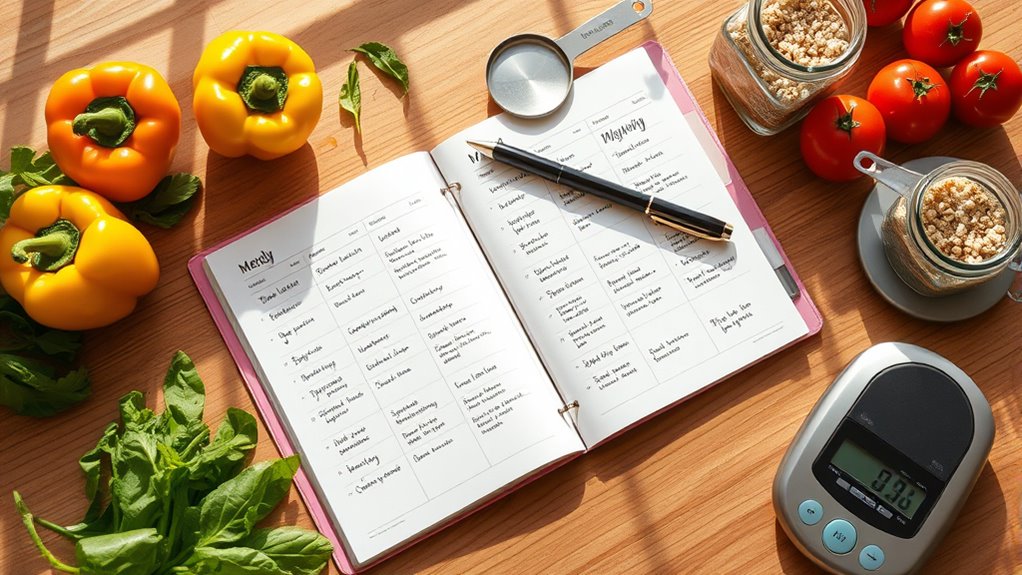
Meal planning is a simple but powerful way to save time, money, and stress in your daily routine. When you plan your meals ahead of time, grocery shopping becomes more efficient because you know exactly what to buy. Instead of wandering through aisles aimlessly or making multiple trips to the store, you can create a detailed shopping list based on your weekly menu. This not only reduces impulse purchases but also helps you stick to your budget. With a well-thought-out plan, you avoid last-minute decisions that often lead to unhealthy or costly takeout. Plus, grocery shopping becomes quicker and more organized, freeing up your time for other priorities.
Meal planning streamlines shopping, saves money, and reduces daily stress effectively.
Focusing on nutritional balance is key to building a successful weekly menu. It’s tempting to fill your plan with quick fixes or favorite comfort foods, but a balanced diet supports your energy levels, immune system, and overall health. When planning your meals, aim to include a variety of food groups. Incorporate lean proteins like chicken, fish, or plant-based options such as beans and lentils. Fill your plate with colorful vegetables and fruits that provide essential vitamins and minerals. Whole grains like brown rice, quinoa, or whole wheat bread can add fiber and keep you full longer. By diversifying your ingredients, you ensure that your body gets a wide spectrum of nutrients, which is vital for maintaining good health. Additionally, understanding the importance of balanced macronutrients can help optimize your meal choices.
Another important aspect of meal planning is balancing portion sizes and meal timing. You want to prevent overeating or under-eating by portioning your meals appropriately. Think about how many servings of each food group you need daily and plan accordingly. Breakfast, lunch, dinner, and snacks should be spaced out to keep your energy steady throughout the day. If you prepare meals in advance, you can pre-portion servings to avoid overeating and make it easier to stick to your dietary goals. Including a variety of textures and flavors also keeps things interesting, so you’re more likely to follow through with your plan.
Finally, don’t forget to factor in your schedule and lifestyle. If you know certain days are busier than others, plan quick and easy meals for those nights. On weekends, you might have more time to cook something elaborate or try new recipes. Flexibility is essential, so adapt your menu as needed. With consistent planning, grocery shopping becomes more targeted, your meals become more nutritionally balanced, and you stay on track toward your health and wellness goals. Over time, this process becomes second nature, making your weekly routine smoother and more enjoyable.
meal prep containers with portion control
As an affiliate, we earn on qualifying purchases.
As an affiliate, we earn on qualifying purchases.
Frequently Asked Questions
How Can I Adapt Meal Plans for Food Allergies?
To adapt meal plans for food allergies, you should incorporate gluten-free modifications and nut allergy substitutions. Always read labels carefully and choose allergy-safe ingredients. Swap nuts with seeds like sunflower or pumpkin seeds, and use gluten-free grains such as rice, quinoa, or certified gluten-free oats. Planning ahead helps you avoid cross-contamination and guarantees your meals remain balanced, safe, and enjoyable for everyone with allergies.
What Are Low-Cost Options for Balanced Weekly Menus?
You can create budget-friendly, balanced weekly menus by focusing on cost-effective recipes and using affordable ingredients like beans, rice, and seasonal vegetables. Incorporate versatile staples that can be prepared in various ways to save money and time. Look for sales and buy in bulk when possible. Planning meals around these cost-effective ingredients guarantees you get nutritious, balanced options without overspending.
How Do I Incorporate Special Dietary Needs?
You can easily incorporate special dietary needs by customizing your meals. For example, if someone in your family is gluten-free, swap out regular pasta for gluten-free options and include vegetarian substitutions like chickpea salads or tofu stir-fries. You might plan a weekly menu that features a variety of these alternatives, ensuring everyone’s needs are met without sacrificing flavor or nutrition. This approach keeps your meals inclusive and enjoyable for all.
What Are Quick Meal Prep Ideas for Busy Weekdays?
You can save time on busy weekdays by doing snack prep ahead of time, like chopping veggies or portioning nuts. Batch cooking larger portions of meals on weekends allows you to reheat quickly during the week. Keep quick options like wraps or salads handy, and prep ingredients in advance so you can assemble meals fast. These strategies help you stay nourished without spending hours in the kitchen.
How Can I Prevent Food Waste While Meal Planning?
To prevent food waste while meal planning, focus on portion control by preparing just enough for each meal. Proper storage is key; keep leftovers in airtight containers and label them with dates to track freshness. Plan your shopping list based on your actual needs, avoiding impulse buys. Regularly check your fridge and pantry to use ingredients before they spoil, ensuring minimal waste and maximum freshness.
As an affiliate, we earn on qualifying purchases.
Conclusion
Think of your weekly menu as a garden, each meal a carefully chosen seed. When you plan thoughtfully, you nurture a vibrant, balanced harvest that sustains you through busy days and restful nights. Remember, the effort you put into planting today yields nourishment and happiness tomorrow. Embrace this process as a symbol of care—both for yourself and those you feed. With patience and intention, your meal plan blossoms into a flourishing life.
grocery list organizer for meal planning
As an affiliate, we earn on qualifying purchases.
As an affiliate, we earn on qualifying purchases.
quick and easy healthy dinner recipes
As an affiliate, we earn on qualifying purchases.
As an affiliate, we earn on qualifying purchases.
NFL season / tailgating Picks
team gear
As an affiliate, we earn on qualifying purchases.