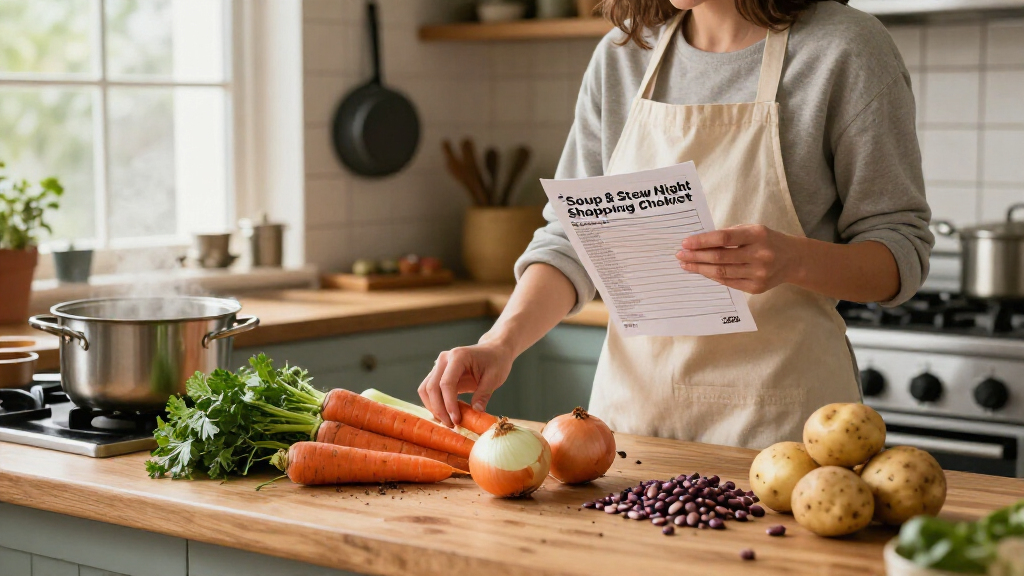

This checklist is for anyone planning a cozy soup or stew night, whether you’re building a kitchen collection or choosing a few practical additions. It pairs named products with straightforward advice for the items that don’t have a specific pick. Keep your menu and serving plans in mind as you read, since the right tools depend on what you like to cook and share.

Get kitchen staples and gadgets delivered free with Prime
- Fast, free delivery on millions of items
- Prime Video, Amazon Music and more included
- Member-only deals all year
The sections follow the path from cooking to serving: Dutch oven, immersion blender, ladle, stock pot, soup bowls, and crusty bread. Each product pick is considered for its intended kitchen role, while the advice-only sections focus on useful features to compare. The named items are the starting point; check their current specifications and instructions before buying.
Use this as a shortlist, not a recipe. Start with the dishes you make most often, then compare capacity, fit, care requirements, and compatibility with your kitchen. For serving pieces, think about how many people you host and how the items will be used. You can work through every section or focus on the gaps in your setup.
Dutch oven
A Dutch oven is a useful slot for recipes that move between browning, simmering, and serving in one vessel. The Le Creuset Enameled Cast Iron Signature Deep Round Oven, 6.5 qt., Sea is the named pick here. Before choosing it, confirm that its capacity suits your usual batch size and that its shape fits your stovetop and storage space. A pot that is awkward to lift or store can be less convenient in daily use.
Common buying mistakes include judging cookware by appearance alone and overlooking care instructions or cooking-surface compatibility. Check the manufacturer’s guidance for heat sources, utensils, cleaning, and oven use; do not assume that every cooktop or cooking method is supported. Consider the full, hot pot as well as its empty size, and make sure you have a safe place to set it down. The finish color is a personal choice, while capacity and handling should guide practical fit.
Compare the listed dimensions with your cabinet and sink, and check whether the lid and handles affect clearance. If you often cook small portions, a large vessel may take more room than you need; if you make generous batches, verify that the stated capacity aligns with your recipes. Choose based on how you cook and what your kitchen can accommodate.
What to look for:
- Confirm capacity against your typical recipe batch.
- Check listed dimensions against storage and sink space.
- Verify compatibility with your cooktop and oven plans.
- Review care guidance and recommended utensils.
- Consider lifting and handling when the pot is full.
Le Creuset Enameled Cast Iron Signature Deep Round Oven, 6.5 qt., Sea Salt

This enameled cast iron Dutch oven offers excellent heat distribution and retention, making it ideal for a variety of cooking tasks. It features a durable, easy-to-clean enamel interior and a tight-fitting lid that circulates steam, with ergonomic handles for easy lifting.
Pros:
- Excellent heat retention and distribution
- Durable, easy-to-clean enamel surface
- Compatible with all cooktops and oven-safe
Cons:
- Heavy weight may be difficult to handle
- Price may be high for some budgets
Best for: Home cooks who want a Dutch oven for soups and stews.
Not ideal for: Kitchens with limited storage or cooks who need a smaller vessel.
Bottom line: Check capacity, dimensions, and care guidance against your kitchen before choosing this Dutch oven.
Immersion blender
An immersion blender can help create a smoother soup directly in a cooking vessel, reducing the need to transfer hot ingredients in batches. The named pick is the KitchenAid Go Cordless Hand Blender with Accessories. Because this model is cordless and includes accessories, review the product listing to understand what is included and how each component is intended to be used. Match its capabilities to the textures you make rather than assuming one tool suits every blending task.
A frequent mistake is overlooking the practical details of blending hot food: vessel depth, splashing, and the manufacturer’s operating instructions all matter. Check the blender’s stated uses and safety guidance, including any limits on ingredients, temperature, or continuous operation. For cordless equipment, confirm how it charges and what runtime information the maker provides, then consider whether that fits your cooking routine. Included accessories are useful only if they fit your needs and are manageable to clean and store.
Think about your usual soup pot before buying. The blender head needs to fit comfortably inside, and the handle should be practical to control while you work. If you plan to use attachments beyond soup, verify their purpose and care requirements in the listing. Compare the complete package and instructions so the tool suits both your recipes and your available storage.
What to look for:
- Confirm the accessories included in the current listing.
- Check the manufacturer’s guidance for hot liquids and safe use.
- Review charging and runtime details for cordless operation.
- Make sure the blender head fits your usual pot.
- Consider cleaning and storing the blender and attachments.
KitchenAid Go Cordless Hand Blender with Accessories

This cordless hand blender offers easy maneuverability in the kitchen with a removable blending arm, whisk, and chopper attachments for versatile food prep. It includes a BPA-free pitcher, rechargeable battery, and multiple accessories for blending, whisking, and chopping tasks.
Pros:
- Cordless design for easy maneuverability
- Multiple attachments for versatile use
- Removable blending arm and accessories for easy cleaning
Cons:
- Battery life may be limited for extended use
- Requires charging via USB-C
- Some users may find the weight of cordless design cumbersome
Best for: Cooks who want to blend soups in the pot.
Not ideal for: Anyone who needs a tool for uses not covered by its stated capabilities.
Bottom line: Confirm safe-use guidance, pot fit, and accessory details before picking this hand blender.
Soup ladle
A soup ladle helps portion broth, stew, and other dishes from a deep pot with control. Choose one that reaches the bottom of your usual cookware and holds a serving size that makes sense for your table. Reach and control matter: a short handle can bring hands close to hot liquid, while an unwieldy one may be harder to maneuver around a crowded pot.
One common mistake is buying a ladle without considering the cookware it will touch. If your pot has a coated surface, check that the ladle material is suitable and follow the cookware maker’s guidance. Also consider whether the bowl shape pours cleanly into your soup bowls and whether the handle can rest securely between servings. Look for a comfortable grip and a balance that feels manageable when the ladle is full.
Check dimensions against your stock pot or Dutch oven, especially if you use deep vessels. A hook or hanging feature can help with storage, but only if it fits your drawer, rack, or utensil holder. Review care instructions as well: a tool that is easy to clean after a thick stew is more likely to be convenient for regular use. Choose a simple shape that suits the food and cookware you actually serve.
What to look for:
- Choose a handle length suited to your deepest pot.
- Check material compatibility with coated cookware.
- Look for a bowl shape that pours neatly.
- Consider grip comfort and balance when full.
- Review cleaning and storage requirements.
Stock pot
A stock pot offers room for large-volume cooking, but the named pick here is notably specific: the Pipopa 120QT Stainless Steel Seafood Boil Pot with Basket and Paddle. Its listed capacity and included pieces point to a very large setup, so first consider whether your recipes, storage, and cooking area can accommodate it. For ordinary soup nights, compare the stated capacity with the quantity you actually prepare instead of assuming larger is automatically more useful.
Buying mistakes often come from overlooking filled weight, dimensions, and the practical requirements of heating a large vessel. Check the listing for measurements and manufacturer guidance on compatible heat sources and use. Confirm that your cooking surface can safely support the pot and that you have room to handle it. The basket and paddle may be relevant to your plans, but review their stated purpose and whether they can be stored and cleaned conveniently. Capacity and setup deserve careful checking before purchase.
Think through where the pot will live when it is not in use, and whether your sink can accommodate its size for washing. If you cook smaller batches, a more modest stock pot may be easier to handle; choose a size based on real recipes and serving needs. Confirm that all included components match your intended cooking tasks, and follow the maker’s directions for safe operation.
What to look for:
- Compare 120-quart capacity with your actual batch sizes.
- Check pot and component dimensions before buying.
- Verify cooktop compatibility and safe weight support.
- Confirm the basket and paddle suit your intended use.
- Plan for storage, handling, and washing.
Pipopa 120QT Stainless Steel Seafood Boil Pot with Basket and Paddle

This 120-quart stainless steel stock pot is designed for large-batch cooking, ideal for seafood boils, brewing, and feeding groups of 24–30 people. It includes a 100-quart perforated basket for quick draining and a 32-inch detachable paddle for safe stirring over high heat.
Pros:
- Large 120-quart capacity is perfect for feeding large groups or commercial use
- Includes a 32-inch detachable paddle for safe stirring without reaching over heat
- Durable food-grade stainless steel construction resists rust and corrosion
- 100-quart perforated basket allows for quick and efficient draining of ingredients
Cons:
- Heavy at 26.1 pounds, which may make handling difficult when full
- Limited warranty period of only 180 days
Best for: Cooks who need the listed large capacity and included accessories.
Not ideal for: Small kitchens or cooks who usually make modest soup batches.
Bottom line: Verify capacity, dimensions, heat-source compatibility, and storage before choosing this pot.
Soup bowls
The named item for this slot is the Ceramic Tealight Wax Burner and Oil Diffuser with Removable Bowl. Its product name describes a wax burner and oil diffuser, so check the listing carefully before treating it as tableware. A removable bowl is not by itself confirmation that the item is intended for food or hot soup. For serving, choose bowls whose maker explicitly identifies them for food contact and the temperatures you plan to serve.
A common mistake is assuming that a ceramic item is automatically suitable as a soup bowl. Review the product’s intended use, food-contact information, care instructions, and any heat limitations. If the listing does not clearly establish that it is tableware, select a dedicated soup bowl instead. Food-safe intended use is essential when choosing anything that will hold a meal.
For dedicated soup bowls, consider capacity, shape, grip, and how they fit your table and storage. A wider bowl can make toppings accessible, while a deeper shape may suit brothy portions; compare actual dimensions rather than relying on appearance alone. Check whether the bowls are compatible with your cleaning routine and any serving or reheating method you plan to use. Buy a matching set only if its quantity suits your household and guests.
What to look for:
- Confirm the item is explicitly intended for food service.
- Check food-contact and heat-use information.
- Choose capacity and depth suited to your portions.
- Review care guidance and compatibility with your routine.
- Compare dimensions with storage and table space.
Ceramic Tealight Wax Burner and Oil Diffuser with Removable Bowl

This two-part ceramic fragrance lamp uses a tealight to gently warm scented wax or water mixed with essential oils. It has a removable, dishwasher-safe bowl and a matte black, grooved finish.
Pros:
- Works with scented wax or essential oils
- Removable bowl is dishwasher-safe
- Hand-shaped ceramic construction
- Customers rate it 4.7/5
Cons:
- Requires a tealight, which is not specified as included
Best for: Shoppers selecting bowls clearly made for serving food.
Not ideal for: Anyone assuming a wax burner bowl is automatically tableware.
Bottom line: Use dedicated soup bowls unless the maker clearly confirms this item is suitable for food and hot soup.
Crusty bread
Crusty bread can make a soup or stew meal feel complete and gives diners something to serve alongside the bowl. Since there is no named product pick, choose bread based on the soup’s texture and the way you plan to serve it. A sturdy loaf can be sliced for sharing, while individual portions may be easier for a casual table. Freshness and serving style are practical starting points.
A common mistake is buying more bread than the meal can use or choosing a loaf that does not suit the soup. Consider how many people are eating, whether bread is a side or a centerpiece, and whether you want slices for dipping. If buying ahead, check the bakery’s storage guidance and plan when you will serve it; crust and texture can change over time. For dietary needs, read the ingredient and allergen information provided by the seller.
Think about loaf size, slicing, and how it will reach the table. A pre-sliced option may be convenient, while a whole loaf lets you cut portions to suit your guests. If you are serving a very brothy soup, pieces that are easy to dip may be helpful; with a thicker stew, bread can be portioned alongside each serving. Keep the choice simple and suited to your menu, timing, and guest count.
What to look for:
- Choose a loaf size that fits the guest count.
- Match the bread texture and shape to the soup.
- Decide whether whole or pre-sliced is more convenient.
- Check storage guidance and serving timing.
- Review ingredients and allergen details when needed.
If you are prioritizing purchases, begin with the cooking vessel that fits the recipes you make most, then add tools that solve a regular kitchen task, such as blending or serving. Next, consider whether your stock pot size is practical for your cooking space and storage. Finish with dedicated soup bowls and bread suited to your menu. This order keeps decisions tied to everyday use and avoids buying oversized or mismatched pieces just for one occasion.
Soup night does not require a perfect collection. Use the checklist to compare fit, capacity, care, and intended use, and choose only what will make cooking or serving easier in your home. A few well-matched essentials can support plenty of comforting meals. Enjoy building a setup that works for your table and the dishes you love.