For most travelers, I’d choose the OM SYSTEM OM-5 Mark II with its 14-150mm lens for a compact kit that covers a wide range of scenes and adds weather sealing. The Canon EOS R10 with the RF-S 18-150mm is a strong alternative for quick autofocus and a broad zoom range, while the Canon EOS R50 makes a lighter, approachable choice for beginners. The main tradeoff is between carrying one flexible lens, choosing a smaller and simpler kit, or building around a camera with stronger travel protections. This lineup also includes several similar R100 and a6400 bundles, where the included lens can matter more than the camera body. Read on for the full breakdown and help matching a camera kit to your trip.

Get kitchen staples and gadgets delivered free with Prime
- Fast, free delivery on millions of items
- Prime Video, Amazon Music and more included
- Member-only deals all year
Key Takeaways
- The OM-5 Mark II kit is the travel specialist: its 14-150mm lens spans wide views to distant details, and weather sealing suits trips where conditions can change.
- The R10 with the 18-150mm lens is the Canon all-rounder: it combines a broad travel zoom with faster autofocus than the entry-level R100 kits.
- Several R100 listings share the same basic camera: the practical difference is the bundle, from a standard zoom to a 50mm prime or memory card.
- The Sony a6400 has two distinct kit choices: the body-only option lets you select a lens separately, while the 16–50mm kit is a compact starting setup.
- The EOS RP adds a larger full-frame sensor but changes the travel equation: its kit lens and body make more sense for buyers prioritizing full-frame image characteristics over the smallest, widest-ranging kit.
| Canon EOS R100 Mirrorless Camera with RF-S 18-45mm Lens Bundle |  | Best Travel Starter Bundle | Sensor: 24.1MP APS-C CMOS | Processor: DIGIC 8 | Included lens: RF-S 18-45mm f/4.5-6.3 IS STM | VIEW ON AMAZON | See Our Full Breakdown |
| Canon EOS R10 Mirrorless Camera Bundle with RF-S 18-150mm and RF 75-300mm Lenses |  | Best for Travel Range | Sensor: 24.2MP APS-C CMOS | Autofocus: Dual Pixel CMOS AF II with subject detection | Video: 4K UHD up to 60p; Full HD up to 120p | VIEW ON AMAZON | See Our Full Breakdown |
| Nikon Z 30 Mirrorless Camera with NIKKOR Z DX 16-50mm Zoom Lens |  | Best for Travel Video Creators | Camera type: Mirrorless | Included lens: NIKKOR Z DX 16-50mm f/3.5-6.3 VR | Video: 4K recording; Full HD 60p over USB-C; 4K 30p over HDMI | VIEW ON AMAZON | See Our Full Breakdown |
| Canon EOS R50 V Mirrorless Camera with RF-S 14-30mm Lens Bundle |  | Best for Wide-Angle Travel Video | Sensor: 24.2MP APS-C CMOS | Processor: DIGIC X | Included lens: RF-S 14-30mm f/4-6.3 IS STM PZ | VIEW ON AMAZON | See Our Full Breakdown |
| Canon EOS R100 Mirrorless Camera with RF-S 18-45mm Lens and 128GB Memory Card Bundle |  | Best Lightweight Photo Kit | Sensor: 24.1MP APS-C CMOS | Processor: DIGIC 8 | Included lens: RF-S 18-45mm f/4.5-6.3 IS STM | VIEW ON AMAZON | See Our Full Breakdown |
| Canon EOS R50 Mirrorless Camera with RF-S 18-45mm F4.5-6.3 IS STM Lens | 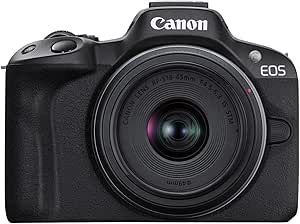 | Best for Beginners | Sensor: 24.2 MP APS-C CMOS | Processor: DIGIC X | Included lens: RF-S 18-45mm F4.5-6.3 IS STM | VIEW ON AMAZON | See Our Full Breakdown |
| Sony Alpha a6400 APS-C Mirrorless Camera Body, 4K, Black |  | Best for Autofocus | Camera type: Mirrorless, body only | Sensor: 24.2 MP APS-C CMOS | Autofocus points: 425 phase-detection and 425 contrast-detection | VIEW ON AMAZON | See Our Full Breakdown |
| Canon EOS RP Mirrorless Camera with RF 24-105mm f/4-7.1 IS STM Lens |  | Best for Full-Frame Travel | Camera: Canon EOS RP mirrorless | Included lens: RF 24-105mm f/4-7.1 IS STM | Image stabilization: Up to 5 stops of shake correction | VIEW ON AMAZON | See Our Full Breakdown |
| Canon EOS R10 Mirrorless Camera with RF-S18-150mm Lens |  | Best One-Lens Travel Kit | Sensor: 24.2 MP APS-C CMOS | Image processor: DIGIC X | Included lens: RF-S 18-150mm F3.5-6.3 IS STM | VIEW ON AMAZON | See Our Full Breakdown |
| Sony Alpha a6400 Mirrorless Camera with 16–50mm Lens, Black |  | Best Compact Sony Kit | Model: ILCE-6400L/B | Sensor: 24.2 MP APS-C | Autofocus points: 425 phase-detection and 425 contrast-detection | VIEW ON AMAZON | See Our Full Breakdown |
| OM SYSTEM OM-5 Mark II Mirrorless Camera with M.Zuiko Digital 14-150mm f/4.0-5.6 II Lens, Black |  | Best for Outdoor Travel | Sensor: 20.4 MP BSI Live MOS, Micro Four Thirds | Included lens: M.Zuiko Digital 14-150mm f/4.0-5.6 II | Image stabilization: Sensor-shift | VIEW ON AMAZON | See Our Full Breakdown |
| Canon EOS R100 Mirrorless Camera Bundle with RF 50mm f/1.8 STM Lens |  | Best for Portraits on a Beginner’s Trip | Sensor: 24.1 MP APS-C CMOS | Included lens: Canon RF 50mm f/1.8 STM | Autofocus: Dual Pixel CMOS AF with subject tracking | VIEW ON AMAZON | See Our Full Breakdown |
| Canon EOS R100 Mirrorless Camera with RF-S 18-45mm f/4.5-6.3 IS STM Lens |  | Best Simple Starter Kit | Sensor: 24.1 MP APS-C CMOS | Image processor: DIGIC 8 | Included lens: RF-S 18-45mm f/4.5-6.3 IS STM | VIEW ON AMAZON | See Our Full Breakdown |
| mirrorless camera for travel | Sensor | Included lens | Video | Autofocus |
|---|---|---|---|---|
| Canon EOS R100 Mirrorless Came | 24.1MP APS-C CMOS | RF-S 18-45mm f/4.5-6.3 IS STM | 4K 24p with crop; Full HD 60p | Dual Pixel CMOS AF with 143 AF zones |
| Canon EOS R10 Mirrorless Camer | 24.2MP APS-C CMOS | — | 4K UHD up to 60p; Full HD up to 120p | Dual Pixel CMOS AF II with subject detection |
| Nikon Z 30 Mirrorless Camera w | — | NIKKOR Z DX 16-50mm f/3.5-6.3 VR | 4K recording; Full HD 60p over USB-C; 4K 30p over HDMI | Eye detection for people, cats, and dogs |
| Canon EOS R50 V Mirrorless Cam | 24.2MP APS-C CMOS | RF-S 14-30mm f/4-6.3 IS STM PZ | 4K at 30p; Full HD at 120p | Dual Pixel CMOS AF with eye, face, and subject detection |
| Canon EOS R100 Mirrorless Came | 24.1MP APS-C CMOS | RF-S 18-45mm f/4.5-6.3 IS STM | Cropped 4K up to 24 fps; Full HD up to 60 fps | Dual Pixel CMOS AF with face and eye detection |
| Canon EOS R50 Mirrorless Camer | 24.2 MP APS-C CMOS | RF-S 18-45mm F4.5-6.3 IS STM | Oversampled uncropped 4K up to 30 fps; Full HD up to 120 fps | Dual Pixel CMOS AF II; 651 AF zones |
| Sony Alpha a6400 APS-C Mirrorl | 24.2 MP APS-C CMOS | — | 4K (2160p) | — |
| Canon EOS RP Mirrorless Camera | — | RF 24-105mm f/4-7.1 IS STM | 4K UHD (2160p) | — |
| Canon EOS R10 Mirrorless Camer | 24.2 MP APS-C CMOS | RF-S 18-150mm F3.5-6.3 IS STM | 4K | Subject detection |
| Sony Alpha a6400 Mirrorless Ca | 24.2 MP APS-C | 16-50mm | 4K, slow- and quick-motion recording | — |
| OM SYSTEM OM-5 Mark II Mirrorl | 20.4 MP BSI Live MOS, Micro Four Thirds | M.Zuiko Digital 14-150mm f/4.0-5.6 II | 4K, MOV (MPEG-4 AVC/H.264) | — |
| Canon EOS R100 Mirrorless Came | 24.1 MP APS-C CMOS | Canon RF 50mm f/1.8 STM | — | Dual Pixel CMOS AF with subject tracking |
| Canon EOS R100 Mirrorless Came | 24.1 MP APS-C CMOS | RF-S 18-45mm f/4.5-6.3 IS STM | — | — |
More Details on Our Top Picks
Canon EOS R100 Mirrorless Camera with RF-S 18-45mm Lens Bundle
The EOS R100 bundle suits travelers who want a straightforward stills camera with the basic kit ready to go: a stabilized 18-45mm zoom, bag, battery, charger, and memory card. Its 24.1MP APS-C sensor gives room to crop travel photos, while Dual Pixel autofocus helps keep everyday subjects in focus. Compared with the more capable Canon EOS R10 bundle, this R100 has simpler video, slower continuous shooting, and no included telephoto lens, so it is less flexible for wildlife or fast action. The tradeoff is a less complex setup for casual sightseeing and family trips. The kit lens is compact, but its f/4.5-6.3 aperture limits light gathering as you zoom, and 4K video is cropped.
Pros:- 24.1MP APS-C sensor supports detailed stills and cropping
- Dual Pixel autofocus with 143 AF zones
- Stabilized 18-45mm zoom is included
- Bundle includes a shoulder bag and 64GB card
Cons:- 4K video uses a crop
- The lens has a slow variable maximum aperture
- 6.5 fps shooting is less suited to fast action than the EOS R10
Best for: First-time camera buyers who want a ready-to-pack kit for sightseeing, family photos, and daylight travel
Not ideal for: Wildlife photographers and travelers who expect frequent low-light shooting or uncropped 4K video
- Sensor:24.1MP APS-C CMOS
- Processor:DIGIC 8
- Included lens:RF-S 18-45mm f/4.5-6.3 IS STM
- Autofocus:Dual Pixel CMOS AF with 143 AF zones
- Video:4K 24p with crop; Full HD 60p
- Continuous shooting:6.5 fps
- Viewfinder:2.36-million-dot OLED electronic viewfinder
- Connectivity:Wi-Fi and Bluetooth
- Included accessories:Battery, charger, camera cover, neck strap, shoulder bag, and 64GB card
Our verdict“Choose this bundle for an approachable travel stills kit, but pick the EOS R10 bundle for stronger action and video flexibility.”
Canon EOS R10 Mirrorless Camera Bundle with RF-S 18-150mm and RF 75-300mm Lenses
For a trip with varied subjects, the EOS R10 bundle offers the broadest reach in this group: the 18-150mm covers everyday scenes, while the 75-300mm lens extends to distant details and wildlife. That two-lens setup can spare you from buying another lens, though carrying and changing lenses adds bulk compared with the Nikon Z 30 and its single stabilized zoom. The R10’s subject-detection autofocus for people, animals, and vehicles also gives it an edge over the entry-level R100 bundles when subjects move. Its 4K video reaches 60p, with Full HD up to 120p for slow motion. The tradeoff is a larger kit to pack, and the listing does not specify some travel-use details such as weight or stabilization for both lenses.
Pros:- 18-150mm and 75-300mm lenses cover a broad range of subjects
- Autofocus detects people, animals, and vehicles
- 4K UHD recording up to 60p
- Full HD recording up to 120p for slow motion
Cons:- Two lenses take more packing space and require lens changes
- The listing does not provide camera weight or lens stabilization details
- Long-range coverage may be unnecessary bulk for casual city trips
Best for: Travelers planning wildlife, outdoor, or multi-stop trips who want wide-to-telephoto coverage in the box
Not ideal for: Light-packing travelers who prefer one small lens and do not need long telephoto reach
- Sensor:24.2MP APS-C CMOS
- Autofocus:Dual Pixel CMOS AF II with subject detection
- Video:4K UHD up to 60p; Full HD up to 120p
- Included lens 1:RF-S 18-150mm
- Included lens 2:RF 75-300mm f/4-5.6
- Memory card:64GB
- Included accessories:Shoulder bag
Our verdict“Pick this bundle when distant subjects and lens range matter more than carrying a compact one-lens travel kit.”
Nikon Z 30 Mirrorless Camera with NIKKOR Z DX 16-50mm Zoom Lens
The Nikon Z 30 is the travel pick for people who want to record themselves as often as the places they visit. Its flip-out touchscreen makes framing a solo video easier, and the stabilized 16-50mm lens is useful for handheld walk-and-talk clips. Eye detection for people and pets helps keep a subject in focus, while USB-C power support suits long recording sessions near an outlet or power bank. Compared with the Canon EOS R100, this Nikon puts more emphasis on video handling and streaming, but the supplied details do not include a viewfinder, which some travelers may prefer for composing photos in bright sun. A built-in stereo mic is convenient, yet creators seeking clearer audio need to add an external microphone, sold separately.
Pros:- Flip-out touchscreen helps with self-recording and varied angles
- Stabilized 16-50mm lens supports handheld travel clips
- Eye detection covers people, cats, and dogs
- USB-C constant power and webcam support
Cons:- External microphone and creator accessories are sold separately
- No viewfinder is listed in the supplied product details
- The 16-50mm lens offers less telephoto reach than the EOS R10 bundle
Best for: Solo travel vloggers and streamers who want a flip screen, stabilized kit lens, and USB-C power support
Not ideal for: Still-photo travelers who rely on an electronic viewfinder or want a complete audio setup in the box
- Camera type:Mirrorless
- Included lens:NIKKOR Z DX 16-50mm f/3.5-6.3 VR
- Video:4K recording; Full HD 60p over USB-C; 4K 30p over HDMI
- Screen:Flip-out touchscreen
- Autofocus:Eye detection for people, cats, and dogs
- Microphone:Built-in stereo microphone with adjustable sensitivity
- Power:USB-C constant power support
- Warranty:Limited one-year warranty
Our verdict“Choose the Z 30 if travel video and self-recording are priorities; photo-first travelers may prefer a camera with a viewfinder.”
Canon EOS R50 V Mirrorless Camera with RF-S 14-30mm Lens Bundle
The EOS R50 V bundle favors wide scenes and video-first travel: its 14-30mm stabilized power zoom starts wider than the R100’s 18-45mm lens, making it easier to fit architecture, interiors, and self-recorded clips into the frame. The uncropped 4K at 30p and Full HD at 120p also offer more video flexibility than the R100 bundles. Face, eye, and subject detection help when the camera is pointed toward a moving presenter. Compared with the Nikon Z 30, this Canon includes a wider zoom lens and a 24.2MP sensor, while both are oriented toward creators. The tradeoffs are limited telephoto reach, no built-in flash, and no water resistance—matters for travelers expecting distant wildlife or shooting in wet weather.
Pros:- 14-30mm stabilized lens captures wide scenes and selfie framing
- Uncropped 4K video at 30p
- Full HD video at 120p
- Articulating touchscreen and eye, face, and subject detection
Cons:- Wide zoom range provides limited reach for distant subjects
- Not water resistant
- No built-in flash
Best for: Travel vloggers and architecture-focused travelers who want a wide stabilized lens and uncropped 4K
Not ideal for: Wildlife shooters needing telephoto reach or travelers who need weather protection and a built-in flash
- Sensor:24.2MP APS-C CMOS
- Processor:DIGIC X
- Included lens:RF-S 14-30mm f/4-6.3 IS STM PZ
- Video:4K at 30p; Full HD at 120p
- Autofocus:Dual Pixel CMOS AF with eye, face, and subject detection
- Display:Articulating LCD touchscreen
- Connectivity:USB-C
- Weight:4.4 pounds
- Included accessories:Battery, charger, camera cover, strap, lens caps, shoulder bag, and 64GB memory card
Our verdict“Choose the R50 V for wide-angle travel video and self-recording, rather than long-range photography or wet-weather trips.”
Canon EOS R100 Mirrorless Camera with RF-S 18-45mm Lens and 128GB Memory Card Bundle
This EOS R100 kit keeps the travel setup simple: a 24.1MP APS-C camera, stabilized 18-45mm lens, bag, guide, and 128GB memory card. Face and eye detection help with portraits, while the electronic viewfinder offers a familiar way to compose in bright outdoor light. Compared with the first Canon EOS R100 bundle in this batch, the core camera and lens are similar; this version lists a larger card and a photography guide, while the other adds a 64GB card and more accessories. Both share the same key limits: cropped 4K at 24 fps, a fixed LCD, and a relatively slow kit lens. Its stated 1.1-pound weight makes it the clearest light-carry choice here, though the listing’s weight may not reflect every accessory.
Pros:- Stated camera weight of 1.1 pounds
- 24.1MP APS-C sensor with face and eye detection
- Stabilized 18-45mm kit lens included
- 128GB memory card, bag, and photography guide included
Cons:- 4K is cropped and limited to 24 fps
- Fixed LCD is less useful for self-recording than the Z 30 flip-out screen
- 6.5 fps continuous shooting is limited for action
Best for: Light-packing beginners who mainly shoot travel photos and want a simple kit with generous included storage
Not ideal for: Travel filmmakers, action shooters, and anyone who needs an articulating screen or a faster lens
- Sensor:24.1MP APS-C CMOS
- Processor:DIGIC 8
- Included lens:RF-S 18-45mm f/4.5-6.3 IS STM
- Autofocus:Dual Pixel CMOS AF with face and eye detection
- Continuous shooting:Up to 6.5 fps
- Video:Cropped 4K up to 24 fps; Full HD up to 60 fps
- Screen:3-inch fixed LCD
- Weight:1.1 pounds
- Bundle accessories:128GB SanDisk memory card, camera bag, and digital photography guide
Our verdict“Choose this R100 bundle for a light, photo-focused starter kit with extra card capacity, while video creators should look to the R50 V or Z 30.”
Canon EOS R50 Mirrorless Camera with RF-S 18-45mm F4.5-6.3 IS STM Lens
The EOS R50 is the easiest fit here for travelers who want guided, responsive shooting without giving up an electronic viewfinder. Its 24.2 MP APS-C sensor and subject tracking cover everyday scenes, moving family members, and wildlife, while the vari-angle touchscreen makes it easier to frame from awkward angles. Compared with the Sony a6400 body-only, this kit includes a lens, so you can start shooting without choosing one separately. It also records oversampled 4K, giving travel clips more detail than Full HD. The tradeoff is the included 18-45mm lens: its modest zoom range and slow maximum aperture offer less reach and low-light flexibility than the EOS R10 kit’s 18-150mm lens. Choose it for simple operation and video versatility; skip it if you want one lens for distant subjects.
Pros:- 24.2 MP APS-C sensor provides detail for travel photos and cropping
- Subject tracking recognizes people, animals, and vehicles
- Oversampled 4K up to 30 fps and Full HD up to 120 fps
- Vari-angle touchscreen, EVF, Wi-Fi, and Bluetooth
Cons:- 18-45mm lens offers limited reach compared with the EOS R10’s 18-150mm kit
- F4.5-6.3 maximum aperture limits light gathering as you zoom in
Best for: First-time interchangeable-lens camera buyers who want an included lens, an EVF, and approachable autofocus for family trips.
Not ideal for: Travelers who need a long zoom for wildlife or distant landmarks, since the included 18-45mm lens has limited reach.
- Sensor:24.2 MP APS-C CMOS
- Processor:DIGIC X
- Included lens:RF-S 18-45mm F4.5-6.3 IS STM
- Autofocus:Dual Pixel CMOS AF II; 651 AF zones
- Continuous shooting:Up to 12 fps electronic first-curtain; up to 15 fps electronic shutter
- Video:Oversampled uncropped 4K up to 30 fps; Full HD up to 120 fps
- Viewfinder:2.36-million-dot EVF
- Connectivity:Wi-Fi and Bluetooth
Our verdict“Choose the EOS R50 if you want a beginner-friendly travel camera with a viewfinder and capable video in a ready-to-shoot kit.”
Sony Alpha a6400 APS-C Mirrorless Camera Body, 4K, Black
For travelers who prioritize catching a fleeting moment, the Sony a6400 pairs real-time subject tracking with up to 11 fps continuous shooting. Its 425 phase-detection and 425 contrast-detection points give autofocus broad coverage, while the OLED EVF is useful in bright outdoor light. Compared with the Canon EOS R50, this Sony is sold body-only, so you can pick a lens suited to your trip and existing Sony E-mount gear. That flexibility comes with an extra decision and a lens to pack or buy. The tilting LCD is less adaptable for high or low compositions than the R50’s vari-angle screen, and the listed shutter tops out at 1/4000 second. This makes the most sense for Sony lens owners who value tracking over an all-in-one kit.
Pros:- Real-time subject tracking supports responsive focus on moving subjects
- 425 phase-detection and 425 contrast-detection autofocus points
- Up to 11 fps continuous shooting
- OLED EVF and 4K video recording
Cons:- Body-only package requires a separate compatible lens
- Tilting LCD offers less flexible framing than the EOS R50’s vari-angle touchscreen
- Maximum listed shutter speed is 1/4000 second
Best for: Sony E-mount owners who want a compact travel body with subject tracking for street scenes, pets, or fast-moving family moments.
Not ideal for: First-time buyers seeking a ready-to-shoot package, because this body-only listing does not include a lens.
- Camera type:Mirrorless, body only
- Sensor:24.2 MP APS-C CMOS
- Autofocus points:425 phase-detection and 425 contrast-detection
- Continuous shooting:Up to 11 fps
- Video:4K (2160p)
- Screen:3-inch tilting LCD
- Viewfinder:2.36-million-dot OLED EVF
- Mount:Sony E
- Weight:1.5 lb
Our verdict“Pick the a6400 body if you already use Sony E-mount lenses and want strong tracking in a travel-sized camera.”
Canon EOS RP Mirrorless Camera with RF 24-105mm f/4-7.1 IS STM Lens
This EOS RP kit takes a different travel approach from the APS-C Canon EOS R10: it pairs a full-frame camera with a broad 24-105mm zoom, covering landscapes through tighter portraits without a lens swap. The lens’s optical stabilization, rated for up to five stops of shake correction, can help when handheld shutter speeds slow in dim interiors. Its close-focus and Center Focus Macro modes also make food, details, and small souvenirs easier to frame. The compromise is reach at the long end: 105mm falls short of the R10 kit’s 150mm equivalent range, and this lens’s f/4-7.1 aperture grows dimmer as you zoom. The supplied data also lists 4K UHD, but not its frame-rate or crop details. It suits travelers who value full-frame shooting and versatile framing over a longer, brighter zoom.
Pros:- 24-105mm zoom covers a useful range of travel subjects
- Optical image stabilization rated for up to five stops of shake correction
- Close-focus and Center Focus Macro modes support detail shots
- 4K UHD video and clean HDMI output are supported
Cons:- Lens aperture narrows to f/7.1 at the long end, limiting low-light flexibility
- 105mm reach is shorter than the EOS R10 kit’s 150mm lens
- Provided product data does not specify 4K frame rate or crop details
Best for: Travel photographers who want a full-frame Canon body and a single stabilized zoom for landscapes, portraits, and close details.
Not ideal for: Wildlife and sports travelers who need longer reach or a faster telephoto aperture than this 24-105mm f/4-7.1 lens provides.
- Camera:Canon EOS RP mirrorless
- Included lens:RF 24-105mm f/4-7.1 IS STM
- Image stabilization:Up to 5 stops of shake correction
- Maximum magnification:0.4x autofocus; 0.5x Center Focus Macro
- Minimum focusing distance:0.66 ft autofocus; 0.43 ft Center Focus Macro
- Video:4K UHD (2160p)
- Webcam use:EOS Utility Webcam Beta Software or clean HDMI output
Our verdict“Choose this EOS RP kit if full-frame shooting and a stabilized all-purpose zoom matter more than long telephoto reach.”
Canon EOS R10 Mirrorless Camera with RF-S18-150mm Lens
The EOS R10 with 18-150mm is the strongest pick here for travelers who would rather keep one lens mounted all day. Its zoom range reaches much farther than the EOS R50’s 18-45mm kit, making distant architecture, stage performances, and wildlife easier to frame without changing lenses. The 24.2 MP APS-C sensor, subject-detection autofocus, and up to 15 fps mechanical shooting also suit busy itineraries where moments move quickly. That range has a portability cost: the lens is bulkier than a short kit zoom, and its f/3.5-6.3 aperture is not especially bright at the long end. The supplied specs list 4K but do not give frame rate or crop details. Compared with the R50, this kit favors reach and flexibility over a smaller lens package.
Pros:- 18-150mm zoom range covers wide scenes through distant subjects
- 24.2 MP APS-C sensor and DIGIC X processor
- Subject-detection autofocus supports moving-subject capture
- Up to 15 fps mechanical continuous shooting
Cons:- 18-150mm lens is bulkier than the EOS R50’s 18-45mm kit lens
- F3.5-6.3 aperture limits light gathering, especially at the telephoto end
- Provided specs do not state 4K frame rate or crop details
Best for: Travelers who photograph a mix of landscapes, street scenes, and distant subjects and want to avoid swapping lenses.
Not ideal for: Minimal-pack travelers who want the smallest possible lens setup or often shoot in dim light at long focal lengths.
- Sensor:24.2 MP APS-C CMOS
- Image processor:DIGIC X
- Included lens:RF-S 18-150mm F3.5-6.3 IS STM
- Video:4K
- Continuous shooting:Up to 15 fps with mechanical shutter
- Autofocus:Subject detection
- Screen:Anti-smudge coated LCD
- Battery:Canon LP-E17
Our verdict“Pick the EOS R10 kit if a broad zoom range matters more to your trip than keeping the camera and lens especially small.”
Sony Alpha a6400 Mirrorless Camera with 16–50mm Lens, Black
Unlike the body-only Sony a6400 in this roundup, this package includes the 16-50mm power zoom, so it is ready for travel without a separate lens purchase. The camera’s 425-point phase and contrast autofocus and 11 fps shooting support quick street and family photos, while 4K and slow- or quick-motion modes add options for trip video. Its tilting screen can help with low-angle shots, though the EOS R50’s vari-angle display is easier to position for front-facing recording. The kit lens keeps the setup compact, but its 16-50mm reach is far shorter than the EOS R10’s 18-150mm zoom. That means fewer options for distant subjects and a likely lens change for wildlife or performances. Pick this Sony when a small, included-lens kit matters more than broad zoom coverage.
Pros:- Included 16-50mm lens makes this a ready-to-shoot kit
- 425 phase-detection and 425 contrast-detection autofocus points
- Up to 11 fps continuous shooting
- 4K video plus slow- and quick-motion recording
Cons:- 16-50mm lens has limited reach for distant travel subjects
- Tilting screen is less flexible for self-recording than the EOS R50’s vari-angle screen
- Travelers needing a longer zoom may have to carry or buy another lens
Best for: Travelers already drawn to Sony’s system who want an included compact zoom for city walks and everyday trip photos.
Not ideal for: Buyers photographing distant wildlife or events, since the 16-50mm lens offers much less reach than the EOS R10’s 18-150mm.
- Model:ILCE-6400L/B
- Sensor:24.2 MP APS-C
- Autofocus points:425 phase-detection and 425 contrast-detection
- Continuous shooting:Up to 11 fps
- Video:4K, slow- and quick-motion recording
- Screen:Tiltable LCD
- Included lens:16-50mm
- Mount:Sony E mount
- Metering:1200-zone evaluative
Our verdict“Choose this a6400 kit for a compact Sony setup with a lens included, provided its short zoom range suits your itinerary.”
OM SYSTEM OM-5 Mark II Mirrorless Camera with M.Zuiko Digital 14-150mm f/4.0-5.6 II Lens, Black
The OM SYSTEM OM-5 Mark II makes the most sense for trips that mix hiking, changing weather, and distant subjects. Its included 14-150mm lens covers wide scenes and substantial telephoto reach without requiring a lens swap, while the 370 g body and sensor-shift stabilization suit long days on foot. Compared with either Canon EOS R100 bundle here, this kit offers much broader focal-length coverage and weather-sealed construction; the Canons instead pair a larger APS-C sensor with a more beginner-oriented setup. The tradeoff is the OM-5 Mark II’s smaller Micro Four Thirds sensor, which gives less room for shallow depth of field, and the listed battery life of about two hours calls for careful planning. It also lacks a built-in flash, so it is less self-contained indoors.
Pros:- Compact 370 g body for a camera with interchangeable lenses
- 14-150mm lens spans wide-angle through telephoto framing
- Sensor-shift stabilization helps steady handheld photos and video
- Weather-sealed construction is suited to outdoor trips
Cons:- Micro Four Thirds sensor is smaller than the APS-C sensors in the Canon EOS R100 options
- Listed battery life is approximately two hours
- No built-in flash
Best for: Hikers and outdoor travelers who want one stabilized lens for landscapes, wildlife, and distant details.
Not ideal for: Travelers prioritizing low-light flexibility, APS-C image characteristics, or a camera with a built-in flash.
- Sensor:20.4 MP BSI Live MOS, Micro Four Thirds
- Included lens:M.Zuiko Digital 14-150mm f/4.0-5.6 II
- Image stabilization:Sensor-shift
- Video:4K, MOV (MPEG-4 AVC/H.264)
- Viewfinder:Electronic
- Screen:3 inches
- Weight:370 g (body only)
- Battery life:Approximately 2 hours
Our verdict“Choose the OM-5 Mark II for outdoor itineraries where weather sealing, stabilization, and an all-in-one travel zoom matter more than an APS-C sensor.”
Canon EOS R100 Mirrorless Camera Bundle with RF 50mm f/1.8 STM Lens
This EOS R100 bundle is a focused starter kit for travelers who expect to photograph people, meals, and details in softer light. The RF 50mm f/1.8 STM lens has a fast aperture that can separate a subject from a busy background, giving portraits a look the OM SYSTEM OM-5 Mark II’s broad 14-150mm travel zoom does not prioritize. Its 24.1 MP APS-C sensor and subject-tracking autofocus support detailed stills and easier moving-subject capture, while the included bag and memory card cover basic trip needs. That 50mm prime is less adaptable for cramped interiors, sweeping landscapes, or spontaneous group shots than the RF-S 18-45mm kit lens on the other EOS R100. The camera is also beginner-focused, so travelers wanting more advanced controls may prefer the Canon EOS R10 options elsewhere in the roundup.
Pros:- 24.1 MP APS-C sensor for detailed still images
- Fast-aperture 50mm lens suits portraits and dimmer scenes
- Dual Pixel autofocus with subject tracking
- Shoulder bag and 64GB memory card are included
Cons:- Fixed 50mm focal length can feel restrictive for travel scenes
- Beginner-focused body may lack features experienced photographers want
- 4K recording is limited to 24p
Best for: First-time interchangeable-lens camera buyers who mostly shoot portraits and want a fast prime plus basic travel accessories.
Not ideal for: Travelers who need one lens for both tight indoor spaces and wide landscapes, or who want advanced camera controls.
- Sensor:24.1 MP APS-C CMOS
- Included lens:Canon RF 50mm f/1.8 STM
- Autofocus:Dual Pixel CMOS AF with subject tracking
- 4K video:24p
- Full HD video:60p
- Mount:Canon RF
- Bundle accessories:Shoulder bag and 64GB memory card
- Photo file format:JPEG
Our verdict“Pick this EOS R100 bundle if portraits are your priority and you are comfortable building your travel framing around a 50mm lens.”
Canon EOS R100 Mirrorless Camera with RF-S 18-45mm f/4.5-6.3 IS STM Lens
The EOS R100 with RF-S 18-45mm is the straightforward choice for travelers who want a general-purpose zoom rather than the portrait-specific prime in the other EOS R100 bundle. The lens covers everyday wide-to-short-telephoto framing, making it easier to move between street scenes, landmarks, and casual portraits without changing lenses. Its 24.1 MP APS-C sensor and face, eye, animal, and vehicle detection add useful flexibility for varied trip subjects. Compared with the OM SYSTEM OM-5 Mark II, this Canon kit is less suited to long-reach wildlife or rough outdoor conditions, since the supplied lens has a much narrower range and the OM-5 II includes weather-sealed construction. The R100’s 4K tops out at 24 fps, and its entry-level feature set may feel limiting for travelers who want more control as their skills grow.
Pros:- 24.1 MP APS-C CMOS sensor
- 18-45mm zoom suits common travel scenes
- Autofocus detects faces, eyes, animals, and vehicles
- Full HD recording supports up to 120 fps
Cons:- Included zoom has limited reach compared with the OM-5 Mark II’s 14-150mm lens
- 4K video is limited to 24 fps
- Beginner-oriented controls may constrain advanced users
Best for: New camera owners who want a familiar zoom range for sightseeing, street photography, and family travel.
Not ideal for: Wildlife-focused travelers needing telephoto reach, or videographers who want 4K recording above 24 fps.
- Sensor:24.1 MP APS-C CMOS
- Image processor:DIGIC 8
- Included lens:RF-S 18-45mm f/4.5-6.3 IS STM
- 4K video:Up to 24 fps
- Full HD video:Up to 60 fps
- HD video:Up to 120 fps
- Autofocus coverage:Up to 143 zones
- Continuous shooting:Up to 6.5 shots per second in One-Shot AF
Our verdict“Choose this EOS R100 kit for uncomplicated everyday travel photography with a flexible starter zoom, provided you do not need long telephoto reach.”

How We Picked
I ranked these kits by how well the complete camera-and-lens setup fits common travel days: walking for hours, photographing varied subjects, and making decisions quickly. I weighed lens range, carry practicality, autofocus, handling, weather protection, and how readily a buyer can grow the system. A camera body alone can be a poor travel value if the buyer still needs a lens, so I treated included equipment as part of each recommendation.
The OM-5 Mark II leads for its travel-oriented combination of a broad 14-150mm zoom and weather-sealed design. The R10 with the 18-150mm lens follows for travelers who favor responsive autofocus and a flexible zoom in the Canon system. More specialized or constrained kits rank lower: the R50 is easier for many first-time users, while the R100 bundles favor a simpler entry point and the a6400 options trade newer-feeling handling for lens choice. I also considered duplication: when listings share a camera body, their ranking reflects the bundle’s distinct usefulness rather than treating them as separate camera designs.
Factors to Consider When Choosing Mirrorless Camera For Travel
Choosing a travel camera is mostly a question of what you want to carry and photograph over a full day. I’d decide on lens coverage, handling, and trip conditions before comparing sensor formats or video labels. These broader tradeoffs can help narrow the options before you choose a specific kit.
Choose lens range around your actual itinerary
A single zoom can keep a trip simple, but its range determines which shots feel easy. Wide views, street scenes, portraits, and distant landmarks can call for very different focal lengths. A broad zoom such as a 14-150mm equivalent-style range can reduce lens changes and missed moments, while a shorter kit zoom tends to make a smaller, lighter setup. A common mistake is buying a camera body first and discovering that the included lens does not reach the subjects you photograph most. I’d look at sample framing from your usual trips and decide whether convenience or compactness matters more. If you expect to change lenses often, account for the space and time that takes as well.
Treat carry weight as a full-kit decision
Camera weight is only part of what ends up around your neck or in a day bag. Lens size, spare batteries, a strap, and a protective pouch all add to the load. A small body paired with a large zoom may not feel like a compact travel setup after several hours of walking. Conversely, a slightly larger camera may be worthwhile if its controls make exposure changes easier while moving. I’d compare the complete kits, including the lens you expect to use most, rather than relying on body dimensions alone. If you often leave gear at the hotel because it feels burdensome, the lighter setup can produce more usable travel photos.
Match weather protection to the trip
Weather sealing can offer welcome protection against dust and moisture, but it does not make a camera waterproof. Protection also depends on using a suitably sealed lens, so check the whole kit rather than the body’s description alone. Travelers visiting beaches, dusty trails, or rainy regions may value a sealed setup more than someone mostly photographing from cities and indoor attractions. A rain cover and a dry place to store the camera remain useful even with a weather-resistant body. Another common mistake is paying for protection that rarely matches the trip while overlooking lens coverage or carry comfort. Think about the conditions you will actually face and budget for basic care either way.
Prioritize autofocus and controls for moving moments
Travel photography often gives you little time to arrange a scene, especially with children, street activity, or wildlife. Reliable subject detection and responsive focusing can help you capture those moments without repeatedly adjusting settings. Controls matter too: a reachable exposure dial or a clear viewfinder can be more useful in bright sun than a long list of advanced menu features. Beginners may prefer guided controls and a simpler interface, while experienced photographers may value direct access to shutter speed and focus settings. I’d consider which controls you can operate without stopping to consult a manual. A feature-rich camera is less helpful if its setup slows you down in the situations you want to photograph.
Decide whether video belongs in the travel kit
Many travelers want short clips alongside still photos, but video needs vary widely. Check whether the camera has the recording formats, microphone options, and stabilization approach that match how you plan to shoot. A creator-oriented kit may suit someone making frequent on-camera updates, while a stills-first traveler may get more from a versatile zoom or a comfortable viewfinder. Stabilization in the lens and in the camera body are different, so confirm what the specific setup offers before relying on handheld footage. Remember that high-resolution video uses storage quickly and can drain batteries during a long day. I’d choose features that support a real filming habit rather than paying attention to a video label alone.
Plan for batteries, storage, and system growth
A travel camera is only useful when it is ready to shoot, so think through charging and storage before departure. Long days with frequent screen use, wireless transfers, or video can call for a spare battery and a charging plan. Memory cards included in a bundle may be convenient, but check their capacity and speed against the files you expect to record. Lens compatibility also shapes future choices: a camera that fits your needs now may become less appealing if the lenses you want later are costly or hard to find. I’d browse the system’s compact wide-angle and telephoto options before committing to a body. This prevents a low-friction starter kit from becoming an awkward set of upgrades later.
Frequently Asked Questions
Is the OM-5 Mark II kit a better travel choice than the Canon R10 kit?
I’d favor the OM-5 Mark II if weather resistance and one-lens flexibility are central to your trips. The R10 with the 18-150mm is a strong fit if you prioritize Canon’s autofocus experience and already expect to build around that system. Compare the entire kits, including lens coverage, because these choices offer different combinations of reach and handling. Neither makes every other tradeoff disappear: your preferred controls, future lens plans, and tolerance for carrying the camera still matter. For a traveler who often faces rough conditions, the OM-5 II has the clearer fit.
Should I get an R100 bundle with a 50mm prime or the standard zoom?
The standard zoom is the more flexible first lens for trips where you may move from buildings to people to landscapes in the same day. A 50mm prime can be useful for portraits and low-light scenes, but its fixed framing can feel restrictive when you cannot step closer or farther away. The memory-card bundle adds convenience, though it does not change what subjects the lens can cover. I’d choose the prime bundle if you already know you enjoy that focal length or plan to add another lens. For a one-camera travel starter kit, the standard zoom is usually the easier lens to live with.
Is the EOS RP worth choosing over an APS-C camera for travel?
The EOS RP may suit you if full-frame image characteristics and access to the RF lens system are more important than a minimal kit. Its 24-105mm f/4-7.1 lens provides useful everyday coverage, but the body-and-lens setup does not offer the same broad reach as an 18-150mm travel zoom. APS-C options in this roundup can make it easier to carry a compact setup with a broad range. Full-frame does not automatically mean better travel photos; lens choice, light, and how often you bring the camera matter greatly. I’d choose the RP for a deliberate full-frame system plan rather than for the sensor size alone.
Do I need to buy a lens separately with the Sony a6400 body-only option?
Yes, the body-only a6400 listing does not include a lens, so it is not ready to photograph until you add one. That can be useful if you already own compatible lenses or want to select a lens for a specific trip. For a first-time buyer, the 16–50mm kit avoids that extra decision and provides a compact starting point. Its shorter range may mean changing lenses or cropping when subjects are far away. Check the lens mount and the total kit you intend to carry before comparing the two listings.
Which of these cameras is the easiest choice for a beginner who wants both travel photos and video?
The Canon R50 is the most straightforward starting point in this group for many beginners who want a modern hybrid camera in a compact kit. The R50 V bundle may appeal more if video creation is a major part of the trip, though its lens choice and intended use deserve a closer look. The Nikon Z 30 is another video-minded option, but its lack of a built-in viewfinder can be a drawback when composing still photos outdoors in bright light. Beginners should also check microphone needs, battery plans, and how comfortable the menus feel. I’d pick based on the balance of stills and video you will actually make, rather than the number of video features listed.
Conclusion
For most travelers, I recommend the OM SYSTEM OM-5 Mark II with the 14-150mm lens as the best overall blend of broad coverage and weather-ready design. The Canon EOS R10 with the 18-150mm lens is my best value pick for a flexible Canon travel kit, while the EOS RP is the premium choice for buyers who specifically want full-frame. New photographers should start with the Canon EOS R50 for an approachable camera and compact kit. For video-focused travel, compare the Canon EOS R50 V and Nikon Z 30; for a small Sony starter kit, consider the a6400 with 16–50mm. Choose the camera whose lens and carry weight fit your itinerary, since those choices shape the experience more than bundle extras.