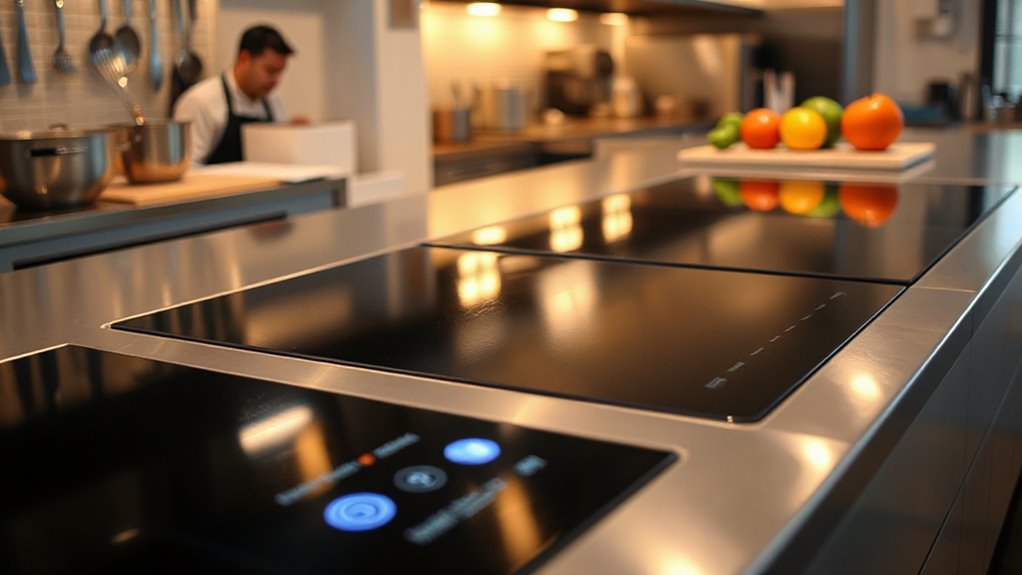

Induction ranges have become the go-to upgrade for cooks who want gas-level responsiveness with easier cleanup and better energy efficiency, but choosing one means sorting through real tradeoffs: slide-in versus freestanding, oven capacity, smart modes like air frying, and whether a 30-inch standard or a 36-inch pro-style unit fits your space. After comparing seven standout models, the FORNO Donatello 30-Inch Slide-In Induction Range earns my best overall pick for its balance of a true convection oven, four flexible elements, and a built-in slide-in look at a mid-tier commitment. The Frigidaire Gallery stands out for its stone-baked pizza mode and everyday usability, while the Summit 24-inch is the rare induction option for small kitchens where width is limited. Below, I break down each model’s strengths, drawbacks, and who it actually suits.

Get kitchen staples and gadgets delivered free with Prime
- Fast, free delivery on millions of items
- Prime Video, Amazon Music and more included
- Member-only deals all year
Key Takeaways
- True convection was the clearest dividing line in this lineup — the FORNO Donatello, Kenmore 5.0 cu. ft., and Forno Torino all pair induction cooktops with convection ovens, while the Summit 24-inch makes do with a smaller conventional cavity.
- Size was the biggest filter before features even mattered: four models are 30-inch slide-ins, but the Summit 24-inch and KoolMore 36-inch serve opposite ends of the space spectrum, and neither is a substitute for the other.
- Air fry capability showed up in three models (Kenmore 5.0, Forno Torino, and convection-adjacent modes elsewhere), which matters if you want to skip a countertop air fryer — buyers who already own one can ignore this differentiator.
- The Forno Torino’s French door oven is the only one of its kind here, trading a familiar drop-door layout for easier access and less heat loss, at the cost of a higher price and a learning curve.
- The Kenmore 5.6 cu. ft. model wins on raw oven volume — a full half cubic foot more than the 30-inch FORNO and nearly double the Summit — making it the pick for batch cooks who care more about capacity than slide-in styling.


| induction range | Oven capacity | Cooktop |
|---|---|---|
| FORNO Donatello 30-Inch Slide- | 5.0 cu. ft. | 4 induction zones |
| Kenmore 5.6 cu. ft. Stainless | 5.6 cu. ft. | Induction |
| Kenmore 5.0 Cu. Ft. Front-Cont | 5.0 cu. ft. | Induction |
| Frigidaire Gallery 30-Inch Sli | 6.2 cu. ft. | Induction; 5 heating elements |
| Summit 24-Inch Induction Range | 2.66 cu. ft. (75 L) | — |
| KoolMore 36-Inch Professional | 6 cu. ft. true convection | Polished glass-ceramic induction |
| Forno Torino 30-Inch French Do | 4.32 cu. ft. | 4-zone induction, 8,800 watts total |
More Details on Our Top Picks
FORNO Donatello 30-Inch Slide-In Induction Range, Stainless Steel, 4 Elements, 5.0 cu. ft. True Convection Oven
The FORNO Donatello is a practical choice for buyers who want a full-size induction range with a useful convection oven and familiar cooking modes. Its four induction zones offer responsive stovetop control, while the 5.0 cu. ft. oven and 2,500-watt convection element support cooking on multiple racks. Compared with the compact Summit REN24W5, it gives you much more oven room; the Frigidaire Gallery offers a larger cavity and more modes for cooks who want specialty functions such as high-heat pizza baking. The Donatello keeps its feature set more focused, with convection conversion, proof, quick preheat, and self-cleaning. Its tradeoff is installation: it needs a 240V connection and 50-amp circuit, and its 5.0 cu. ft. capacity is smaller than the Frigidaire’s 6.2 cu. ft.
Pros:- Four induction zones provide responsive stovetop control
- True convection supports cooking across multiple oven racks
- Proof and quick-preheat modes add useful everyday flexibility
- Self-clean cycle and hidden bake element simplify oven upkeep
Cons:- Requires a 240V connection and 50-amp circuit
- Its 5.0 cu. ft. oven is smaller than the Frigidaire Gallery’s 6.2 cu. ft. cavity
Best for: Home cooks replacing a standard 30-inch range who want induction, convection, and core oven modes without a specialty-focused control menu
Not ideal for: Households that regularly cook large batches or need a pizza mode, or kitchens without a compatible 240V, 50-amp circuit
- Model:FFSIN0905-30
- Width:29.92 inches
- Cooktop:4 induction zones
- Combined cooktop output:8,100 watts
- Oven capacity:5.0 cu. ft.
- Convection element:2,500 watts
- Electrical requirement:240V; 50-amp circuit
- Cleaning:Self-clean cycle; hidden bake element
Our verdict“Choose the Donatello for a full-size induction range with practical convection features, provided your kitchen has the required electrical circuit.”
Kenmore 5.6 cu. ft. Stainless Steel Electric Induction Range
The Kenmore 5.6 cu. ft. induction range suits cooks who want a roomy oven and help monitoring roasts. Its temperature probe gives more direct feedback on doneness than the feature list for the FORNO Donatello provides, while true convection and air fry add options for baking and crisping. Four dual-ring induction elements give the cooktop flexibility for different pan sizes. The Frigidaire Gallery has five heating elements and a larger 6.2 cu. ft. oven, so it may suit households that prioritize maximum capacity and specialty modes. Kenmore’s 5.6 cu. ft. cavity still offers more space than the Donatello and Summit, with a more focused set of cooking features. The tradeoff is that the supplied product details don’t specify element wattages, dimensions, or electrical requirements, making fit and installation planning less clear.
Pros:- 5.6 cu. ft. oven offers substantial cooking capacity
- Temperature probe helps monitor roasts
- True convection and air fry expand oven options
- Four dual-ring induction elements accommodate different pan sizes
Cons:- Supplied product data does not list dimensions or electrical requirements
- The Frigidaire Gallery offers a larger oven and more than 15 cooking modes
Best for: Cooks who frequently roast meat and want a temperature probe, air fry, and a roomy convection oven in one range
Not ideal for: Buyers who need exact installation dimensions or circuit requirements before choosing, or who want the largest oven and broadest mode selection
- Fuel type:Electric
- Cooktop:Induction
- Cooktop elements:4 dual-ring elements
- Oven capacity:5.6 cu. ft.
- Oven type:True convection
- Color:Stainless steel
- Oven features:Air fry, temperature probe, broil, self-cleaning
Our verdict“Pick this Kenmore if probe-guided roasting and a generous convection oven matter more to you than the Frigidaire Gallery’s extra capacity and specialty modes.”
Kenmore 5.0 Cu. Ft. Front-Control Induction Electric Range with True Convection and Air Fry
The Kenmore front-control range makes its case with a 3,000-watt Turbo Boil element, a useful distinction for cooks who often bring large pots to a boil or sear at high heat. It pairs that element with three more induction elements, a 5.0 cu. ft. true-convection oven, and air fry. Compared with the larger 5.6 cu. ft. Kenmore, this model gives up oven space and the listed temperature probe, but it calls out a specific high-output zone and includes an air-fry basket. The FORNO Donatello also has a 5.0 cu. ft. oven and convection, though the supplied details don’t identify a single 3,000-watt zone. This Kenmore’s front controls may suit cooks who want controls at the front, but its stated dimensions and cooking details make it important to check kitchen fit and cookware compatibility.
Pros:- 3,000-watt Turbo Boil element supports fast boiling and searing
- True convection and air fry provide varied oven cooking options
- 5.0 cu. ft. oven offers more room than the Summit REN24W5
- Self-clean function helps with oven cleanup
Cons:- Oven capacity is smaller than the 5.6 cu. ft. Kenmore and Frigidaire Gallery
- Induction requires compatible cookware
Best for: Induction users who often boil water or sear in a large pan and want front controls plus air fry
Not ideal for: Cooks who need a larger oven or a temperature probe, or anyone whose cookware is not induction-compatible
- Oven capacity:5.0 cu. ft.
- Dimensions:29.9 in. W × 25 in. L × 36 in. H
- Cooktop:Induction
- Number of elements:4
- Turbo Boil element:3,000 watts
- Oven features:True convection, air fry, self-clean
- Color:Stainless steel
Our verdict“Choose this Kenmore if a high-output boiling zone and front controls are more useful to you than extra oven capacity or a probe.”
Frigidaire Gallery 30-Inch Slide-In Induction Range with Stone-Baked Pizza Mode
For cooks who want their induction range to handle more than everyday meals, the Frigidaire Gallery stands out for its Stone-Baked Pizza mode, which can reach 750°F or higher. Its 6.2 cu. ft. oven is the largest specified among the lineup’s full-size options here, and more than 15 modes include air fry, steam bake, and convection. Compared with the FORNO Donatello, it adds a fifth heating element, more oven capacity, and a dedicated high-heat pizza function; compared with the Summit, it is a substantially larger range built for a different kitchen footprint. The tradeoff is a mode-rich oven that may be more than a simple-baking household needs, plus pizza results depend on ingredients and preheating. It also requires a 240-volt connection, and its 203-pound weight may complicate delivery and installation.
Pros:- Stone-Baked Pizza mode reaches 750°F or higher
- 6.2 cu. ft. oven provides the greatest stated capacity among these full-size options
- More than 15 cooking modes include air fry and steam bake
- Five heating elements offer an additional cooktop zone versus the four-zone Donatello
Cons:- Requires a 240-volt connection
- At 203 pounds, delivery and installation may take more planning
- Pizza mode requires preheating or reheating, and cooking time varies with ingredients
Best for: Households that regularly bake pizza, use multiple oven modes, and need a high-capacity 30-inch range
Not ideal for: Small kitchens, buyers seeking a compact oven, or cooks who want only basic baking functions
- Range type:30-inch slide-in
- Cooktop:Induction; 5 heating elements
- Oven capacity:6.2 cu. ft.
- Cooking modes:More than 15
- Stone-Baked Pizza mode:750°F or higher
- Voltage:240 volts
- Dimensions:28.5 in. D × 30 in. W × 35.38 in. H
- Weight:203 pounds
Our verdict“Choose the Frigidaire Gallery if high-heat pizza cooking and a large, versatile oven justify its size and installation demands.”
Summit 24-Inch Induction Range with 2.66 cu. ft. Oven, 4 Elements, White (REN24W5)
The Summit REN24W5 is the lineup’s clear fit for kitchens where a standard 30-inch range won’t work. At 23.75 inches wide, it pairs four induction zones with a 2.66 cu. ft. oven that can bake, broil, and use convection. That oven is far smaller than the 5.0 cu. ft. FORNO Donatello or either full-size Kenmore, so this range favors a compact footprint over batch cooking. Its pan sensor, child lock, residual-heat indicator, and touch controls add practical safety and operating cues for a smaller household or secondary kitchen. Unlike the Frigidaire Gallery, it doesn’t offer a long list of specialty modes or a high-temperature pizza function. The included NEMA 14-30P plug may simplify connection where the matching outlet is available, but buyers should verify their kitchen setup and be comfortable with induction-compatible cookware.
Pros:- 23.75-inch width fits spaces that cannot accommodate a 30-inch range
- Four induction zones include boost and timer functions
- Bake, broil, and convection cover core oven needs
- Pan sensor, child lock, and residual-heat indicator add useful safety features
Cons:- 2.66 cu. ft. oven is substantially smaller than the full-size ranges in this lineup
- Induction cooktop requires compatible cookware
Best for: Apartment dwellers, owners of smaller homes, or renovators replacing a 24-inch range who still want four induction zones
Not ideal for: Large households that bake for groups or need a full-size oven for multiple large dishes
- Model:REN24W5
- Width:23.75 in.
- Dimensions:23.75 in. W × 23.5 in. D × 35.62 in. H
- Oven capacity:2.66 cu. ft. (75 L)
- Cooking zones:4
- Zone power:Two 7 in. zones at 2,500 W; two 6 1/4 in. zones at 2,000 W
- Oven functions:Bake, broil, convection
- Plug:Pre-installed NEMA 14-30P, 4-prong
Our verdict“Pick the Summit when fitting a 24-inch opening matters more than having a full-size oven or specialty cooking modes.”
KoolMore 36-Inch Professional Induction Oven Range, Stainless Steel
Most induction ranges in this roundup hold you to a 30-inch footprint, but the KoolMore 36-inch goes wider — and that extra six inches changes what you can actually do with it. Where the FORNO Donatello offers four elements on a 30-inch cooktop, this model spreads an 11 kW cooktop across more real estate, which matters if you regularly run multiple pots at once. The 6 cu. ft. oven is the largest here by a clear margin, out-sizing the Kenmore 5.6 cu. ft. and easily beating the Summit’s cramped 2.66 cu. ft. cavity. Its mode list is unusually deep — air fry, pizza, proof, and dehydration — putting it in Frigidaire Gallery territory for versatility, and the three-year parts-and-labor warranty is longer coverage than most competitors offer. The tradeoff is installation: hardwired 240V means an electrician visit and no plug-and-play option like the Forno Torino’s pre-installed cord.
Pros:- Largest oven capacity in the lineup at 6 cu. ft. with true convection
- Versatile mode set including air fry, pizza, proof, and dehydration
- Three-year parts-and-labor warranty beats typical one-year coverage
- Wide 36-inch cooktop spreads 11 kW of power across more usable space
Cons:- Requires professional hardwired 240V installation — no plug-in option
- 36-inch width won’t fit standard 30-inch range cutouts without a kitchen remodel
Best for: Large households and avid home cooks who need maximum oven capacity and cooktop space for multi-dish meals
Not ideal for: Renters or anyone with a standard 30-inch cutout and no electrician budget — the width and hardwired setup make it impractical
- Width:36 in.
- Cooktop:Polished glass-ceramic induction
- Cooktop Power:11 kW
- Oven Capacity:6 cu. ft. true convection
- Cooking Modes:Bake, convection bake, broil, roast, air fry, pizza, proof, dehydration, keep warm
- Controls:Front-mounted touchscreen digital controls
- Installation:Hardwired, 240V
- Warranty:3 years, parts and labor
Our verdict“If your kitchen can absorb the extra width and the hardwired install, this is the pick for serious volume cooking that no 30-inch model in this roundup can match.”
Forno Torino 30-Inch French Door Induction Range with Air Fryer and True Convection
The French door design is what sets the Forno Torino apart from every slide-in alternative here — the Frigidaire Gallery and Kenmore front-control models both use a single drop-down door, which forces you to reach around it in tight galley kitchens. Side-hinged doors solve that problem and look doing it. Its air sous vide mode is a genuinely rare feature at this format, going beyond the air fry functions on the Kenmore and KoolMore. Compared with the Forno Donatello’s 5.0 cu. ft. oven, the Torino’s 4.32 cu. ft. cavity is noticeably smaller, so holiday turkey duty favors the Donatello. What softens the install burden, unlike the hardwired KoolMore, is the pre-installed NEMA 14-50P cord — if you already have a 50A outlet, setup is nearly plug-and-play. The 8,800-watt cooktop is modest against the KoolMore’s 11 kW, but pan-presence sensing adds a real safety layer for busy cooks.
Pros:- French doors eliminate drop-door reach-around and suit tight kitchen layouts
- Air sous vide and air fry modes add specialty cooking rarely found at this price class
- Pre-installed NEMA 14-50P cord simplifies installation versus hardwired rivals
- True convection and dual-element broiler deliver even baking and browning
Cons:- 4.32 cu. ft. oven trails the Donatello and both Kenmore models by a meaningful margin
- Still demands a 240V/50A circuit, which may require electrical upgrades
- Requires induction-compatible cookware, an added cost if your current set is aluminum or copper
Best for: Design-conscious cooks in smaller kitchens who value French door access and specialty modes like air sous vide over raw capacity
Not ideal for: Big-batch bakers and large families — the 4.32 cu. ft. oven is the smallest full-size cavity in this roundup
- Cooktop:4-zone induction, 8,800 watts total
- Oven Capacity:4.32 cu. ft.
- Oven Output:4,800 watts
- Convection Element:3,515 watts
- Cooking Modes:Air fry, air sous vide, true convection
- Oven Racks:2 included; 4 adjustable positions
- Exterior:430-grade stainless steel
- Electrical Setup:240V/50A; pre-installed NEMA 14-50P cord
Our verdict“Buy the Torino for the doors and the modes, not the capacity — it’s the most distinctive 30-inch option here for cooks who prioritize convenience and style over oven volume.”

How We Picked
I evaluated each induction range against the factors that actually drive buyer satisfaction: cooktop power and element flexibility (how well the burners handle everything from a rolling boil to a low simmer), oven capacity and cooking modes (true convection versus conventional, plus extras like air fry and specialty modes), installation fit (slide-in versus freestanding, 24/30/36-inch widths, and front-control ergonomics), and build quality relative to the category tier. Because induction cooking itself is fast and precise across the board, most differentiation happened in the oven and in fit — not in the cooktop.
The ranking order reflects that logic. Models combining true convection with a modern slide-in design and flexible elements rose to the top, led by the FORNO Donatello. Models with a single standout strength — the Kenmore’s massive capacity, the Frigidaire’s pizza mode, the Summit’s small-footprint practicality — were placed by how broadly useful that strength is. Premium picks like the KoolMore and Forno Torino were judged against whether their extra size or door innovation justifies the step up for a typical home cook rather than a professional.
Factors to Consider When Choosing Induction Ranges
Before settling on a specific model, it helps to understand the broader decisions that shape induction range ownership. These are the factors I weighed across all seven products — and the mistakes buyers most often make at each step.Slide-In Versus Freestanding: More Than Looks
A slide-in range like the FORNO Donatello, Frigidaire Gallery, or Forno Torino sits flush against your countertop with controls at the front, giving a built-in appearance and eliminating the side seam where crumbs collect. A freestanding range like the Kenmore models typically costs less and installs anywhere, but the finished sides and rear control panel read as more utilitarian. The mistake buyers make here is assuming any range fits any cutout — slide-in models often need a countertop strip behind them or a specific cabinet depth, so measure your existing opening before falling in love with a look. If you’re keeping existing cabinets, your layout may quietly decide this for you.
Width and Oven Capacity Are Locked Together
In this category, you can’t maximize cooktop space and oven volume independently: the 36-inch KoolMore gives you more element room, the 24-inch Summit squeezes into tight gaps with a 2.66 cu. ft. oven, and the 30-inch models split the difference with 5.0 to 5.6 cu. ft. cavities. A common regret is buying a compact range for a kitchen that could have fit a 30-inch — the oven becomes the bottleneck the moment you host a holiday meal. Conversely, paying for 36 inches in a household that cooks one pan at a time wastes both money and counter space. Match the size to how you actually cook, not the biggest number on the spec sheet.
True Convection Versus Conventional Ovens
True convection adds a rear fan with its own heating element, circulating air for even browning across multiple racks — a genuine advantage for roasting and baking. Conventional ovens, like the Summit’s smaller cavity, create hot and cold zones that require rotation and rack discipline. Among these seven, the FORNO Donatello, Kenmore 5.0, and Forno Torino all carry true convection, which is part of why they rank near the top. Air fry modes, present on the Kenmore 5.0 and Forno Torino, are essentially high-speed convection; they’re worth having only if you’d otherwise buy a countertop unit. Don’t pay a premium for the badge if you already own a standalone air fryer.
Induction Requires Cookware Compatibility
Every model here needs magnetic cookware — cast iron, most stainless steel, or enamel-coated pans — and non-ferrous aluminum or copper simply won’t heat. This is the single most common surprise for buyers switching from gas or radiant electric, and replacing a full pan set can add real cost to the project. Do the magnet test on your current cookware before purchasing: if a refrigerator magnet clings to the base, the pan will work. Also note that induction surfaces need smooth, flat-bottomed pans for even contact; warped vintage cookware that performed fine on gas will underperform here.
Electrical Requirements Can Kill a Deal
Induction ranges draw more power than many older electric ranges, and nearly all of these models require a dedicated 240-volt circuit with specific amperage — the 36-inch KoolMore in particular can demand more than a standard household circuit delivers. Buyers in older homes should verify their breaker capacity and wiring before ordering, because an electrician’s visit to upgrade a circuit can rival the cost of the appliance itself. Delivery crews also won’t hook up a range to an inadequate circuit, which means delays on install day. This is the least glamorous part of the purchase and the one most likely to blow up a budget.
When to Pay More — and When Not To
Stepping up in this lineup buys you three things: French door ovens (Forno Torino) for easier access and less heat loss, pro-style width and finish (KoolMore) for serious cooks and open kitchen designs, and specialty modes like Frigidaire’s stone-baked pizza setting. If none of those maps to how you cook, the mid-tier 30-inch models deliver the same core induction speed and precision for less. The pattern I saw across these seven is that paying more rarely improves the cooktop itself — induction performance is fairly mature — it improves the oven and the aesthetics. Spend where you’ll notice it daily.
Frequently Asked Questions
Is a slide-in induction range worth the extra cost over a freestanding model?
It depends on your kitchen layout and how much the built-in look matters to you. Slide-in models like the FORNO Donatello and Forno Torino sit flush with countertops, put controls at your fingertips rather than on a rear panel, and eliminate the crumb-catching gap beside the range — a real benefit in open kitchens where the range is visible. Freestanding units like the Kenmore models install with fewer restrictions and usually cost less for comparable cooking performance. If your existing cutout lacks the countertop strip behind the range that slide-ins need, retrofitting can add expense that erases the price gap. My rule: choose freestanding for value and flexibility, slide-in for finished appearance and easier cleanup.
Can I replace my old electric or gas range with an induction range myself?
Swapping an existing electric range for an induction model is usually straightforward if your circuit meets the amperage requirement, but it’s not automatic — some induction ranges, especially wide models like the 36-inch KoolMore, draw more current than a standard 40-amp circuit provides. Replacing a gas range is more involved: you’ll need a 240-volt outlet where none exists, which means an electrician running a new circuit, and you’ll need to cap the gas line safely. Delivery teams typically handle basic hookup but will refuse if the electrical doesn’t meet spec. Budget for a professional assessment if your home is older than about 25 years; the circuit upgrade is often the hidden cost that surprises buyers.
What cookware works with induction ranges, and will I need to replace mine?
Induction cooking relies on magnetic fields, so only ferrous cookware works: cast iron, most tri-ply stainless steel, carbon steel, and enamel-coated cast iron. Plain aluminum, copper, glass, and most non-stick aluminum pans will not heat at all. Before buying, run a refrigerator magnet across the bottom of your pans — if it clings firmly, the pan is compatible. Budget for replacement if your set is aluminum-based, since even one incompatible favorite pan becomes useless on the cooktop. Induction also rewards flat-bottomed pans; warped cookware that worked on gas will heat unevenly here because contact with the glass surface affects performance less, but the magnetic coupling weakens with gaps.
Is a 24-inch induction range like the Summit a smart choice, or will I regret the small oven?
A 24-inch range makes sense when the alternative is no induction at all — small apartments, galley kitchens, accessory kitchens, and ADUs are exactly where the Summit fits. The 2.66 cu. ft. oven handles everyday roasting and sheet-pan meals but struggles with a large turkey, a full batch of cookies, or multiple dishes at once. Buyers who entertain regularly or cook large-format meals will feel that ceiling within months, so be honest about your cooking style. If your space could fit a 30-inch model with even a few inches to spare, the capacity and convection upgrade usually justifies the compromise elsewhere. Choose 24 inches because your kitchen demands it, not because the footprint looks tidy.
Do specialty modes like Frigidaire’s pizza setting or air fry actually matter?
Specialty modes are worth paying for only if they replace something you’d otherwise buy or if they match a dish you make weekly. Frigidaire’s stone-baked pizza mode pre-programms heat delivery for crispier crusts, which is genuinely useful for pizza-night households but adds nothing for everyone else. Air fry modes on the Kenmore 5.0 and Forno Torino effectively function as high-speed convection — excellent if you don’t own a countertop air fryer, redundant if you do. What I’d caution against is letting a single mode drive the whole purchase: base performance, oven capacity, and fit matter every single day, while a specialty mode gets used occasionally. Treat modes as tiebreakers between otherwise equal models, not as primary reasons to choose one.
Conclusion
The right induction range comes down to matching the model to your kitchen and cooking habits. For the best overall pick, the FORNO Donatello delivers the most complete package: true convection, four flexible elements, and slide-in styling that suits nearly any modern kitchen. The Kenmore 5.6 cu. ft. freestanding range is my best value pick — the biggest oven in the lineup for buyers who prioritize capacity over built-in looks. For a beginner-friendly first induction range, the Kenmore 5.0 cu. ft. with Air Fry keeps things simple with familiar freestanding installation and useful preset cooking modes.
On the premium end, the Forno Torino French door range is the standout for design-focused cooks who want easier oven access and air frying in one appliance, while the KoolMore 36-inch suits serious home chefs and open-concept kitchens that can use the extra width. For specific needs: the Summit 24-inch is the only real answer for compact spaces, and the Frigidaire Gallery is the pick for households that will actually use its pizza mode day to day. Whichever you choose, verify your electrical circuit and cookware compatibility first — those two checks prevent nearly every induction buyer’s regret.