Shopping for espresso machines for home means balancing three things: espresso quality, milk drink capability, and how much counter space and effort you’re willing to give up. The Breville Barista Express earns the best overall spot because its built-in conical burr grinder produces fresher shots than machines that rely on pre-ground coffee, and its three colorways let it match almost any kitchen. If counter space is tight, the Breville Bambino delivers serious heat-up speed and proper steam pressure in a compact body, while budget shoppers can get real lattes from the CASABREWS CM5418 or the ultra-affordable De’Longhi Stilosa. The main tradeoff in this category is between all-in-one convenience, single-serve simplicity, and raw value — read on for the full breakdown of all 15 machines.

Get kitchen staples and gadgets delivered free — and shop member deals
- Fast, free delivery on millions of items
- Access to Prime Big Deal Days deals on October 6–7
- Prime Video, Amazon Music and more included
Complete the kit


Key Takeaways
- Built-in grinding is the single biggest quality separator: the Breville Barista Express variants consistently out-brew pre-ground-only machines because fresh grinding preserves the oils and aromas that make espresso taste layered rather than flat.
- Bar-pressure claims above 9 bars are marketing, not quality — the 20-bar touchscreen model and the 15-bar Aromaster don’t extract better than the 9-bar-capable Brevilles; temperature stability (PID control) matters far more.
- This lineup splits cleanly into three tiers: Breville machines for serious daily espresso drinkers, midrange CASABREWS/Arecovas/Ninja for casual milk-coffee households, and sub-budget IMUSA/Stilosa picks for occasional or first-time users.
- Steam wand quality varies more than espresso quality at the budget level — the CASABREWS CM5418 and Stilosa produce drinkable microfoam, while the IMUSA’s frother is better suited to plain cappuccinos than latte art.
- The Ninja Luxe Café is the only machine here that also makes drip coffee and cold brew, making it the strongest pick for households where only one person actually drinks espresso.
| Breville Barista Express Espresso Machine, Black Truffle (BES870BTR) |  | Best Overall | Model: BES870BTR | Grinder: Integrated precision conical burr grinder | Water tank capacity: 67 oz | VIEW LATEST PRICE | See Our Full Breakdown |
| XIXUBX Espresso Machine with Milk Frother |  | Best Budget Starter Pick | Pressure: 20 bar | Water tank capacity: 42 oz | Steam wand: 360° rotating, detachable | VIEW LATEST PRICE | See Our Full Breakdown |
| Breville Barista Express Espresso Machine, Brushed Stainless Steel |  | Best Grinder-Integrated Classic | Model: BES870XL | Finish: Brushed stainless steel | Grinder: Integrated precision conical burr grinder | VIEW LATEST PRICE | See Our Full Breakdown |
| Compact Espresso Machine with Steam Wand and PID Temperature Control |  | Best Compact Semi-Automatic | Machine type: Semi-automatic | Power: 1400 W | Pump pressure: 20 bar | VIEW LATEST PRICE | See Our Full Breakdown |
| Aromaster 1400W Espresso Machine with Milk Frother |  | Best for Easy Maintenance | Power: 1400 W | Pump pressure: 20 bar | Operation mode: Semi-automatic | VIEW LATEST PRICE | See Our Full Breakdown |
| Arecovas Espresso Machine with Touchscreen and Milk Frother |  | Best for One-Touch Drink Variety | Machine type: Semi-automatic espresso machine | Pressure: 20 bar | Power: 1300 watts | VIEW LATEST PRICE | See Our Full Breakdown |
| 20-Bar Espresso Machine with Milk Frother, Cold Brew, and Touchscreen |  | Best for Year-Round Drink Range | Pump pressure: 20 bar | Boiler power: 1350 W | Temperature control: PID | VIEW LATEST PRICE | See Our Full Breakdown |
| Breville Barista Express Espresso Machine, Black Sesame |  | Best All-in-One Workflow | Model: BES870BSXL (Black Sesame) | Grinder: Integrated precision conical burr grinder | Water tank capacity: 67 oz | VIEW LATEST PRICE | See Our Full Breakdown |
| Breville Bambino Espresso Machine, Brushed Stainless Steel (BES450BSS) | 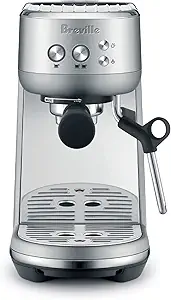 | Best Compact Speed Demon | Model: BES450BSS (Brushed Stainless Steel) | Heating system: ThermoJet, 3-second heat-up | Temperature control: Digital PID | VIEW LATEST PRICE | See Our Full Breakdown |
| CASABREWS CM5418 Compact Espresso Machine with Milk Frothing Steam Wand |  | Best Budget Starter Machine | Model: CASABREWS CM5418 | Type: Semi-automatic espresso machine | Pump pressure: 20 bar | VIEW LATEST PRICE | See Our Full Breakdown |
| De’Longhi Stilosa Compact Manual Espresso Machine with Milk Frother | 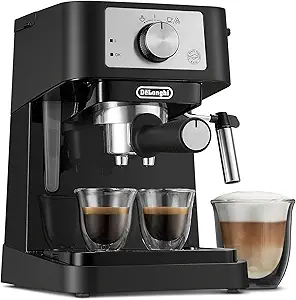 | Best Budget Entry Point | Machine type: Manual espresso machine | Boiler: Stainless steel | Milk frother: Manual steam wand | VIEW LATEST PRICE | See Our Full Breakdown |
| Ninja Luxe Café Premier 3-in-1 Espresso Machine, Drip Coffee Maker, and Cold Brew Maker |  | Best All-in-One Machine | Brew types: Espresso, drip coffee, cold brew | Espresso styles: Double shot and quad shot | Drip styles: Classic, rich, and over ice | VIEW LATEST PRICE | See Our Full Breakdown |
| CASABREWS 3700 Essential Stainless Steel Espresso Machine with Steam Wand |  | Best Compact Workhorse | Machine type: Semi-automatic espresso machine | Pump pressure: 20 bar | Wattage: 1350 W (120 V) | VIEW LATEST PRICE | See Our Full Breakdown |
| XIXUBX Espresso Machine with Milk Frother, Grey |  | Best for Iced Coffee Fans | Type: Semi-automatic espresso machine | Power: 1350 W | Pump pressure: 20 bar | VIEW LATEST PRICE | See Our Full Breakdown |
| IMUSA 4-Cup Electric Espresso and Cappuccino Maker, Black |  | Best Ultra-Simple Option | Capacity: 4 cups | Frother: Built-in milk frother | Exterior: Heat-resistant plastic | VIEW LATEST PRICE | See Our Full Breakdown |
| espresso machines for home | Water tank capacity | Power |
|---|---|---|
| Breville Barista Express Espre | 67 oz | 1600 W |
| XIXUBX Espresso Machine with M | 42 oz | — |
| Breville Barista Express Espre | 67 oz | 1600 W |
| Compact Espresso Machine with | 57.5 oz removable | 1400 W |
| Aromaster 1400W Espresso Machi | — | 1400 W |
| Arecovas Espresso Machine with | 1.2 L (40 oz), removable | 1300 watts |
| 20-Bar Espresso Machine with M | 45 oz, removable | — |
| Breville Barista Express Espre | 67 oz | 1600 W, 120 V |
| Breville Bambino Espresso Mach | — | 1560 W, 110–120 V |
| CASABREWS CM5418 Compact Espre | 34 oz, removable | — |
| De’Longhi Stilosa Compact Manu | — | — |
| Ninja Luxe Café Premier 3-in-1 | — | — |
| CASABREWS 3700 Essential Stain | — | — |
| XIXUBX Espresso Machine with M | — | 1350 W |
| IMUSA 4-Cup Electric Espresso | — | — |
More Details on Our Top Picks
Breville Barista Express Espresso Machine, Black Truffle (BES870BTR)
This model earns the top spot because it solves the biggest problem for home espresso: stale, inconsistently ground coffee. The integrated conical burr grinder doses straight into the portafilter, which means the freshness gap between a café shot and a home shot largely disappears. PID temperature control and low-pressure pre-infusion give repeatable, balanced extraction — something the XIXUBX and Aromaster can only approximate, since they rely on pre-ground coffee and less precise thermoregulation. The manual steam wand rewards practice with genuine microfoam for latte art. The tradeoff is real, though: this is a machine you learn, not a machine you press a button on. Compared with the compact PID machine in this lineup, it takes up far more counter space and costs more to own, but it replaces both a grinder and a brewer in one footprint.
Pros:- Integrated burr grinder doses fresh coffee directly into the portafilter
- PID control and pre-infusion deliver repeatable, balanced shots
- Steam wand produces true microfoam for latte art
- Complete accessory kit including tamper, jug, and cleaning tools
Cons:- Steep learning curve for grinding, extracting, and milk texturing
- Only a 1-year limited warranty on a premium-priced machine
Best for: Home baristas who want café-quality shots and are willing to learn grind, dose, and milk technique
Not ideal for: Buyers who want one-touch convenience — the manual workflow demands practice before results improve
- Model:BES870BTR
- Grinder:Integrated precision conical burr grinder
- Water tank capacity:67 oz
- Bean hopper capacity:1/2 lb
- Power:1600 W
- Temperature control:Digital PID
- Shot options:Single or double
- Warranty:1-year limited
Our verdict“The most complete all-in-one path to serious home espresso, provided you’re ready to put in the practice.”
XIXUBX Espresso Machine with Milk Frother
For a first step into espresso without a large commitment, this option stands out for its simplicity and fast heat-up. The 360° rotating, detachable steam wand is the standout detail here — detaching makes cleaning far easier than fixed wands on similarly priced machines like the Aromaster. Its 42 oz tank is generous for the category, covering several drinks before a refill. The honest tradeoff: with no grinder and a 20-bar pump that far exceeds the roughly 9 bars ideal for extraction, results depend heavily on buying good pre-ground coffee and accepting some inconsistency. Compared with the Breville Barista Express, there’s no comparison in shot quality potential — but that’s not the point. This model makes the most sense for someone testing whether espresso-making is a habit worth investing in before spending Breville money.
Pros:- Heats up quickly for both brewing and steaming
- Detachable rotating steam wand simplifies frothing and cleanup
- 42 oz tank handles multiple servings between refills
- Includes a stainless steel frothing pitcher out of the box
Cons:- No grinder — entirely dependent on pre-ground coffee quality
- 20-bar pump exceeds ideal extraction pressure and may need dialing in
Best for: First-time espresso drinkers who want to try milk drinks at home without a big investment
Not ideal for: Shot-quality purists — without a grinder or precise pressure control, café-level espresso isn’t realistic
- Pressure:20 bar
- Water tank capacity:42 oz
- Steam wand:360° rotating, detachable
- Body material:Stainless steel
- Included accessory:Stainless steel milk frothing pitcher
- Warranty:1 year
Our verdict“A low-risk entry point for casual milk-coffee drinkers, not a machine for chasing the perfect shot.”
Breville Barista Express Espresso Machine, Brushed Stainless Steel
This is the long-established version of the Barista Express, and its place here is about trust: it’s the proven configuration the Black Truffle edition above it simply restyles. Functionally the two are near-identical — same integrated burr grinder, same PID temperature control, same pre-infusion logic — so choosing between them comes down to finish preference, not performance. Against the De’Longhi Stilosa or CASABREWS machines elsewhere in this roundup, the gap is more meaningful: those machines produce decent espresso from pre-ground coffee, while this one controls the full chain from whole bean to cup. That control is exactly why it’s better suited to someone upgrading from a basic machine. The drawback remains the manual workflow: grind adjustment, dosing, and milk texturing all sit on your shoulders, and early shots will be inconsistent until the technique settles.
Pros:- Integrated burr grinder removes the need for a separate grinder
- PID control and pre-infusion support consistent, repeatable extraction
- Steam wand textures milk into microfoam for latte-style drinks
- Ships with a full accessory kit for dosing, tamping, and cleaning
Cons:- Requires hands-on adjustment of grind settings and milk texturing technique
- Large footprint compared with compact rivals like the XIXUBX
Best for: Upgraders from basic espresso machines who want bean-to-cup control in a familiar, well-established design
Not ideal for: Compact kitchens — the grinder-equipped body demands serious counter space and a learning period
- Model:BES870XL
- Finish:Brushed stainless steel
- Grinder:Integrated precision conical burr grinder
- Water tank capacity:67 oz
- Bean hopper capacity:1/2 lb
- Power:1600 W
- Shot options:Single or double
- Warranty:1 year limited
Our verdict“The same bean-to-cup capability as our top pick in a classic finish — pick whichever Breville look you prefer.”
Compact Espresso Machine with Steam Wand and PID Temperature Control
This model wins the space-constrained category on numbers alone: at 5.3 inches deep and 7.2 pounds, it slips under cabinets where the Breville Barista Express would never fit, yet it keeps features the Barista line charges a premium for — PID temperature control, pre-infusion, and a 45-second heat-up. The touchscreen interface and cold brew function push it beyond what the XIXUBX offers at the same general scale. The meaningful sacrifice is the lack of a grinder: you’ll need a separate burr grinder (or very fresh pre-ground coffee) to make the PID worthwhile, since temperature precision can’t rescue stale grounds. The manual steam wand also takes practice before it produces latte-ready microfoam. This pick makes the most sense for apartment dwellers or office nooks who already own a grinder and want fast, temperature-stable shots in a minimal footprint.
Pros:- Heats up in 45 seconds for quick morning shots
- Slim 5.3-inch depth fits under most cabinets
- PID and NTC temperature control for stable extraction
- Removable tank and descaling function keep maintenance simple
Cons:- Requires pre-ground coffee or a separate grinder
- Manual steam wand has a learning curve for good microfoam
Best for: Apartment dwellers or office users with limited counter space who already own a grinder
Not ideal for: Anyone expecting all-in-one convenience — no grinder means a second purchase and extra counter items
- Machine type:Semi-automatic
- Power:1400 W
- Pump pressure:20 bar
- Temperature control:PID and NTC
- Heat-up time:45 seconds
- Water tank capacity:57.5 oz removable
- Dimensions:11.4 x 5.3 x 11.4 inches
- Weight:7.2 lb
- Interface:Touchscreen
Our verdict“The strongest small-footprint option here if you already grind your own beans and value speed and temperature stability.”
Aromaster 1400W Espresso Machine with Milk Frother
Where this machine separates itself from the XIXUBX and CASABREWS compact machines is cleanup: one-touch descaling, removable parts, and auto shut-off make it the low-effort choice for daily cappuccinos. PID and NTC temperature control with pre-infusion puts it a step above basic 20-bar machines that brew at whatever temperature they reach, and the swivel steam wand handles milk frothing competently for lattes. The real weakness is capacity — a 2.4 oz listed capacity means this is built for one or two drinks at a time, not entertaining. Compared with the compact touchscreen machine in this lineup, it loses points on heat-up speed and footprint efficiency, but its stainless build and safety features like anti-dry burn protection make it well suited to households where the machine runs on autopilot every morning and rarely gets fussed over.
Pros:- One-touch descaling and removable parts simplify upkeep
- PID and NTC temperature control with pre-infusion for consistent flavor
- 360° swivel steam wand froths milk for lattes and cappuccinos
- Auto shut-off and anti-dry burn protection add safety for set-and-forget use
Cons:- 2.4 oz capacity limits it to one or two drinks at a time
- Semi-automatic operation still requires hands-on preparation for each drink
Best for: Small households wanting daily lattes with minimal cleaning and upkeep effort
Not ideal for: Hosts and multi-drink households — the tiny capacity means back-to-back brewing sessions
- Power:1400 W
- Pump pressure:20 bar
- Operation mode:Semi-automatic
- Capacity:2.4 oz
- Water tank:Removable, 37 oz
- Temperature control:PID and NTC
- Dimensions:13 x 7 x 14 inches
- Special features:Pre-infusion, one-touch descaling, auto shut-off, cup warmer, anti-dry burn protection
Our verdict“A low-maintenance daily driver for one or two milk-coffee drinkers who value easy cleaning over capacity.”
Arecovas Espresso Machine with Touchscreen and Milk Frother
This option stands out for its dedicated Americano button, something none of the other budget semi-automatics in this lineup offer. Where the CASABREWS CM5418 limits you to straight espresso and milk drinks, the Arecovas covers espresso, Americano, and cappuccino from a single touchscreen, which makes it better suited to households where not everyone drinks milk-based coffee. The real-time pressure gauge is a genuine learning tool — newer baristas can see whether their grind and tamp are on target instead of guessing from taste alone. The tradeoff is that it lacks a grinder, so you’re pairing it with pre-ground coffee or a separate burr grinder, and the 1.2L tank means more frequent refills than the Breville Barista Express’s 67 oz reservoir. Compared with the Barista Express, you give up freshly ground beans for a lower barrier to entry and simpler operation.
Pros:- Americano button extends drink range beyond what most entry machines offer
- PID algorithm with dual sensors keeps brew and steam temperatures stable
- Touchscreen presets reduce the skill needed for repeatable shots
- Compact footprint with a removable tank for easy refilling
Cons:- No integrated grinder, adding cost and counter space if you buy one
- Semi-automatic operation still requires manual dosing and tamping
Best for: Households mixing espresso drinkers and Americano drinkers who want preset shots without learning manual dialing
Not ideal for: Buyers who want an all-in-one workflow — there’s no grinder, so beans must be ground separately
- Machine type:Semi-automatic espresso machine
- Pressure:20 bar
- Power:1300 watts
- Interface:Touchscreen with LED display and real-time pressure gauge
- Water tank capacity:1.2 L (40 oz), removable
- Brew options:Single shot, double shot, Americano
- Milk frother:Steam wand
- Dimensions:12 × 5.2 × 11.9 in (D × W × H)
Our verdict“The right pick for mixed-drink households that want touchscreen simplicity and Americano convenience without paying for a built-in grinder.”
20-Bar Espresso Machine with Milk Frother, Cold Brew, and Touchscreen
The cold brew function is what separates this machine from everything else in its price bracket here — including the Arecovas touchscreen model, which tops out at hot Americanos. For anyone in a warm climate or a household of iced-coffee drinkers, that alone reframes the purchase: one appliance covers summer cold brew and winter lattes. Its low-pressure pre-infusion matches the extraction approach of the pricier Breville Barista Express, gently saturating grounds before full pressure to reduce channeling and sour shots. The removable 45 oz tank sits between the CASABREWS’s 34 oz and Breville’s 67 oz, a reasonable middle ground for one or two daily drinkers. The honest drawback is uncertainty: no published dimensions make it hard to judge counter fit, and like the Arecovas, it demands properly ground coffee to perform — pre-ground supermarket bags will undersell what the PID control can do.
Pros:- Cold brew function is rare at this price and rounds out the drink menu
- PID control plus pre-infusion supports balanced, repeatable extraction
- Touchscreen allows customizing shot volume to your cups
- Removable tank and detachable drip tray simplify daily cleaning
Cons:- No published dimensions, making small-space planning difficult
- Requires quality ground coffee; poorly ground beans will undermine the PID control
Best for: Iced-coffee and cold brew fans who still want hot espresso and steamed-milk drinks from one machine
Not ideal for: Buyers with tight counters or specific size limits — dimensions aren’t published, so fit is a gamble
- Pump pressure:20 bar
- Boiler power:1350 W
- Temperature control:PID
- Water tank capacity:45 oz, removable
- Controls:Touchscreen with customizable coffee volume
- Additional function:Cold brew
- Milk frother:Steam wand
- Body material:Stainless steel
Our verdict“A smart choice for drinkers who alternate between cold brew and hot espresso and want one machine to do both.”
Breville Barista Express Espresso Machine, Black Sesame
This is the only machine in this batch that turns whole beans into espresso without leaving the counter, and that single fact explains its enduring popularity. The integrated conical burr grinder doses directly into the 54 mm portafilter, which means fresher coffee and one fewer appliance compared with the Arecovas or the 20-bar cold brew model — both of which assume you already own a grinder. The 67 oz water tank is the largest here, roughly double the CASABREWS CM5418’s, so it suits two-to-four-drink households without constant refilling. The generous accessory bundle (tamper, milk jug, trimming tool, cleaning kit) means you’re brewing on day one rather than shopping for parts. The tradeoffs are real, though: this is a hands-on, learn-the-craft machine, not a button-press experience, and the 1-year warranty is thin for a machine at this level. Beginners wanting simplicity should look at the Bambino instead.
Pros:- Built-in conical burr grinder grinds fresh directly into the portafilter
- PID temperature control and pre-infusion deliver balanced extraction
- 67 oz tank and half-pound bean hopper minimize daily refills
- Extensive accessory bundle covers brewing and maintenance out of the box
Cons:- Fully manual workflow demands time and practice to master
- Only a 1-year limited warranty despite the premium build
Best for: Coffee enthusiasts who want fresh-ground espresso and don’t mind a hands-on, skill-building routine
Not ideal for: Set-and-forget drinkers — manual grinding, dosing, and tamping are required for every drink
- Model:BES870BSXL (Black Sesame)
- Grinder:Integrated precision conical burr grinder
- Water tank capacity:67 oz
- Bean hopper capacity:1/2 lb
- Power:1600 W, 120 V
- Shots:Single or double
- Warranty:1-year limited
Our verdict“The pick for buyers who want the complete bean-to-cup experience in one machine and are willing to learn the craft.”
Breville Bambino Espresso Machine, Brushed Stainless Steel (BES450BSS)
Where the Barista Express asks you to commit counter space and a learning curve, the Bambino strips espresso down to its essentials and does it fast. The ThermoJet heating system hits extraction temperature in about 3 seconds — no waiting for a boiler, which changes morning routines more than the spec sheet suggests. Its digital PID and low-pressure pre-infusion carry over the same extraction quality as its bigger Breville sibling, and the 54 mm portafilter with a 19 g dose produces genuinely café-style shots from a footprint smaller than the CASABREWS CM5418’s class of machines. The obvious compromise is the absence of a grinder, so you’ll need pre-ground coffee or a separate burr grinder — the Barista Express remains the better one-box solution. The bundled accessories, including filter baskets and a milk jug, mean there’s nothing extra to buy beyond beans. Manual preparation is still the name of the game.
Pros:- 3-second heat-up eliminates the morning wait entirely
- Digital PID and pre-infusion deliver extraction quality on par with larger Breville models
- Compact footprint fits kitchens where the Barista Express won’t
- Includes filter baskets, milk jug, tamper, and cleaning supplies
Cons:- No integrated grinder, requiring pre-ground coffee or a separate purchase
- Manual operation means dialing in shots takes practice
Best for: Small-kitchen espresso drinkers and busy commuters who want café-quality shots with zero warm-up wait
Not ideal for: Buyers who want everything in one appliance — the lack of a grinder means a second purchase for fresh beans
- Model:BES450BSS (Brushed Stainless Steel)
- Heating system:ThermoJet, 3-second heat-up
- Temperature control:Digital PID
- Portafilter:54 mm, 19 g dose
- Power:1560 W, 110–120 V
- Settings:1 cup, 2 cups, hot water, steam
- Warranty:1-year limited
Our verdict“The best small-footprint choice for drinkers who already own a grinder or accept pre-ground coffee and value instant heat-up.”
CASABREWS CM5418 Compact Espresso Machine with Milk Frothing Steam Wand
This model makes the list as the low-commitment entry point for anyone curious whether espresso at home is worth the hassle. Compared with the Breville Bambino, it asks far less of your wallet while still covering the fundamentals: a 20-bar pump, a steam wand that textures milk for lattes, and a built-in pressure gauge that gives beginners visual feedback on their grind and tamp — a feature the Bambino doesn’t offer. The 34 oz tank is the smallest in this batch, fine for one or two people but a chore for a household. The workflow has a quirk worth knowing: after steaming milk, the machine needs to cool down before pulling the next shot, which slows back-to-back drink making. Expect a dialing-in period too — pressure will run low until you sort out grind size and tamping. That learning curve is arguably the point: it teaches you what to look for before upgrading.
Pros:- Pressure gauge gives beginners visible feedback on grind and tamp
- Steam wand produces textured milk for cappuccinos and lattes
- Compact brushed stainless design fits home or office counters
- Includes portafilter, filters, and tamper so you can start immediately
Cons:- Must cool down after frothing before brewing the next shot
- Requires grind, dose, and tamp adjustments to reach proper pressure
Best for: First-time espresso buyers on a budget who want to learn the basics before investing in a bigger machine
Not ideal for: Households making multiple drinks back to back — the required cool-down between steaming and brewing slows things down
- Model:CASABREWS CM5418
- Type:Semi-automatic espresso machine
- Pump pressure:20 bar
- Wattage:1350 W
- Water tank capacity:34 oz, removable
- Milk frother:Steam wand
- Gauge:Built-in pressure gauge
- Filters:One-cup and two-cup filters included
Our verdict“A sensible training-wheels machine for budget buyers who want to learn espresso fundamentals without a big spend.”
De’Longhi Stilosa Compact Manual Espresso Machine with Milk Frother
The De’Longhi Stilosa earns its spot as the lowest-commitment way to start pulling real shots. Unlike the Ninja Luxe Café, which automates dosing and tamping, the Stilosa asks you to learn the craft yourself — and that’s the point. It costs little because it does little, but the stainless steel boiler and single/double filter baskets give you everything needed for genuine espresso rather than the moka-style brewing you get from the IMUSA 4-Cup. Compared with the CASABREWS 3700, the tradeoff is capacity and power: expect slower heat-up and a smaller water tank. The manual frother works for cappuccinos and lattes, though it demands more patience than the automatic systems on pricier rivals. This pick makes the most sense for someone who wants to try the hobby before investing.
Pros:- Compact footprint fits small kitchen counters
- Manual steam frother handles cappuccinos and lattes
- Single and double shot filters included
- Two-level cup holder fits espresso cups and taller mugs
Cons:- Fully manual operation — every drink requires hands-on work
- Frothing milk by hand takes practice to get right
- Slower recovery between shots than higher-wattage rivals
Best for: Curious beginners who want real manual espresso without a real investment
Not ideal for: Busy households that need fast back-to-back drinks — the small boiler and manual operation slow things down
- Machine type:Manual espresso machine
- Boiler:Stainless steel
- Milk frother:Manual steam wand
- Included filters:Single and double espresso
- Cup holder:Two-level
- Design:Compact countertop format
Our verdict“A low-risk first step into manual espresso for anyone unsure whether the hobby will stick.”
Ninja Luxe Café Premier 3-in-1 Espresso Machine, Drip Coffee Maker, and Cold Brew Maker
The Ninja Luxe Café Premier is the most versatile machine in this roundup, covering espresso, drip coffee, and cold brew in a single footprint. Where the Breville Barista Express focuses exclusively on espresso excellence, the Ninja trades some depth for breadth — one appliance replaces three. Its 25-setting conical burr grinder and guided brewing with automatic dosing and assisted tamping mean beginners get help at every step, unlike the fully manual De’Longhi Stilosa. The automatic dual froth system with four presets outclasses the steam wands on the CASABREWS 3700 and XIXUBX for anyone who drinks mostly lattes. The tradeoff: purists chasing café-level shot control will still find the Breville offerings more dialed-in, and a machine this capable takes up serious counter space.
Pros:- Three brewing styles — espresso, drip, and cold brew — in one unit
- Guided brewing with automatic dosing and assisted tamping flattens the learning curve
- Built-in conical burr grinder with 25 grind settings
- Automatic dual froth system with four presets plus manual mode
Cons:- Bulky footprint that may dominate smaller counters
- Do-everything design means it does not specialize in anything
- More components to clean and maintain than simple machines
Best for: Households split between espresso drinkers, drip coffee fans, and cold brew lovers who want one machine for everything
Not ideal for: Espresso enthusiasts who want maximum shot control — the guided system prioritizes convenience over tweakability
- Brew types:Espresso, drip coffee, cold brew
- Espresso styles:Double shot and quad shot
- Drip styles:Classic, rich, and over ice
- Grinder:Conical burr, 25 settings
- Frothing:Automatic dual froth system, 4 presets plus manual
- Water reservoir:70 oz, removable
- Key accessories:Portafilter, milk jug, baskets, assisted tamper, cleaning kit
Our verdict“The one-machine answer for households with mixed coffee habits who refuse to buy three appliances.”
CASABREWS 3700 Essential Stainless Steel Espresso Machine with Steam Wand
The CASABREWS 3700 occupies the sweet spot between the barebones De’Longhi Stilosa and the do-everything Ninja Luxe Café: it’s a focused semi-automatic with enough power for daily routine. The 1350-watt heating system and 20-bar pump deliver faster warm-up and more consistent extraction than the Stilosa can manage, and the 43.9 oz removable tank means fewer refills than smaller entry-level machines. Its steam wand is the real draw for milk drinkers — it froths with enough control for basic latte art, something the IMUSA 4-Cup simply cannot do. Compared with the Breville Barista Express, you give up the built-in grinder and pressure gauge, so you’ll need a separate grinder and rely on taste rather than readouts. For an office desk or a compact kitchen, this balance of size and capability is hard to beat.
Pros:- 20-bar pump and 1350W heating for reliable extraction
- Steam wand froths well enough for latte art practice
- Large 43.9 oz removable tank and drip tray
- Includes one-cup and two-cup filters
Cons:- Requires a first-use rinse cycle before brewing
- No pressure gauge for shot diagnostics
- Ground coffee only — no built-in grinder
Best for: Small-space dwellers and office users who want daily cappuccinos from a compact, capable machine
Not ideal for: Data-driven tinkerers — with no pressure gauge, tuning your shots is guesswork
- Machine type:Semi-automatic espresso machine
- Pump pressure:20 bar
- Wattage:1350 W (120 V)
- Water tank:43.9 oz, removable
- Milk frothing:Steam wand
- Included filters:One-cup and two-cup
- Coffee input:Ground coffee
Our verdict“A dependable compact semi-auto for daily milk drinks where counter space is limited.”
XIXUBX Espresso Machine with Milk Frother, Grey
The XIXUBX stands out for one reason that most of this lineup can’t match: one-touch cold brew alongside hot espresso. The Ninja Luxe Café also covers cold brew, but at a far higher cost and complexity — the XIXUBX delivers hot-and-cold versatility in a simpler push-button package. Its 30-second heat-up is quicker than the CASABREWS 3700, and NTC temperature control keeps extraction steadier than machines that rely on guesswork alone. The included frothing pitcher and adjustable steam wand mean latte drinkers are covered too, though the frothing experience is more basic than the Ninja’s automatic presets. The real compromise is control: there are no pressure gauges or temperature dials, so dialing in a shot means adjusting the grinder, not the machine. For iced-latte-first households, that tradeoff is easy to accept.
Pros:- One-touch cold brew plus hot espresso in one machine
- Heats in about 30 seconds for quick morning drinks
- NTC temperature control for consistent extraction
- Frothing pitcher and adjustable steam wand included
Cons:- No pressure gauge or temperature dial for manual tuning
- Push-button interface limits shot customization
- Smaller brand means less established service and parts support
Best for: Iced coffee and cold brew fans who still want hot espresso without buying a second appliance
Not ideal for: Hands-on hobbyists — push-button controls and no gauges leave little room to experiment
- Type:Semi-automatic espresso machine
- Power:1350 W
- Pump pressure:20 bar
- Heating time:About 30 seconds
- Temperature control:NTC sensor
- Beverage options:Hot espresso, one-touch cold brew
- Frother:Adjustable steam wand with pitcher
- Warranty:1 year
Our verdict“The affordable pick for iced-drink-first households who want hot espresso on the side.”
IMUSA 4-Cup Electric Espresso and Cappuccino Maker, Black
The IMUSA 4-Cup is the easiest machine here to use, and the most limited. It brews moka-style coffee in larger batches rather than true 9-bar espresso, which puts it in a different category from the CASABREWS 3700 or De’Longhi Stilosa — those pull genuine shots but one at a time. For someone who just wants a warm milky coffee for a couple of people with one press, that difference barely matters, and the permanent filter basket plus removable drip tray keep cleanup trivial. The included milk frother handles basic cappuccinos and lattes, though with none of the latte-art potential of a real steam wand. The plastic exterior is a step down in both durability and heat retention from the stainless builds elsewhere in this list. This pick makes sense when simplicity and serving size outrank café authenticity.
Pros:- Brews up to four cups in one cycle
- Built-in milk frother for cappuccinos and lattes
- Removable drip tray and permanent filter simplify cleanup
- Simple operation with no learning curve
Cons:- Plastic exterior feels less durable and retains less heat
- Hard four-cup capacity ceiling
- Brews moka-style coffee, not true espresso
Best for: Casual drinkers who want simple, batch-brewed milky coffee for two without espresso-hobby complexity
Not ideal for: Espresso purists — moka-style brewing won’t produce true crema or shot quality
- Capacity:4 cups
- Frother:Built-in milk frother
- Exterior:Heat-resistant plastic
- Drip tray:Removable
- Filter:Permanent filter basket
- Voltage:120 V
Our verdict“A no-fuss batch brewer for casual milky-coffee drinkers who care about convenience, not crema.”

How We Picked
I evaluated each machine through the lens of a home buyer: how good is the espresso, how well does it steam milk, how much learning curve and daily cleanup does it demand, and does the build quality justify the cost? For espresso quality I prioritized temperature stability (PID-controlled machines rank higher than basic thermostats), grind freshness (built-in grinders beat pre-ground setups), and pressure consistency rather than inflated bar counts. For milk drinks, I judged steam wand power and the difference between manual wands, automatic frothers, and steam-free alternatives.
Ranking then came down to fit and durability. Machines with stainless steel construction, accessible water tanks, and descaling-friendly maintenance placed above plastic-bodied competitors, and I penalized models that hide routine cleaning behind awkward disassembly. Finally, I weighed value at each tier — a budget machine that does 80 percent of a premium one ranks higher than a midrange machine that duplicates a cheaper model’s performance at a higher cost.
Factors to Consider When Choosing Espresso Machines For Home
Before picking a specific machine, it helps to understand what actually drives espresso quality and daily satisfaction at home. These are the factors that shaped this ranking — and the ones buyers most often get wrong.Grinder or No Grinder?
The single biggest decision in this category is whether the machine includes a grinder. Espresso demands a fine, consistent grind that goes stale within minutes of grinding, which is why integrated-grinder machines like the Barista Express pull noticeably better shots than any pre-ground setup. If you buy a grinder-less machine — the Bambino, Stilosa, or CASABREWS models — you’ll need a separate burr grinder or a very good relationship with your local roaster, and pre-ground coffee will always taste flatter. The common mistake is buying a quality grinder-less machine and feeding it supermarket pre-ground, which wastes the machine’s potential. Budget for a grinder if you go that route, or accept convenience-focused drinks rather than café-level espresso.
Temperature Stability Beats Bar Pressure
Every machine in this lineup advertises 15, 19, or 20 bars of pressure, but espresso only extracts properly at around 9 bars — anything more is a number on a box, not a feature. What separates good shots from sour or bitter ones is whether the machine can hold a stable brewing temperature shot after shot. PID-controlled machines (marked in this roundup) adjust temperature electronically and recover fast between drinks, while cheaper thermostat-based machines swing several degrees, which shows up as inconsistent flavor. If you drink straight espresso or light roasts, temperature stability should outweigh touchscreen gimmicks and pressure claims every time.
Milk Steaming: Manual Wand vs. Automatic Frother
If your household drinks lattes and cappuccinos, the milk system matters as much as the espresso side. A manual steam wand — found on the Brevilles, CASABREWS, and Stilosa — takes a week or two to learn but produces silky microfoam good enough for latte art. Automatic frothers and basic steam attachments (like the IMUSA’s) are easier for beginners but texture milk unevenly and can’t make true microfoam. Be honest about who’s using the machine: a household of one enthusiast will love a manual wand, while a family of occasional cappuccino drinkers may never learn it and would be happier with assisted frothing.
Counter Space and Daily Routine
Espresso machines live on the counter, not in a cabinet, so measure your space before buying — especially the height clearance needed to fill the bean hopper or remove the water tank. The Bambino and CASABREWS compact models fit under standard cabinets, while the Barista Express and Ninja Luxe Café demand real estate and nearby outlet access. Also think through your daily routine: machines with front-access water tanks and dishwasher-safe parts remove friction that otherwise builds over months of use. A machine that’s annoying to clean gets used less, no matter how good its espresso is.
Semi-Automatic, Manual, or Multi-Function?
This roundup is mostly semi-automatic machines, where you start and stop the shot yourself — that’s the sweet spot for learning espresso without full barista training. True manual machines like the Stilosa rely entirely on your tamping and technique, which rewards practice but frustrates beginners. At the other end, multi-function machines like the Ninja Luxe Café trade some espresso purity for drip coffee and cold brew in one footprint. Choose based on how many drinks you make daily and whether anyone else in the house will actually use the machine — the best espresso machine for a household is often the most versatile one, not the most precise one.
When to Spend More (and When Not To)
Stepping up in price buys three things: temperature stability, grinder quality, and build durability — usually in that order. A premium pick like the Barista Express makes sense if you drink espresso daily, because better shots and fewer replacements pay off over years. But if you make two or three milk drinks a week, a sub-budget machine like the Stilosa or CM5418 delivers 80 percent of the experience for a fraction of the cost. The mistake to avoid is buying a midrange machine that splits the difference without excelling at anything — in this lineup, the top and bottom tiers offer clearer value than several of the middle options.
Frequently Asked Questions
Is the Breville Barista Express worth it over the Bambino if I already own a grinder?
If you already own a quality burr grinder capable of espresso-fine settings, the Bambino becomes the smarter buy. Its Thermojet heating system reaches brewing temperature in about three seconds, it pulls shots on par with the Barista Express, and it costs less while occupying a fraction of the counter space. The Barista Express’s real advantage is its built-in conical burr grinder, so paying for it twice — once in your standalone grinder, once in the machine — doesn’t make sense. The only reason to still choose the Barista Express is if you want a single machine that handles beans-to-espresso in one workflow or you plan to sell your grinder.
Can a budget espresso machine like the De’Longhi Stilosa actually make good espresso?
Yes, but with expectations adjusted. The Stilosa can pull genuinely enjoyable shots if you use freshly ground coffee (ground fine, ideally from a burr grinder), distribute and tamp evenly, and accept that temperature stability is limited compared with PID machines. What you give up is consistency — back-to-back shots may taste slightly different — and long-term durability, since the build is lighter and mostly plastic. For someone testing whether home espresso is a habit worth investing in, it’s a low-risk entry point. If you already know you’ll drink espresso daily, spending more upfront will save you an upgrade within the year.
Do the different Breville Barista Express colors (Black Truffle, Stainless Steel, Black Sesame) differ in performance?
No — the BES870 variants in this roundup are identical machines in different finishes. Same grinder, same PID temperature control, same steam wand, same 67-ounce water tank. The choice between Black Truffle, Brushed Stainless Steel, and Black Sesame is purely aesthetic, so pick whichever matches your kitchen and buy based on availability. This is worth knowing because listings sometimes price colors differently; there’s no functional reason to pay more for one finish over another. What does matter is distinguishing the Barista Express from the Barista Express Impress, a separate model with assisted tamping that isn’t in this lineup.
Is the Ninja Luxe Café a real espresso machine or a multi-cooker that does espresso on the side?
It’s a legitimate espresso machine that also does other things. The Luxe Café uses pressure-based espresso brewing with proper grind-size guidance and produces solid shots and textured milk drinks, and it adds drip coffee and cold brew in a single footprint. The tradeoff is focus: dedicated semi-automatics like the Barista Express give you more hands-on control over grind, dose, and extraction, so enthusiasts will eventually hit the Ninja’s ceiling. It makes the most sense for mixed-drink households where one person wants espresso and others want a full carafe of drip in the morning. If espresso is your only priority, a dedicated machine serves you better.
How much maintenance do home espresso machines actually require?
More than most buyers expect, and it’s the number-one reason machines end up unused. Daily, you’ll rinse the portafilter and drip tray and wipe the steam wand immediately after each use — dried milk is the fastest way to ruin a wand. Weekly, you should backflush machines that support it and wash the water tank. Every one to three months, depending on water hardness, descaling is mandatory, and Breville machines in particular will prompt you with lights when it’s due. Using filtered or distilled-mineral-blended water dramatically reduces scale buildup and improves taste at the same time. Budget ten minutes of upkeep per week; if that sounds unappealing, favor machines with simpler cleaning routines over feature-loaded ones.
Conclusion
The right choice here depends less on specs and more on how you actually drink coffee. For the best overall pick, the Breville Barista Express in any of its three finishes stands apart because its built-in grinder and PID temperature control deliver the most consistent café-quality shots in this lineup. The best value goes to the CASABREWS CM5418, which pairs a real steam wand with stainless build at a price that undercuts machines with similar capability. For beginners, the De’Longhi Stilosa offers the cheapest way to learn manual espresso basics, while the Breville Bambino is the better beginner pick if budget allows — its fast heat-up and forgiving extraction make daily practice easy. As the best premium/multi-function option, the Ninja Luxe Café justifies its price for households that want espresso, drip, and cold brew in one machine. And for tight budgets or occasional use, the IMUSA 4-Cup covers basic cappuccino duty without pretending to be more than it is. Match the machine to your routine, your counter, and your milk habits, and any of these picks will pay for itself in skipped café visits.
NFL season / tailgating Picks
team gear
As an affiliate, we earn on qualifying purchases.