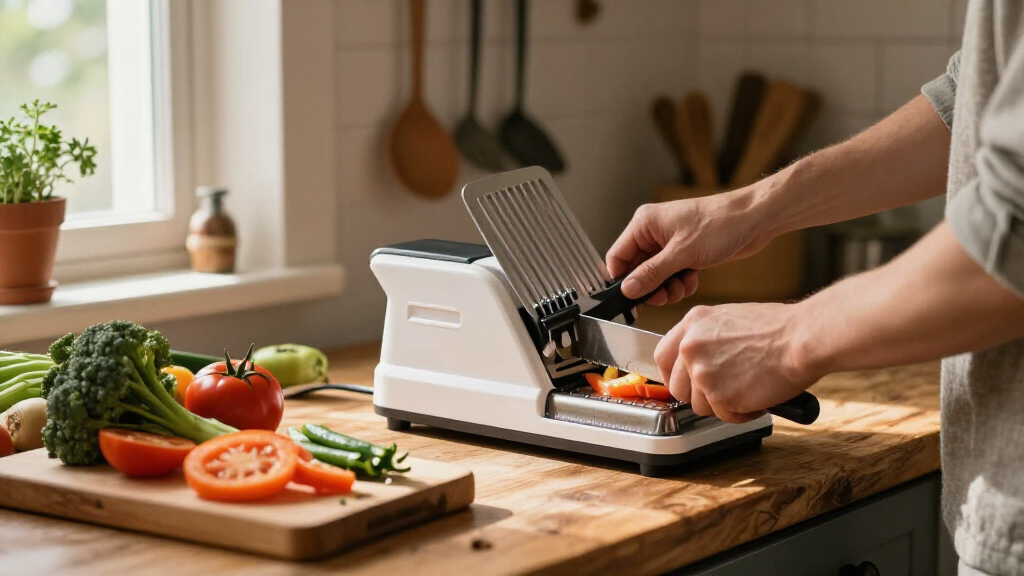

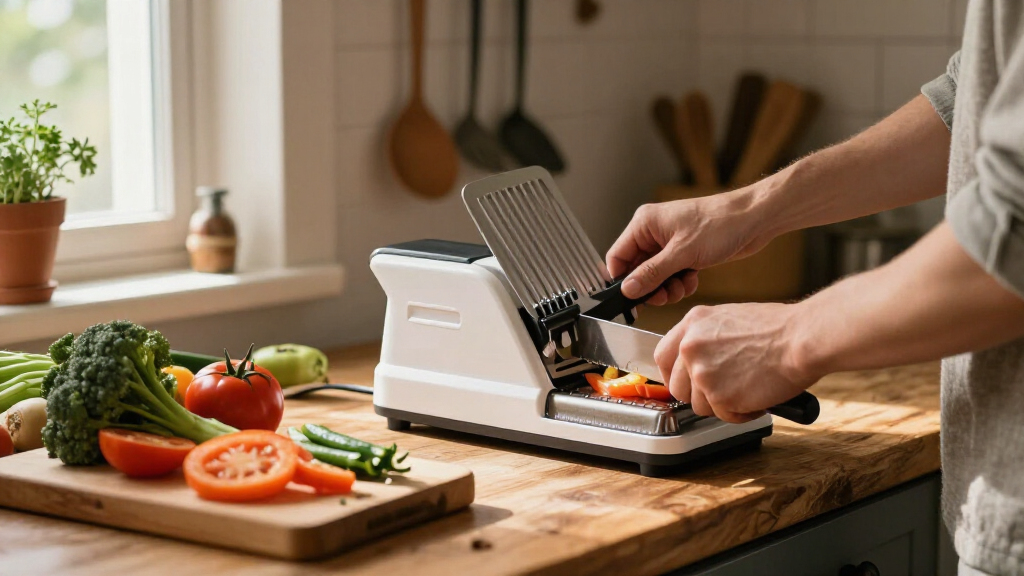
Electric food slicers promise deli-quality cuts at home, but the gap between a $60 budget model and a $300 semi-commercial machine comes down to motor power, blade size, and how much cleanup you’re willing to tolerate. The BESWOOD 10-inch 240W slicer stands out as the best overall pick for its commercial-grade blade and motor that handle frozen meat and daily use without bogging down. For most home kitchens, the CUSIMAX 8.7-inch offers the best balance of capacity and price, while the OSTBA two-blade 200W wins on value for occasional sandwich prep. The main tradeoff you’ll face: foldable compact models save counter space but sacrifice blade size and stability, while full-size machines slice better but demand permanent counter real estate. Read on for the full breakdown of all 14 models.
Listen free for 30 days with Audible
Thousands of audiobooks and originals — cancel anytime.
Start your free trialAs an affiliate, we earn on qualifying purchases.
Key Takeaways
- The 10-inch commercial-grade models (BESWOOD, VEVOR 240W) outperformed everything else on frozen meat and dense vegetables, but they’re overkill for weekly sandwich slicing and cost roughly double the home models.
- Blade quality mattered more than wattage in this lineup — the 7.5-inch models with two included blades (OSTBA 200W, generic dual-blade picks) delivered cleaner cuts than higher-wattage machines with single budget blades.
- Foldable 6.7-inch slicers are the weakest performers for bread and large roasts, but their storage footprint makes them the only realistic choice for small kitchens and infrequent users.
- Removable food carriages and detachable blades (CUSIMAX, FOHERE) cut cleanup time dramatically, which emerged as the single biggest satisfaction factor for regular users.
- Several listings in this category are near-identical rebrands of the same 200W two-blade design, so warranty terms, spare blade availability, and price on the day matter more than brand name.


| electric food slicer | Blade Size | Adjustable Thickness | Safety Features | Blade Material |
|---|---|---|---|---|
| CUSIMAX Electric Meat Slicer w | 8.7 inches | 1–20mm | Non-slip feet, blade safety guard | Stainless Steel 304 |
| OSTBA Electric Meat Slicer wit | 7.5 inches | 0–15mm (~3/4 inch) | — | — |
| Electric Meat Slicer | 8.7 inches | — | — | Stainless steel |
| VEVOR Meat Slicer | 7.5 inches | 0–15mm | Recessed blade, food pusher, suction cup feet | — |
| OSTBA Electric Meat Slicer wit | 7.5 inches | Super thin to ~3/4 inch | Safety lock, power button, non-slip suction cup feet | — |
| 150W Foldable Meat Slicer Mach | 6.7 inches | — | Dual safety lock, independent safety switch | Stainless steel |
| Foldable Meat Slicer | 6.7 inches | — | Child safety lock, suction rubber feet, protected food pusher | German RSG stainless steel |
| Meat Slicer Machine for Home | 7.5 inches | 0-15mm | Child lock, non-slip feet | — |
| VEVOR Commercial Meat Slicer | 10 inches | 0 to 12mm (0.47 inches) | — | Chromium-plated steel |
| Nutrichef Electric Meat Slicer | 7.5 inches | — | Food pusher, blade guard | Stainless steel |
| FOHERE 250W Electric Meat Slic | 7.5 inches | 0-15mm | — | — |
| Meat Slicer | 7.5 inches | — | — | — |
| Meat Slicer Machine for Home | 7.5 inches | Stepless, up to 3/4 inch | — | — |
| BESWOOD 10" Electric Deli Meat | 10 inches | — | Double illuminated ON/OFF switch, 24V power supply | Chromium-plated steel |
More Details on Our Top Picks
CUSIMAX Electric Meat Slicer with 8.7” Stainless Steel Blades
This option stands out for hitting the sweet spot between capacity and convenience. The 8.7-inch blade is larger than what the OSTBA 7.5-inch models offer, which means it can handle wider loaves of bread and bigger cuts of roast without awkward trimming. An adjustable thickness range of 1–20mm also runs slightly wider than most competitors, giving deli-thin shavings through to substantial sandwich slices. Compared with the 200W OSTBA two-blade slicer, the CUSIMAX matches the motor power but pulls ahead on blade size, while the fully removable food carriage makes cleanup less of a chore. The tradeoff is that it only comes with one blade style, so buyers who want a serrated option for crusty bread will need to look elsewhere. Still, for all-around household slicing, this pick makes the most sense.
Pros:- Larger 8.7-inch blade handles wide bread loaves and big roasts better than 7.5-inch rivals
- Wide 1–20mm thickness range covers everything from shaved meat to thick sandwich cuts
- Removable blade and food carriage make cleanup faster
- Non-slip feet and blade guard keep operation stable and safe
Cons:- Single non-serrated blade limits versatility on crusty bread
- Max 20mm thickness may not satisfy buyers wanting extra-thick cuts
Best for: Home cooks who slice a variety of foods regularly and want a larger blade without commercial-grade bulk
Not ideal for: Bread enthusiasts who need a serrated blade — this single-blade setup struggles with hard crusts compared to dual-blade models
- Blade Size:8.7 inches
- Power:200W
- Adjustable Thickness:1–20mm
- Blade Material:Stainless Steel 304
- Removable Parts:Blade and food carriage
- Safety Features:Non-slip feet, blade safety guard
Our verdict“The most balanced choice for a busy household that slices meat, cheese, and bread on a weekly basis.”
OSTBA Electric Meat Slicer with Two 7.5” Stainless Steel Blades, 200W
What separates this OSTBA from the crowd is the two-blade package — a serrated blade for bread and a non-serrated one for meat and cheese — at a price point where most rivals, including the single-blade CUSIMAX, include only one. That dual-blade versatility translates directly into fewer frustrations at the cutting board. The 200W motor matches the CUSIMAX’s output despite the smaller 7.5-inch blade, so everyday slicing power isn’t sacrificed. Compared with the 150W OSTBA further down this list, this model is the smarter buy for anyone who slices dense meats or semi-frozen cuts, since the extra wattage keeps the blade from bogging down. The 2-year warranty also adds peace of mind that budget slicers rarely offer. The compromises are physical: the footprint is larger than you might expect for a 7.5-inch unit, and this is firmly a home machine, not a workhorse for batch prep.
Pros:- Includes both serrated and non-serrated blades for bread versus meat and cheese
- 200W motor handles dense and semi-frozen foods better than 150W rivals
- 2-year warranty exceeds typical budget-slicer coverage
- Removable parts simplify cleaning
Cons:- Bulky footprint for a 7.5-inch slicer
- Not built for commercial or heavy-volume use
Best for: Budget-conscious buyers who want blade versatility and warranty coverage without paying premium prices
Not ideal for: Small-kitchen owners — the body is bulkier than its blade size suggests
- Power:200W
- Blade Size:7.5 inches
- Blade Types:Serrated and non-serrated
- Adjustable Thickness:0–15mm (~3/4 inch)
- Included Components:Food pusher, meat slicer, two stainless steel blades
- Warranty:2 years
Our verdict“The best price-to-versatility ratio on this list for home users who slice both bread and deli meats.”
Electric Meat Slicer, 8.7-inch Stainless Steel Blade, Adjustable Thickness
This model plays in a different league from the rest of this batch. Its 400W peak motor doubles the output of the 200W CUSIMAX and VEVOR units, which shows up in real-world performance: dense roasts and firm cheeses pass through without the blade stalling or dragging. The all-metal housing also sets it apart from the mostly plastic-bodied home slicers here, giving it the rigidity that repeated commercial use demands, and the ETL certification signals it has been vetted to a higher safety standard than typical kitchen-gadget listings. Compared with the VEVOR 7.5-inch, this machine’s larger blade and metal build make it the obvious choice for small delis or serious batch cooking. The flip side is weight and storage — this is a heavy, countertop-dominant appliance, and buyers who slice only occasionally will find it overkill when a lighter 200W model does the job for less money.
Pros:- 400W peak motor is twice the power of standard home models, cutting dense foods effortlessly
- All-metal housing built to commercial durability standards
- ETL certified for verified safety compliance
- Removable blades, food pusher, and drip tray make post-use cleanup manageable
Cons:- Heavy and bulky, difficult to store or move frequently
- Overbuilt and likely overpriced for light home use
Best for: Small delis, catering side businesses, or home cooks doing large-batch slicing who need sustained power
Not ideal for: Casual users — the weight, bulk, and likely price are wasted on occasional sandwich prep
- Blade Size:8.7 inches
- Blade Material:Stainless steel
- Motor Power:400W peak
- Thickness Adjustment:1–15mm
- Housing:All-metal
- Safety Certifications:ETL
- Included Features:Removable blades, food pusher, drip tray
Our verdict“The power pick for anyone whose slicing volume justifies commercial-grade construction.”
VEVOR Meat Slicer, 7.5-inch Electric Deli Slicer with Dual SUS420 Blades
This VEVOR earns its place through thoughtful safety engineering rather than raw power. The recessed blade design, food pusher, and suction cup feet combine to keep hands away from the cutting edge and the machine anchored during use — a meaningful advantage over the CUSIMAX, whose standard non-slip rubber feet are adequate but less secure on polished counters. Like the two-blade OSTBA, it ships with both serrated and non-serrated blades, covering bread and deli duty from one box. The 70–100 RPM blade speed sits in a comfortable middle ground: fast enough for efficient slicing, slow enough to feel controlled. Compared with the 150W OSTBA, the extra 50W of motor power here makes slicing semi-firm cheese noticeably smoother. The limitations are real, though — the 7.5-inch blade forces you to trim large roasts, and those suction cups can lose their grip on textured or uneven countertops, undermining the machine’s core stability pitch.
Pros:- Recessed blade and food pusher minimize hand-to-blade exposure
- Dual serrated and non-serrated blades handle bread and deli meats from one package
- 0–15mm thickness range covers paper-thin to 3/4-inch cuts
- Suction cup feet anchor the machine firmly on smooth counters
Cons:- Smaller 7.5-inch blade limits the size of foods it can accept
- Suction cups lose grip on uneven or textured surfaces
Best for: Safety-conscious home cooks, including those new to slicers, who value a stable, guarded design
Not ideal for: Anyone slicing large cuts of meat or bread — the 7.5-inch blade requires trimming oversized items first
- Blade Size:7.5 inches
- Motor Power:200W
- Blade Speed:70–100 RPM
- Blade Type:Serrated and non-serrated (SUS420)
- Adjustable Thickness:0–15mm
- Food Compatibility:Meat, bread, vegetables
- Safety Features:Recessed blade, food pusher, suction cup feet
Our verdict“A smart choice for first-time slicer owners who prioritize controlled, guarded operation over maximum capacity.”
OSTBA Electric Meat Slicer with 7.5” Stainless Steel Blade, 150W
For buyers testing whether a home slicer fits their routine at all, this is the lowest-risk entry point in the batch. The 150W motor is the weakest here, but for its intended job — slicing cooked meats, cheese, vegetables, and fruit at moderate volume — it delivers consistent, adjustable cuts from paper-thin up to roughly 3/4 inch. Compared with its 200W sibling from OSTBA, this model trades motor muscle and the second blade for a lower price, which is a fair deal if your slicing is mostly weekly sandwich prep rather than frozen roasts. The fully removable components — blade, carriage, slide-rod extension, and pusher — mean cleaning isn’t the pain point it is on some cheaper fixed-blade machines. The serrated blade handles bread reasonably well, but push it toward dense or semi-frozen meat and it will strain where the VEVOR or either 200W model cruises.
Pros:- Lowest-cost entry into electric slicing in this lineup
- Adjustable thickness from super thin to about 3/4 inch
- Blade, carriage, slide rod, and pusher all remove for easy cleaning
- Safety lock and suction cup feet keep operation secure
Cons:- 150W motor strains on dense or semi-frozen foods
- No blade options — single serrated blade only
Best for: First-time buyers and light-duty households wanting an affordable slicer for weekly deli-style prep
Not ideal for: Anyone slicing frozen meat or large volumes — the 150W motor will bog down and overheat
- Blade Size:7.5 inches
- Power:150W
- Blade Type:Stainless steel serrated
- Adjustable Thickness:Super thin to ~3/4 inch
- Safety Features:Safety lock, power button, non-slip suction cup feet
- Removable Parts:Blade, food carriage, slide-rod extension, food pusher
Our verdict“A sensible starter slicer for light household use, as long as you never ask it to cut frozen or heavy-duty items.”
150W Foldable Meat Slicer Machine for Home with 6.7″ Stainless Steel Blade
The foldable design is what sets this model apart in a category full of countertop hogs. Once collapsed, it slides into a cabinet far more easily than the Nutrichef 7.5-inch, which occupies nearly a square foot of counter permanently. The tradeoff is a smaller 6.7-inch blade and a 150W motor that lags behind the 200W units elsewhere in this roundup when slicing dense meats. Thickness tops out at 15mm, which is fine for deli cuts but tighter than the 0-20mm range on the German RSG foldable model. For apartment dwellers or occasional slicers, the convenience of storage outweighs the power deficit. Anyone processing large roasts weekly should look at the larger 8.7-inch options instead.
Pros:- Folds flat for cabinet storage
- Removable dishwasher-safe parts make cleanup quick
- Dual safety lock and independent switch prevent accidental starts
- Precise 0-15mm thickness control for deli-style cuts
Cons:- Underpowered 150W motor compared to 200W competitors
- 6.7-inch blade too small for wide bread loaves or large roasts
Best for: Apartment dwellers and occasional home cooks who value storage over raw power
Not ideal for: Bulk slicers — the 150W motor and 6.7-inch blade struggle with large or dense cuts
- Motor Power:150W
- Blade Size:6.7 inches
- Blade Material:Stainless steel
- Thickness Adjustment:0-15mm
- Foldable Design:Yes
- Safety Features:Dual safety lock, independent safety switch
- Included Components:Food pusher, slicer, tray, user manual
Our verdict“Buy this if counter space is your scarcest resource; skip it if you slice in volume.”
Foldable Meat Slicer, Electric Food Slicer with 6.7-inch German RSG Blade for Home
Where the 150W foldable model offers portability on a budget, this one earns its edge through the German RSG stainless steel blade — a genuinely sharper, longer-holding edge than the generic stainless blades on most home slicers here. The 0-20mm thickness range also beats the 15mm ceiling shared by the Nutrichef and the 200W dual-blade model, giving you true thick-cut sandwich slices. The one-twist disassembly makes cleaning faster than fixed-carriage rivals. Drawbacks are real, though: some buyers report minor blade or motor issues over time, and its safety features only protect you if assembly is correct every single use. This pick makes the most sense for buyers who foldable storage and cut quality, rather than raw wattage.
Pros:- Premium German RSG blade holds sharpness longer than generic stainless
- Widest thickness range in this group at 0-20mm
- One-twist blade removal speeds up cleaning
- Handles bread, cheese, vegetables, and fruits beyond just meat
Cons:- Some users report blade or motor issues with extended use
- Safety mechanisms depend on careful, correct assembly each time
Best for: Home cooks who want foldable storage without accepting a mediocre blade
Not ideal for: Buyers prioritizing long-term reliability — reported blade and motor issues suggest quality variance
- Blade Size:6.7 inches
- Blade Material:German RSG stainless steel
- Thickness Control:0-20mm
- Foldable Design:Yes
- Safety Features:Child safety lock, suction rubber feet, protected food pusher
- Disassembly:One-twist blade removal
- Recommended Uses:Bread, meat, cheese, vegetables, fruits
Our verdict“The best folding slicer if blade quality matters more to you than brand-name reliability.”
Meat Slicer Machine for Home, 200W Food Slicer with Two 7.5″ Blades
Two blades for the price most rivals charge for one is the headline here. The second 7.5-inch stainless blade effectively doubles the lifespan of your purchase — when one dulls, swap it out rather than shipping it for sharpening, something the single-blade Nutrichef 200W can’t match. The 200W DC motor also closes the power gap with pricier models like the FOHERE 250W for typical home jobs. Compared with the foldable units, you give up storage convenience: this is a full-size countertop machine that stays where you put it. The motor runs louder than the quiet DC models in this roundup, and 7.5 inches means wider bread loaves get trimmed by hand first. For the money, though, the blade redundancy alone justifies the ranking.
Pros:- Includes two blades, doubling usable lifespan before sharpening
- 200W DC motor handles dense deli meats without stalling
- Adjustable 0-15mm thickness covers most home slicing needs
- Removable parts and stainless tray simplify cleanup
Cons:- Motor is louder than competing quiet DC models
- No extra accessories beyond the second blade
- 7.5-inch blade capacity limits larger food items
Best for: Budget-conscious buyers who want backup blade capacity and solid power without paying premium prices
Not ideal for: Quiet-kitchen households — motor noise is noticeable — or anyone wanting to slice wide artisan loaves
- Motor Power:200W
- Blade Size:7.5 inches
- Number of Blades:2
- Adjustable Thickness:0-15mm
- Material:Stainless steel
- Safety Features:Child lock, non-slip feet
- Includes:Stainless steel tray, 2 blades
Our verdict“The smartest spend in this batch if you want power and blade redundancy at a mid-range price.”
VEVOR Commercial Meat Slicer, 10 inch Electric Food Slicer, 240W Frozen Meat Deli Slicer
This is the machine for buyers who have outgrown home-grade slicers. The 10-inch chromium-plated blade and 240W motor spinning at 350-400 rpm cut through frozen meat and large deli portions that would stall a 7.5-inch home model like the Nutrichef instantly. Compared with the BESWOOD 10-inch, VEVOR lands at a noticeably lower price while sacrificing some refinements. The tradeoffs are substantial: it’s heavy and bulky, demanding dedicated counter space, the blade needs manual sharpening, and the 12mm maximum thickness is actually thinner than the budget home models above. It’s also a specialist — great for meat, awkward for bread and produce. Choose it when volume and durability matter more than versatility.
Pros:- 240W motor with 350-400 rpm blade speed for fast, continuous slicing
- 10-inch blade handles frozen meat and large cuts that stall home models
- Chromium-plated steel blade resists corrosion under heavy use
- Removable parts support the hygiene standards commercial use demands
Cons:- Heavy and bulky — impractical for small kitchens
- Blade sharpening requires manual effort
- Thickness caps at 12mm, below cheaper home slicers
Best for: Small delis, hunters, or large households processing big batches of meat regularly
Not ideal for: Small kitchens or multi-purpose users — it’s bulky, meat-focused, and capped at 12mm thickness
- Blade Size:10 inches
- Blade Material:Chromium-plated steel
- Motor Power:240W
- Blade Speed:350-400 rpm
- Adjustable Thickness:0 to 12mm (0.47 inches)
- Intended Use:Commercial and heavy home use
- Included Components:Meat slicer, plastic baffle, instruction manual
Our verdict“A near-commercial workhorse for meat-heavy users, but overkill for casual sandwich slicing.”
Nutrichef Electric Meat Slicer 200W, Adjustable Thickness, 7.5-inch Stainless Steel Blade
Nutrichef wins on predictability, which is exactly what a first-time slicer buyer needs. The controls are simple, the food pusher and blade guard are well-designed for nervous hands, and the 0-15mm adjustment dial is clearly marked — no guessing like on some unbranded imports. Compared with the dual-blade 200W model, you only get one blade, but you gain an established brand with consistent quality control and accessible support. The 7.5-inch blade and 200W motor put it right at the home-use sweet spot: capable on deli meats and bread, but it will bog down on anything frozen — leave that to the VEVOR. Footprint is the main complaint; at nearly 14 inches wide it takes real counter space, so measure first.
Pros:- Trusted brand with consistent quality control and support
- Food pusher and blade guard make first-time operation safer
- Clear 0-15mm thickness dial for repeatable results
- Removable stainless blade simplifies cleaning
Cons:- Only one blade included — sharpening means downtime
- Nearly 14 inches wide, bulky for small counters
- Not built for commercial-volume use
Best for: First-time slicer owners who want a known brand, simple controls, and strong safety features
Not ideal for: Compact kitchens or bulk processing — it’s bulky and the single blade means downtime when sharpening
- Motor Power:200W
- Voltage:110V
- Blade Size:7.5 inches
- Blade Material:Stainless steel
- Cutting Thickness:0-15mm
- Safety Features:Food pusher, blade guard
- Dimensions:13.9 x 9.9 x 10.9 inches
Our verdict“The safest first electric slicer purchase for buyers who value brand reliability over maximum features.”
FOHERE 250W Electric Meat Slicer Machine for Home
The FOHERE earns the top spot because it is the only slicer in this batch that ships with three blades — two serrated and one smooth — which means one machine genuinely handles crusty bread, delicate cheese, and raw meat without cross-contamination guesswork. Its 250W motor is the most powerful home-class option here, a step up from the 200W crowd like the Quiet 200W DC Motor Deli Slicer, and that extra wattage shows up as fewer stalls on denser cuts. The tradeoff is deliberate: FOHERE runs the blade at a slower speed for safety, so it will not keep pace with the BESWOOD 10-inch when you are processing volume. Blade changes also demand care, since the edges ship genuinely sharp.
Pros:- Three included blades (two serrated, one smooth) cover more food types than any competitor here
- Highest home-class power at 250W resists stalling on dense foods
- 0-15mm thickness range covers paper-thin prosciutto through sandwich cuts
- Non-slip feet and food pusher keep operation stable on a countertop
Cons:- Intentionally slower blade speed lengthens big slicing sessions
- Blade replacement and cleaning require careful handling due to sharp edges
Best for: Home cooks who want maximum versatility across bread, cheese, meat, and vegetables from a single machine
Not ideal for: Buyers who slice in bulk every week — the safety-governed blade speed makes large jobs tedious
- Blade Size:7.5 inches
- Power:250W
- Blades Included:Two serrated, one smooth
- Material:304 stainless steel blades, die-cast aluminum body
- Adjustable Thickness:0-15mm
- Dimensions:15.74 x 9.84 x 9.84 inches
- Included Components:Two serrated blades, one smooth blade, food pusher
Our verdict“If you want one home slicer that does everything reasonably well, this is the pick.”
Meat Slicer, 200W Electric Food Slicer with 2 Removable 7.5″ Blades
This unbranded 200W slicer is the value play in the lineup because it pairs a two-blade kit with a fully removable, seamless design at a price point where most rivals — including the OSTBA 150W single-blade model — give you one blade and a fixed carriage. Removability matters more than it sounds: the biggest complaint across budget slicers is meat fibers trapped in seams, and this design heads that off. Compared with the FOHERE 250W, you give up the third blade and 50 watts of muscle, so expect slower going on hard cheeses. The safety setup is also thinner — the pusher doubles as the blade guard, and there is no child lock like the Quiet DC Motor slicer offers.
Pros:- Two stainless steel blades let you separate raw meat from ready-to-eat slicing
- Fully removable parts make cleanup far easier than fixed-carriage budget models
- Stainless steel tray and die-cast aluminum body feel sturdier than the price suggests
- 0-15mm thickness dial matches what pricier models offer
Cons:- Struggles with large quantities and very dense foods at 200W
- Safety provisions are thinner than competitors — no child lock or dedicated blade guard
Best for: Budget-conscious buyers who want easy cleanup and dual blades without paying premium prices
Not ideal for: Households with curious kids — the safety features are minimal compared to child-locked rivals
- Power:200W
- Blade Size:7.5 inches
- Number of Blades:2
- Material:Stainless steel, die-cast aluminum
- Thickness Range:0-15 mm
- Tray Material:Stainless steel
Our verdict“The smartest spend if cleanup convenience matters more to you than raw power.”
Meat Slicer Machine for Home, Quiet 200W DC Motor Electric Deli Slicer
What separates this model is its DC motor, which runs noticeably quieter than the AC motors in the 200W Two-Blade slicer and the FOHERE — a real difference if you slice during nap time or in an open-plan kitchen. The child lock is unique in this batch; no other slicer here offers one, and that alone justifies it for families. Its stepless thickness dial up to 3/4 inch also beats the standard 0-15mm range, opening up thicker cuts for roasting or jerky strips. The catches: it is physically large for a home unit despite the compact-sounding category, and the German high carbon steel blades still demand regular cleaning to avoid corrosion — carbon steel is sharper but less forgiving than coated options.
Pros:- DC motor runs quieter and smoother than AC-powered rivals
- Child lock is the only one in this lineup, a genuine family safety advantage
- Stepless thickness control up to 3/4 inch exceeds the typical 15mm ceiling
- Serrated and non-serrated German high carbon blades included
Cons:- Larger footprint than comparable 7.5-inch home slicers
- High carbon steel blades need prompt cleaning to prevent corrosion
Best for: Families with children and anyone who slices early morning or late night without waking the house
Not ideal for: Small kitchens or apartments — the footprint is bigger than most 7.5-inch competitors
- Motor Power:200W DC
- Blade Size:7.5 inches
- Blade Type:German high carbon stainless steel, serrated and non-serrated
- Adjustable Thickness:Stepless, up to 3/4 inch
- Material:Stainless steel
- Child Lock:Yes
- Warranty:12 months
Our verdict“The pick for parents and quiet-kitchen dwellers who value safety features over compact storage.”
BESWOOD 10″ Electric Deli Meat Slicer, 240W, for Commercial and Home Use
The BESWOOD plays in a different league from the rest of this roundup. Its 10-inch chromium-plated blade dwarfs the 7.5-inch home models like the FOHERE, meaning it can accept larger roasts and blocks of cheese without pre-cutting — the single biggest everyday frustration with smaller slicers. The 24V circuit protection and double illuminated ON/OFF switch are commercial-grade safety touches absent from every home-class pick here, and ETL certification backs it up. The tradeoffs are real, though: it occupies serious counter space, weighs accordingly, and lacks the thickness-dial flexibility documented on cheaper rivals. If your slicing is occasional sandwich prep, this is overkill; if you cure meats or buy deli quantities, the corrosion-resistant blade that rarely needs sharpening pays for itself.
Pros:- 10-inch blade handles full-size roasts and cheese blocks without pre-cutting
- Chromium-plated steel resists corrosion and rarely needs sharpening
- Commercial-grade safety: 24V protected power circuit and double illuminated switch
- ETL Listed and Certified for both commercial and home use
Cons:- Large footprint and weight demand dedicated counter or storage space
- No documented speed control or variable settings found on home-class rivals
Best for: Home charcuterie enthusiasts and small food businesses that need commercial-grade capacity and durability
Not ideal for: Casual users with limited counter space — it is oversized and overpowered for weekly sandwich slicing
- Blade Size:10 inches
- Power:240W
- Blade Material:Chromium-plated steel
- Safety Features:Double illuminated ON/OFF switch, 24V power supply
- Certifications:ETL Listed & Certified
- Use Rating:Commercial and home use
Our verdict“The step-up buy for serious slicing volume — skip it if a 7.5-inch blade already covers your needs.”
How We Picked
I evaluated these 14 electric food slicers against five buyer-relevant criteria: cutting performance (can the motor and blade maintain speed through dense bread, cheese, and semi-frozen meat without stalling), thickness consistency (whether the adjustable dial actually holds its setting across a full slice), build quality and stability (suction feet, body rigidity, and how much the unit flexes under load), cleanability (removable carriage and blade versus wipe-only designs), and value for the intended user — a $70 slicer that excels at weekly deli meat can legitimately outrank a $300 machine built for volume.
The ranking logic follows capacity and durability tiers. Full-size 10-inch commercial machines sit at the top because they handle every task, followed by 8.7-inch home workhorses that cover most households, then 7.5-inch dual-blade value picks, with foldable 6.7-inch compact models ranked by storage convenience rather than raw performance. Within each tier, I prioritized models with removable parts and dual blade packages, since blade replacement cost and cleaning friction are the two most common long-term complaints in this category.
| electric food slicer | Blade Material |
|---|---|
| CUSIMAX Electric Meat Slicer w | Stainless Steel 304 |
| OSTBA Electric Meat Slicer wit | — |
| Electric Meat Slicer | Stainless steel |
| VEVOR Meat Slicer | — |
| OSTBA Electric Meat Slicer wit | — |
| 150W Foldable Meat Slicer Mach | Stainless steel |
| Foldable Meat Slicer | German RSG stainless steel |
| Meat Slicer Machine for Home | — |
| VEVOR Commercial Meat Slicer | Chromium-plated steel |
| Nutrichef Electric Meat Slicer | Stainless steel |
| FOHERE 250W Electric Meat Slic | — |
| Meat Slicer | — |
| Meat Slicer Machine for Home | — |
| BESWOOD 10" Electric Deli Meat | Chromium-plated steel |
Factors to Consider When Choosing Electric Food Slicers
Before matching yourself to a specific model, it helps to understand what actually separates a satisfying electric slicer purchase from one that ends up in a closet after two months.Blade Size Dictates What You Can Actually Slice
Blade diameter is the most underweighted spec in this category, and it determines your real-world limits more than motor wattage does. A 6.7-inch blade struggles with wide bread loaves and large roasts — you’ll end up trimming food to fit, which defeats the purpose. 7.5-inch blades are the practical home minimum for deli meat, cheese, and standard loaves, while 8.7 to 10-inch blades handle full-size brisket, unsplit sourdough, and block cheese without pre-cutting. A common mistake is buying compact for the counter-space savings, then discovering every slicing session starts with a cutting board prep step. Match the blade to the widest item you realistically slice, not the widest item you own.
Wattage and Motor Type: What the Numbers Really Mean
Listed wattage is misleading because peak wattage ratings on budget models often reflect startup surge, not sustained power. A 200W AC motor in a rigid housing will outperform a loudly rated motor in a flexing plastic body. The quieter DC motors found in some home models (like the quiet 200W pick in this roundup) run smoother and cooler for short sessions, but AC motors in the commercial tier sustain load better for back-to-back slicing. If you slice hard cheese or semi-frozen meat regularly, prioritize sustained torque and metal gearing over headline wattage. For thin deli cuts of cooked meats, almost any motor here is adequate — which is why wattage alone shouldn’t drive your ranking.
Cleanability Is the Hidden Dealbreaker
The number one reason home slicers get abandoned is cleanup friction, not cutting performance. Slicers with removable carriages and detachable blades can be washed properly in minutes; wipe-only designs trap meat residue around the blade guard and become a hygiene problem within weeks. Cheese is the worst offender — it melts into crevices and hardens, so if you slice cheese often, a fully disassemblable design is close to mandatory. Check whether the manufacturer sells replacement blades separately, because serrated bread blades dull and buying a whole new unit to replace one blade is poor value. Also look at the thickness dial mechanism: exposed screw threads collect food debris, while recessed designs wipe clean easily.
Serrated Versus Smooth Blades — You Need to Know the Difference
Most dual-blade packages in this roundup pair a smooth blade for meat and cheese with a serrated blade for bread, and using the wrong one is why so many buyers think their slicer is weak. Smooth blades crush soft bread; serrated blades tear delicate prosciutto and smear soft cheese. Single-blade models force a compromise — a serrated blade can technically slice meat, but the edges are ragged, and a smooth blade simply cannot handle crusty bread. If bread is even 20% of your intended use, choose a model that includes or sells a serrated second blade. Consider also that smooth blades can be professionally sharpened, while most budget serrated blades are replace-only.
Stability and Safety Features That Actually Matter
A slicer that walks across the counter mid-cut is both frustrating and dangerous, so suction feet and body weight deserve real attention — heavier die-cast bodies resist torque better than lightweight plastic, though they’re harder to store. The blade guard and fixed food pusher are the two features that prevent the most common injuries; a thumb guard that holds the last slice of meat is worth more than any thickness dial precision. Children in the household should push you toward models with blade covers and locking thickness dials. One pattern worth knowing: foldable models save space precisely by sacrificing structural rigidity, so there’s a genuine stability-versus-storage tradeoff, not a free lunch.
When to Pay More — and When It’s Wasted Money
The honest price tiers in this category are roughly under $80 for occasional deli slicing, $80–150 for weekly household use, and $250-plus for volume, frozen meat, or light commercial work. Paying commercial money only makes sense if you slice frequently, in bulk, or professionally — the BESWOOD-class machines justify their price through durability, not through better sandwich meat. Conversely, spending the minimum is false economy if you slice weekly, because budget motors and thin blades degrade fast under regular load. The buyers who regret purchases most are those who buy one tier below their actual frequency of use. Buy for how often you’ll use it, not for the one holiday party a year that tempts you to overspend.
Frequently Asked Questions
Can a home electric slicer handle frozen meat?
Most home models cannot, and this is where the commercial tier earns its price. Semi-frozen meat — firm but sliceable with slight pressure — is the realistic ceiling for 7.5 to 8.7-inch home slicers, and even then you need a smooth blade and patience with slow, steady passes. Fully frozen meat will stall a 150–200W home motor, dull the blade quickly, and potentially strip plastic gearing. The 240W commercial models with 10-inch blades like the BESWOOD and VEVOR are rated specifically for frozen meat because they pair sustained torque with rigid blade mounts. If frozen slicing is a genuine need rather than an occasional convenience, that’s your signal to buy up a tier.
Is a foldable slicer worth it if I have limited counter space?
Foldable models like the two 6.7-inch options in this roundup make sense for a specific user: someone who slices occasionally, in small quantities, and stores the machine in a cabinet between uses. The fold mechanism genuinely halves the storage footprint, which matters in apartments and small kitchens. The tradeoffs are real — the folding hinge introduces flex under load, the smaller blade limits you to standard deli meats and small loaves, and bread with a hard crust is asking too much. If you slice more than a few times per month, a rigid 7.5-inch model that lives on the counter will serve you better despite the footprint. Foldable design is a storage solution, not a performance category.
Why do some slicers come with two blades, and do I need both?
The two-blade packages pair a smooth blade for meat and cheese with a serrated blade for bread, and the second blade is genuinely useful if bread is part of your routine — the models from OSTBA, VEVOR, and the generic 200W listings all follow this pattern. A smooth blade cannot cut crusty bread without crushing it, and a serrated blade tears delicate cured meats instead of slicing them cleanly. Even if you skip bread initially, having a spare blade extends the machine’s usable life, since replacement blades for budget brands can be hard to source and sometimes cost nearly as much as a new slicer. Check blade compatibility before buying, because many of these brands use proprietary mounts rather than universal sizes.
How thin can these slicers actually cut, and does the thickness dial matter?
Nearly every model here advertises adjustable thickness from near-zero (paper-thin) up to roughly 15mm, but the advertised range matters less than whether the dial holds its setting. Cheap dial mechanisms drift under pressure, so your first slice and tenth slice come out different thicknesses — a real problem for prosciutto or consistent sandwich stacks. The better designs use a lockable dial or threaded rod with positive stops. In practice, paper-thin cuts below 1mm also demand a sharp blade and firm food; a dull blade on the thinnest setting will tear rather than slice, no matter what the dial says. If ultra-thin cured meats are your goal, prioritize blade quality and dial locking over the advertised thickness range.
Can I use a home slicer for a small business or side hustle?
Not legally or practically in most cases. Home-grade slicers aren’t built for commercial food-safety certification, and their motors and gears will fail quickly under continuous volume use — a household model rated for 10 minutes of intermittent use will overheat in a food-truck shift. If you’re selling sliced product, even in small volumes, the BESWOOD 10-inch or VEVOR commercial models are the entry point, and you should verify local health-code requirements for certified equipment before purchasing. For genuinely gray areas — slicing for a charity event or a large family gathering — a quality 8.7-inch home model like the CUSIMAX can handle one heavy session, but give the motor cool-down breaks between batches. The commercial tier buys you duty cycle and certification, not just bigger blades.
Conclusion
Matching the right slicer to your situation: for best overall, the BESWOOD 10-inch 240W handles every food type with commercial durability, and the VEVOR 10-inch frozen-meat model is a strong alternative if frozen slicing is the priority. For best value, the OSTBA 7.5-inch two-blade 200W covers meat, cheese, and bread for the price of one decent knife. For most home kitchens, the CUSIMAX 8.7-inch with removable carriage is the sweet spot — big enough for real roasts and loaves, cleanable in minutes. Beginners and occasional users should start with a 7.5-inch dual-blade model like the Nutrichef or the generic 200W listings rather than overspending on capacity they won’t use. If counter space is the constraint, one of the foldable 6.7-inch models makes sense — the German RSG blade version slices above its class. And if noise is a dealbreaker, the quiet 200W DC motor model is the pick. Buy for how often you’ll slice and what you’ll slice, and the choice makes itself.
Grilling season Picks
grills
As an affiliate, we earn on qualifying purchases.