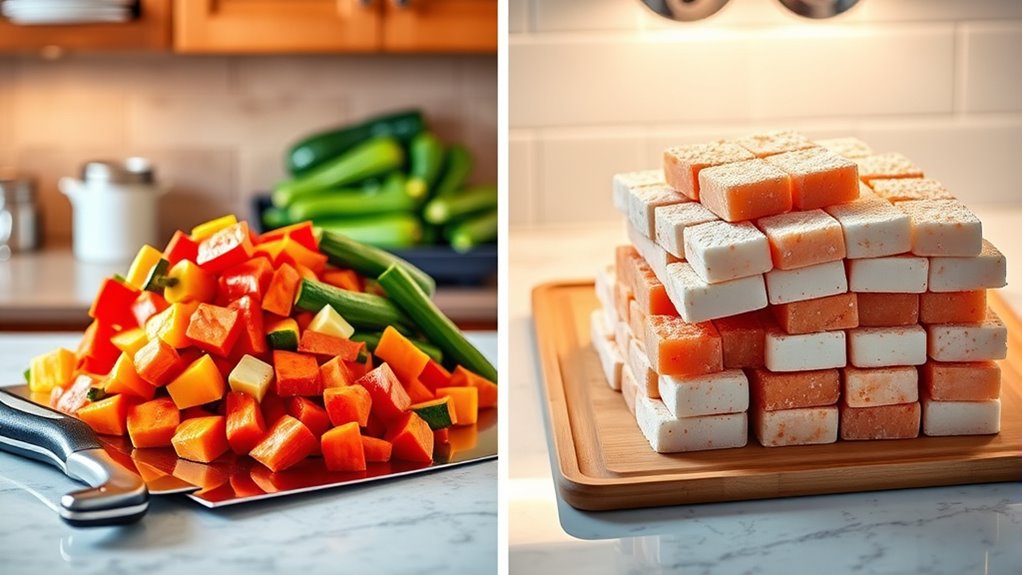

Pre-cut and frozen vegetables both save you time, but they serve different needs. Pre-cut veggies are quick for salads, stir-fries, and when you need ready ingredients, though they are more expensive and spoil faster. Frozen vegetables are budget-friendly, store longer, and are great for soups and steaming. Using them together smartly helps you cut waste and prep efficiently. Keep exploring for tips on how to make the most of each option for easier, fresher meals.
Key Takeaways
- Use pre-cut vegetables for quick salads and stir-fries; opt for frozen for soups and casseroles.
- Balance cost and freshness by combining frozen vegetables for long-term storage with pre-cut for immediate use.
- Store pre-cut veggies in airtight containers and frozen items in moisture-proof packaging to maintain quality.
- Incorporate both options into meal prep routines to maximize convenience and reduce waste.
- Proper handling and storage extend shelf life, ensuring fresh-tasting, time-efficient meals with minimal effort.

When choosing between pre-cut and frozen vegetables, understanding their differences can help you make smarter, time-saving decisions in the kitchen. Both options offer convenience, but knowing how to incorporate them effectively can elevate your meal prep tips and ensure your ingredients stay fresh longer. Pre-cut vegetables are often washed, peeled, and sliced for you, making them ideal for quick meals. They’re perfect when you’re short on time or need to prepare a dish fast. However, they tend to be more expensive and have a shorter shelf life, so proper storage techniques are essential to prevent spoilage. Store pre-cut veggies in airtight containers or resealable bags in the refrigerator, and aim to use them within a few days. Keeping them dry and chilled helps maintain their freshness and flavor. Additionally, proper storage techniques are crucial for maintaining quality and minimizing waste over time.
Pre-cut vegetables are convenient but need quick refrigeration and use to prevent spoilage.
Frozen vegetables, on the other hand, are typically blanched and flash-frozen at their peak ripeness, locking in nutrients and flavor. They tend to be more budget-friendly and have a longer shelf life, making them a great choice for stocking your freezer. When it’s time to cook, you can use frozen vegetables directly from the freezer without thawing, reducing prep time. To maximize their longevity, store frozen veggies in airtight, moisture-proof packaging and keep your freezer at a consistent temperature. An organized freezer will help you quickly identify what you need, minimizing waste and making meal prep more efficient.
In terms of meal prep tips, incorporating frozen vegetables into your routine can streamline cooking, especially when you’re preparing multiple meals for the week. Use pre-cut vegetables for salads, stir-fries, or quick sautés, while frozen options work well for soups, casseroles, or steaming. Both can be part of a balanced diet, so don’t hesitate to mix and match based on your cooking needs and budget. When storing either type, avoid leaving them out at room temperature, as this can lead to spoilage or freezer burn. Instead, keep pre-cut veggies in the fridge and frozen vegetables in the freezer, always sealing them properly to prevent contamination and maintain quality.
Ultimately, the key to using pre-cut and frozen vegetables smartly lies in understanding their unique qualities and applying proper storage techniques. Doing so helps you save time, reduce waste, and enjoy fresh-tasting meals without the hassle of chopping or peeling every time. Whether you prefer the convenience of pre-cut or the long-lasting nature of frozen vegetables, both can become valuable staples in your kitchen, supporting efficient meal prep and healthy eating habits.
Frequently Asked Questions
How Do Pre-Cut and Frozen Ingredients Compare Nutritionally?
Pre-cut and frozen ingredients generally have similar nutritional value because both undergo processing methods that preserve most nutrients. However, pre-cut items might lose some vitamins during cutting and storage, while freezing locks in nutrients quickly. You should choose based on convenience and freshness, knowing that both options can be nutritious. Just check labels for added preservatives or sodium, and use them promptly to maximize their health benefits.
Which Option Is More Cost-Effective Long-Term?
You’ll find frozen ingredients more cost-effective long-term, as they often cost 20-30% less per serving than pre-cut options. With bulk purchasing, you save even more, especially if you regularly cook large meals. Frozen items last longer, reducing waste and making them a smart choice for budget-conscious households. Plus, their convenience saves time, giving you greater flexibility and better overall cost savings over time.
Are There Flavor Differences Between Pre-Cut and Frozen Items?
You might notice subtle flavor differences between pre-cut and frozen items. Pre-cut produce can lose some freshness impact quickly due to exposure and handling, which may affect flavor preservation. Frozen items are usually flash-frozen at peak freshness, helping lock in flavor better. So, if you want the most vibrant flavor, frozen ingredients often hold up better over time, whereas pre-cut options might taste fresher initially but can diminish faster.
How Do Storage Requirements Differ for Each?
You need to know that storage requirements differ considerably between pre-cut and frozen items. Pre-cut ingredients require convenient storage in the fridge, but they have a shorter shelf life, so you should use them quickly to avoid spoilage. Frozen items, on the other hand, need to stay in the freezer, which preserves their shelf life much longer. Proper storage convenience ensures freshness and reduces waste, helping you plan your meals efficiently.
Can Using These Ingredients Impact Meal Prep Time Significantly?
Using convenience ingredients can markedly impact your meal prep efficiency, often saving you time. Pre-cut ingredients tend to be quicker to use, reducing prep time, while frozen options might require thawing, which adds a few minutes. However, both help streamline your process and maintain ingredient freshness when stored properly. By choosing the right option, you can balance convenience and freshness, making your meal prep faster and more efficient.
Conclusion
Choosing between pre-cut and frozen ingredients depends on your busy schedule and meal goals. For instance, imagine Sarah, a working mom, saves time with frozen vegetables for quick stir-fries, while occasionally opting for pre-cut produce for salads. Both options are convenient and cost-effective when used wisely. So, next time you’re planning meals, think about your needs—using frozen for everyday cooking and pre-cut for special salads—to make your kitchen both efficient and enjoyable.