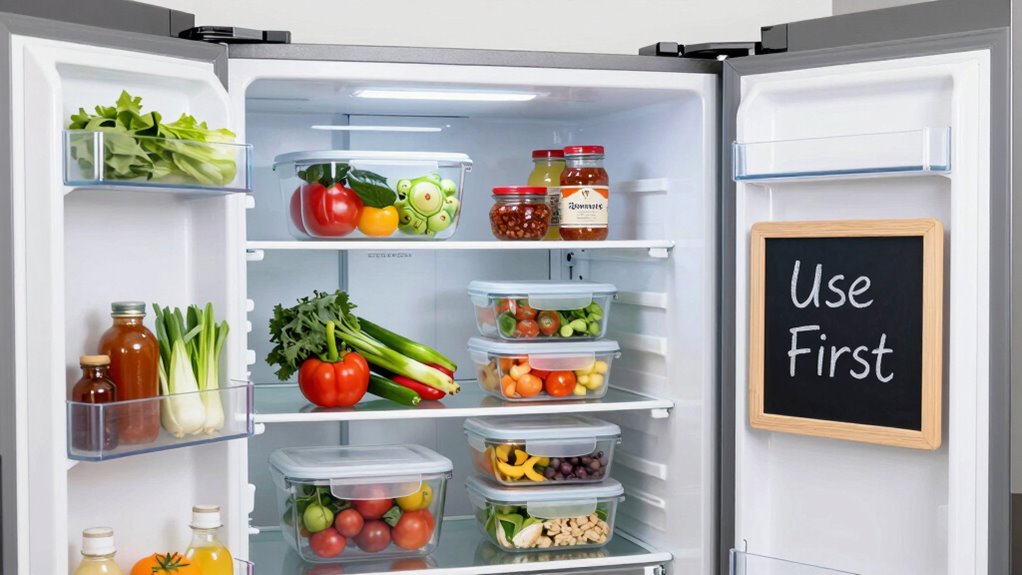

To prevent food waste fast, organize your fridge into specific zones for different categories like produce, dairy, and leftovers, and use clear containers so you can see everything easily. Place items like leftovers at eye level and label them with dates. This setup helps you identify what to use first and reduces spoilage. Keep your fridge clean and well-stocked with essential items. Stick around to discover more simple tips for keeping your fridge fresh and waste-free.

Get kitchen staples and gadgets delivered free with Prime
- Fast, free delivery on millions of items
- Prime Video, Amazon Music and more included
- Member-only deals all year
Key Takeaways
- Use designated storage zones to easily identify and access perishables before they spoil.
- Implement clear containers and labels with dates for quick visibility and proper food rotation.
- Regularly check and plan meals based on inventory to use items before expiration.
- Store leftovers in eye-level, clear containers to promote prompt consumption.
- Establish a weekly cleaning routine to remove spoiled items and maintain an organized fridge.
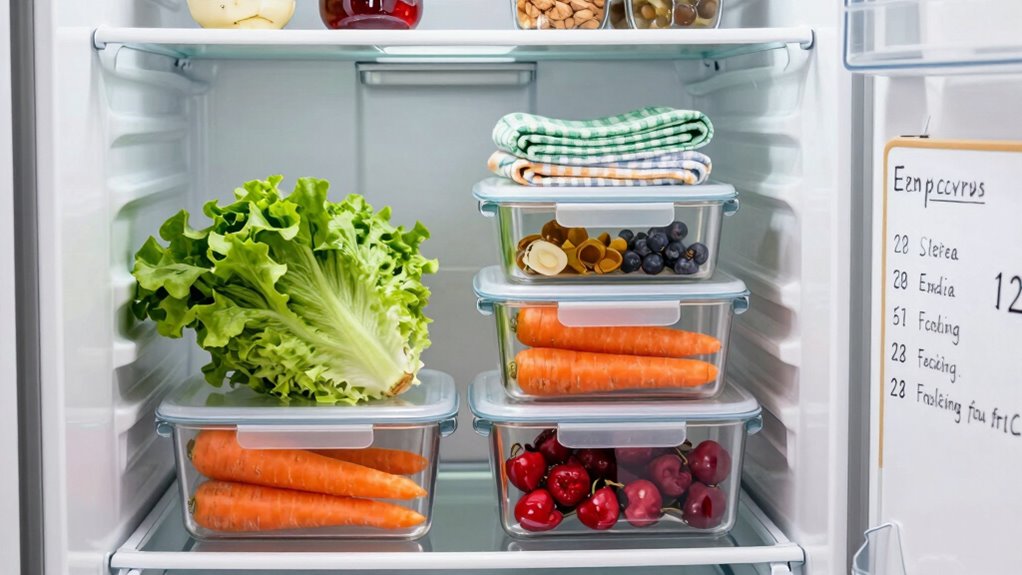
Have you ever struggled to find what you need in your fridge amidst a jumble of leftovers and condiments? If so, you’re not alone. A cluttered fridge can make meal prep frustrating and lead to unnecessary food waste. The good news is, with a simple organization trick, you can transform your fridge into a streamlined space that saves time and reduces waste. The key lies in a strategic approach that combines a clear cleaning schedule with specific storage zones.
Start by establishing a regular cleaning schedule—once a week works best for most people. During this time, empty your fridge completely, discard expired or spoiled items, and wipe down shelves. This not only keeps your fridge fresh but also gives you a clear view of what’s inside. As you put everything back, organize your food into designated zones based on categories or usage. For example, keep leftovers in clear containers at eye level, so you see them easily and use them before they spoil. Store produce in a dedicated crisper drawer to maintain freshness, and keep dairy on a specific shelf to prevent cross-contamination. Proper storage practices can make a significant difference in longevity and waste reduction. Regularly checking your food inventory can help you stay aware of what needs to be used up soon, preventing forgotten items from spoiling.
Establish a weekly cleaning routine, organize food into zones, and keep leftovers visible in clear containers for easier access and freshness.
When planning your meal prep, use this organized setup to your advantage. Knowing exactly what you have in your fridge prevents overbuying and duplicates, which can lead to spoilage. If you plan your meals ahead, you can make smarter shopping lists, sticking to what you actually need. This also encourages you to use ingredients before they go bad, reducing waste. Additionally, labeling leftovers with dates helps you prioritize what to eat first, avoiding forgotten food that eventually gets thrown out. Incorporating organized storage techniques can further enhance your fridge management by making everything more accessible. Implementing these storage zones also helps you quickly identify ingredients, saving time during busy mornings or dinner preparations. Being aware of food safety guidelines ensures your food stays fresh and reduces the risk of spoilage or contamination.
clear fridge storage containers with lids
As an affiliate, we earn on qualifying purchases.
As an affiliate, we earn on qualifying purchases.
Frequently Asked Questions
How Often Should I Reorganize My Fridge?
You should reorganize your fridge every one to two weeks to keep things fresh and prevent waste. During this, use shelf labeling to clearly identify food zones and guarantee items are stored correctly. Container stacking helps maximize space and keeps things tidy. Regular reorganization makes it easier to spot expired foods, maintain freshness, and avoid overbuying, ultimately reducing waste and keeping your fridge efficient and clean.
Does This Trick Work for All Types of Food?
This trick is like a universal key, but it works best with proper food categorization and shelf labeling. While it helps prevent waste for most items, some delicate or easily spoiled foods may need extra attention. You can adapt the method for different foods, but ensuring everything’s labeled and organized makes it easier to spot what’s expiring soon. So, yes, it generally works, but customization boosts its effectiveness.
Can It Be Applied to Small or Mini Fridges?
Yes, you can apply this organization trick to a mini fridge. It’s especially helpful for space optimization in smaller units. Just use clear containers or adjustable shelves to maximize available space, and keep frequently used items at the front. This way, you prevent food waste efficiently, even in a mini fridge. The key is to stay organized and make the most of limited space, ensuring everything stays fresh longer.
Is There a Recommended Temperature Range for This Method?
Imagine your fridge as a fortress of freshness—maintaining the right temperature is key. For ideal food safety and temperature consistency, keep your fridge between 37°F and 40°F (3°C-4°C). This range prevents bacteria growth and keeps food fresh longer. Regularly check your thermometer to guarantee this setting. Consistent temperatures are your best defense against spoilage, helping you save food and money while keeping everything safe to eat.
How Do I Keep Track of Expiry Dates Effectively?
You should use clear food labeling and shelf labeling to keep track of expiry dates effectively. Write the date on each item’s label or use color-coded labels for different expiry periods. Organize items by expiry dates, placing those closest to expiration at the front. Regularly check labels, update them when you move items, and develop a habit of inspecting your fridge weekly to prevent food waste.
As an affiliate, we earn on qualifying purchases.
Conclusion
By keeping your fridge organized with this simple trick, you’ll save time, money, and reduce food waste. When everything has its place, you’re less likely to forget about leftovers or produce that’s about to spoil. Remember, a tidy fridge isn’t just about cleanliness — it’s about making your life easier and more efficient. So, don’t let the perfect be the enemy of the good; start small, stay consistent, and watch waste disappear like snow in spring.
As an affiliate, we earn on qualifying purchases.
As an affiliate, we earn on qualifying purchases.
Halloween Picks
halloween
As an affiliate, we earn on qualifying purchases.