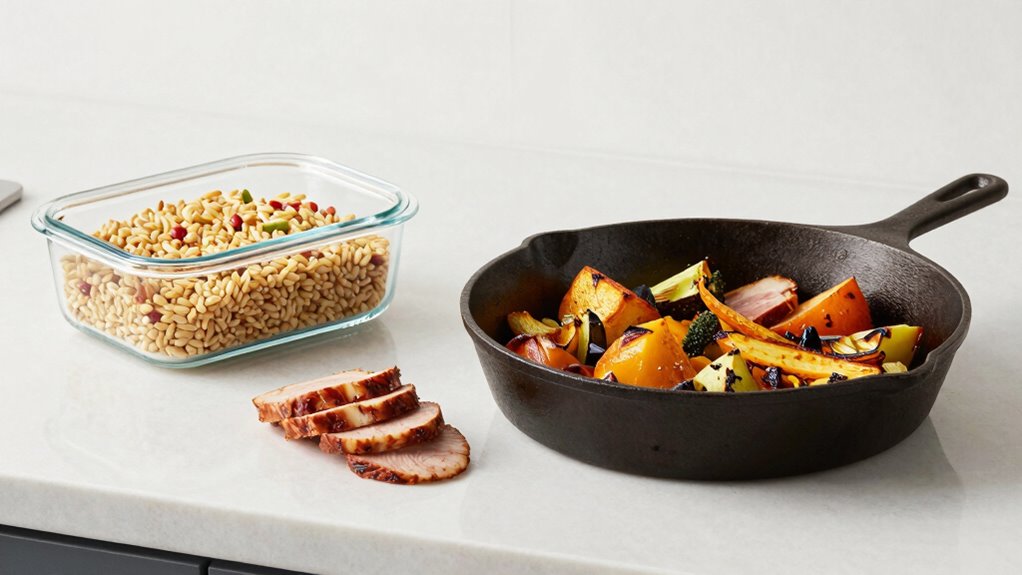

By prepping versatile components like cooked grains, proteins, and roasted vegetables, you can easily create multiple meals throughout the week. Use grilled chicken, quinoa, and chopped peppers for salads, wraps, or bowls. These ingredients can be quickly assembled into different dishes, saving you time and effort. Batch prepping and storing these components make weeknight cooking simple and efficient. Keep exploring to discover how to maximize your meal prep for even more delicious ideas.

Get kitchen staples and gadgets delivered free with Prime
- Fast, free delivery on millions of items
- Prime Video, Amazon Music and more included
- Member-only deals all year
Key Takeaways
- Prepare large batches of grains like rice, quinoa, or farro to serve as versatile bases for various meals.
- Cook proteins such as grilled chicken, ground beef, or baked tofu in advance for quick incorporation into different dishes.
- Roast or chop vegetables like bell peppers, zucchini, and sweet potatoes ahead of time for easy addition to multiple recipes.
- Batch-make sauces and condiments like hummus or pesto to enhance flavors across diverse meals without extra cooking.
- Store prepped ingredients in clear, organized containers for quick assembly and efficient use throughout the week.

Cooking once and using those components across multiple meals can save you time and reduce stress in your busy schedule. When you implement smart meal prep strategies, you set yourself up for success throughout the week. The key is to identify versatile ingredients that can easily be incorporated into different dishes. These components should be simple to prepare in advance, store well, and be adaptable across various recipes. This approach not only streamlines your cooking process but also keeps your kitchen organized, making it easier to access what you need without digging through cluttered drawers or cabinets.
Start with proteins like grilled chicken, cooked ground beef, or baked tofu. These are staples that can be transformed into salads, wraps, bowls, or even pasta dishes. When you cook these in bulk, you create a base that can be quickly mixed and matched with fresh vegetables, grains, and sauces. Additionally, consider preparing grains like rice, quinoa, or farro in advance. These can be stored in airtight containers and used as a foundation for numerous meals. By batching these staples, you reduce cooking time during busy weeknights and minimize the need to start from scratch each time.
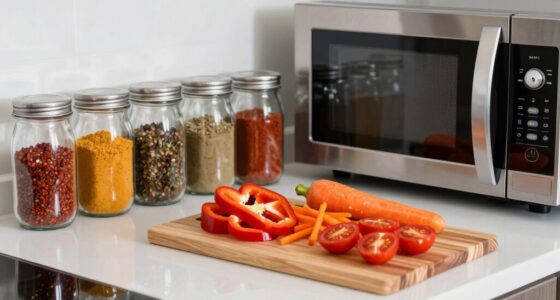
Vegetables are another indispensable component for multiple meals. Roast a variety of vegetables such as bell peppers, zucchini, and sweet potatoes. Once cooked, they can be added to salads, grain bowls, or used as side dishes. To maximize efficiency, chop and portion vegetables after shopping, storing them in clear containers for easy access. This simple step aligns with effective kitchen organization tips, helping you see what’s available and plan your meals accordingly.
Sauces and condiments are often overlooked but are vital for transforming basic ingredients into flavorful meals. Prepare a batch of hummus, pesto, or a versatile vinaigrette that can be drizzled over salads, used as a spread, or stirred into grains. These additions enhance your dishes without requiring extra cooking, saving you time and effort.
As an affiliate, we earn on qualifying purchases.
Frequently Asked Questions
How Long Can Cooked Components Be Stored Safely?
Cooked components can be stored safely for 3 to 4 days following proper storage guidelines. Using effective cooking techniques and airtight containers helps preserve freshness. Make sure to cool cooked items quickly before refrigerating, and reheat thoroughly before eating. For longer storage, consider freezing, which can extend shelf life up to 3 months. Always check for signs of spoilage before consuming, and adhere to food safety recommendations.
Are There Any Ingredients That Don’t Reheat Well?
Some ingredients don’t reheat well, like delicate greens or crispy textures, which turn soggy or limp. You should be cautious with items like seafood or eggs, as they can lose flavor or become rubbery. Ingredient limitations exist, and flavor preservation can be tricky, so consider adding fresh herbs or sauces after reheating. Think of it as reviving flavors, not restoring, to keep your meals tasting fresh and vibrant.
Can These Components Be Adapted for Special Diets?
Yes, you can adapt these components for special diets by making specific ingredient substitutions and considering special diet modifications. For example, replace gluten-containing grains with gluten-free options, or swap dairy for plant-based alternatives. You can also adjust seasonings or cooking methods to suit allergies or sensitivities. With thoughtful ingredient substitutions, you’ll guarantee your meals meet your dietary needs while still being delicious and versatile.
What Are the Best Containers for Prepping and Storing?
The best containers for prepping and storing are airtight, BPA-free options like glass or durable plastic. Choose container types with leak-proof lids to prevent spills and preserve freshness. Storage tips include labeling each container clearly, using stackable designs for space efficiency, and keeping items in a cool, dark place. These practices guarantee your ingredients stay fresh longer, making meal prep easier and more organized.
How Do I Reheat Components Without Losing Flavor?
You want to reheat components without losing flavor, so use gentle reheating techniques like stovetop or oven instead of microwave. Keep an eye on the heat, and cover dishes to trap moisture, preserving flavor and texture. For sauces and stews, reheating slowly allows flavors to meld. With these methods, your meals stay delicious and fresh, even after reheating, making every bite as satisfying as the first.
As an affiliate, we earn on qualifying purchases.
Conclusion
You start with a simple plan, but as you cook, you notice how those same ingredients unexpectedly become the backbone of different meals. It’s almost as if the universe conspired to make your prep more efficient, saving time and effort. By using these cook-once components, you not only streamline your week but also discover a little coincidence in the chaos—reminding you that good things often happen when you least expect them.
reusable silicone food storage bags
As an affiliate, we earn on qualifying purchases.
As an affiliate, we earn on qualifying purchases.
As an affiliate, we earn on qualifying purchases.
Halloween Picks
halloween
As an affiliate, we earn on qualifying purchases.