
To chop vegetables like a pro and do it quickly, keep your knives sharp, use the right grip, and hold vegetables securely with fingers curled inward. Practice steady, controlled motions with a rocking technique, and focus on consistency for even pieces. Proper storage, technique, and regular knife maintenance will boost your speed and safety. Ready to learn advanced tips? Keep going to discover how fine-tuning your skills can make chopping fast, safe, and effortless.
Key Takeaways
- Keep knives sharp and use proper grip for control and safety.
- Use correct cutting techniques like rocking motions to ensure speed and precision.
- Prepare and dry vegetables thoroughly to prevent slipping and improve efficiency.
- Practice consistent pressure and rhythm, incorporating auditory cues to maintain speed.
- Regularly hone and inspect knives to ensure optimal performance and safety.

Chopping vegetables is a fundamental skill in the kitchen that can make your meals safer and more enjoyable. When you’re working with knives, practicing proper knife safety is essential to prevent accidents and ensure clean cuts. Always keep your knives sharp; dull blades require more force and can slip, increasing the risk of injury. When handling your knife, grip it firmly with your dominant hand and use your other hand to hold the vegetable, curling your fingers inward to protect them from the blade. Pay attention to your cutting technique, making deliberate, controlled motions rather than rushing. This not only improves your efficiency but also keeps you safe during the process.
Master safe, efficient vegetable chopping by keeping knives sharp and using controlled, deliberate motions.
Before you start chopping, think about how you’ll store your vegetables. Proper vegetable storage keeps produce fresh longer, reducing waste and making sure you have crisp, firm vegetables ready to cut. Store leafy greens in a sealed container with a paper towel to absorb excess moisture, and keep root vegetables like carrots and potatoes in a cool, dark place or in the fridge’s crisper drawer. When you’re ready to chop, wash your vegetables thoroughly, then dry them completely to prevent slipping while cutting. Clean and dry your workspace and tools beforehand to maintain a hygienic environment, which is part of good knife safety practice. This preparation ensures your vegetables are ready for efficient, safe chopping.
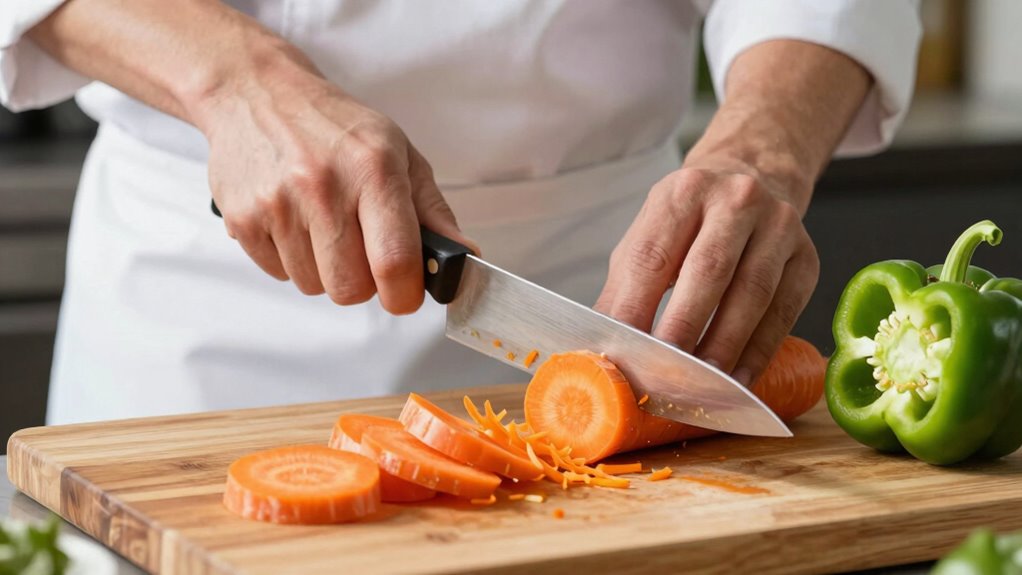
Additionally, understanding the proper knife maintenance techniques, such as honing and sharpening, helps keep your blades in optimal condition for fast and precise cutting. Regularly inspect your knives for damage or dullness so you can address issues promptly. Using the right cutting techniques also plays a significant role in speeding up your prep work and reducing fatigue. Incorporating auditory cues can help you maintain a consistent rhythm and improve overall chopping speed. Paying attention to your blade sharpness can make a noticeable difference in how easily you can cut through vegetables. Once you’re ready to cut, choose the right knife for the task—usually a chef’s knife for most vegetables—and hold it firmly. Position your guiding hand on the vegetable with your fingertips curled inward, creating a “claw” that protects your fingers from the blade. Use a rocking motion, keeping the tip of the knife on the cutting board while lifting the heel to cut through the vegetable smoothly. For even-sized pieces, try to maintain consistent pressure and speed, which will improve your efficiency and make your dishes look more professional. Remember, sharp knives require less force, so regularly hone and sharpen your blades to keep them in top condition.
Incorporating good vegetable storage habits and prioritizing knife safety will make your chopping faster, safer, and more precise. This approach not only enhances your skills but also contributes to better meal prep overall. The more you practice these techniques, the more natural it will become to chop vegetables quickly and confidently—saving you time and reducing frustration in the kitchen. Keep safety at the forefront, and soon, chopping vegetables like a pro will be second nature.
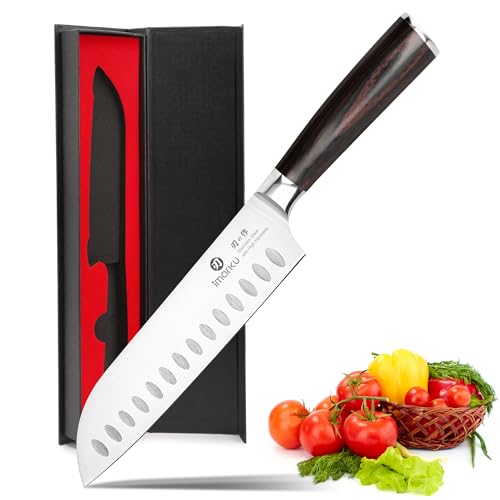
imarku Santoku Knife 7 Inch with Sharp Japanese High Carbon Stainless Steel
- Material: High carbon stainless steel for durability
- Blade Sharpness: Ultra-sharp edge with 15-18° angle
- Blade Length: 7-inch versatile kitchen knife
As an affiliate, we earn on qualifying purchases.
As an affiliate, we earn on qualifying purchases.
Frequently Asked Questions
What’s the Safest Way to Sharpen My Knife for Chopping?
The safest way to sharpen your knife is by using proper knife maintenance and the right sharpening techniques. You should regularly hone your blade with a honing steel to keep it aligned, then use a sharpening stone or electric sharpener for more precise edges. Always keep your fingers clear, move the blade smoothly, and maintain a steady angle. This guarantees safety and keeps your knife sharp for efficient chopping.
How Do I Prevent Vegetables From Slipping While Chopping?
Ever wonder how to prevent vegetables from slipping while chopping? It all comes down to your cutting board techniques, grip, and stance. Keep your non-cutting hand in a claw shape, gripping the vegetable firmly, and position your body for stability. Use a textured cutting board or dampen its surface to reduce slipping. Stay focused, and your vegetables will stay put, making your chopping safer and more efficient every time.
Which Knives Are Best for Different Types of Vegetables?
You should choose knives based on vegetable types, considering knife ergonomics for comfort and control. A chef’s knife works well for most vegetables, offering versatility and ease. For delicate items like tomatoes, go for a serrated knife. Use proper vegetable peeling techniques with a paring knife for onions or carrots to guarantee safety and efficiency. This approach helps you chop faster, safer, and with cleaner cuts.
How Do I Store Chopped Vegetables to Keep Them Fresh?
Think of storing chopped vegetables like tucking precious treasures into a safe. You should use airtight storage containers to lock in freshness and prevent spoilage. Refrigeration techniques include placing them in the fridge’s crisper drawer, where humidity keeps vegetables crisp. Make sure to remove excess air from containers and keep them at a consistent temperature. This way, your chopped veggies stay fresh longer and retain their vibrant flavors.
Are There Alternative Tools for Faster Vegetable Chopping?
Yes, you can use electric choppers or vegetable choppers for faster chopping. These tools save you time and effort, especially when dealing with large quantities. Electric choppers are great for quickly dicing, slicing, or chopping vegetables with minimal effort. Vegetable choppers come in various styles, making them versatile for different textures. If speed is your goal, investing in these tools will help you prep ingredients efficiently and professionally.
imarku Santoku Knife 7 Inch with Sharp Japanese High Carbon Stainless Steel
- Material: High carbon stainless steel for durability
- Blade Sharpness: Ultra-sharp edge with 15-18° angle
- Blade Length: 7-inch versatile kitchen knife
As an affiliate, we earn on qualifying purchases.
As an affiliate, we earn on qualifying purchases.
Conclusion
Now that you know how to chop vegetables like a pro, you’ll save time and impress your friends. Did you know that properly chopped vegetables can reduce cooking time by up to 30%? With a few quick techniques, you’ll become more efficient in the kitchen and enjoy healthier, delicious meals faster. Keep practicing, stay safe, and soon you’ll be chopping like a seasoned chef. Happy cooking!

LinsKind 110 Packs 100CC Food Grade Oxygen Absorbers (10 Packs in Individual Vacuum Bag, 11x Packs of 10), Oxygen Absorbers for Food Storage, with Oxygen Indicator, for Mylar Bags, Mason Jars, Canning
- Food Grade Material: Made from high-quality food grade materials
- Extended Shelf Life: Reduces oxygen to prolong freshness
- Convenient Packaging: 10 packs per vacuum bag for easy storage
As an affiliate, we earn on qualifying purchases.
As an affiliate, we earn on qualifying purchases.

Intelitopia Complete Knife Sharpening Stone Set – Dual Grit Whetstone 400/1000 3000/8000 Knife Sharpener with Leather Strop, Flattening Stone, Bamboo Base, 3 Non-slip Rubber Bases & Angle Guide
- Complete Knife Sharpening Kit: Includes all necessary sharpening tools
- Dual Grit Whetstone: 400/1000 and 3000/8000 grit options
- High-Quality Corundum Stone: Durable aluminum oxide abrasive
As an affiliate, we earn on qualifying purchases.
As an affiliate, we earn on qualifying purchases.