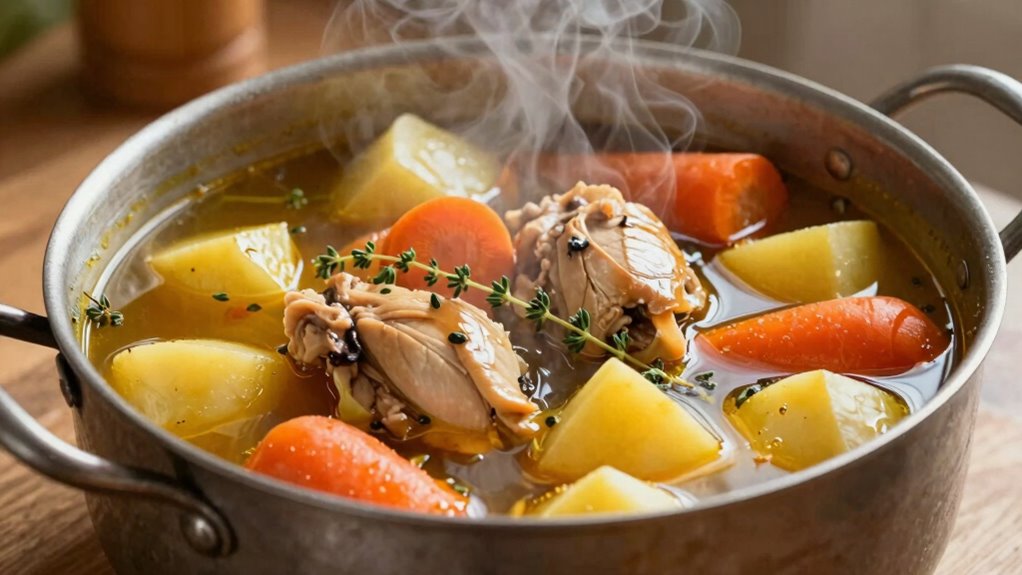

To get the most out of your stock pot, focus on using inexpensive cuts of meat like chicken thighs or beef shanks, which become tender with slow simmering. Add affordable vegetables such as carrots, potatoes, and beans to fill out the dish, and use flavorful broth as a base. Incorporate grains and legumes to stretch ingredients further and boost protein. Mastering seasoning and balance will turn simple ingredients into satisfying, hearty meals. Keep exploring to discover more tips for maximizing your pantry.
Listen free for 30 days with Audible
Thousands of audiobooks and originals — cancel anytime.
As an affiliate, we earn on qualifying purchases.
Key Takeaways
- Use hearty, budget-friendly cuts like chicken thighs or pork shoulder, cooked slowly to tenderize and maximize flavor.
- Incorporate grains, beans, or lentils as bulk and protein sources to extend meal portions.
- Develop rich, flavorful broth with vegetables and aromatics as a versatile base for various dishes.
- Chop vegetables into larger pieces to absorb flavors and create filling, cohesive meals.
- Layer herbs, spices, and seasonings during cooking to enhance taste without additional ingredients.
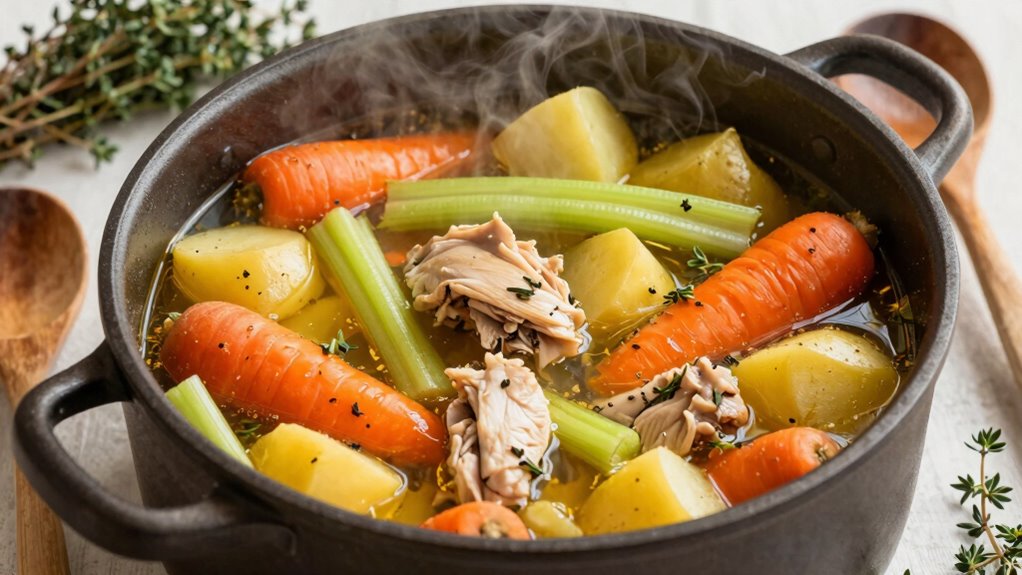
A stock pot is one of the most versatile tools in your kitchen, perfect for creating hearty, flavorful meals with minimal fuss. When aiming to stretch ingredients, especially in budget-friendly cooking, using a good vegetable broth as your base can make a big difference. Vegetable broth adds depth and richness without overwhelming the dish, allowing you to maximize every ingredient you add. It’s a perfect foundation for soups, stews, or even noodle dishes that need to simmer gently for hours. By choosing a flavorful vegetable broth, you enhance the overall taste, even when your other ingredients are limited. Incorporating sustainable ingredients can also help reduce your environmental impact while making these nourishing meals. Meat selection plays a crucial role in making your stock pot meals stretch further. Instead of relying solely on expensive cuts, opt for tougher meats like chicken thighs, beef shanks, or pork shoulder. These cuts are often less costly but become tender and flavorful after long, slow cooking. When combined with a well-seasoned vegetable broth, they produce a rich, satisfying meal that can serve a family or several servings for leftovers. Incorporate smaller amounts of meat into larger vegetable or grain-based dishes to create the illusion of abundance, making every ounce count. To truly maximize your ingredients, consider chopping vegetables into larger pieces so they cook thoroughly and release their flavors slowly. Root vegetables like carrots, potatoes, and parsnips are affordable and filling, and they absorb the flavors of the broth and meat, creating a cohesive, hearty dish. Adding beans, lentils, or grains further stretches the meal, providing bulk and protein without adding much cost. These ingredients absorb the flavors of your broth and meat, enhancing their taste and making your dish more filling. When you’re working with limited ingredients, seasoning becomes your secret weapon. Use herbs, spices, and aromatics wisely to elevate the dish without relying on extra meat or expensive ingredients. A splash of soy sauce, a pinch of thyme, or a dash of garlic can transform a simple broth into something deeply flavorful. Incorporating flavor-enhancing techniques can also help you get the most out of your ingredients and elevate your dish. Additionally, layering flavors during cooking can deepen the complexity of the final dish, making it more satisfying. Understanding how to balance flavors can help ensure your meal is both delicious and well-rounded, even with modest ingredients. As the ingredients simmer together, they meld into a nourishing, filling meal that feels abundant despite its simple components.
large stock pot for soups and stews
As an affiliate, we earn on qualifying purchases.
As an affiliate, we earn on qualifying purchases.
Frequently Asked Questions
How Can I Make Stock Pot Meals More Flavorful Naturally?
To make stock pot meals more flavorful naturally, start with fresh ingredients like herbs, garlic, and onions. Use seasoning tips like adding a splash of lemon juice or a pinch of sea salt to enhance flavors. You can also experiment with ingredient substitutions, such as swapping in fresh thyme or rosemary for dried herbs. Simmering longer allows flavors to meld, resulting in a richer, more satisfying dish without relying on artificial seasonings.
What Are the Best Budget-Friendly Ingredients for Stock Pot Meals?
Think of budget-friendly ingredients as the backbone of your stock pot. You can rely on inexpensive staples like dried beans, rice, potatoes, and seasonal vegetables for a hearty base. Budget shopping and ingredient substitutions, like frozen instead of fresh produce or canned broth instead of homemade, stretch your dollars further. These affordable options create flavorful, filling meals without breaking the bank, proving that good food doesn’t have to be costly.
How Long Can I Store Stock Pot Meals Safely?
You can store stock pot meals safely for up to 3-4 days in the refrigerator. For longer preservation, use proper meal preservation and freezing techniques—transfer the leftovers into airtight containers or freezer bags, label them with dates, and freeze. This way, you can enjoy your meals later while maintaining their flavor and safety. Just remember to reheat thoroughly before eating.
Are There Vegetarian or Vegan Options for These Meals?
Yes, you can make these meals vegetarian or vegan by using plant-based substitutions like tofu, tempeh, or hearty vegetables. Add flavor-enhancing herbs such as thyme, rosemary, or bay leaves to boost taste. These options can be just as filling and delicious, offering variety while stretching ingredients. Plus, they’re perfect for accommodating dietary preferences, ensuring everyone can enjoy a warm, satisfying meal from your stock pot.
How Can I Adjust Recipes for Larger or Smaller Families?
Adjusting recipes for larger or smaller families is like balancing a scale—you want enough without waste. You should modify meal portioning accordingly, increasing or decreasing ingredient amounts. Use ingredient substitutions to maintain flavor and texture when scaling down, or to extend ingredients when cooking for more. Always taste and adjust seasonings, ensuring each family member gets a satisfying meal, whether you’re cooking for a crowd or just a few.
budget-friendly meat cuts chicken thighs beef shanks
As an affiliate, we earn on qualifying purchases.
As an affiliate, we earn on qualifying purchases.
Conclusion
So, next time you’re looking to stretch your ingredients further, remember the humble stock pot. With a little creativity, you can turn simple staples into hearty, satisfying meals—just like a good old-fashioned potluck feast. Don’t forget, even in this modern day, a well-made broth can be your secret weapon—like the magic of a well-placed quill in a bustling tavern. With these tips, you’ll turn everyday ingredients into culinary treasures, no matter the era.
vegetable broth for slow cooking
As an affiliate, we earn on qualifying purchases.
As an affiliate, we earn on qualifying purchases.
grain and legume storage containers
As an affiliate, we earn on qualifying purchases.
As an affiliate, we earn on qualifying purchases.
Pool season Picks
robotic pool cleaners
As an affiliate, we earn on qualifying purchases.