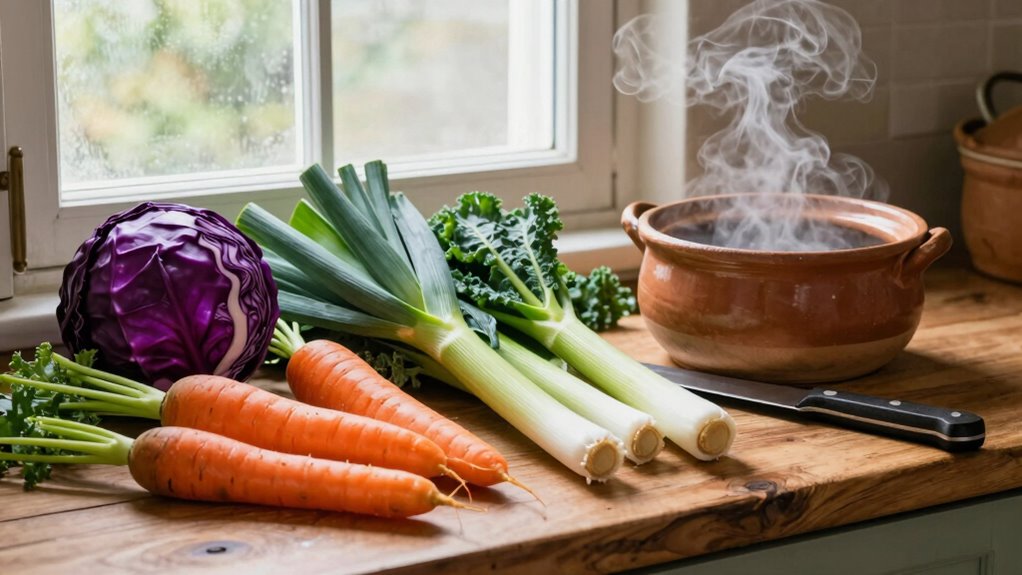

Cooking with winter vegetables offers hearty, flavorful options that work well in a variety of recipes. You can roast root vegetables like carrots, parsnips, and potatoes for natural sweetness or simmer them in stews for rich comfort foods. Using seasonal produce supports local farmers and reduces environmental impact, ensuring your dishes are fresh and sustainable. Keep exploring for more ideas on how to incorporate these versatile ingredients into your winter meals.
Key Takeaways
- Incorporate seasonal winter vegetables like carrots, parsnips, and beets into hearty stews, roasts, and soups for optimal flavor.
- Use roasting, simmering, and mashing techniques to enhance and diversify winter vegetable recipes.
- Pair vegetables with herbs and spices such as thyme, rosemary, garlic, or smoked paprika to elevate flavors.
- Combine roasted or cooked vegetables into salads, grain bowls, or pies for versatile winter dishes.
- Support sustainability by sourcing locally grown, seasonal produce during peak winter months.
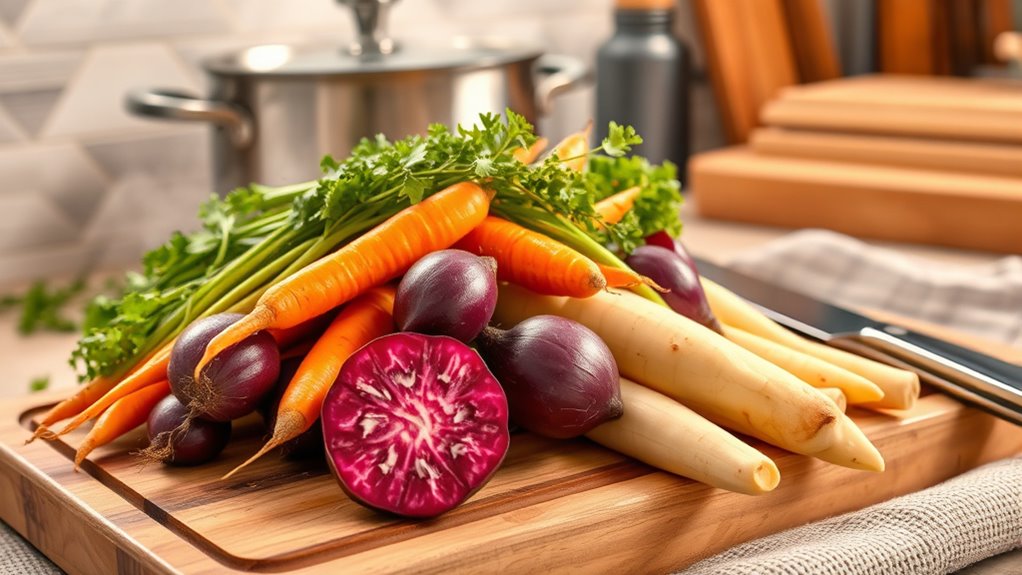
Winter is the perfect season to explore the hearty, flavorful world of winter vegetables. These ingredients lend themselves beautifully to comfort foods that warm you from the inside out. Think about simmering a rich, hearty stew filled with root vegetables like carrots, parsnips, and potatoes. The slow cooking process allows the flavors to meld, creating a dish that’s satisfying and nourishing. Hearty stews are versatile—you can add your favorite proteins or keep them vegetarian, and they become perfect for cozy family dinners or meal prep. The key is choosing seasonal produce that’s at its peak, which *guarantees* the best flavor and texture. Root vegetables shine during winter, and roasting them elevates their natural sweetness and earthiness. When you roast root vegetable roasts, you bring out their caramelized qualities that make each bite addictive. Toss chopped carrots, turnips, beets, and parsnips with olive oil, salt, pepper, and perhaps some herbs like rosemary or thyme. Spread them on a baking sheet and roast at high heat until they’re tender and slightly charred. The process is simple but yields complex, comforting flavors that pair wonderfully with a variety of mains. These roasts also make excellent side dishes or can be added to salads or grain bowls for extra texture and flavor. Plus, roasting intensifies their natural sweetness, making even the simplest vegetables taste indulgent. As you experiment with different root vegetables, you’ll find that their versatility extends beyond just roasting. You can mash them for a creamy side, incorporate them into soups, or even turn them into savory pies. When cooking with winter vegetables, it’s important to embrace their robust flavors and hearty textures. They hold up well to long cooking times and can stand up to bold seasonings like garlic, cumin, or smoked paprika. Additionally, supporting local farmers by choosing seasonal produce can significantly reduce your environmental impact while ensuring the freshest ingredients. Incorporating seasonal produce not only maximizes flavor but also supports local farmers and reduces environmental impact. Using local ingredients can further enhance freshness and sustainability. Use them as the star of your hearty stews and roasts. Whether you’re simmering a thick stew on a chilly evening or roasting a medley of roots for a weekend feast, these vegetables will elevate your cooking and keep you warm. With a little creativity, you’ll discover how these seasonal staples can transform simple ingredients into memorable, comforting meals that celebrate the best of winter.
Frequently Asked Questions
How Can I Store Winter Vegetables to Maximize Freshness?
To maximize freshness, you should use proper storage techniques like keeping winter vegetables in a cool, dark, and humid environment, such as a root cellar or the crisper drawer of your fridge. For longer preservation, consider freezing winter vegetables after blanching them briefly. This method preserves their flavor and nutrients, allowing you to enjoy seasonal produce even after winter ends. Proper storage and freezing will keep your vegetables fresh and ready to use.
Are There Specific Health Benefits Associated With Winter Vegetables?
Sure, winter vegetables are packed with antioxidant properties that help fight free radicals, and they support your immune system when you’re feeling under the weather. Ironically, they often taste better in the cold, making you want to skip the health benefits. By including them in your diet, you boost your health naturally, turning winter’s chill into a time for nourishing your body and staying resilient all season long.
What Are Some Common Mistakes to Avoid When Cooking Winter Vegetables?
When cooking winter vegetables, avoid overcooking them, which can lead to loss of flavor and nutrients. Use the right cookware, like non-stick pans or heavy-bottomed pots, to guarantee even cooking. Don’t forget to season properly, and keep an eye on cooking times to maintain texture and color. These mistakes can diminish the quality of your dish, so stay attentive and adjust your techniques for the best results.
Can Winter Vegetables Be Used in Smoothies or Raw Dishes?
Imagine bright, crisp winter vegetables like carrots and kale, ready to energize your day. Yes, you can use winter vegetables in smoothies or raw dishes! Think about raw vegetable pairings that add crunch and flavor, like apple and celery. When making smoothies, use tips like steaming slightly to soften tougher greens or blending with sweet fruits. These vibrant ingredients can bring warmth and freshness to your raw and blended creations.
How Do I Select the Freshest Winter Produce at the Market?
To select the freshest winter produce, look for firm winter vegetable varieties like carrots, parsnips, and kale that feel heavy for their size. Check for vibrant colors and avoid any with wilting, blemishes, or soft spots. Trust your senses—sniff for earthy, fresh scents, and opt for seasonal flavor pairings that highlight their natural sweetness. Fresh, high-quality winter vegetables guarantee your dishes are flavorful and nutritious.
Conclusion
Now that you’ve explored the vibrant world of winter vegetables, it’s time to bring these hearty ingredients into your kitchen. Think of them as the warm hugs of the culinary world—comforting and full of flavor. With a little creativity, you can turn these seasonal gems into delicious dishes that nourish your body and soul. So go ahead, embrace winter’s bounty and let your taste buds dance in the cozy symphony of seasonal cooking.