TL;DR
Listen free for 30 days with Audible
Thousands of audiobooks and originals — cancel anytime.
Start your free trialAs an affiliate, we earn on qualifying purchases.
Outdoor propane grills heat quickly, offer precise control, and are easier to clean than charcoal. Choosing the right model and maintaining it properly ensures delicious results and safety.
Imagine the aroma of smoky burgers, the sizzle of vegetables, and the warmth of a summer evening. That’s what an outdoor propane grill brings to your backyard—or balcony—at the push of a button. But choosing the right grill isn’t just about looks; it’s about understanding performance, safety, and long-term reliability.
In this guide, you’ll learn what makes a good propane grill, how to keep it running safely, and the latest trends shaping the market. Whether you’re a weekend griller or a backyard chef, these insights will help you make smarter choices and turn every cookout into a celebration.
Choose a grill with a cooking area that fits your typical meal size—don’t just chase the biggest number on the box.
Prioritize even heat distribution over raw BTU numbers for better grilling results.
Regularly inspect hoses, burners, and grease traps to prevent flare-ups and ensure safety.
Understand your fuel options—the convenience of propane comes with proper management of tanks and safety checks.
Keep safety top of mind: operate grills outdoors, away from structures, and never leave flames unattended.
What Makes a Good Outdoor Propane Grill? Here’s What to Look For
When shopping for an outdoor propane grill, you want a balance of power, durability, and features. The key is understanding what really impacts cooking performance.
Look for a grill with a **cooking area** that matches your needs—roughly 350-500 square inches suits most small households, but if you love hosting parties, aim for 500-700 or more. The **burner configuration** matters, too: three or more burners give you better control over heat zones, making it easier to sear steaks and cook sides simultaneously.
**Heat performance** isn’t just about BTUs. A high BTU rating might seem impressive but doesn’t guarantee even cooking. Consider factors like burner design, lid construction, and grate material, which influence how well heat distributes across your food.
Durability counts. Stainless steel builds last longer, especially in humid or coastal environments, while cast aluminum fireboxes resist corrosion better than porcelain-coated steel. For grates, cast iron offers superior heat retention, but stainless steel is easier to maintain.
Ignition systems should be reliable—look for electronic ignitions, but always ensure a safe manual backup. And don’t forget grease management: removable drip trays and accessible channels make cleanup quicker and reduce flare-ups.
Finally, think about mobility and storage: sturdy wheels, locking casters, foldable shelves, and enclosed cabinets make a big difference in daily use and storage convenience.
Choosing a grill with these features means investing in a device that performs well over time, withstands the elements, and offers flexibility for different cooking styles. The tradeoff is often cost versus durability—spending a bit more upfront can save money and hassle later, especially if you grill frequently or in challenging weather conditions.
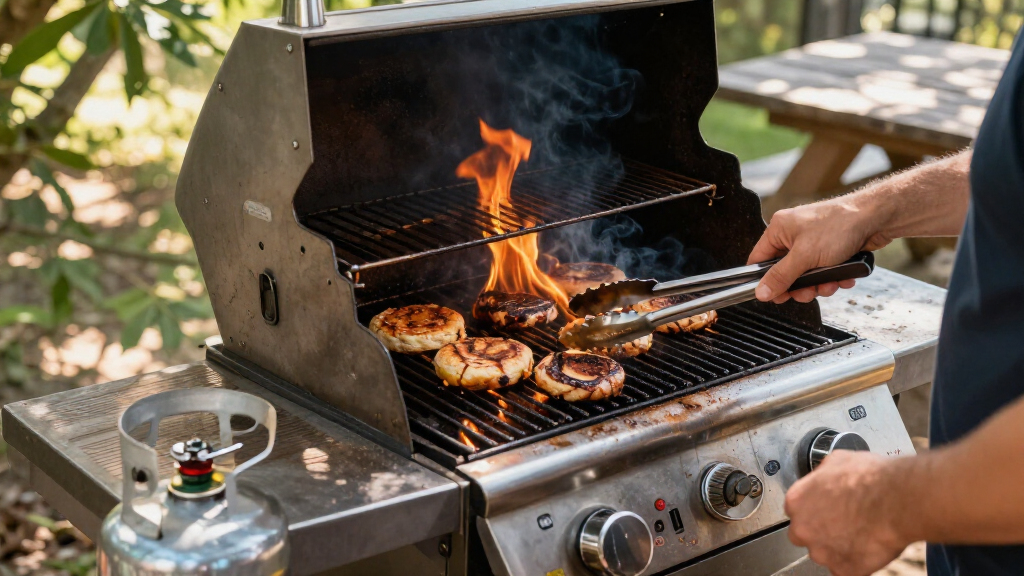
outdoor propane grill with multiple burners
As an affiliate, we earn on qualifying purchases.
As an affiliate, we earn on qualifying purchases.
How to Pick the Perfect Size and Power for Your Backyard
Choosing the right size and power isn’t just about how many burgers you want to flip. It’s about matching your cooking style and space.
Most households find **350-500 square inches** of cooking area plenty for casual meals. Larger families or those who love grilling for friends should consider **over 700 square inches**. Think about your space, too. A bulky grill might be a challenge on a small patio, while a portable model fits better for camping or tailgating.
As for power, **BTU ratings** range from 10,000 to over 50,000. But more BTUs don’t always mean better results. Instead, compare BTUs to the cooking area—higher BTUs with a smaller space can cause uneven heating. Focus on models with good heat distribution and even flame patterns.
Imagine hosting a summer cookout. You want a grill that heats evenly, sears steaks perfectly, and cooks vegetables without hot spots. Size and power should match your typical cooking needs, not just the marketing hype.
Keep in mind that a larger grill or higher BTU rating can mean increased fuel consumption and higher costs. Therefore, balancing size, power, and efficiency is key to selecting a model that suits both your cooking habits and your budget. A smaller, well-designed grill can outperform a bigger, less efficient one in producing consistent results. The tradeoff here involves considering the frequency of use, the types of foods you cook, and your willingness to manage fuel and cleaning routines.
stainless steel propane grill 500 sq inches
As an affiliate, we earn on qualifying purchases.
As an affiliate, we earn on qualifying purchases.
Comparing Propane, Natural Gas, Charcoal, and Electric Grills
| Feature | Propane | Natural Gas | Charcoal | Electric |
|---|---|---|---|---|
| Start-up speed | Fast—just turn the knob | Permanent hookup, instant start | Slow—lighting, waiting for coals | Instant—plug in and turn on |
| Flavor | Clean, no smoke flavor | Similar to propane | Rich smoky aroma | Neutral, no smoke |
| Portability | High—fuel in a tank | Low—fixed hookup | High—easy to move | High—plug anywhere |
| Maintenance | Easy—tank refills, cleaning | Similar to propane | Messy—ash cleanup | Minimal—just wipe clean |
| Best for | Quick cooks, responsive control | Long-term, fixed setup | Flavor enthusiasts, slow cooks | Apartment balconies, small spaces |
Each fuel type has its perks and drawbacks. Propane remains the favorite for portability and quick heat, making it perfect for backyard cookouts or camping. Natural gas suits those with a permanent hookup, offering continuous fuel without refilling. Charcoal delivers that classic smoky flavor, ideal for traditionalists willing to wait. Electric grills excel in small spaces or areas with strict fire codes but lack the smoky punch.
Understanding these differences is crucial because choosing the wrong fuel type can lead to frustration, safety issues, or subpar cooking results. For example, a portable propane grill is great for flexibility but might not be suitable for someone wanting a consistent, long-term setup. Conversely, a natural gas hookup offers convenience but requires a permanent installation, limiting mobility. Weighing these factors against your cooking style, space, and safety considerations ensures you pick the right match, avoiding costly mistakes or compromises in flavor and performance.
propane grill with electronic ignition
As an affiliate, we earn on qualifying purchases.
As an affiliate, we earn on qualifying purchases.
Safety Tips That Keep Your Grill Fun and Fire-Free
Safety should always come first when using a propane grill. It’s easy to get caught up in the fun, but a moment’s oversight can lead to accidents.
Always operate your grill outdoors—never in a garage, porch, or enclosed space. Propane fumes are flammable and can build up quickly, risking fire or carbon monoxide poisoning.
Before lighting, check for leaks by applying soapy water around hoses and connections—bubbles mean escaping gas. Never test for leaks with a flame. When igniting, open the lid first—accumulated gas can ignite with a burst if you light it with the lid closed.
Keep children, pets, loose clothing, and flammable objects away from the grill. Always place your grill on a level, noncombustible surface, away from overhangs or siding.
After cooking, turn off the gas supply at the tank, then wait for the grill to cool before cleaning or covering. Regular inspections of hoses, valves, and burners help prevent leaks and flare-ups.
Remember, if you smell gas, turn everything off, move away, and call for professional help. Never attempt to fix gas leaks yourself.
Understanding and practicing these safety routines is vital because propane is a safe and convenient fuel when handled properly, but neglecting safety can lead to dangerous fires or health risks. The tradeoff is that following simple protocols minimizes hazards and ensures peace of mind during every cookout.
best portable propane grill for backyard
As an affiliate, we earn on qualifying purchases.
As an affiliate, we earn on qualifying purchases.
How to Keep Your Propane Grill in Top Shape
Good maintenance isn’t just about longevity; it’s about safety and perfect results every time. A well-kept grill performs better and lasts longer.
Start with cleaning the grates—use a manufacturer-approved brush to remove food residue. Be cautious about wire-bristle brushes; loose wires can stick in food or cause injury.
Empty the grease tray regularly to prevent flare-ups. Check burner ports and venturi tubes for grease buildup, rust, or insect nests—these block airflow and cause uneven flames.
Inspect hoses for cracks, abrasions, or leaks. Replace damaged parts promptly. Protect your grill from prolonged moisture but let it cool before covering to avoid trapping moisture inside.
Address surface rust early. Light rust can be scrubbed with steel wool; severe corrosion might mean replacing parts or upgrading.
Always follow the manual’s instructions before pressure-washing or using harsh cleaners. Proper maintenance ensures safety, efficiency, and a longer lifespan for your grill.
Deep maintenance routines are crucial because neglecting them can lead to dangerous leaks, uneven cooking, or costly repairs. Regularly inspecting and cleaning each component ensures your grill operates safely and efficiently, saving you money and preventing accidents in the long run.
Latest Trends That Are Changing How We Grill Outdoors
The outdoor grilling scene is evolving fast. Modern features aim to improve cooking quality, convenience, and versatility.
Many new models focus on **more even heating**, with advanced burner layouts and heat diffusers that cut down on hot and cold spots. Some add **high-heat searing zones** or infrared burners for restaurant-quality sear marks.
**Smart grills** with app controls, temperature alerts, and guided cooking are growing in popularity, turning grilling into a tech-enabled experience. Modular systems with interchangeable grates, pizza stones, rotisserie kits, and smoker boxes let you customize your setup for different cuisines.
Flat-top surfaces and dedicated griddle inserts are sparking interest, offering a different style of outdoor cooking. Fuel options are also expanding—some grills support both propane and natural gas, while others are designed for easy conversion.
Durability and ease of repair are now selling points. Manufacturers offer longer warranties, replaceable parts, and thoughtful designs that make cleaning and maintenance straightforward. These trends point toward a future where outdoor grilling becomes more precise, fun, and adaptable.
Understanding these innovations helps you stay ahead of the curve and select a grill that will serve you well for years to come, combining modern convenience with traditional grilling excellence.
Propane vs. Other Grill Types: Which Is Best for You?
Choosing between propane, natural gas, charcoal, or electric depends on your priorities—speed, flavor, convenience, or space.
Propane grills heat quickly and respond instantly, making them ideal for weeknight dinners and spontaneous cookouts. Natural gas offers a continuous, hassle-free fuel source, which is perfect if you have a dedicated hookup—though it sacrifices portability. Charcoal provides the richest smoky flavor and the highest heat potential, but requires more time and effort to ignite and clean afterward. Electric grills are the most convenient for small spaces or areas with strict fire codes, offering quick heating without the fumes or mess, but they lack the authentic smoky flavor that many enthusiasts desire.
Understanding these differences is crucial because choosing the wrong type can result in dissatisfaction, safety concerns, or subpar results. For instance, a portable propane grill offers flexibility but may fall short for someone seeking a permanent, high-capacity setup. Conversely, a natural gas hookup provides convenience but limits portability and requires installation planning. Making an informed choice involves weighing these tradeoffs against your typical cooking habits, space constraints, and safety considerations to ensure your outdoor cooking experience is both enjoyable and safe.
Your Top 5 Questions About Outdoor Propane Grills Answered
How many burners do I need? Two burners support basic two-zone cooking, but three or four burners give you more control and flexibility for large or complex meals. More burners also allow you to create distinct heat zones, which are crucial for multi-stage cooking, such as searing then roasting. The tradeoff is often cost and size—more burners mean a larger, more expensive grill, so consider your typical cooking style to determine the optimal number.
How long does a propane tank last? It varies depending on usage and grill size. Moderate grilling on a 20-pound tank can last approximately 18-20 hours, but high-heat cooking or frequent use can drain fuel faster. Using a gauge or weighing the tank can help monitor fuel levels more accurately. This knowledge helps prevent unexpected runs out in the middle of a cookout, ensuring you plan your fuel needs better and avoid delays or safety hazards.
Can I use a propane grill indoors? No. Propane grills produce carbon monoxide and pose significant fire risks in enclosed spaces. Always operate your grill outdoors in a well-ventilated area. Indoor use can lead to dangerous buildup of toxic gases and increase the risk of fires, which outweighs any convenience. Safety considerations are paramount because the risks of indoor propane grilling far outweigh any perceived benefits.
How do I know how much propane remains? Use a scale to weigh the tank—subtract the tare weight from the total to estimate remaining fuel. Inline gauges are often inaccurate and should be used as rough indicators. Knowing your fuel level helps avoid running out unexpectedly, especially during longer cookouts or when hosting multiple guests. Proper monitoring allows you to plan refills or exchanges in advance, ensuring continuous operation and safety.
What features are worth paying extra for? Features like reliable electronic ignition, even heat distribution, sturdy construction, accessible grease management, and comprehensive warranties tend to be worthwhile investments. While flashy extras may seem appealing, prioritizing these practical features ensures safety, consistent results, and durability. The tradeoff involves balancing initial cost against long-term performance and peace of mind, making it wise to focus on quality and reliability.
These questions address the most common concerns, helping you make smarter, safer, and more satisfying grilling decisions.
Conclusion
Owning an outdoor propane grill means balancing performance, safety, and convenience. A well-chosen model, combined with regular maintenance, turns backyard cooking into a reliable, flavorful ritual. Remember, a grill is an investment in countless summer nights of good food and great company.
So, pick wisely, handle your propane with care, and get ready to turn up the heat whenever the mood strikes. Your next perfect burger is just a flame away—happy grilling!
Flea & tick season Picks
flea and tick prevention
As an affiliate, we earn on qualifying purchases.