During Mardi Gras, you’ll enjoy dishes like gumbo, jambalaya, and beignets that burst with bold flavors and rich tradition. Colorful king cakes, decorated in purple, green, and gold, add a festive touch, while lively music and bead-throwing elevate the celebration. These dishes and customs reflect the region’s cultural melting pot and resilient history. Want to discover more about the vibrant flavors and festive traditions behind Mardi Gras? Keep exploring!
Key Takeaways
- Classic Mardi Gras dishes include gumbo and jambalaya, featuring bold flavors, spices, seafood, and meats served over rice.
- Beignets are popular fried pastries dusted with powdered sugar, offering a sweet, indulgent treat during festivities.
- King Cake, decorated in purple, green, and gold, contains a tiny baby figurine symbolizing luck and hosting the next celebration.
- Regional ingredients highlight the diverse agricultural influences, emphasizing authentic flavors and culinary traditions.
- Music, vibrant colors, and shared dishes reflect the lively, communal spirit of Mardi Gras celebrations.
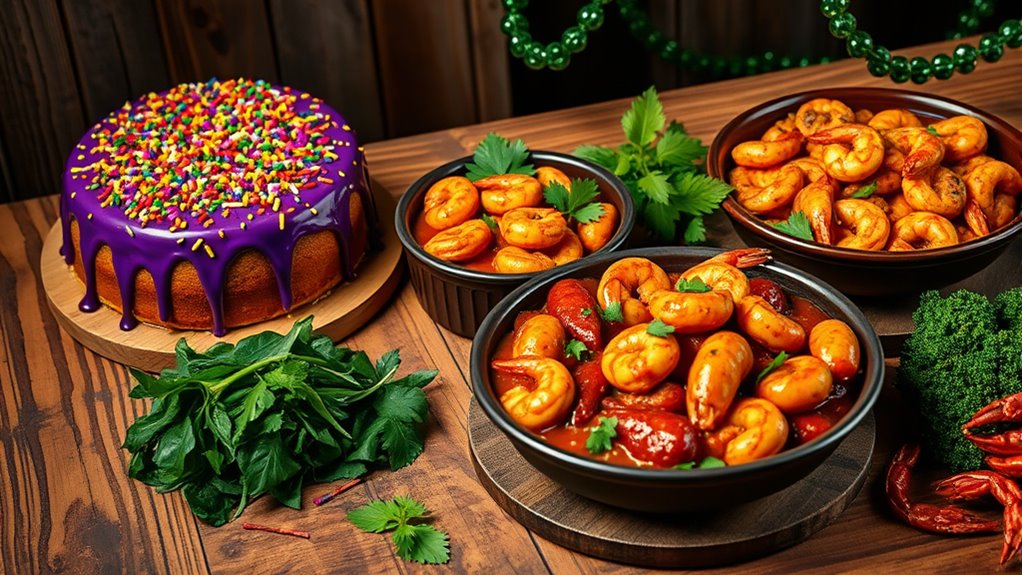
Mardi Gras is a celebration of vibrant colors, bold flavors, and rich traditions, and its signature tastes are as lively as the festivities themselves. As you immerse yourself in the event, you’ll notice how the bead throwing traditions add a playful, communal spirit to the parade routes. Catching colorful beads tossed from floats becomes a highlight, symbolizing good luck and shared joy. The sound of jazz music influences the entire atmosphere, with lively brass bands and soulful melodies setting the rhythm for both dancing and dining. This musical backdrop not only energizes the crowds but also inspires the vibrant, improvisational spirit seen in the region’s culinary creations.
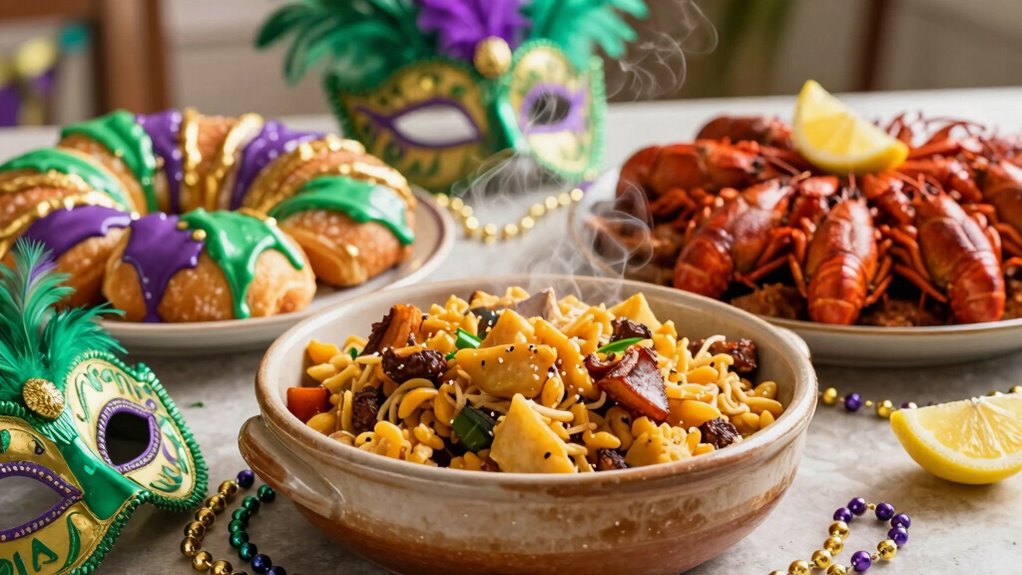
When it comes to traditional dishes, bold flavors reign supreme. You’ll find that classic staples like gumbo and jambalaya dominate the tables, their rich, savory profiles reflecting the city’s history and cultural melting pot. Gumbo, with its hearty mix of sausage, seafood, and vegetables, is often served over rice, offering a comforting yet complex taste. Jambalaya combines spices, meats, and rice in a one-pot wonder that embodies Louisiana’s love for bold, layered flavors. These dishes aren’t just about taste—they’re about celebrating community and resilience, often passed down through generations with pride.
Beignets, fluffy fried pastries dusted with powdered sugar, are another must-try. They’re simple yet indulgent, perfectly complementing the lively atmosphere. As you enjoy these treats, you might notice the way local vendors and families come together, sharing stories and laughter amid the music and parade buzz. The flavors are as much a part of the experience as the sights and sounds, making each bite a taste of tradition. Additionally, the use of regional ingredients highlights the region’s diverse agricultural influences, emphasizing the authenticity of these dishes.
Throughout Mardi Gras, drinks like King Cake also carry symbolic significance. The cake, decorated in purple, green, and gold, contains a tiny baby figurine hidden inside. Finding the baby means you’re responsible for hosting the next celebration or bringing the next batch of King Cake. It’s a sweet tradition that ties everyone together in anticipation and joy, much like the bead throwing and jazz melodies that fill the streets. Additionally, the culinary traditions are deeply rooted in cultural melting pot, reflecting diverse influences that shape the region’s unique flavors and practices.
Frequently Asked Questions
What Are the Origins of Mardi Gras Flavors?
The origins of Mardi Gras flavors stem from a mix of cultural influences and historical origins. You’ll find ingredients like spices, fruits, and rich meats reflect European, African, and Caribbean traditions brought to Louisiana through trade and colonization. These flavors evolved over centuries, blending local and imported customs to create the vibrant, bold dishes we enjoy today during Carnival season. Your celebration becomes richer by embracing these diverse culinary roots.
How Do Regional Differences Influence Mardi Gras Dishes?
Regional differences shape Mardi Gras dishes through unique cultural influences and regional ingredients. You’ll notice that New Orleans favors Creole spices and seafood, reflecting its diverse heritage, while Louisiana’s Cajun dishes highlight bold flavors and local ingredients like sausage and rice. In other areas, Caribbean influences introduce tropical fruits and spices. These regional variations create a vibrant tapestry of flavors, making each Mardi Gras celebration uniquely delicious and culturally rich.
Are There Vegetarian Options for Traditional Mardi Gras Recipes?
Yes, you can find vegetarian options for traditional Mardi Gras recipes. You might consider vegetarian substitutions like plant-based sausage or seafood alternatives, and explore vegan adaptations by omitting meat altogether. For example, replace sausage in gumbo with hearty vegetables or tofu, and use vegetable broth instead of seafood stock. These modifications allow you to enjoy the festive flavors while respecting your dietary preferences.
How Can I Modify Dishes for Allergies While Preserving Traditional Flavors?
You can modify dishes for allergies by using gluten-free adaptations like rice flour or almond flour, and dairy-free substitutions such as coconut milk or vegan margarine. To preserve traditional flavors, incorporate authentic spices and seasonings, and choose high-quality allergy-friendly ingredients. These tweaks make sure you enjoy the festive spirit without compromising taste or safety, allowing everyone to celebrate Mardi Gras together comfortably and deliciously.
What Are Modern Twists on Classic Mardi Gras Dishes?
You can add a modern twist to classic Mardi Gras dishes by experimenting with fusion cuisine and vegan adaptations. Incorporate flavors like spicy Cajun or Creole with international ingredients, such as Thai or Mexican spices, to create exciting fusion dishes. For vegan versions, replace traditional meats with jackfruit or tofu, and use plant-based cheeses. These twists keep the spirit of Mardi Gras alive while appealing to contemporary tastes and dietary preferences.
Conclusion
As you savor these Mardi Gras flavors, remember that each dish tells a story as rich as the Carnival itself. Just like the masked ball, these traditional foods invite you to embrace tradition, community, and celebration. Let each bite be a reminder that, like the spirited parades and vibrant costumes, food brings us together to create unforgettable memories. So indulge, celebrate, and carry the spirit of Mardi Gras in your heart long after the revelry ends.