Holiday cooking puts two kinds of pressure on a kitchen: crowded ovens and a long list of chopping, slicing, and mixing. An air fryer and a food processor address different parts of that problem. The air fryer cooks sides and appetizers in a compact space, which can help when the main oven is full. The food processor shortens hands-on prep for dishes such as slaw, pie crust, dips, and vegetables, but it does not cook anything.

Get kitchen staples and gadgets delivered free with Prime
- Fast, free delivery on millions of items
- Prime Video, Amazon Music and more included
- Member-only deals all year
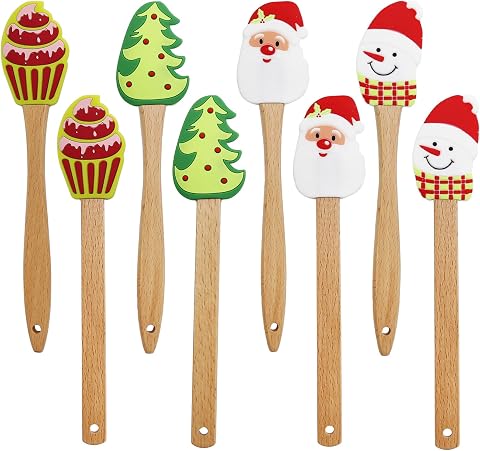
8PC Christmas Silicone Spatula Set – Santa Design Wood Handle
- ✔ Brand: Hoypeyfiy
- ✔ Pieces: 8 spatulas
- ✔ Head material: Silicone

3-Piece Christmas Silicone Mini Tongs Set, 7-Inch Small Style Tongs for Cooking
- ✔ Brand: OIULO
- ✔ Pieces: 3
- ✔ Material: Stainless steel with silicone-cushioned handles

BOYAN 4PCS Christmas Silicone Spatula with Wooden Handle for Baking
- ✔ Brand: BOYAN
- ✔ Pieces: 4 spatulas
- ✔ Head material: Food-grade silicone
The main choice is whether your holiday bottleneck is cooking capacity or preparation time. Choose an air fryer if you want another way to cook crisp sides in small batches. Choose a food processor if repetitive prep is what slows you down, or if your menu depends on finely chopped, sliced, or blended ingredients. Neither replaces a full-size oven, and neither is a universal holiday shortcut.
At a Glance
| Criteria | Air fryer | Food processor | Winner |
|---|---|---|---|
| Primary holiday task | Cooks compact batches of sides, snacks, and appetizers | Chops, slices, shreds, grates, and mixes ingredients | Depends |
| Oven and stovetop workload | Reduces demand on the oven; needs counter space and power | Reduces knife work; food still needs cooking elsewhere | A |
| Prep time | Quick cooking, but food may need turning or multiple batches | Can greatly shorten repetitive prep; assembly and processing take time | B |
| Batch size and throughput | Best for modest portions; basket capacity can limit a family-sized side | Processes ingredients quickly, though large recipes may require batches | Depends |
| Versatility | Roasts, reheats, and crisps; less suited to chopping or mixing | Useful across salads, sauces, doughs, fillings, and vegetables | B |
| Cleanup and storage | Basket cleanup is often simple; appliance takes counter or cabinet space | Several parts and blades need washing; takes storage space | Depends |
| Typical cost and value | Often worthwhile if crisp foods are frequent and oven space is tight | Worthwhile for frequent batch prep; harder to justify for occasional use | Depends |
8PC Christmas Silicone Spatula Set – Santa Design Wood Handle
When holiday cooking means several batches, sauces, and mixing bowls in rotation, eight spatulas in two sizes offer the widest coverage in this group. The silicone heads are described as non-scratch and suitable for cookware, so we can use them for scraping and mixing without adding a rigid metal edge to delicate pans. The wooden handles and Santa and tree motifs give this set an explicitly seasonal look; that is a plus for a holiday kitchen or a practical gift, though the red-and-green palette is less flexible year-round.Compared with BOYAN’s four-piece set, Hoypeyfiy gives us more tools to keep separate tasks moving at once, which can help when baking and cooking overlap. BOYAN may be the tidier choice if we want a smaller set with four distinct character designs. Neither spatula set provides a stated silicone heat-resistance temperature, so we should not assume either is appropriate for prolonged high-heat contact. And unlike OIULO’s tongs, these tools do not add a dedicated way to grip and turn appetizers. For a holiday host who bakes frequently, the larger assortment earns the top spot; for a buyer who needs compact serving tools, it is the wrong kind of set.
Pros:
- Eight-piece assortment supports multiple baking and cooking tasks.
- Two listed sizes provide options for different bowls and jobs.
- Silicone heads are described as non-scratch and suitable for cookware.
- Festive Santa and Christmas tree designs suit seasonal gifting.
Cons:
- Red-and-green styling may not match every kitchen or year-round use.
- Wooden handles can require more careful cleaning than all-silicone tools.
- No specific heat-resistance limit is provided.
Best for: Holiday hosts who bake several recipes and want a larger supply of silicone spatulas in more than one size.
Not ideal for: Buyers seeking tongs, neutral kitchen styling, or a small set that needs little storage space.
Bottom line: Choose Hoypeyfiy when holiday baking volume and having spare spatulas matter more than compact storage or serving with tongs.
“Choose Hoypeyfiy when holiday baking volume and having spare spatulas matter more than compact storage or serving with tongs.”
3-Piece Christmas Silicone Mini Tongs Set, 7-Inch Small Style Tongs for Cooking
OIULO fills the gap the two spatula sets leave: three stainless steel mini tongs for picking up, turning, and serving small foods. That makes them especially relevant to holiday spreads, where we may need to move appetizers or serve salad without reaching for a full-size utensil. Their silicone-cushioned handles are listed as heat resistant to 480°F, and a lock helps the tools store closed or hang when not in use. The set is also described as dishwasher safe, an appealing cleanup detail during a crowded cooking day.Against the spatula sets, OIULO is more specialized rather than more comprehensive. It will not scrape a mixing bowl or fold batter, so a baker should choose Hoypeyfiy or BOYAN first. The seven-inch length helps with drawer storage and close serving, but the description warns it may be short for some cooking jobs; we would not treat these as a substitute for longer tongs around a hot grill or deep pan. The listing gives a 7-inch length and width dimensions of 7 inches, so shoppers should check the form factor carefully. Silicone-cushioned handles may also wear with heavy use. This is our leading choice when the holiday menu calls for small-item handling and serving, not one all-purpose gadget.
Pros:
- Stainless steel bodies are described as durable and rust resistant.
- Silicone-cushioned handles provide a non-slip grip and listed heat protection.
- Locking mechanism supports hanging or closed drawer storage.
- Dishwasher-safe construction simplifies cleanup.
Cons:
- Seven-inch length may be too short for some pan, grill, and turning tasks.
- Silicone handles may wear with heavy use.
- Does not cover mixing, scraping, or batter work like either spatula set.
Best for: Hosts who want compact utensils for salads, appetizers, and small portions, with a locking design for storage.
Not ideal for: Bakers who need bowl-scraping tools or cooks who need long tongs for grilling and reaching into deep cookware.
Bottom line: Pick OIULO for compact holiday serving and appetizer handling when its short reach suits the food and cookware you use.
“Pick OIULO for compact holiday serving and appetizer handling when its short reach suits the food and cookware you use.”
BOYAN 4PCS Christmas Silicone Spatula with Wooden Handle for Baking
BOYAN sits between Hoypeyfiy’s larger assortment and OIULO’s single tool category: four silicone spatulas for scraping, mixing, and handling batter, with festive snowman, Santa, gingerbread, and snowflake designs. The food-grade heads are described as flexible, nonstick, and odor resistant. Wooden handles with hanging holes offer a familiar grip and an easy way to keep the tools visible in a busy baking area.Compared with Hoypeyfiy, BOYAN reduces the piece count and gives us a more concise baking set, but the supplied details do not specify two sizes or dimensions. That makes it harder to judge exactly how each tool will fit different bowls. It is more directly useful for baking than the OIULO tongs, yet it cannot help with turning or serving foods in the same way. The most concrete drawback is care: the wooden handles may not be dishwasher safe and are described as needing hand washing. No heat limit is given for the silicone heads either, so the listed flexibility and nonstick quality should not be read as permission for sustained high-heat use. Choose BOYAN when four themed baking tools feel sufficient; step up to Hoypeyfiy for a broader quantity, or choose OIULO when serving is the main need.
Pros:
- Four spatulas cover common scraping and mixing tasks.
- Food-grade silicone heads are described as flexible, nonstick, and odor resistant.
- Wooden handles include holes for hanging storage.
- Four distinct holiday character and pattern designs provide variety.
Cons:
- Wooden handles require hand washing and may not be dishwasher safe.
- No specific heat-resistance temperature is supplied.
- Dimensions and size variation are not specified.
Best for: Bakers who want a four-piece seasonal spatula set for scraping and mixing, with handles that can hang for storage.
Not ideal for: Anyone prioritizing dishwasher cleanup, precise size information, or a tool for gripping and serving appetizers.
Bottom line: Choose BOYAN for a compact, festive baking set if hand washing the wooden handles is acceptable.
“Choose BOYAN for a compact, festive baking set if hand washing the wooden handles is acceptable.”
As an Amazon Associate we earn from qualifying purchases.
Key Differences
The air fryer helps when the oven is occupied and you want a small side or appetizer cooked with crisp edges. That can be useful before guests arrive or for keeping a few portions moving while other dishes bake. Its advantage depends on the menu and the appliance’s capacity: a small basket may require several rounds for a crowd, and those rounds compete for attention. It adds cooking capacity, but it does not eliminate the need to plan timing.
The food processor helps earlier in the process. It can make quick work of shredding vegetables, chopping nuts, blending a dip, or preparing pastry dough, especially when a recipe calls for repeated, consistent cuts. The benefit grows with the amount of prep and the number of dishes that use it. It cannot cook, and the time saved at the cutting board comes with setup, blade handling, and cleanup.
For value, buy around the task you repeat. A food processor is the stronger all-purpose prep investment for cooks who regularly make salads, sauces, pastry, or large batches. An air fryer is a more focused purchase that can pay off for households that often want crisp food without tying up the main oven. If holiday cooking is the only occasion for either, borrowing or choosing a recipe that uses existing equipment may be the better fit.
Detailed Comparison
Primary holiday task (major difference)
The air fryer wins when the goal is to cook a side or appetizer while the main oven handles a roast or dessert. The food processor wins when the menu involves repeated chopping, shredding, slicing, or blending. This is a major difference: one cooks food, the other prepares it. Pick by the task that currently delays dinner.
Oven and stovetop workload (Air fryer wins — moderate)
The air fryer has a moderate advantage when oven space is scarce. It gives some foods a separate cooking route, though its basket still limits how much can be cooked at once. A food processor frees hands and reduces knife work but leaves the oven and stovetop workload intact. For a holiday menu with several baked dishes, the air fryer addresses the more urgent constraint.
Prep time (Food processor wins — major)
The food processor usually wins for tasks involving large quantities or repeated cuts. Shredding a bowl of vegetables or mixing a batch of dough can take less hands-on time than doing it all by hand. The air fryer may cook quickly, but it does not shorten the chopping that precedes a recipe. The gap is moderate to major for prep-heavy menus and small for menus that rely on prepared ingredients.
Batch size and throughput (moderate difference)
Neither appliance is automatically better for a large gathering. A food processor can process ingredients quickly, but some models require ingredients to be added in batches. An air fryer can cook a limited amount at a time, and consecutive rounds may slow service. The winner depends on the job: processing a large quantity of vegetables favors a suitably sized processor; cooking a small crisp side alongside other dishes favors the air fryer. Check capacity against the recipes you make.
Versatility (Food processor wins — moderate)
The food processor wins for range across holiday recipes. Slicing vegetables, chopping nuts, blending spreads, and mixing some doughs all use the same appliance, depending on included attachments. An air fryer’s strongest uses are cooking, crisping, and reheating. That makes the processor a broader tool, though broad capability only has value when you will use it. The difference is moderate for an occasional holiday cook and major for someone who cooks from scratch often.
Cleanup and storage (Air fryer wins — minor)
This is close and model-dependent. An air fryer basket may be straightforward to wash, but the appliance itself can be bulky. A food processor often has a bowl, lid, pusher, and blade or disc to clean and store. The air fryer has a slight convenience edge after simple cooking; the processor’s extra parts can be worth the space when they replace frequent hand prep. Check whether parts are dishwasher-safe and where the appliance will live.
Typical cost and value (moderate difference)
Value depends more on use than on a universal price ranking. A food processor earns its cost when it repeatedly saves prep time across different meals. An air fryer earns its cost when you regularly cook foods that benefit from crisping or need an alternate cooking space. Paying more for the processor makes sense for frequent from-scratch cooking; paying more for an air fryer makes sense only if its capacity and features match recurring meals. For a single holiday, neither purchase is automatically good value.
Air fryer: Pros and Cons
Pros:
- Cooks small sides and appetizers without occupying the main oven
- Can crisp or reheat foods when the oven is busy
- Useful beyond holidays for quick meals and snacks
Cons:
- Limited capacity can mean multiple rounds for a crowd
- Does not reduce chopping, slicing, or mixing work
- Needs counter or cabinet space and may be less useful for menus without crisp foods
Food processor: Pros and Cons
Pros:
- Speeds up chopping, shredding, slicing, and mixing
- Supports a wide range of prep-heavy recipes
- Can save substantial hands-on time when cooking from scratch
Cons:
- Does not cook food or ease oven scheduling
- Multiple parts and blades add cleanup and storage work
- May be poor value if used only once or twice a year
Who Should Choose What
Choose Air fryer if:
- Your oven is usually full during holiday meals and you want to cook crisp sides or appetizers separately.
- You often make small portions of roasted or reheated foods and will use the appliance throughout the year.
- You value a second cooking route more than faster knife work.
Choose Food processor if:
- Your holiday menu involves large amounts of chopping, shredding, slicing, or mixing.
- You regularly make salads, sauces, pastry, dips, or vegetable-heavy dishes from scratch.
- You want one appliance that supports many prep tasks across everyday cooking.
Skip both if: You cook a large holiday menu only once a year, have enough oven and prep capacity, or lack space for another appliance. Use existing tools, prep ingredients ahead, or borrow the appliance suited to the recipes.
Value for Money
Pay more for a food processor when it will save hands-on prep across many meals, not just one holiday. Its value is strongest for cooks who make batches of dough, dips, salads, or sliced vegetables often. A basic model with the needed attachments may be enough; extra functions matter only when they match regular recipes.
An air fryer is worth buying when crisping and oven overflow are recurring needs. For occasional holiday use, its limited batch size can make the time savings less impressive than they first appear. Compare capacity with the number of portions you serve, and count year-round use before paying for premium features. The better value is the appliance that solves a repeated problem.
Final Verdict
Choose the food processor if your biggest holiday delay is preparation and you cook from scratch often. It handles more kinds of work and is the stronger value for a kitchen that regularly needs chopping, slicing, shredding, or mixing. Choose the air fryer if the main problem is a crowded oven and your household frequently eats crisp sides or appetizers. Its advantage is focused but practical when that need recurs.
The biggest deciding factor is whether you need help preparing ingredients or cooking them. For most cooks who want one broadly useful holiday helper, the food processor is the better starting point. If your prep is already under control and oven space is the bottleneck, choose the air fryer instead. Skip both if neither problem happens often enough to justify the space and expense.
Frequently Asked Questions
Which appliance is more useful for a large holiday dinner?
It depends on the workload. A food processor is more useful when many recipes require chopped, sliced, or shredded ingredients. An air fryer is more useful when the oven is full and you need to cook smaller crisp sides separately. For a crowd, check the capacity of the specific model before relying on either one.
Can an air fryer replace a food processor for holiday recipes?
No. An air fryer cooks food; it does not chop vegetables, shred cheese, mix pastry, or blend dips. It may help finish or reheat a dish, but it solves a different part of the cooking process.
Is a food processor worth buying for holiday cooking alone?
Usually only if the holiday menu includes substantial prep and you expect to use it during the rest of the year. For one annual meal, borrowing one or using a knife, box grater, and mixer you already own may offer better value.
Which should I buy if I only have room for one appliance?
Choose based on your recurring bottleneck. Pick a food processor for broad prep help across many recipes. Pick an air fryer when you regularly want crisp food or need a separate cooking space. If neither need is frequent, keeping the counter space may be the better choice.